How to make vegetable fried rice with restaurant texture
Good fried rice and gluey fried rice usually come down to three things: how the rice was handled before it hit the pan, how hot the pan actually got, and the order ingredients went in. That's the working idea behind this guide to how to make vegetable fried rice with grains that stay separate and glossy instead of clumping into mush. Chef Jet Tila's professional method adds beaten egg right before the rice so it coats every grain, a sequencing choice he credits for keeping the dish "distinct and glossy" (Food Network, last week).
Tila also points out that fried rice is a smart way to use up whatever's sitting in the fridge or pantry, and his own version leans on frozen peas and carrots he already has around (Food Network, last week). That convenience comes with a catch. Rice left sitting between 40°F and 140°F for more than two hours lets Bacillus cereus spores multiply into toxins that survive reheating, so how the rice gets cooled and stored matters just as much as how it's cooked (University of Maine Cooperative Extension, 5 months ago). The storage section near the end spells out exactly what that means in practice.
Consider this an adapted, easy vegetable fried rice recipe, not a lab-tested one. The amounts below are a starting framework to adjust after a try or two, not fixed measurements. Before starting, gather a wide wok or deep skillet, rice that's already cooked and chilled, and a food thermometer for reheating leftovers later. What follows covers a base ingredient list, vegetable and protein prep, the cooking sequence, and the storage habits that keep next-day fried rice safe.
A starting formula for homemade vegetable fried rice
Video of the Day
Tila's original is a deluxe, Chinese-style fried rice built around char siu pork and shrimp (Food Network, last week). This adaptation keeps his rice, egg, and oil measurements, drops the meat and seafood, and swaps out the chicken bouillon and oyster sauce so the result actually works as a vegetarian fried rice recipe:
- 4 cups cooked, chilled rice (jasmine or another long-grain)
- 3 large eggs, beaten
- 2 tablespoons neutral oil
- Vegetable bouillon powder or mushroom seasoning, starting with about a teaspoon
- Soy sauce, starting with about a tablespoon
- 2 to 3 scallions, sliced on the bias
- A pinch of ground white pepper
- Vegetables and tofu, to taste (see below)
That bouillon swap deserves a caveat. Tila's recipe calls for 2 tablespoons of powdered chicken bouillon (Food Network, last week), but vegetable bouillon and mushroom seasoning vary enormously in salt concentration from brand to brand. Using that same 2-tablespoon measurement with a different product could easily oversalt the dish. Start with a teaspoon, mix it through, taste, and add more only if the rice actually needs it.
The same caution applies to serving size. This adaptation keeps Tila's rice, egg, and oil quantities, which in his recipe serve four (Food Network, last week), but that yield describes his version, not this one. A cup or two of vegetables is a reasonable starting point for this amount of rice, cut small enough to cook through quickly, and roughly half a block of tofu is a reasonable amount to test if using it. Neither has been tested as a finished recipe, so treat both as a framework, not a promise of exact servings.
Worth a quick label check before cooking: eggs make this vegetarian, not vegan, and soy sauce, bouillon, and mushroom seasoning brands vary in whether they meet a strict vegetarian or vegan standard.
Video of the Day
Start with rice that's already been handled right
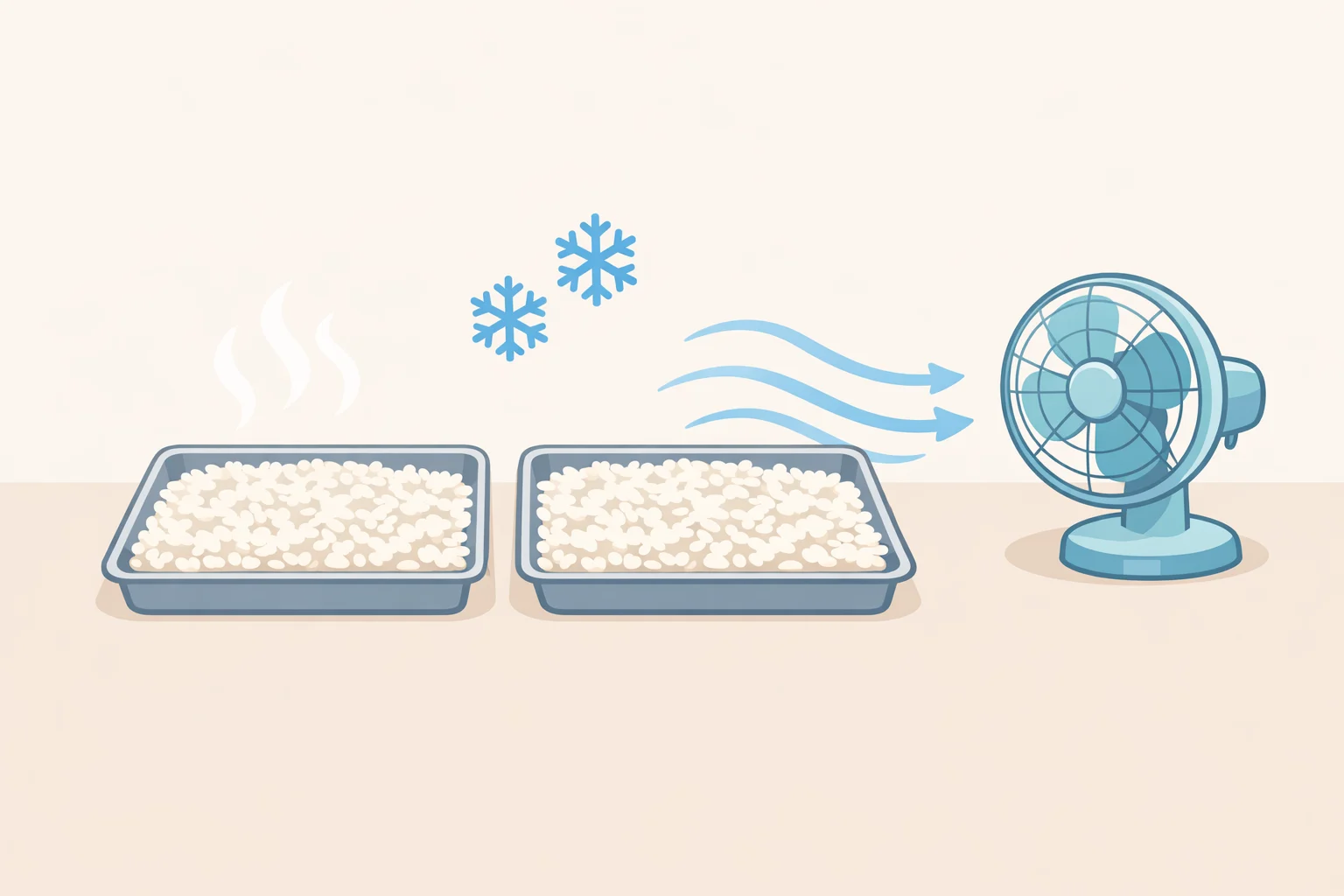
Nearly every fried-rice failure traces back to rice that's too wet, too warm, or too clumped before it meets the oil. Cooking rice a day ahead is the surest way to get vegetable fried rice with leftover rice instead of a clumpy same-day batch. Serious Eats recommends rice refrigerated 12 hours to 3 days for the clearest, clump-free grains; if cooking same-day, spread the hot rice on a tray and let it cool for five minutes before using it (Serious Eats, late last year).
Whichever timeline is used, get the rice into the fridge within two hours of cooking, or within one hour if the room is 90°F or hotter. Split large batches across shallow or multiple containers so they cool quickly instead of sitting warm in one dense block (University of Maine Cooperative Extension, 5 months ago). Break up any clumps with a fork or fingers before the rice goes near the pan, so it's ready to take on egg and seasoning evenly once the wok is hot.
Fried rice has a reputation as a fast weeknight meal, at least once the rice is ready. Tila's version runs 20 minutes total; Serious Eats' nasi goreng takes 25 (Food Network, last week; Serious Eats, late last year). Both numbers assume the rice is already cooked and chilled going in, so budget that active cooking window separately from however long the rice needs to cool.
Choosing and prepping vegetables and protein for high heat
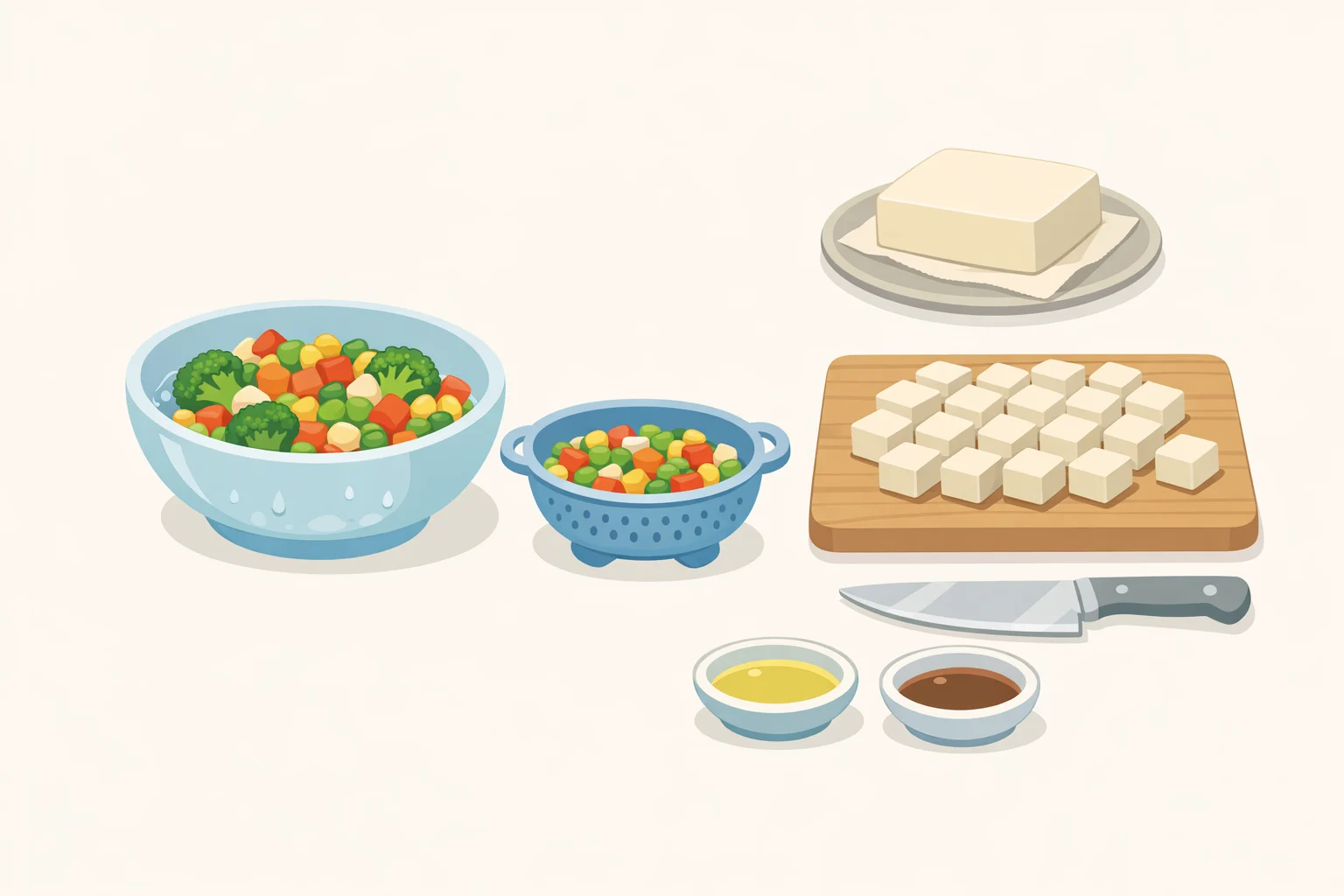
Tila keeps his vegetable mix simple: frozen peas and carrots, thawed fully before they hit the oil, not added straight from the freezer (Food Network, last week). That thawing step matters because ice crystals and surface water dilute the pan and slow down the sear. Fresh vegetables don't carry that same moisture problem, but they still need to be cut small and even, since there's no partial cooking from a freeze-thaw cycle to help soften them.
For a bigger vegetable mix than Tila's, here's one practical way to sequence it, based on general stir-fry timing rather than this specific recipe: put denser vegetables like carrot, broccoli, or cauliflower in first, since they need the most time; add quicker ones like bell pepper or snap peas partway through; stir in delicate additions like bean sprouts or thawed peas at the very end, just long enough to warm through. Cut everything roughly the same size, mirroring the way Tila dices his peas and carrots small enough to finish together in under a minute (Food Network, last week).
Watch the pan rather than the clock. If vegetables start pooling liquid or the sizzle goes quiet, spread things out, raise the heat, or work in two smaller batches instead of pushing through a crowded pan.
Tofu is a straightforward vegetarian protein to add. For this adaptation, pressing it, cubing it, and browning it in its own thin layer before anything else joins the pan gives it a firmer sear than adding it in wet. Exact timing depends on the tofu's moisture and how hot the pan runs, so treat it as a starting point to adjust, not a fixed rule; Tila's shrimp and pork, by comparison, cook directly with the vegetables since they finish in the same 30 to 45 seconds (Food Network, last week).
How to make vegetable fried rice: the cooking sequence
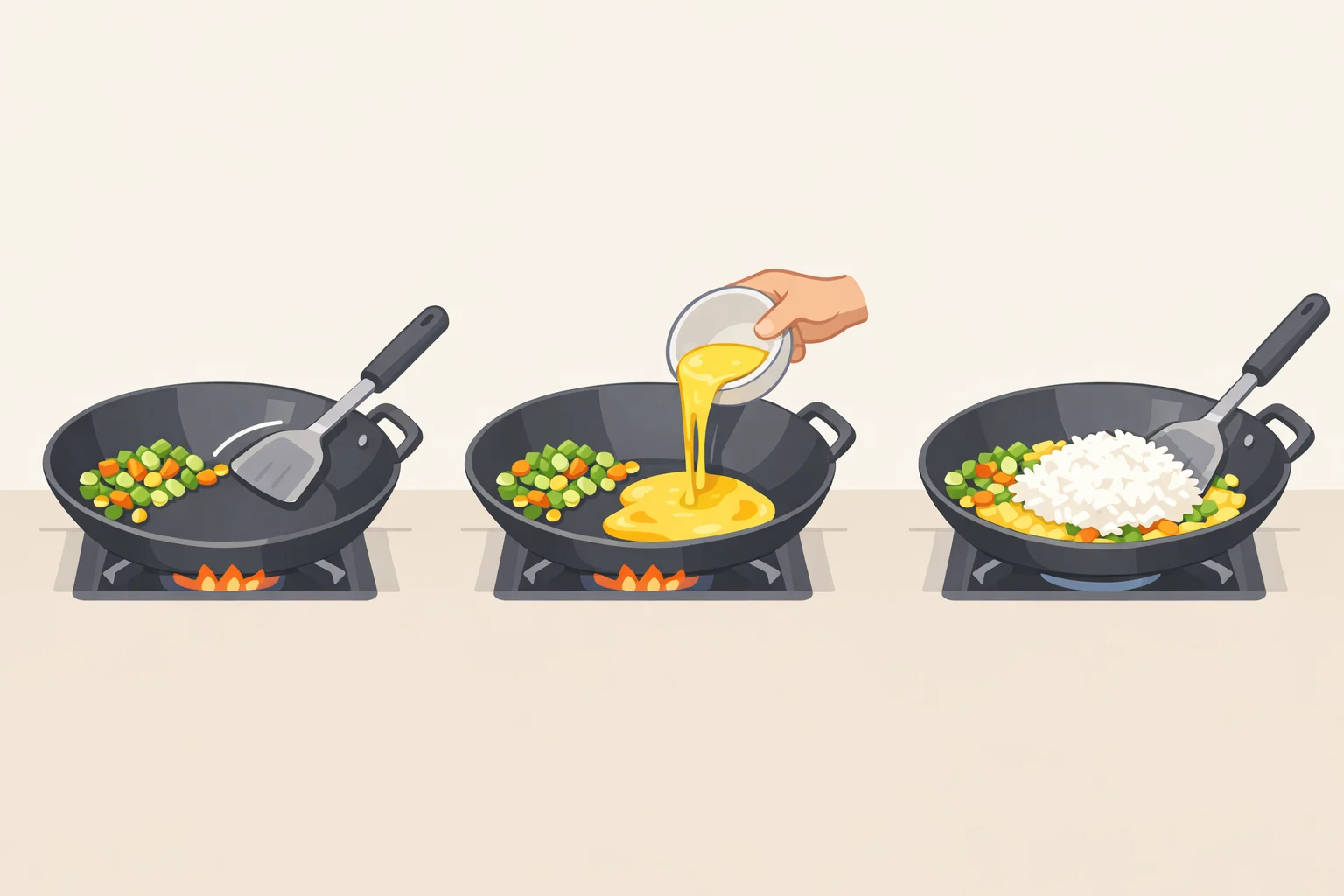
- Heat the oil over high heat. Tila's method calls for heating until a wisp of white smoke appears; for this adaptation, a strong shimmer works as a slightly gentler cue for the same readiness (Food Network, last week).
- If using tofu, add it now and cook until browned on most sides, then set it aside. Tofu is handled separately here because it needs more time to brown well than Tila's shrimp and pork, which cook directly with the vegetables in 30 to 45 seconds (Food Network, last week).
- Stir-fry the vegetables in the order from the prep step above, adding the quickest-cooking ones last so nothing overcooks while the slower vegetables catch up.
- Push everything to one side of the pan, pour the beaten egg into the cleared space, and add the rice right away, folding constantly with a circular motion so the grains don't get smashed. Give it about 30 seconds; that's roughly how long it takes the egg to fully coat the rice in Tila's version, the sequence he credits for keeping every grain distinct instead of clumped (Food Network, last week).
- Return the tofu to the pan and toss briefly, just long enough to reheat it without breaking it apart.
- Sprinkle in the bouillon or mushroom seasoning, then pour soy sauce around the pan's edges so it sizzles on contact instead of pooling in the middle. Cook for about a minute more, until the rice is visibly steaming and the grains have loosened back up, holding their shape without turning dry or gummy, the finish line Tila describes for his own version (Food Network, last week).
- Finish with a pinch of white pepper and serve immediately. Have everything prepped before the oil goes in; there's no time to chop mid-cook once the pan is hot (Food Network, last week).
If the pan turns watery or the rice starts clumping partway through, try spreading everything into a thin layer and raising the heat instead of continuing to stir a soggy pile. There's no tested benchmark for how long that fix takes; it depends on how much liquid built up and how hot the pan can get.
Season it vegetarian, then adjust to taste
Tila's Yang Chow, built on chicken bouillon, oyster sauce, and soy sauce, lands at 1,698 mg of sodium per serving; Serious Eats' nasi goreng, which leans on shrimp paste and kecap manis, comes in at 1,212 mg (Food Network, last week; Serious Eats, late last year). Those numbers describe recipes built around salty, umami-heavy ingredients that don't belong in a vegetable version, but they're a fair reminder to build seasoning in stages instead of dumping it all in at once. Add soy sauce a little at a time, tasting between additions.
For an optional twist, nasi goreng, Indonesia's take on fried rice, points in a different direction entirely: kecap manis, an Indonesian sweet soy sauce, adds a caramelized, sweet-savory edge to the finished dish (Serious Eats, late last year). Try it as a one-off swap for part of the soy sauce, not as a way to recreate real nasi goreng, which gets its signature depth from terasi, a fermented shrimp paste that has no place in a vegetarian version anyway (Serious Eats, late last year).
Storage and the food-safety habits that matter most
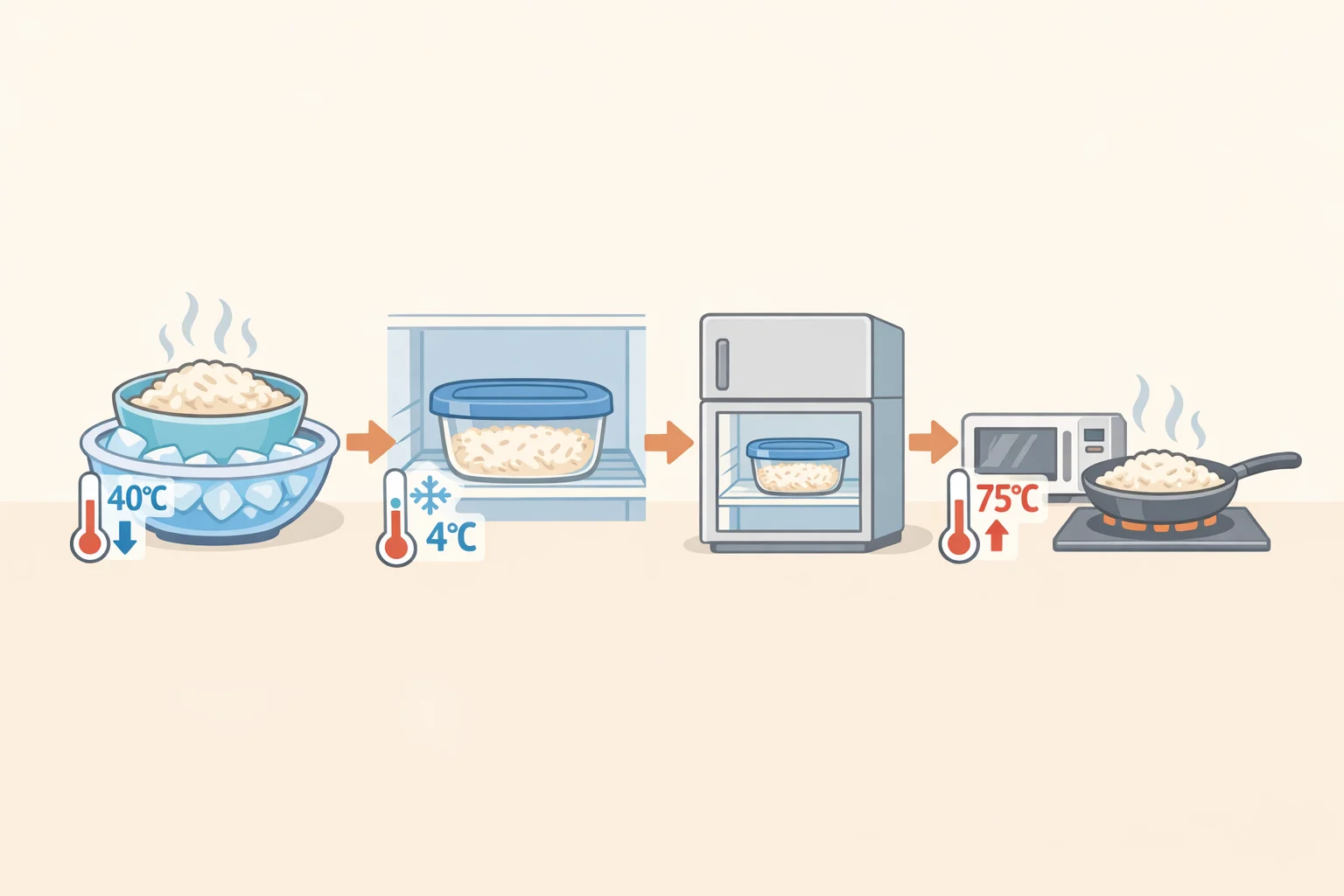
Cooked rice can carry B. cereus spores that turn dangerous once the rice sits too long at the wrong temperature, so cooling it correctly is part of the recipe, not an afterthought. Refrigerate leftovers within two hours of cooking, or within one hour if the room runs above 90°F, split across shallow containers rather than one deep one (University of Maine Cooperative Extension, 5 months ago). NC State Extension gives a sharper version of that same window: rice should drop from 135°F to 70°F within the first two hours and down to 41°F within four more hours after that, and if it hasn't reached 70°F within those first two hours, it's safer to toss it than try to save it (NC State Extension, in 2024).
Reheat leftovers to 165°F, checked with a food thermometer, and reheat only the portion about to be eaten. Cycling the same batch through repeated cooling and reheating pushes it back through the temperature range where bacteria multiply each time, which is why both NC State Extension and Cleveland Clinic recommend reheating any given portion only once (NC State Extension, in 2024; Cleveland Clinic, in 2024).
On how long leftovers actually keep, the sources don't fully agree. The University of Maine points to the FoodKeeper app's 3- to 4-day window (University of Maine Cooperative Extension, 5 months ago). NC State Extension says rice held at or below 41°F stays microbiologically safe for up to 7 days, but only if the fridge is confirmed to run that cold with an actual thermometer (NC State Extension, in 2024). Cleveland Clinic takes the most conservative position, recommending leftovers get tossed after two days no matter how they were stored (Cleveland Clinic, in 2024). Absent a verified fridge thermometer, defaulting to that shortest window, two days, is the more cautious call, since a bad case of food poisoning is a poor trade for an extra day of leftovers.
Reheating can't undo a mistake here. B. cereus toxins are heat-stable, so a hot pan or microwave kills the bacteria itself without destroying toxins that already formed while the rice sat out too long. There's no cooking step that rescues rice that's spent too much time in the danger zone (University of Maine Cooperative Extension, 5 months ago; NC State Extension, in 2024).
Next step
The vegetables, the protein, and the exact seasoning are all meant to flex. The rice handling, the heat, and the sequencing are the parts worth keeping fixed. Cook a bigger pot of rice tonight, cool it properly in shallow containers, and turn it into fried rice once it's had a real chance to chill, adjusting the vegetable timing and seasoning to whatever's actually in the kitchen that day.