Thrifted under-bed storage ideas: using a wicker basket
A thrifted, lidded wicker basket works for one narrow job under a bed: holding clean, dry, flat linens like a folded quilt or a spare sheet set. Push it further than that, storing bulky bedding, moth-prone knits, or anything in a damp room, and the format starts working against you. This guide to thrifted under-bed storage ideas treats the basket as a linen holder, not a stand-in for every plastic bin down there.
The dimensions worth hunting for come from a retail example, not a thrift-shop find. In a 2024 review, Apartment Therapy tested a West Elm rattan under-bed basket: lidded, 32 inches wide, 6.5 inches tall, with two side grip holes. It slid under a 7-inch bed frame and held one quilt, a sheet set, and a few odds and ends. That's the shape to look for secondhand, shallow and wide with a lid and handles, though it's a reference point rather than a guarantee any wicker basket you find will perform the same way.
Left unattended, under-bed space collects dust and traps damp, and Good Housekeeping specifically calls out open baskets, because they collapse, gather dust, and invite overstuffing. A lid hides the contents, but it doesn't turn the basket into sealed storage the way a zip-up bag is. That distinction shapes everything about what belongs inside one.
This guide covers deciding whether a thrifted lidded wicker basket suits your bed and bedroom, measuring for fit, shopping and inspecting one secondhand, cleaning it before it comes inside, and packing it correctly.
Decide if wicker suits your space
Video of the Day
Skip the project if your bedroom runs damp, or your bed sits on a divan base with vents underneath. Good Housekeeping warns that blocking those vents traps moisture and causes musty smells, so don't set a basket where it covers one.
Skip it, too, if what you're storing is pest-sensitive. Good Housekeeping's pest-prevention advice is to keep delicate knits, silk, and cashmere in zip-up garment bags, because the barrier only works if it leaves no gaps. Unless a basket's lid seals that tightly on every side, and hinged wicker rarely does, don't treat it as pest protection.
Skip it for anything high-capacity or bulky as well. The West Elm basket is shallow by design, and the reviewer needed careful, flat packing just to fit one quilt and a sheet set under the lid. For suitcases, Good Housekeeping points to wheeled clear plastic boxes; for bulky bedding, it suggests vacuum-sealed storage, which can halve the volume instantly. A shallow woven basket won't compete with either option on capacity.
If the basket needs to guard against pests, hold bulky bedding, or sit in a damp room, choose sealed or rigid storage instead and stop here. Everything below assumes the opposite: a bedroom that isn't fighting a humidity problem, and linens that are already clean, dry, and flat.
Video of the Day
Vintage under-bed storage: measure before you shop
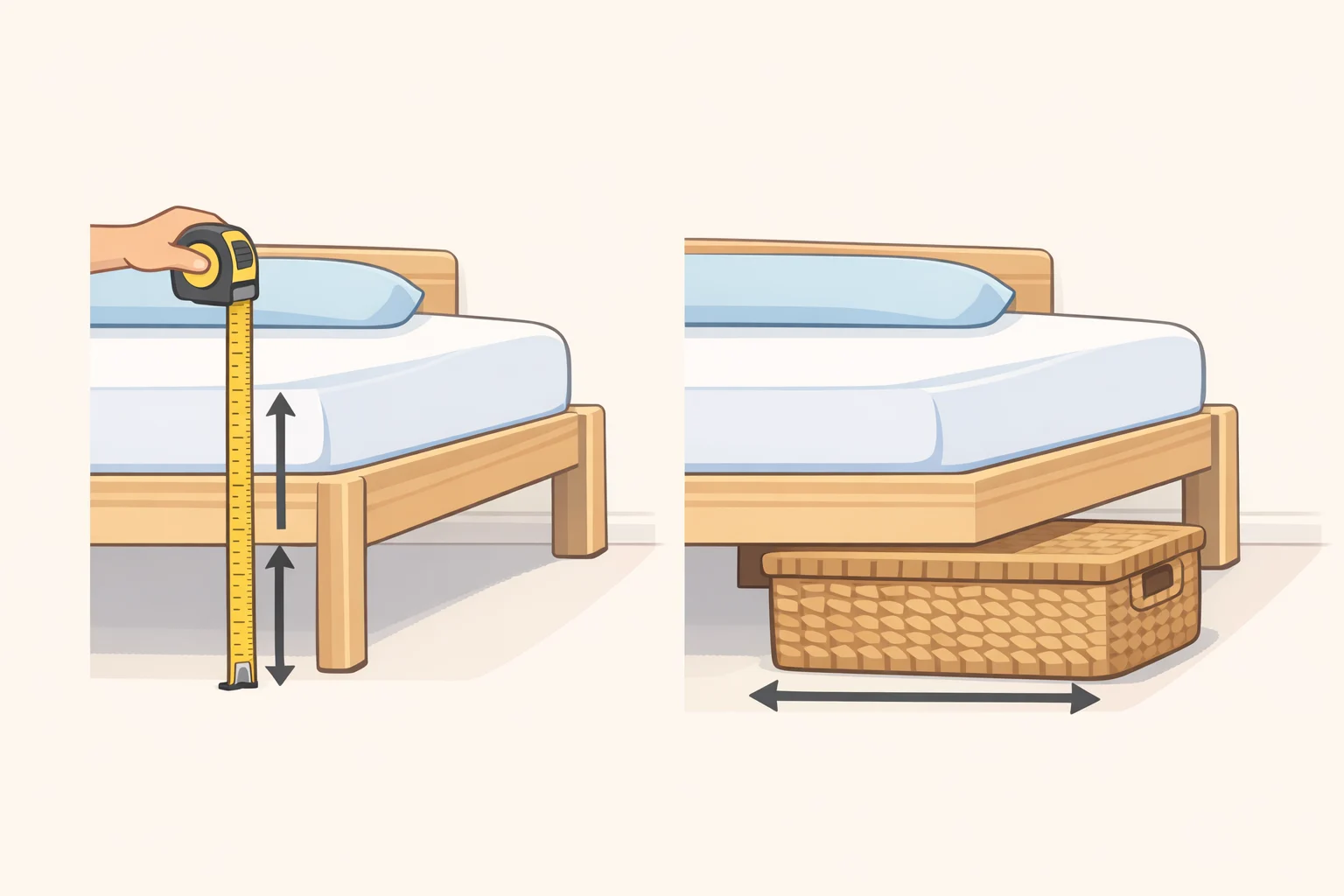
Bring a tape measure before you bring home a basket. The example that worked was 6.5 inches tall under a 7-inch frame, leaving barely half an inch of clearance. Eyeballing it isn't good enough at that margin.
Measure four things:
- Floor-to-frame clearance at the lowest point of your bed frame, not an average guess.
- Usable depth, from the bed's outer edge to whatever sits in the way, a leg, a slat, a divan base.
- Basket width, including any flare at the rim.
- Handle or grip-hole clearance, since a basket that fits width-wise can still snag on a bed leg if the handles stick out.
Once you've got a basket home, run a test fit before you build any habit around it:
- Recheck the empty clearance under the frame.
- Fill the basket with the actual items you plan to store, not filler.
- Close the lid on a level surface and confirm it seats flat.
- Slide the basket under the bed without forcing it.
- Pull it back out by the handles and check for snagging or scraping.
- Confirm it clears any divan vents and leaves room around it for air.
The Apartment Therapy reviewer had to arrange her items flat specifically to get the lid to close, which is why steps two and three matter more than an empty-basket measurement ever will. If the basket fails any of these six checks, better to find that out now than after everything's unpacked into it.
Leave a gap around the basket once it clears all six. Good Housekeeping's general advice is to space storage apart for airflow, which helps prevent damp and makes pulling things out less of a chore. A basket wedged flush against a vent or another bin defeats the point even if it technically fits.
Grip holes make step five painless. The format that worked had two cutouts built for pulling the basket free. Without them, a snug basket under a low frame turns retrieval into a wrestling match, an obstacle with better texture than a solution.
Thrift store under-bed storage: where to shop and what to reject
Check thrift chains and consignment shops before trying flea markets. Apartment Therapy's reporting on thrifted baskets points to places like Goodwill, the Salvation Army, and small consignment shops, where general decorative baskets often run $1.99 to $5.99. Flea market vendors carry similar baskets too, but prices there vary more, and you may end up paying slightly more for the same shape.
That pricing reflects ordinary decorative baskets, though, not the specific shallow, wide, lidded shape built for under-bed use. That format is a narrower find. Treat a bargain price as a possibility while you shop, not something to plan around.
If secondhand shopping comes up empty, Apartment Therapy also lists HomeGoods, T.J.Maxx, Marshalls, Homesense, IKEA, JOANN, and Michaels as places to check for well-priced baskets.
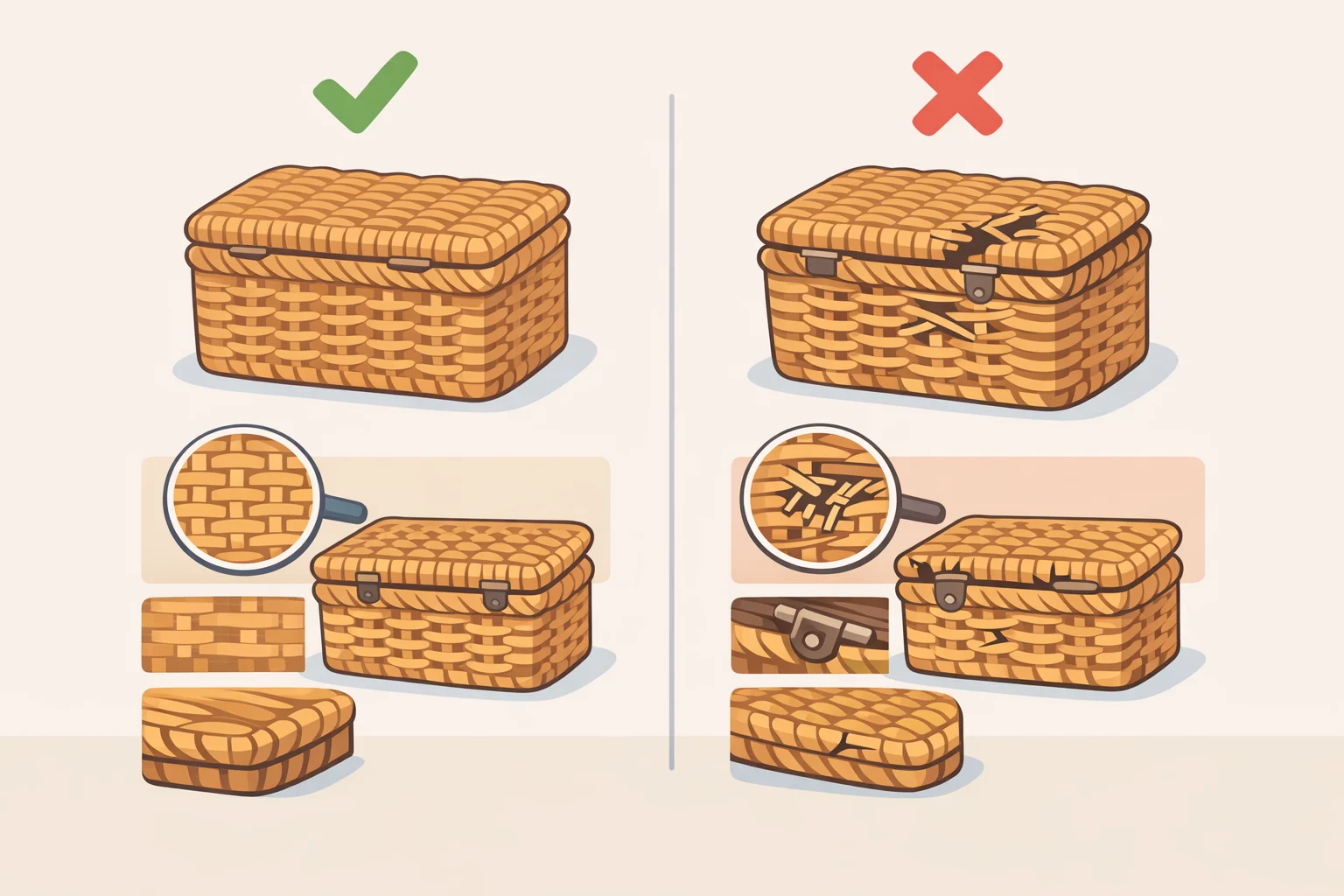
Before buying anything secondhand, run through a short checklist. Some of these checks trace back to wicker-cleaning advice; others are just practical common sense worth applying anyway.
Buy it if:
- the base sits flat with no rocking
- the lid closes without bowing or gapping
- the hinges, or whatever joint holds the lid, feel intact and don't wobble
- the handles or grip holes clear a bed frame without catching
- the weave has no broken or loose structural strands, a check The Rural Legend's guide to thrifted wicker recommends directly
- the interior feels smooth enough that it won't snag fabric
Leave it if:
- there's mold, mildew, or a musty smell
- the weaving has holes or breaks that affect the structure
- it would need restoration beyond what you're prepared to do at home
The Rural Legend describes a vinegar-and-water treatment for mold or mildew, but that's a fix for minor spotting, not a guarantee. Extensive growth, a persistent odor, or structural damage is a reason to walk away rather than attempt a rescue.
Once a basket clears that checklist, patina and slightly mismatched weaving aren't flaws. Older baskets with visible age often look more expensive than they cost, and both Apartment Therapy and The Rural Legend note that a matching set is hard to come by secondhand. A little visual inconsistency is normal territory for a thrifted find, not a sign you picked the wrong one.
Clean it before it comes inside
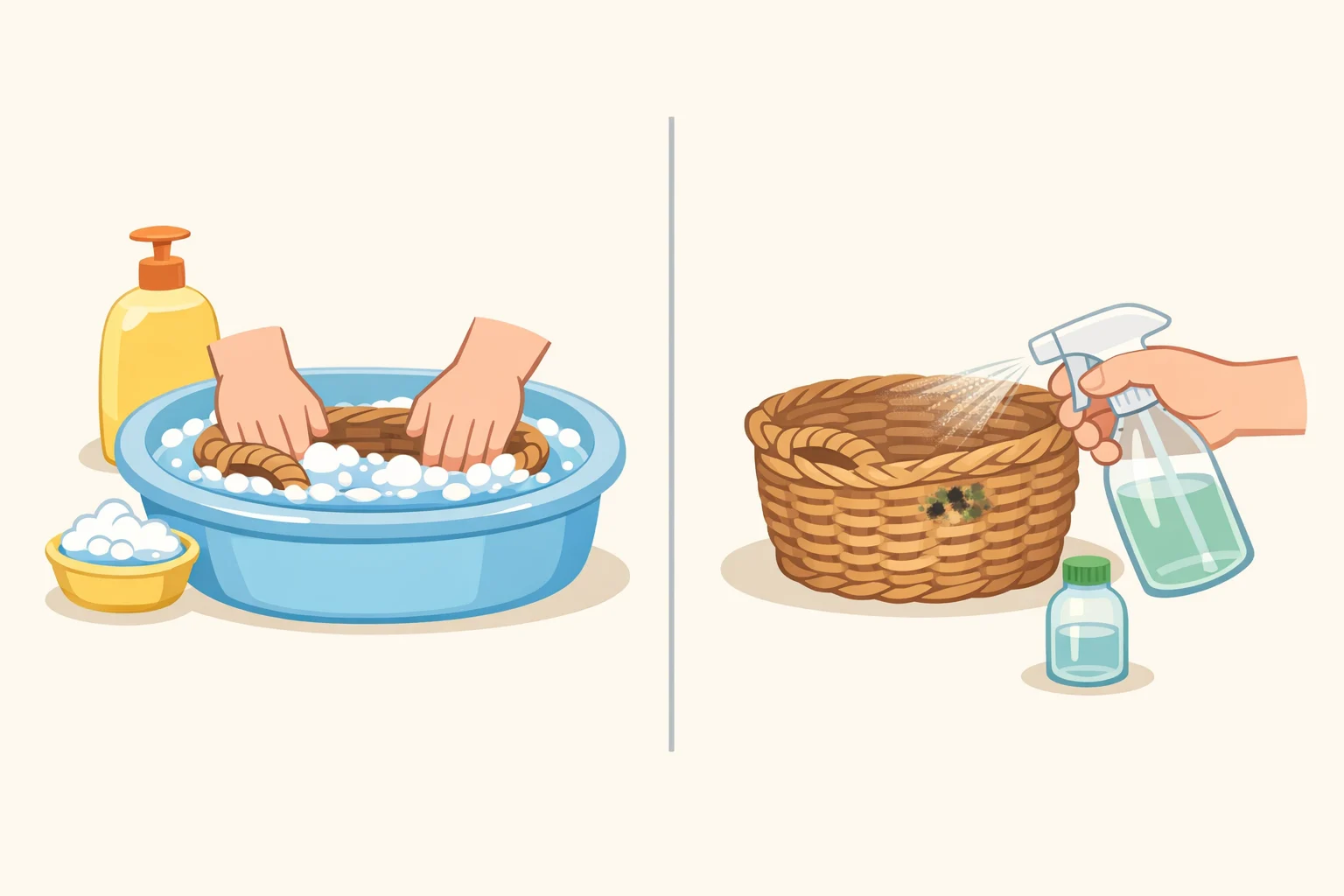
Wicker's texture holds onto dirt more readily than a smooth surface, so a quick wipe isn't enough, even on a basket that passed inspection. These steps handle ordinary dirt and describe The Rural Legend's vinegar-and-water method for mold or mildew. They aren't a substitute for professional mold remediation, and a basket with widespread growth belongs in the trash, not the wash basin.
- Brush and wipe off loose debris, inside and outside the basket, before anything else.
- If the structure is sound, submerge it fully in warm water with mild dish soap for up to five minutes, no longer, to avoid damaging the weave. Swirl gently to loosen dirt, then rinse thoroughly.
- For small mold or mildew spots, spray a vinegar-and-water mixture over the area, let it sit a few minutes, and scrub gently with a soft brush before repeating the wash and rinse.
- Air-dry outside, and bring the basket back in as soon as it's fully dry. Extended sun exposure causes UV damage, so don't leave it out longer than drying requires.
Decorative under-bed storage that still works
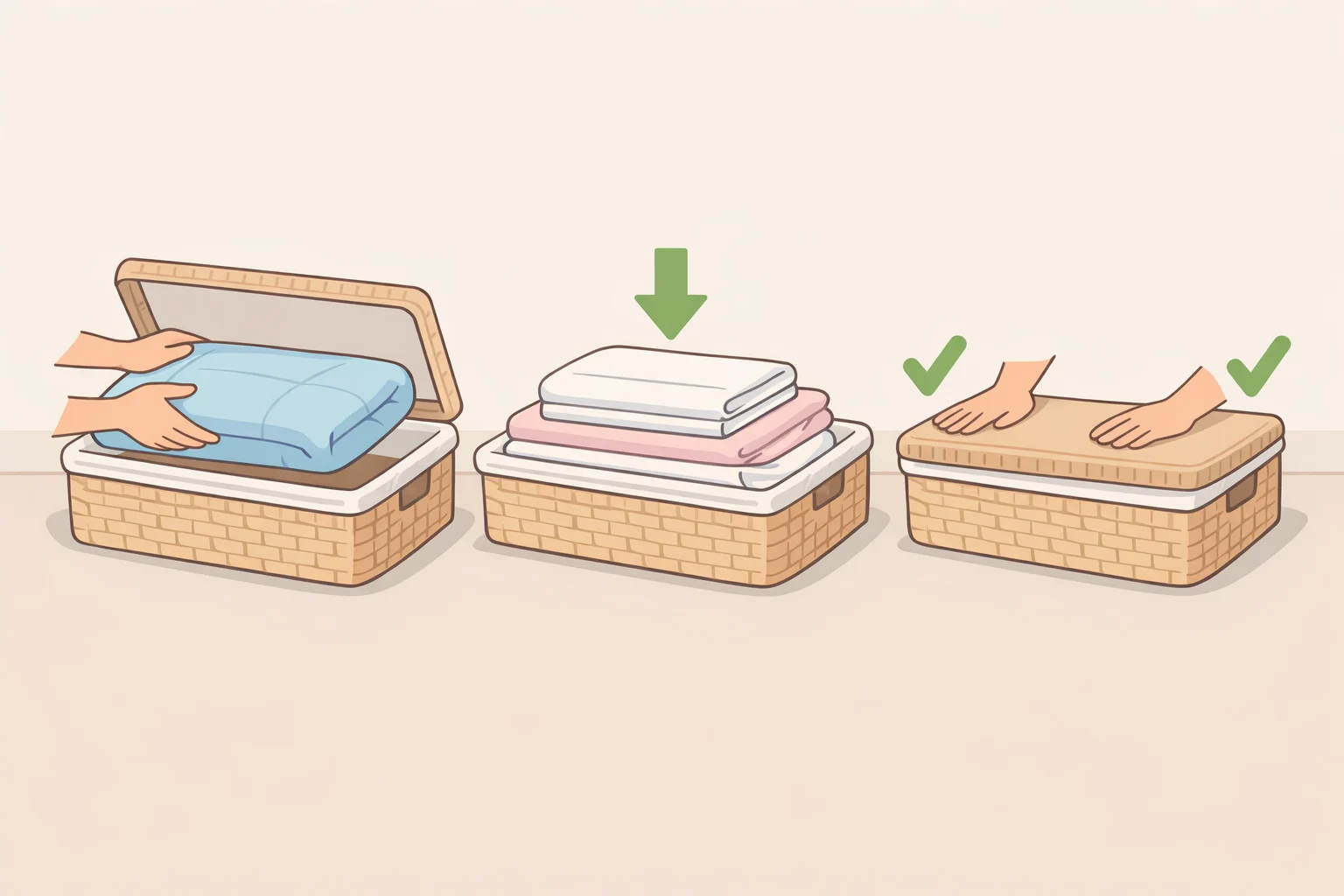
Once the basket is clean and dry, keep its contents to clean, dry, flat textiles: spare bedding, a folded quilt, a sheet set, the same items the Apartment Therapy reviewer packed into hers. Try the quilt flat on the bottom and the sheet set above it, then adjust the stack until the lid closes without pressure. Keep whatever you reach for most often near the front edge, following Good Housekeeping's general placement advice for under-bed storage.
Delicate fabrics need an extra layer no matter what's holding them. Good Housekeeping's pest-prevention guidance centers on zip-up garment bags with no gaps for cashmere, silk, and delicate knits, and that guidance is really about the bag itself, not whatever sits around it. Tucking one of those sealed bags inside the basket combines both jobs: the bag pest-proofs, and the basket just holds it.
Skip anything damp or musty-smelling, and skip anything bulky enough to keep the lid from closing flush. Good Housekeeping's overstuffing warning is aimed at open baskets and soft bags specifically, but the logic holds once a lid won't sit flat: if it doesn't close, the basket is overfilled.
A thin liner or rug underneath protects flooring and makes the next cleaning pass easier. Handle the basket itself more gently than a plastic tote, too; the Apartment Therapy reviewer noted her basket couldn't be kicked or shoved into place the way her old plastic bins could.
Every three to six months, Good Housekeeping recommends pulling storage out, vacuuming underneath, and checking for damp. Audit the contents annually so the space doesn't quietly fill back up with things you no longer use.
More thrifted under-bed storage ideas: where this basket fits
The Apartment Therapy reviewer said the basket improved the view under her unskirted bed and hid the storage sitting behind it. That's the real payoff of a project like this: better appearance and easier access, not sealed protection.
Learning how to organize under-bed storage well usually means mixing formats rather than picking just one. Pair a thrifted wicker basket with sealed garment bags for anything moth-prone, and with rigid, wheeled bins for bulk or for damp-prone rooms.
Use the basket for linens you reach for often and can inspect easily. Reserve purpose-built storage, sealed bags, rigid bins, for anything pest-sensitive, bulky, or exposed to damp. That split does more for the space than any single container could on its own.