Grated Tomato Pasta Sauce vs Pomodoro Crudo: Which to Make
A grated tomato pasta sauce takes only a few minutes of prep and a brief simmer; pomodoro crudo keeps the sauce entirely raw but asks for an hour of patience. Both make the most of ripe summer tomatoes, just on different timelines. The grated version turns tomatoes into a silky sauce fast: halve them, run the cut side across a box grater, and warm the pulp briefly before tossing it with hot pasta (Country Living, 2 days ago). For nights when even that feels like too much effort, cookbook author Meryl Feinstein's pomodoro crudo lets chopped tomatoes macerate with garlic, basil, salt, and olive oil for at least an hour before they ever meet the pasta (The Independent, 3 days ago).
Here, "no-cook" applies to the sauce, not the pasta. Even Feinstein's raw version needs a pot of boiling water for the noodles themselves (The Independent). This guide walks through both methods start to finish: how to decide which one fits tonight, the full pomodoro crudo recipe, the grating technique, and how to pick and store tomatoes for either.
Raw or grated: choosing your no-cook tomato pasta sauce
Video of the Day
Both methods solve for the same premise, a no-cook tomato pasta sauce that skips the long-simmered pot most people default to, but they get there differently. Pomodoro crudo needs zero heat but at least an hour of covered rest, ideally somewhere warm and sunny, before it's ready to toss with pasta (The Independent). Grated sauce skips that wait but isn't fully raw either: it gets a few minutes over heat, and Country Living is specific that cooking it any longer mellows the bright flavor the whole method is built around (Country Living).
Texture tells the two apart at a glance, and the difference comes down to what happens to the tomato itself. Pomodoro crudo stays chunky and rustic; Feinstein says you can leave the skins and seeds intact, and she prefers that rustic version herself. Grating does the opposite: pressing a cut tomato against the large holes of a box grater separates flesh from skin automatically, leaving a light, silky sauce that coats pasta rather than sitting on top of it (The Independent; Country Living).
Leftovers tip the scale toward the raw version, at least based on what the sources actually say. Feinstein notes that pasta keeps absorbing the garlicky tomato juices the longer it sits, which is why she considers pomodoro crudo especially good the next day or packed for a picnic (The Independent). Country Living doesn't make the same claim for the grated version; that sauce is built to be tossed with hot pasta and eaten while the flavor is still bright, not held for days. Reach for pomodoro crudo when tomatoes can macerate for an hour while you do something else, and lean on the grated method for a quick fresh tomato sauce for pasta on a weeknight when speed is the whole point.
Video of the Day
How to make no-cook pomodoro crudo
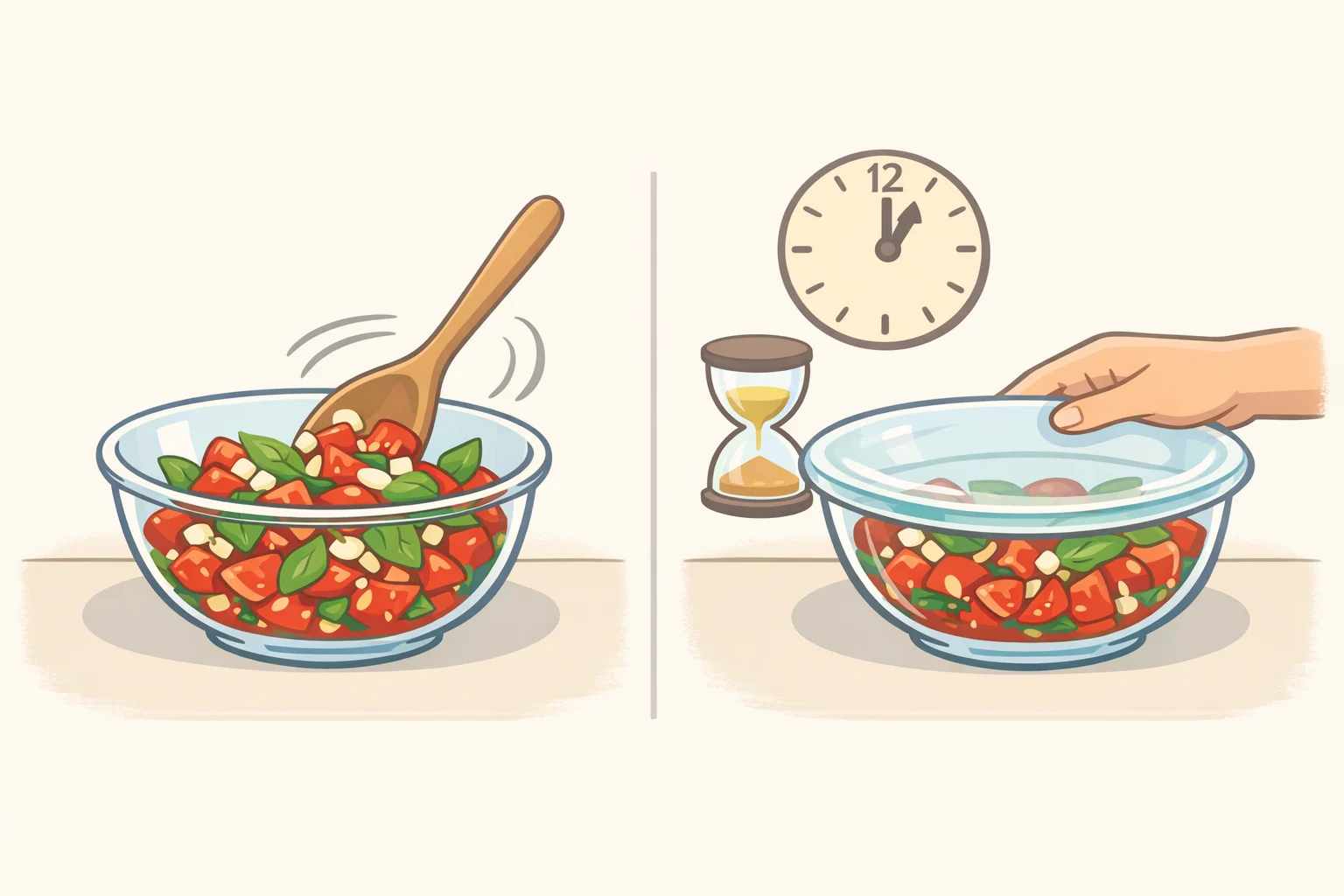
Feinstein's recipe, adapted from her cookbook "Pasta Every Day," calls for 2¼ pounds of ripe, small tomatoes, four finely chopped garlic cloves, 1½ cups of torn basil (plus more for serving), kosher salt, ⅓ to ½ cup of good olive oil (plus more for serving), and grated Parmigiano-Reggiano or Pecorino if you want cheese on top. It makes enough sauce for about 22 ounces of fresh pasta or 16 ounces of dried, serving four (The Independent).
- Halve or quarter the tomatoes and combine them with the garlic and basil in a large serving bowl.
- Season generously with salt, drizzle in the olive oil, and stir to combine.
- Cover the bowl and let it sit for at least one hour, ideally in a warm, sunny place.
- Cook the pasta fully. This is not a recipe for undercooking noodles and finishing them in the sauce; there's no simmering step to soften them further, so they need to be done on their own before they meet the tomatoes.
- Add the cooked pasta directly to the tomato mixture and toss. Finish with more oil, basil, and cheese if you're using it.
(All steps: The Independent)
Let the finished pasta rest for 15 minutes if you have time; the noodles will soak up more of the garlicky juices (The Independent). For larger, thicker-skinned tomatoes, Feinstein sometimes peels and seeds them first: score a small X in the bottom of each one, boil for about two minutes until the skin near the cut loosens, then shock them in ice water and peel before chopping. For smaller tomatoes, you can leave the skins and seeds intact for the rustic version Feinstein prefers (The Independent).
How to grate tomatoes for pasta sauce
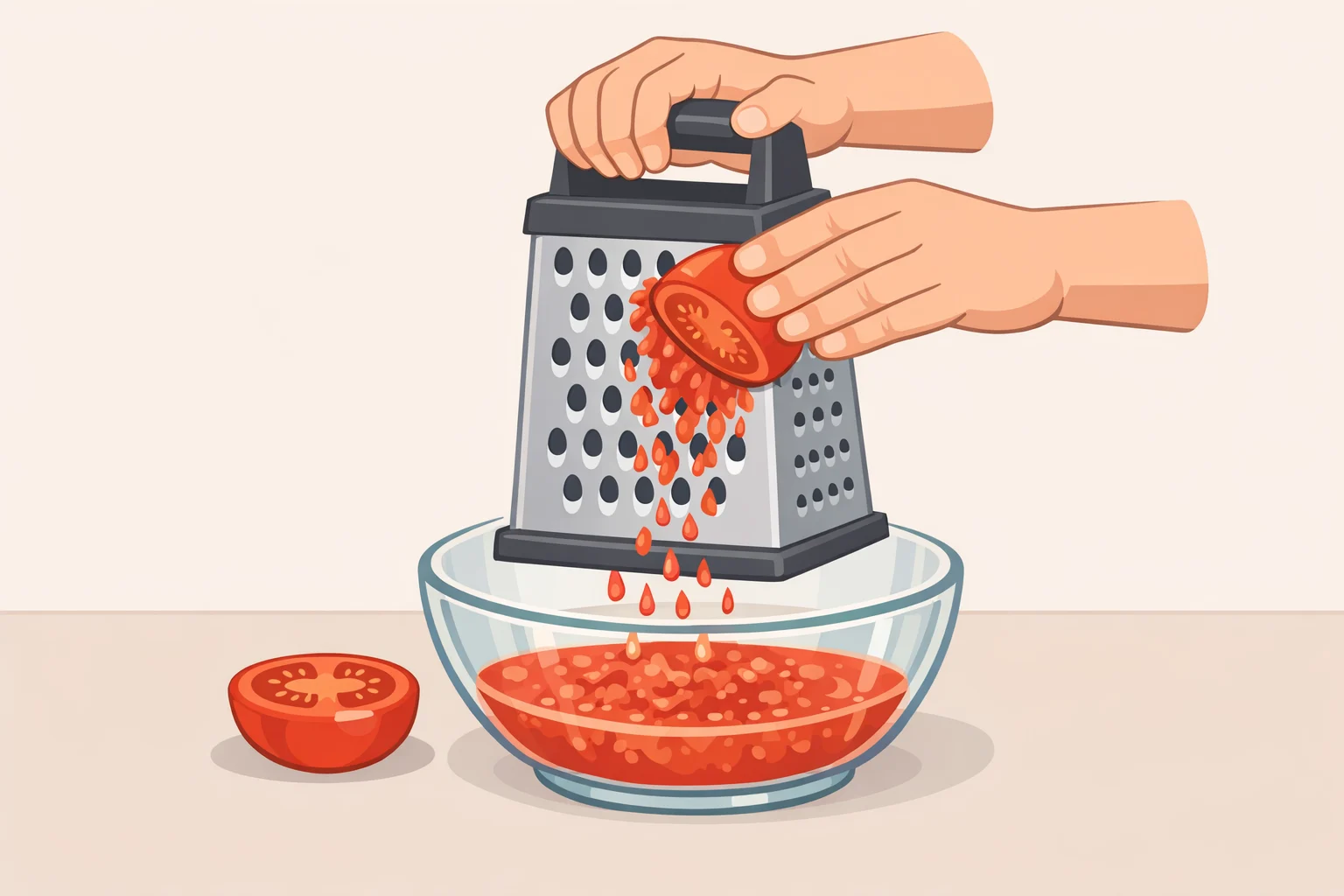
Grating avoids the need to chop or blend the tomatoes (Country Living). Instead of peeling by hand or fishing skins out of a food processor, the grater does that work automatically, and the whole thing takes only a couple of minutes.
- Slice each tomato in half across the equator, which makes it easier to hold steady.
- Set a box grater inside a shallow bowl to catch the juice as you work; it carries plenty of flavor and belongs in the sauce, not down the drain.
- Press the cut side against the large holes of the grater. Country Living identifies the large holes as the ones that create the ideal sauce texture. Grate until only the flattened skin is left in your hand, then discard it.
- Warm the pulp and juice for just a few minutes, then toss with hot pasta and season to taste. A quick simmer is enough; cooking it longer mellows the bright, sweet flavor that makes this technique worth doing in the first place.
(All steps: Country Living)
That's as far as the research goes, and it's worth being upfront about it. This is a reliable technique for building a sauce, not a fixed recipe with measured quantities or a precise doneness cue. Country Living describes the process and the timing window; how much salt to use, how much tomato per serving, and exactly when the pulp looks finished are judgment calls left to the cook.
Firmness matters more here than in the raw method, and the reason is mechanical. Grating needs something solid to press against; a tomato that's gone soft collapses under the pressure instead of shredding cleanly, which is why very ripe, almost-mushy fruit is the wrong pick for this technique (Country Living).
Picking and storing tomatoes for either sauce
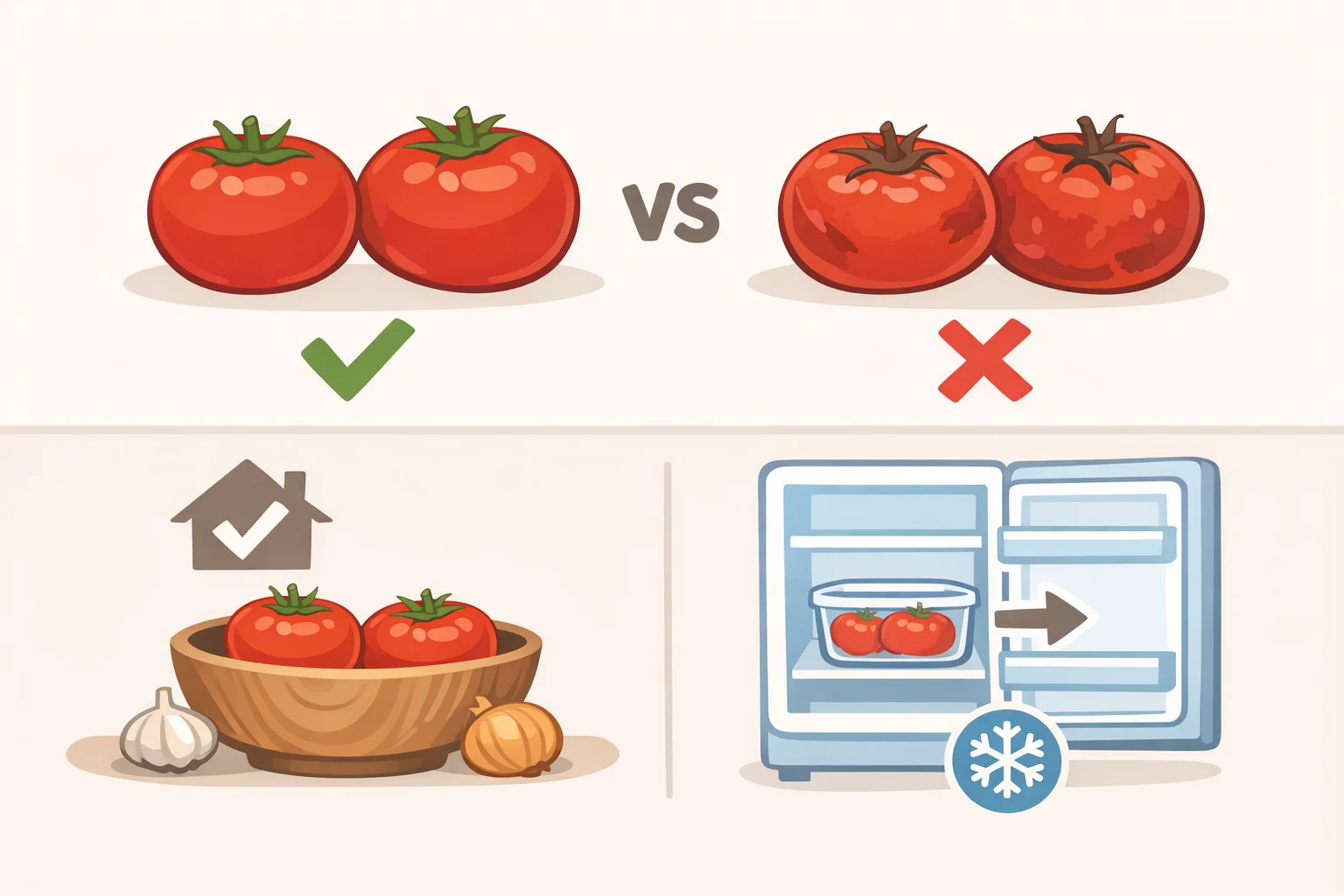
For grating, look for tomatoes that are ripe but still slightly firm. Overripe ones collapse instead of grating cleanly, and peak-season tomatoes generally make a more flavorful sauce than fruit bought out of season. Roma tomatoes work especially well because they're meaty, though most garden slicers and vine-ripened tomatoes are also good choices (Country Living).
Pomodoro crudo is more forgiving. Feinstein says any flavorful tomato works, including heirloom, plum, or cherry varieties, since the sauce doesn't depend on the fruit holding together under a grater (The Independent).
Buying more tomatoes than one meal needs means figuring out how to store the extras, and the usual advice to keep them off the refrigerator shelf turns out to be only half right. In a two-summer test, America's Test Kitchen found that refrigerating whole ripe tomatoes didn't change their flavor and extended their shelf life by five days compared with leaving them at room temperature (America's Test Kitchen).
Cut tomatoes are a different case. Refrigerated, they lasted up to two days versus about a day at room temperature, though some tasters picked up faint off-flavors when refrigerated cut tomatoes were eaten raw. Once those same tomatoes went into a cooked sauce, tasters couldn't tell the difference at all, which matters here since the grated method already involves a brief simmer (America's Test Kitchen). An airtight container also kept out refrigerator odors better than plastic wrap (America's Test Kitchen).
The real variable is the tomato
Reach for pomodoro crudo when there's an hour to spare and leftovers are part of the plan. Reach for the grated method when dinner needs to happen in the next fifteen minutes. Both depend on the same thing: a tomato that already tastes good before any knife or grater touches it, which is the one ingredient no technique can fix.