Best meats for slow cooker meals: chuck, brisket and more
Most slow-cooker letdowns start at the meat counter, not the pot. A shopper picks the cut that looks better raw, then wonders later why dinner turned out chewy instead of falling apart. The fix is knowing which cuts actually improve under hours of moist heat, and that's the standard for picking the best meats for slow cooker meals: cuts loaded with connective tissue or fat, not the leanest thing on the shelf.
A slow cooker rewards two traits that often get lumped together but do different jobs. Connective tissue, the tough sinew running through cheaper cuts, gradually dissolves into gelatin under hours of low heat, softening the meat and thickening the sauce around it. Fat behaves differently: it renders into the cooking liquid and adds richness, but it doesn't transform the way collagen does. A UK butcher shop puts it plainly: cuts rich in both connective tissue and marbling turn buttery soft under slow, moist heat (Yorkshire Dales Meat, last year).
Chicken thighs make the case in miniature. Their higher fat content and connective tissue keep them moist through long cooking in a way breast meat can't manage (Gourmet Food Store, in 2024). Even brisket, a cut with a reputation to protect, can dry out if the marbling isn't there, which is why the smarter move is checking the meat itself rather than trusting the name on the label (Better Homes & Gardens Australia, last year).
This guide leans mainly on a UK butcher shop's cut-by-cut breakdown, checked against a specialty meat retailer and an Australian food publication. It reflects one butcher's practical experience, not an industry-wide survey. Four cuts show up here because they're the ones readers are most likely to find at a typical supermarket or butcher counter: chuck, brisket, pork shoulder, and chicken thighs. Naming varies by region and by store, so each section below starts with what to actually ask for.
The best cuts of meat for slow cooking at a glance
Video of the Day
| Cut | Ask for | Look for | Best use | Rough timing |
|---|---|---|---|---|
| Chuck | Chuck roast or chuck steak | Marbling through the muscle | Stew, pot roast | About 6-8 hours on low (Yorkshire Dales Meat) |
| Brisket | Whole brisket, flat or point | Marbling through the meat, not just a fat cap | Sliceable or shreddable centerpiece | About 6 hours as a baseline; thicker cuts need longer (Gourmet Food Store) |
| Pork shoulder | Pork shoulder or pork butt | Good marbling throughout | Pulled pork, big batches | No fixed time cited; judge by texture |
| Chicken thighs | Thighs, not breasts | More fat and connective tissue than breast meat | Faster weeknight option | Roughly an hour in one cited account (BHG); confirm with a thermometer |
These timings are starting points, not guarantees. Slow cookers vary by model and by starting temperature, so a thermometer and a fork check matter more than the clock.
Video of the Day
Why tough cuts work
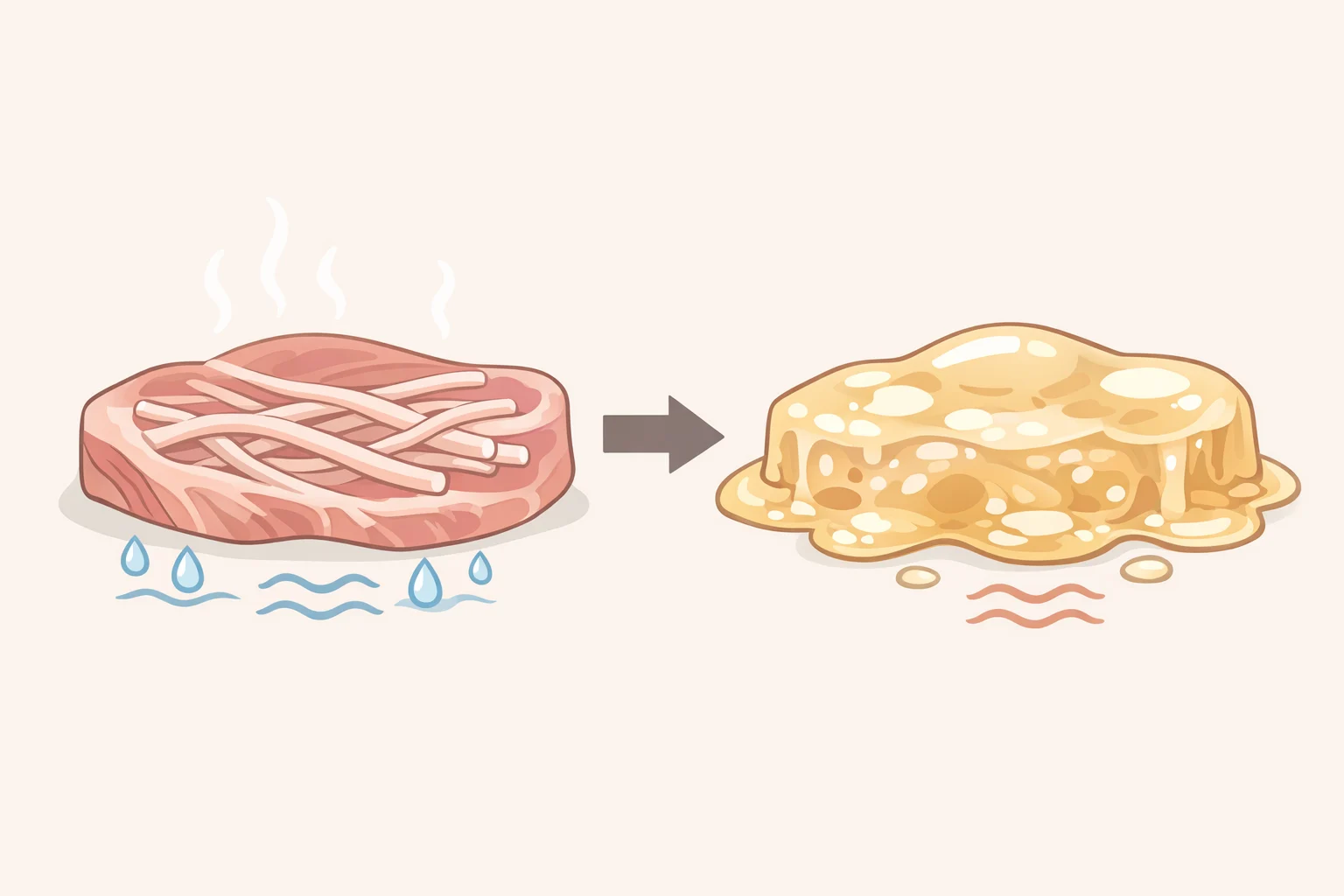
Connective tissue is rigid and chewy raw, almost like scaffolding holding the muscle fibers together. Given enough time at low heat, that sinewy tissue turns gelatinous, which is what lets slow-cooked beef fall apart at the touch of a fork rather than staying stringy (BHG, last year). Fat plays a supporting role rather than the starring one. Yorkshire Dales Meat treats marbling and connective tissue as two separate contributors, one for richness, one for texture, not a single "fattier is better" rule (Yorkshire Dales Meat, last year).
How much connective tissue a cut carries decides cook time almost as much as the recipe does. Beef cheeks are the extreme case: unlike chuck or gravy beef, they typically need 8 to 12 hours in a slow cooker (BHG). The four cuts below were picked because each balances fat and connective tissue differently, and that balance shapes what each one is best cooked into.
Chuck and brisket: two beef cuts, two different jobs
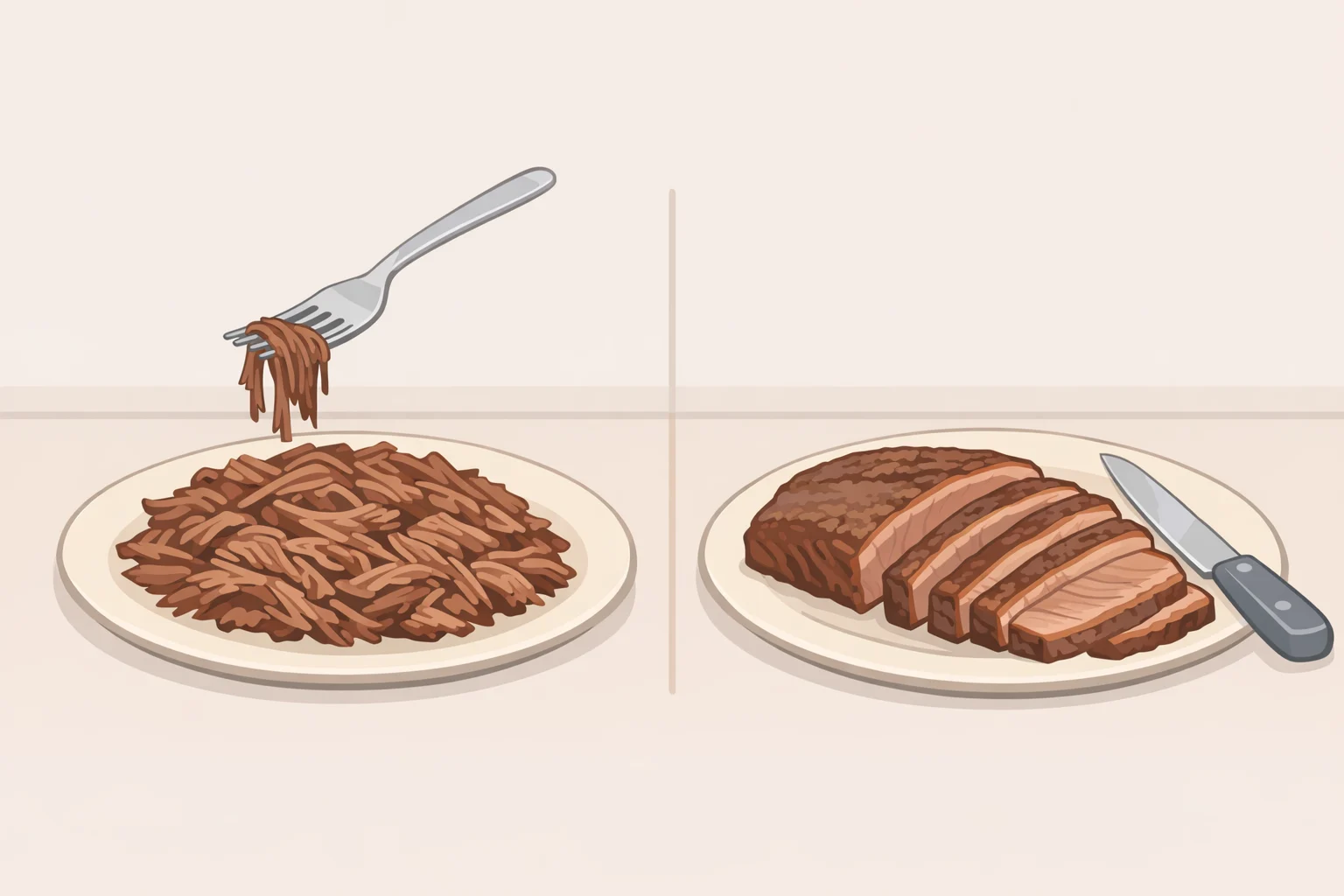
Chuck is the everyday stew cut, and an inexpensive one. Ask for "chuck roast" or "chuck steak" at the counter; it's one of the most commonly used slow cooker beef cuts, usually reserved for stew, because it tenderizes well over several hours (BHG). Chuck comes from the shoulder and upper arm, which makes it tough raw, but that toughness is the point: judge it by the marbling running through the muscle, not by its rough look on the cutting board (Yorkshire Dales Meat). A useful rule of thumb, though not one either source spells out precisely: it's done when a fork meets almost no resistance and the meat pulls apart in strands. Chuck suits stew and pot roast, with roughly 6 to 8 hours on low as a starting point rather than a promise, and it's cheap enough that it's usually the default pick at the counter.
Brisket asks for more attention, and it's particularly sensitive to the quality of the piece bought. It's sold whole or split into two sections: the flat, also called the first cut, and the point, sometimes labeled the second cut or deckle (Gourmet Food Store). A practical distinction many cooks draw, more kitchen wisdom than a rule from either source: the flat tends to slice more cleanly, while the point, carrying extra fat, shreds more easily. Given about six hours in a slow cooker, a well-chosen piece goes from tough to fork-tender, though a thicker cut reasonably needs longer than a thinner one to get there (Gourmet Food Store). Because brisket can dry out, the marbling needs to run through the meat itself, not just sit as a cap of fat on top (BHG). The same fork test used on chuck applies here: press in and look for the meat to give way into shreds or clean slices, rather than resist.
Chuck is the low-cost, low-effort default. Brisket is the cut that rewards a closer look at the meat before it goes in the cart.
Pork shoulder and chicken thighs: the forgiving pick and the faster pick
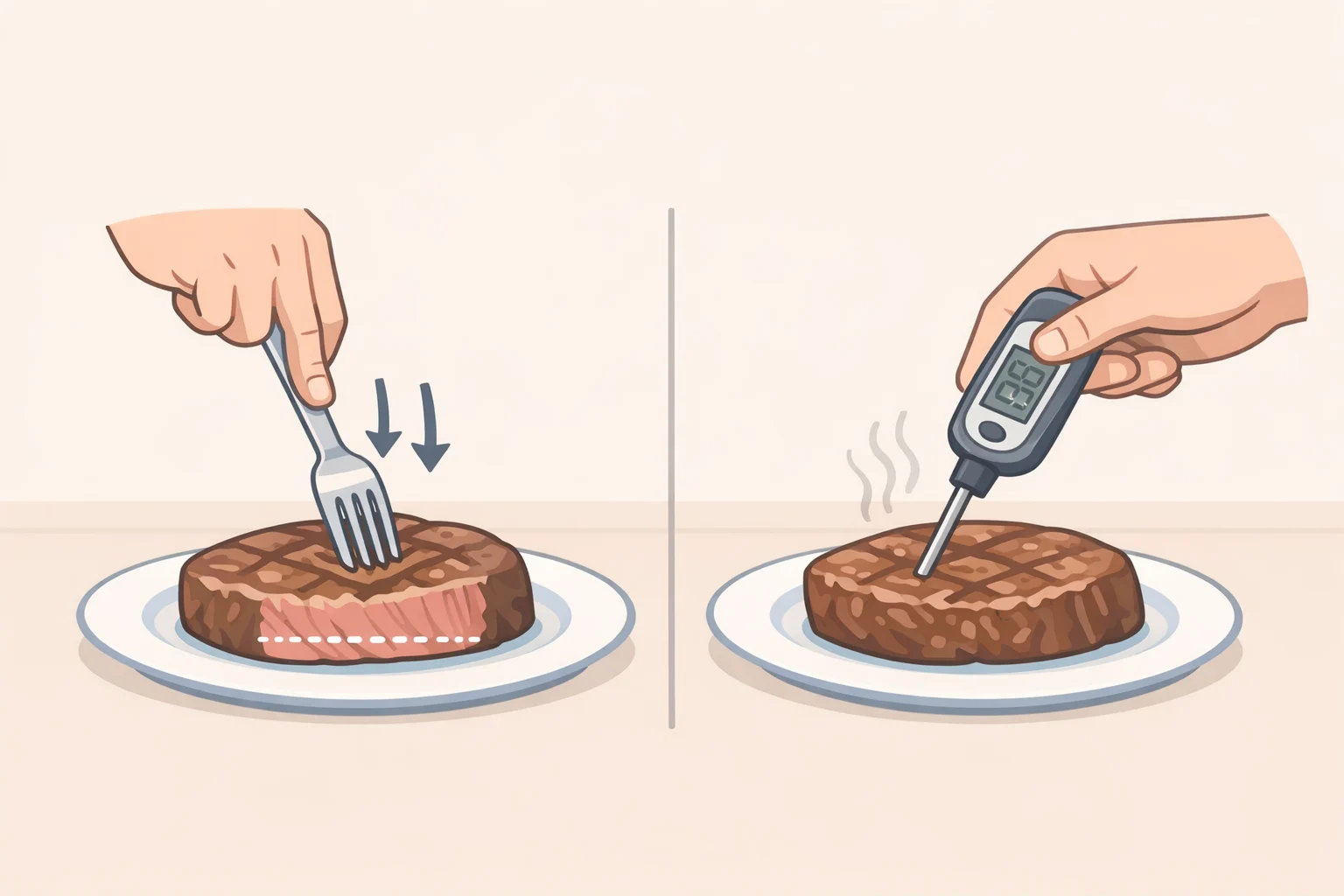
Pork shoulder's naming causes more confusion than its cooking does. Gourmet Food Store sells it as "pork shoulder," while many U.S. stores label it "pork butt," and even that retailer admits the terminology gets confusing (Gourmet Food Store). Labels vary by store, and pork butt is really one shoulder cut rather than a universal synonym, so the safer move at the counter is to ask for a well-marbled shoulder cut suitable for pulling, whatever the sticker says. Both that retailer and a UK butcher shop describe pork shoulder as well-marbled and an excellent choice for the slow cooker (Gourmet Food Store; Yorkshire Dales Meat). The marbling check is the same one used for chuck and brisket. Neither source pins down a precise cook time for this cut, so judge by texture instead: it should pull apart easily under light pressure rather than needing to be cut. That makes pork shoulder well suited to pulled pork and bigger batches meant to serve a group.
Chicken thighs solve a different problem: speed, though that speed is relative and depends on the machine. Their higher fat content and connective tissue keep them moist through long, wet cooking in a way chicken breast can't match (Yorkshire Dales Meat; Gourmet Food Store). The shopping decision isn't about marbling here; it's simply choosing thighs over breasts. One account describes thighs turning soft, juicy, and nearly falling off the bone after roughly an hour in a slow cooker (BHG), though slow cookers vary enough between models that a thermometer is a more reliable check than a timer. When a whole bird fits the meal better than portions, Gourmet Food Store notes a whole chicken works in a slow cooker too, sidestepping the thighs-versus-breast question entirely (Gourmet Food Store).
Buying and cooking safely
Skip the shortcut of cooking straight from frozen. Thawing meat in the refrigerator first matters: putting frozen meat straight into the pot may increase the chances of bacteria contaminating the food (BHG).
Browning is optional, but it adds flavor and changes the finished texture, which makes it worth the extra step for cuts spending many hours in the pot, like brisket or pork shoulder (BHG).
Resting still matters, even for something that's spent hours in a covered pot. Letting the meat sit briefly after cooking makes a noticeable difference to the result (Yorkshire Dales Meat).
Matching the cut to the meal
Which of the four to buy comes down to time and how the meal is meant to look on the plate. A weeknight dinner favors chicken thighs. A Sunday batch meant to stretch across a few meals favors pork shoulder. A dinner built around neat slices favors brisket. A cheap, reliable stew favors chuck. None of the four requires guesswork once checking for marbling becomes a habit at the counter.
The same logic extends well beyond these four. Beef shin, also called gravy beef, and sold as osso buco when the bone is left in, is rich in sinewy tissue that turns gelatinous under slow heat and works well in a beef and dark ale stew (BHG). Beef short ribs, more familiar off the grill, hold up surprisingly well in a slow cooker with little prep beyond a marinade, bones included (BHG). Oxtail is gelatin-rich enough to build a genuinely silky sauce, and lamb neck, an often-overlooked cut, is rich in fat and cartilage and budget-friendly to match (Yorkshire Dales Meat).
Worth exploring once chuck, brisket, pork shoulder, and chicken thighs feel routine, not before. The pattern holds everywhere: connective tissue or fat, enough of either to survive hours of moist heat, checked at the counter rather than assumed from the name on the label.