Grilled Prosciutto Fig Jam Pizza: How to Avoid a Soggy Crust
Sweet fig jam, salty prosciutto, and melted Havarti make a strong enough case on their own. The real question with a grilled prosciutto fig jam pizza is what happens to the crust once all that sweet, wet, cheesy weight sits on it for the several minutes it takes to cook through. This recipe from How Sweet Eats builds one topped pie with fig jam, grated Havarti, and torn prosciutto, then finishes it with a lemony arugula and Parmesan salad piled on only after the pizza leaves the grill. This guide walks through the whole process, mixing and rising dough or shaping a store-bought ball instead, topping the pie, grilling it under a closed lid, and finishing it, aimed at one outcome: a crust that holds its structure once everything is stacked on top.
Recipe at a glance, per How Sweet Eats:
- Yield: 4 servings
- Prep time: 2 hours
- Cook time: 15 minutes
- Total time: 2 hours 15 minutes
That yield is listed as four servings from what reads as a single topped pie. The recipe never states outright how many pizzas the dough makes, and there's no instruction to divide it, so treat "one pizza, sliced to serve four" as a reasonable inference rather than a stated fact.
What you need before you start
Video of the Day
For the dough: 1 cup warm water, 3 teaspoons active dry yeast, 1 tablespoon honey, 1 tablespoon olive oil, 2½ cups all-purpose flour, and 1 teaspoon salt. For the pizza: ½ cup fig jam (the recipe allows more for a bolder fig flavor), 1½ cups grated Havarti, 4 to 6 ounces torn prosciutto, and grated Parmesan for topping. For the finishing salad: 4 cups baby arugula, 1 teaspoon olive oil, the juice of half a lemon, ¼ cup shaved Parmesan, and salt and pepper (How Sweet Eats).
The source lists two hours of prep time, which includes a 10-minute yeast rest and a 1 to 1.5-hour rise (How Sweet Eats). Store-bought dough skips that rise entirely. It's a fine swap in practice: the closed-lid grilling technique doesn't care where the dough came from, only whether it's at room temperature and stretches without tearing.
Havarti is the featured melt here, chosen for how cleanly it turns creamy under a closed lid. Cheese choice beyond that comes down to preference. ThermoWorks favors a blend of mozzarella and provolone with a little Parmesan worked in, and notes that whatever cheese goes on, the main job is melting well under grill heat (ThermoWorks).
Beyond ingredients, the gear list is short: a grill that holds steady heat with a lid that actually closes, and something flat to carry the topped dough to the grate. A pizza peel works well for this. Without one, an inverted baking sheet dusted with flour is an option worth trying, though it isn't part of any tested method here.
Video of the Day
Make and rise the dough
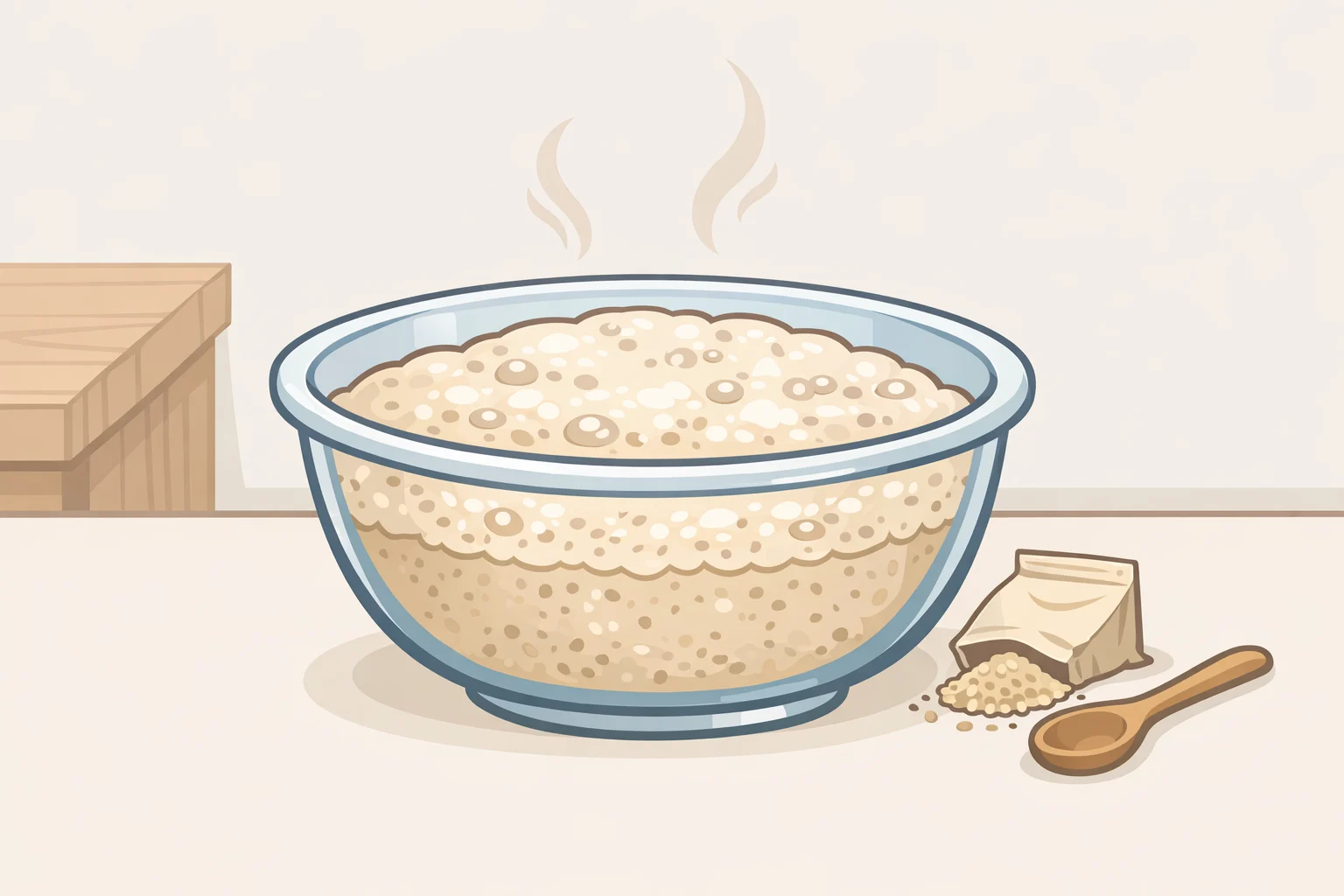
- Proof the yeast. Combine the warm water, yeast, honey, and olive oil in a large bowl. Stir and let it sit until foamy, about 10 minutes; that foam is the sign the yeast is active (How Sweet Eats).
- Mix in the flour and salt. Add them to the yeast mixture and mix until a dough forms, kneading briefly until it's no longer sticky to the touch.
- Rise. Rub the same bowl with olive oil, turn the dough to coat it, cover with a towel, and set it somewhere warm to rise for 1 to 1.5 hours (How Sweet Eats). This step alone accounts for most of the two-hour prep window.
- Or skip it. With store-bought dough, go straight to shaping. Cold dough resists stretching, so letting it lose its fridge chill first makes it easier to work.
How to grill fig jam pizza with prosciutto
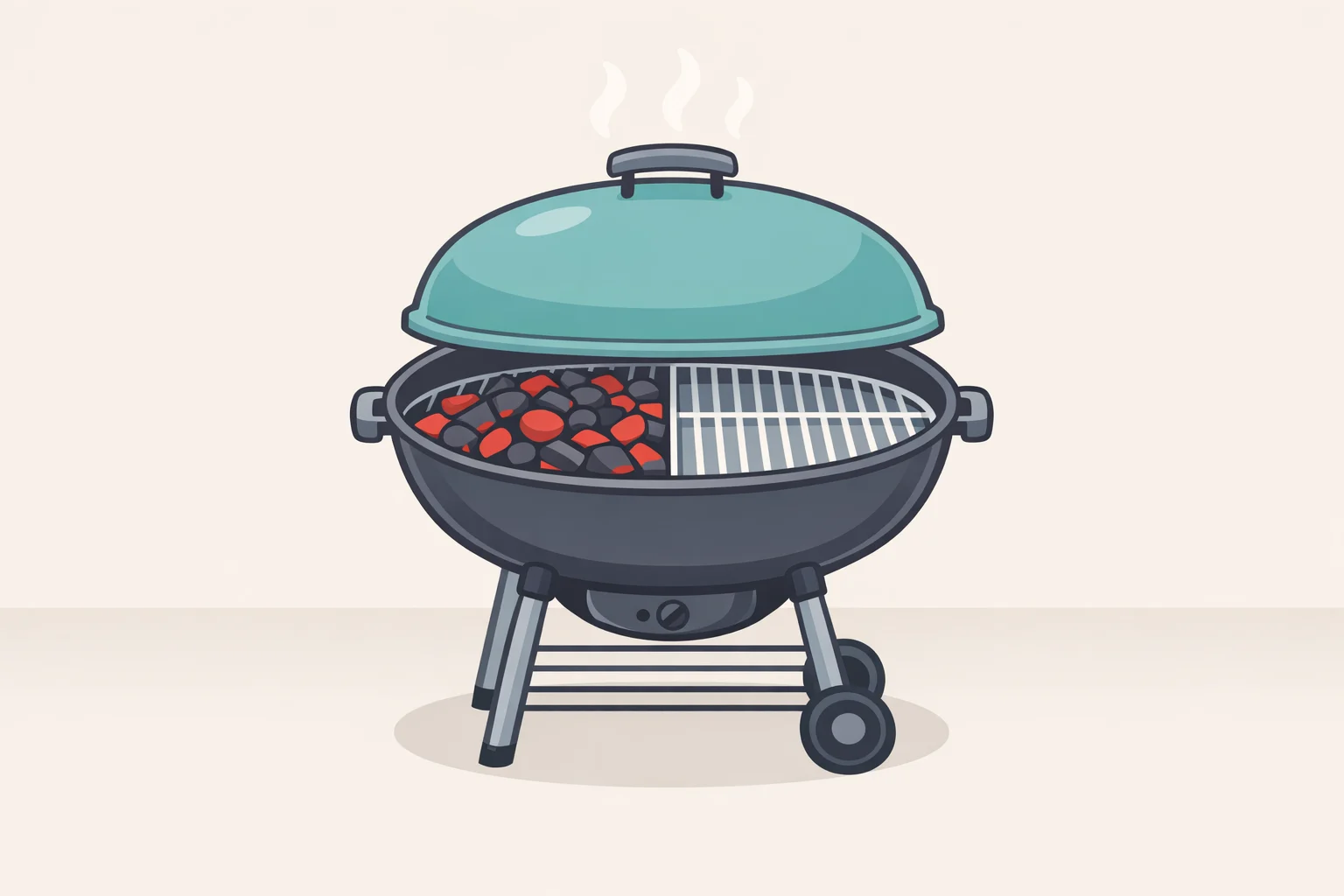
- Preheat the grill to the highest setting, targeting 450 to 500°F. That's How Sweet Eats' number for this recipe, and it's worth backing off slightly if the grill tends to run hot (How Sweet Eats). Keep that separate from a different figure ThermoWorks cites elsewhere: an actual grill surface running closer to 600°F, which its guide describes as the ideal range for grilling pizza (ThermoWorks). These are two different sources measuring two different things, not two ways of saying the same number, so there's no need to reconcile them. Whatever thermometer is on the grill, aim for the figure that matches what it's actually reading.
- Set up two heat zones if grilling over charcoal. Concentrate the coals under one side of the grate instead of spreading them evenly, so one half runs hot enough to char and the other stays milder. That gives a place to shift the pizza if one edge starts browning faster than the other. On a gas grill, keeping one burner lower than the rest approximates the same effect.
- Stretch the dough on a floured peel, not on the counter, so it's ready to slide straight onto the grate without a second transfer.
- Spread the fig jam thin, leaving a 1-inch border at the edge. ½ cup is the recipe's amount, though it allows more for anyone chasing a stronger fig flavor (How Sweet Eats). A thick spread of anything wet under cheese works against the crust, so resist the urge to overload it here even if more jam is added.
- Top with the grated Havarti, torn prosciutto, and a scatter of grated Parmesan before the dough goes anywhere near the grill (How Sweet Eats).
- Transfer with a clean motion. Shake the peel gently first to confirm the dough moves freely underneath the toppings, then slide it onto the grate in one continuous pass.
- Close the lid and cook 5 to 8 minutes, checking every couple of minutes rather than trusting a timer. The exact time depends on how thick the crust is (How Sweet Eats). The recipe leaves rotation up to feel rather than a fixed schedule, so if one side is coloring faster, rotate the pizza toward the milder zone a few times as it cooks instead of waiting until the end. This cooking window is also the moment to toss the arugula salad, since it needs to be ready the instant the pizza comes off the grate.
- Check doneness from both sides. It's ready when the edges are golden and puffed and the top is bubbly (How Sweet Eats). That's a top-of-pizza read. Lift an edge with the peel or a spatula and glance underneath too; the top can look finished before the bottom has actually caught up.
Fix the three most common problems
Bottom charring before the cheese melts. This usually means the heat is too aggressive, or too uneven on one side of the grill. Shift the pizza to the milder zone and close the lid rather than leaving it parked over direct heat. Do this the moment char appears, not after the whole bottom has gone dark; a few seconds of hesitation on high heat is enough to tip charred spots into burnt ones.
Dough that sticks or tears mid-transfer. More flour on the peel and a single confident slide, rather than easing the dough on in stages, is the standard fix for this kind of problem. Hesitating partway through a slide is usually what turns a small stick into a torn crust.
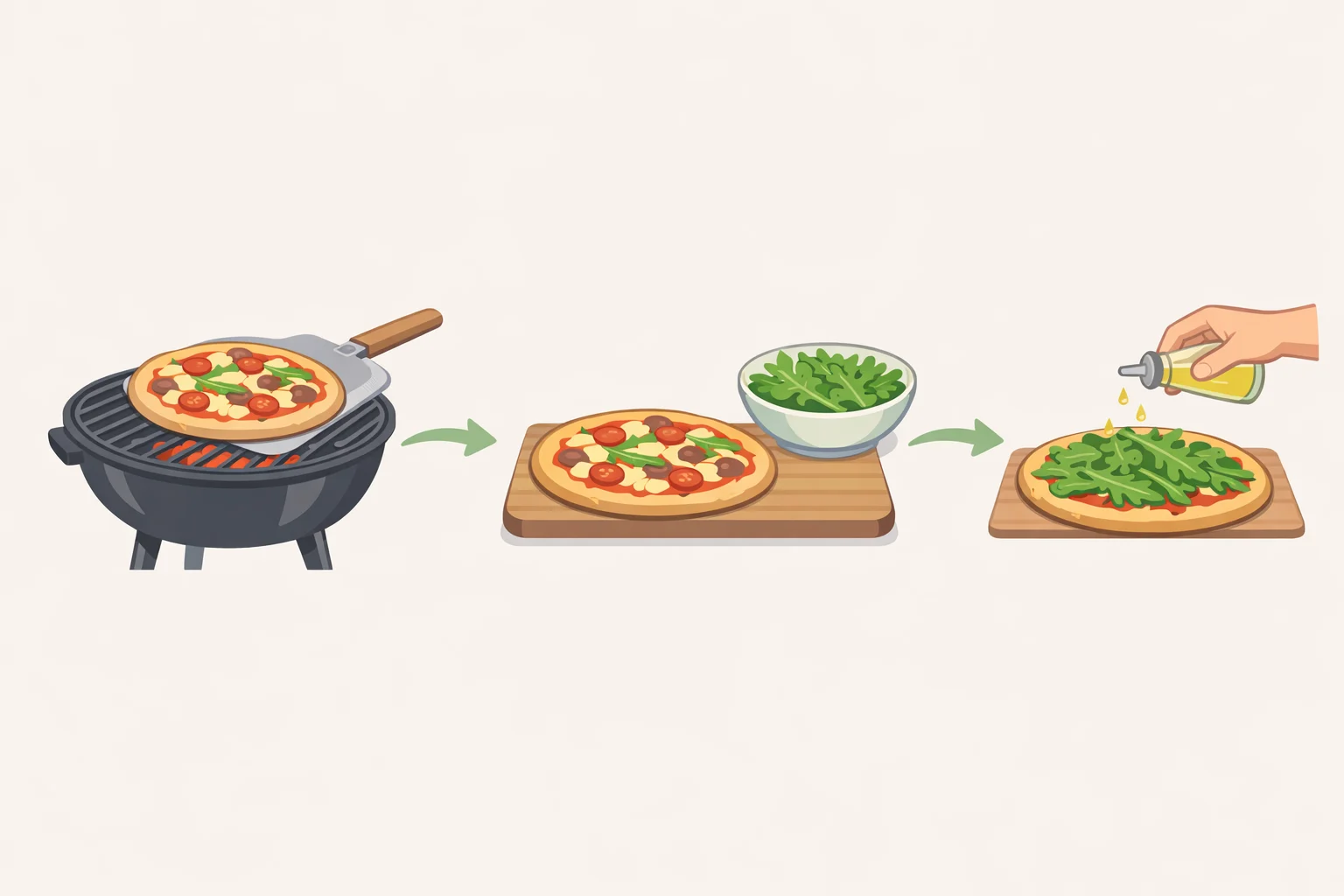
Crust that softens after serving. The recipe adds the arugula salad only once the pizza is off the grill, never before or during cooking (How Sweet Eats). Keeping that order means the dressed, wet greens never sit on the crust while it's still over heat, which is when a crust is most exposed to sogginess.
Finish with the salad and serve
While the pizza is on the grill, toss 4 cups of baby arugula with the juice of half a lemon, a teaspoon of olive oil, and a generous pinch of salt and pepper (How Sweet Eats). Fold in ¼ cup of shaved Parmesan just before the pizza comes off the grill, so the greens stay bright instead of sitting dressed in a bowl for several minutes.
Pile the salad onto the hot pizza as soon as it's off the grate, then slice and serve (How Sweet Eats). What lands on the table is grilled pizza with arugula and prosciutto layered over melted Havarti and sweet fig jam, cut into wedges straight off the grill while the crust is still at its crispest.
Where to go from here
The formula behind this pizza travels well past fig jam and prosciutto: a thin layer of anything wet or sweet, a cheese that melts cleanly, high heat with the lid down, and any fresh, dressed topping held back until the pizza is off the fire. Swap the toppings and that same crust-preserving order still applies.
One open question worth testing on a future attempt is whether this dough can be split. The recipe doesn't say whether its four-serving yield comes from one pie or was designed to stretch further; doubling the dough ingredients and dividing the batch before topping is a logical next experiment for anyone who wants two smaller pizzas instead of one large one, though that moves beyond what this particular recipe tests.