Cornstarch cacio e pepe: how to make a sauce that won't break
Cacio e pepe runs on three ingredients, pasta, Pecorino Romano, and black pepper, and it has a well-earned reputation for turning on cooks mid-toss. Serious Eats calls it a dish that "seems so simple yet is so easy to mess up." Push the cheese too far and it seizes into greasy, separated curds, a point past which, as Serious Eats puts it, there's no saving it. This guide covers a cornstarch cacio e pepe method built to avoid that outcome in the first place.
That extreme failure isn't the only one, though. A grainy sauce is a different problem, and depending on what happened to the cheese along the way, it's often still fixable. The method below, adapted by Serious Eats from a physics study that named starch concentration as the single biggest factor in sauce stability, draws that line clearly. The researchers dryly labeled the failure state the "Mozzarella Phase," a clumped, split mess, according to the research record. Get the ratio right, roughly 2 to 3 percent cornstarch relative to cheese weight, pair it with the temperature and mixing sequence below, and the process gets noticeably more repeatable on a weeknight. One clarification upfront: this is about cornstarch, the powdered thickener, not fresh corn.
Why cacio e pepe sauce breaks
Video of the Day
Pecorino Romano is aged, dry, and crumbly, "just about the worst kind of cheese for melting," according to Serious Eats. Fat and water don't combine on their own, so the dish depends on emulsification rather than simple melting, according to America's Test Kitchen.
Temperature is the first control. America's Test Kitchen found Pecorino needs to hit at least 145°F to loosen its protein structure and take up water, but above 180°F those same proteins clump and the sauce turns greasy. Those numbers describe what's happening inside the cheese as it warms, not a target to chase with a thermometer in the finished sauce; the recipe below leans on timing and visual cues instead. A 35-degree window sounds generous until standing over a hot pot with a wooden spoon and thirty seconds to decide.
Heat isn't the whole story, though. A study published last year in Physics of Fluids found that sauce stability also depends on how much cheese gets mixed relative to water at a given starch level, not on starch and heat in isolation, per the research record. In the kitchen, that shows up in the mixing sequence: Serious Eats adds pasta water in quarter-cup increments rather than all at once, a practical way of managing that same cheese-to-water balance gradually instead of dumping it in.
Three variables move together here: starch, temperature, and concentration. Cornstarch alone won't rescue a sauce if the temperature or water balance is off too.
Video of the Day
Cacio e pepe with cornstarch: why the ratio matters
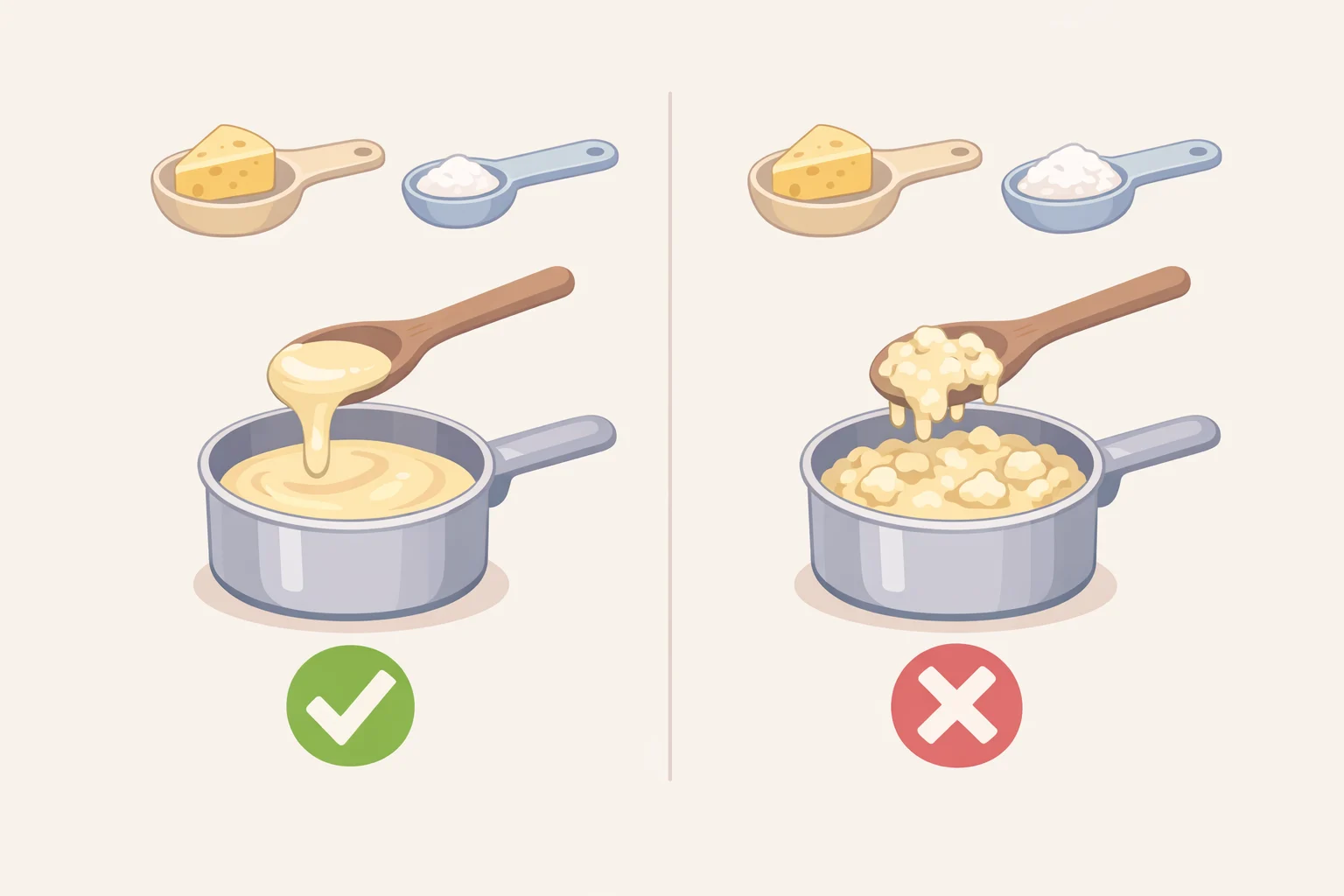
Cooks have tried to stabilize cacio e pepe for years, often to the chagrin of purists, adding cream or butter to give the fat something emulsified to melt into rather than leave it to fend for itself against water, per Serious Eats. That works, but it dilutes the dish and changes its flavor. Cornstarch, by contrast, stabilizes the sauce without introducing new flavors or textures, which is the case Serious Eats makes for it over cream or butter. The idea reportedly reached the site after a reader posted a link on its subreddit to the physics paper behind this method, prompting its test kitchen to adapt the ratios into a home recipe, according to Serious Eats.
The physics behind that paper comes from researchers at the University of Barcelona, the Max Planck Institute for the Physics of Complex Systems, the University of Padova, and the Institute of Science and Technology Austria, who tested a range of starch levels against cheese and water. Their study found that 2 to 3 percent starch relative to cheese weight produced the smoothest, most uniform sauce, while anything under 1 percent led to clumping, according to AIP Publishing's summary of the paper.
The study's authors recommend measured cornstarch or potato starch instead of leaning on pasta water, since the starch content of pasta water is unknown and hard to control precisely, per AIP Publishing. That's a claim about consistency, not about which version tastes better.
Where the kitchen method diverges from the lab is the order of operations. The physicists' own recipe blends cheese, water, and starch together, then reheats the mixture slowly, per AIP Publishing. Serious Eats' adaptation instead cooks a starch-and-pepper gel separately, cools it, folds it into the cheese, and thins the result with pasta water in stages. That version uses 4 grams of cornstarch for 140 grams of Pecorino, about 2.9 percent by weight, landing inside the study's target range even though the mixing sequence differs, according to Serious Eats. Pick one sequence and follow it start to finish rather than improvising a hybrid of the two.
How to make cacio e pepe sauce that doesn't break
This method, adapted by Serious Eats, serves 2 to 3 people and takes about 20 minutes start to finish. Gather the following before turning on the stove:
- A kitchen scale, or measuring spoons
- 225 g dried spaghetti
- 140 g finely grated Pecorino Romano
- 4 g (1 teaspoon) cornstarch
- 45 ml water
- 4 g coarsely ground black pepper, plus more for serving
- Salt
Grate the cheese fine rather than coarse, as the recipe specifies, and handle that before anything else hits the stove.
- Boil the pasta in salted water. Before draining, reserve some of the starchy cooking water; it gets used more than once later on. While the pasta cooks, dry-toast the black pepper in a small saucepan to build its fragrance.
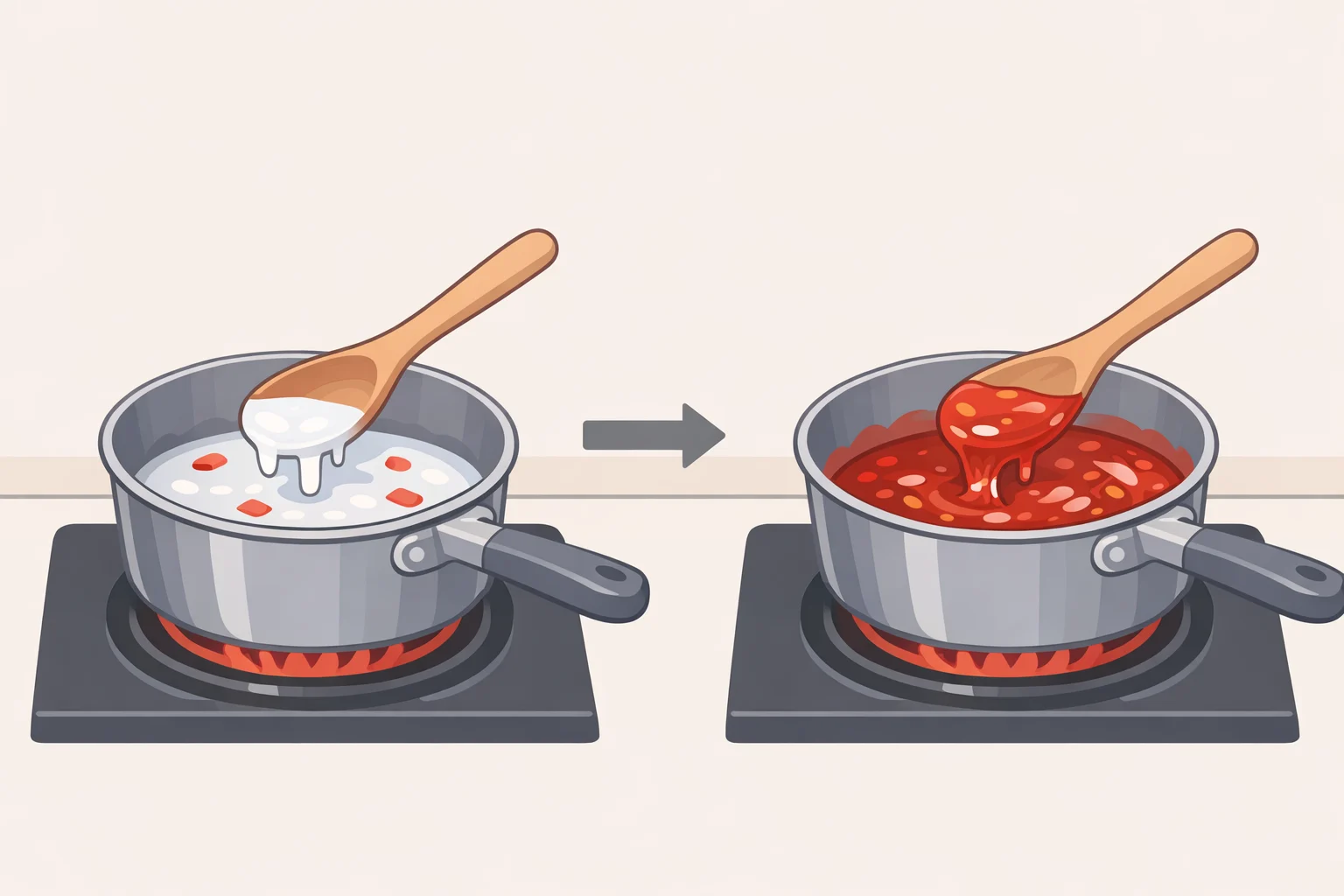
- Make the cornstarch slurry. Stir the cornstarch and water together, roughly a 1-to-10 ratio of starch to water by weight, add it to the toasted pepper, and cook until it gels. Watch it move from a thin, cloudy liquid to a thickened, glossy, peppery gel; that shift is the cue to pull it off the heat.
- Cool the gel off heat for about a minute before combining it with the cheese. Skipping this pause risks warming the cheese too fast before mixing has even started.
- Combine the cheese and gel into a stiff, smooth paste. Rinse the saucepan with a splash of the reserved pasta water to catch leftover starch and stir that in too.
- Cool the pasta briefly after draining, about a minute, then fold it into the cheese paste along with a splash of reserved pasta water. Keep adding water in quarter-cup additions until the sauce turns creamy and smooth and coats the pasta in an even, silky glaze. If it still looks thicker than preferred once all the water's in, add another small splash and keep tossing; same gradual approach, just one increment further.
- Serve right away on warmed plates, with extra cheese and pepper on top.
Troubleshooting a creamy Pecorino Romano pasta sauce
A sauce that comes out thick, pasty, or won't smooth out usually means the cheese never got warm enough to loosen. America's Test Kitchen points to that 145°F floor for the cheese itself, below which the protein matrix stays too tight to absorb water. Set the bowl briefly over the still-steaming pasta pot to gently rewarm it, then keep stirring in water a little at a time, the same fix ATK recommends for a sauce that's cooled too much on its way to the plate.
America's Test Kitchen ran into a version of this problem during its own testing: an early attempt at combining cheese and hot water by hand produced a sauce that was emulsified but grainy. The fix wasn't more water. It was blending the cheese and hot water in a food processor, letting the motor's force smooth out the texture before tossing everything with the pasta. Different technique than the cornstarch method above, but the same underlying point: graininess is a mixing and temperature problem, corrected by working the ingredients together more thoroughly, not by diluting them further.
Greasy, oily, or visibly split is an entirely different failure. That happens when the cheese overheats past roughly 180°F and its proteins clump, per America's Test Kitchen. This is the failure Serious Eats means when it says there's no saving it: once fat has fully separated out, more water or more tossing won't bring it back together.
That distinction is worth knowing before reaching for more pasta water. A grainy or thick sauce can still be corrected. A greasy, split one cannot. Since the recipe doesn't call for a thermometer in the sauce itself, the practical safeguards are mixing off heat and letting the pasta cool briefly before folding it into the cheese paste, in line with the cheese thresholds ATK identified.
For anyone who'd rather skip added starch entirely, America's Test Kitchen's own alternative concentrates the pasta's own starch instead. Cook the noodles in half the usual water, then blend cheese and hot water into a paste before tossing everything together off heat. A purist option worth knowing about, not a claim that it beats the cornstarch version.
What's next for this recipe
The same study also tested a less traditional stabilizer, trisodium citrate, and found it produced a sharp transition from the Mozzarella Phase to a completely smooth, stable sauce, in contrast to the more gradual transition starch produces, per the research record. The paper doesn't establish how that alternative compares in flavor, so treat it as a separate experiment rather than a direct substitution for the method above.
No ratio, cornstarch or citrate, replaces paying attention to how the cheese behaves as it warms. Once the quarter-cup additions and the gentle rewarming trick feel automatic, that's the point to try something else.