Melting carrots recipe: herb-butter Easter side dish guide
Easter dinner usually means one oven doing double duty. A ham or leg of lamb claims the racks for hours, and every side dish wants a piece of that space too. A melting carrots recipe doesn't solve that problem, but as an Easter carrot side dish, it's about as low-maintenance as a rich dish gets: the oven runs at 450°F for 50 minutes to an hour, and only one moment in that stretch needs a person standing nearby. At the 35-to-40 minute mark, the carrots come out, get flipped, and the broth goes in before the pan heads back into the oven (The Kitchn).
The method itself is French: sear the carrots hard until they caramelize, then finish them in broth until the inside turns tender enough to cut with a spoon (Tasting Table explains). The Kitchn traces its version back to fondant potatoes, or pommes de terre fondantes, the classic French preparation that gave rise to a technique now applied well beyond potatoes (The Kitchn). The base recipe serves 4 to 6, takes about 15 minutes of hands-on prep, and the carrots can be peeled and cut up to a day ahead, so that piece of the work is already done before the holiday starts (The Kitchn).
What follows is a full walkthrough of that method, one variation that just swaps a single ingredient, a second that's a genuinely different recipe, and the scheduling math for fitting all of it around a main dish that's already hogging the oven.
The science behind caramelized melting carrots
Video of the Day
Carrots don't liquefy, whatever the name suggests. They're roughly 88 percent water held inside rigid, pressurized cell walls, and that pressure is what gives a raw carrot its snap (WhyVerse notes). Cook them long enough and the pectin cementing those cells together starts to break down, a process called thermal softening, while the water-filled walls rupture. The vegetable softens because its structure is failing, not because anything is melting in a literal sense (WhyVerse).
For cooking purposes, the detail that matters is sequence. Searing browns the surface and builds flavor that a straight simmer never develops, and the braise afterward is what turns that browned exterior silky rather than merely soft (Tasting Table). The Kitchn's oven method leans on the same logic: roasting on a lower rack, closer to the heating element, pushes deeper caramelization, and holding off on the broth keeps it from reducing before the carrots have had time to brown (The Kitchn). Add the liquid too early and the carrots come out softer and paler, with noticeably less color.
What goes into the braising liquid matters too. Acid, whether vinegar or wine, actually stabilizes pectin and slows the softening down, while an alkaline addition like baking soda speeds it up and can turn carrots to mush faster than intended (WhyVerse). That's the reason to keep the broth plain instead of doctoring it for brightness or speed.
Video of the Day
Melting carrots recipe: brown first, then braise
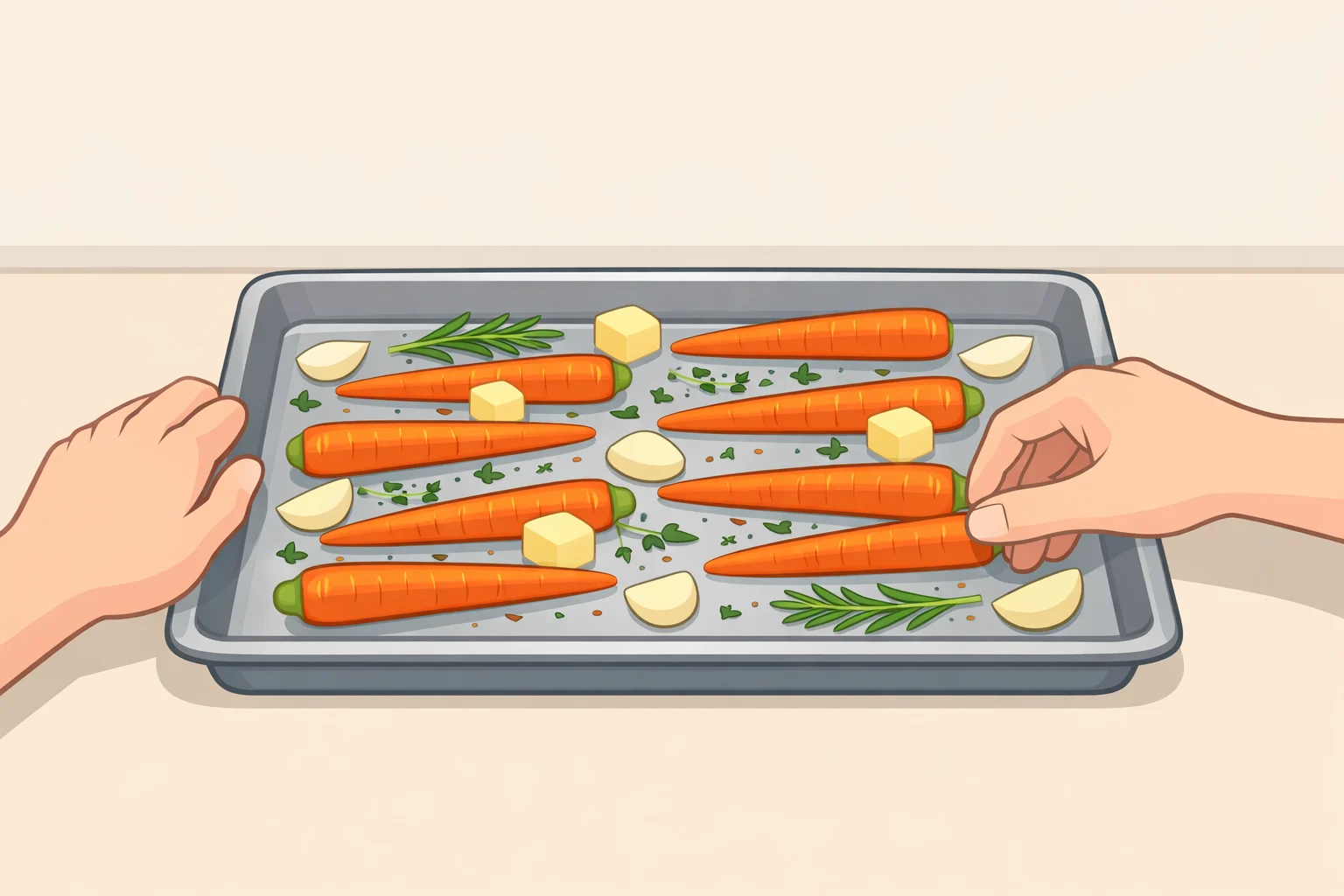
Ingredients (serves 4 to 6):
- 2 pounds medium carrots, halved lengthwise if thick, so pieces cook at roughly the same rate
- 6 tablespoons (¾ stick) unsalted butter, cut into 3 pieces
- 4 garlic cloves, smashed and peeled
- 1 tablespoon minced fresh thyme leaves (about 8 sprigs)
- 1 teaspoon kosher salt
- ½ teaspoon freshly ground black pepper
- 1¼ cups low-sodium chicken or vegetable broth
- 1 teaspoon cornstarch
Equipment: one rimmed baking pan (The Kitchn).
Spread the carrots in a single layer with space between pieces instead of piling them up. Pieces touching each other tend to steam and brown unevenly instead of caramelizing on all sides.
- Set the rack and build the fat base. Adjust an oven rack to about 6 inches from the bottom heating element, then heat the oven to 450°F. Put the butter, garlic, and thyme in the baking pan and bake until the butter is just melted, 3 to 5 minutes (The Kitchn).
- Season and brown. Toss the carrots in the melted butter mixture with the salt and pepper, spread them in a single layer, and roast until the bottoms start to brown, 35 to 40 minutes. This step does the actual caramelizing, so resist the urge to add broth early just to speed things along (The Kitchn).
- Flip and add the braising liquid. This is the one moment in the whole process that needs you back at the stove. Pull the pan out, flip the carrots with tongs or a flat spatula, stir the cornstarch into the broth, and pour it over the carrots. The cornstarch turns the pan liquid into a sauce that clings to the carrots instead of pooling thin at the bottom (The Kitchn).
- Braise to finish. Return the pan to the oven and cook until the carrots are tender and the sauce has thickened slightly, about 15 more minutes. Total cook time runs 50 minutes to an hour, with that single flip-and-pour interruption in the middle (The Kitchn).
Doneness looks like a fork sliding in with almost no resistance, and a sauce that coats the back of a spoon rather than running off it. A comparable tested version browns thinner carrots, no wider than an inch, on both sides for a full 30 minutes at a lower oven temperature before braising (Umami). The specifics differ from The Kitchn's method in carrot size, oven temperature, and timing, but the sequence holds in both: brown completely before any liquid goes in.
The make-ahead step that's actually tested here is simple. Peel and cut the carrots up to a day ahead and refrigerate them in an airtight container (The Kitchn). Fully cooking the dish ahead and reheating it later is a different matter; neither source tests that route, so treat what follows as planning advice rather than a verified shortcut. Block off a dedicated 50-to-60-minute window at 450°F, hotter than most holiday roasts run, and cook the carrots either before the main dish goes into the oven or after it comes out, whichever fits the day's schedule better. Running both dishes at two different temperatures at once is the scenario most likely to leave you with underdone carrots or an overcooked roast.
Two variations: herb-butter melting carrots and maple-spiced carrots
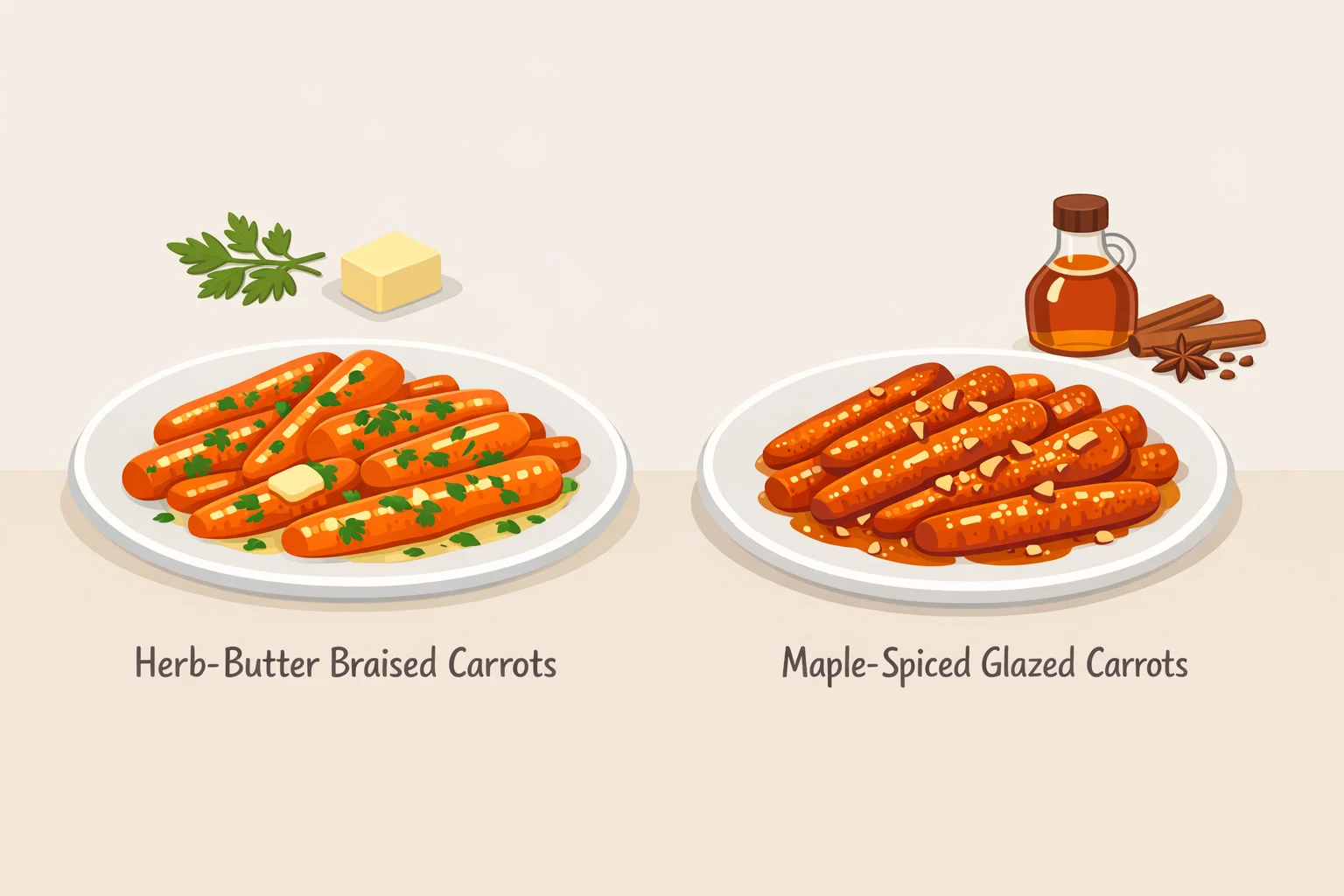
The base method flexes with whatever main is on the table. Two directions are worth trying, and they're different enough that swapping pieces between them won't work cleanly.
The simplest change keeps The Kitchn's entire method intact and swaps only the broth. Use low-sodium beef or mushroom broth instead of chicken or vegetable, which echoes the braised carrots with butter sauce that typically show up alongside a pot roast (The Kitchn). Everything else in the base method stays the same.
The second option is a genuinely different formula, not a substitution: 1 pound thin carrots no wider than an inch, 2 tablespoons maple syrup, 1 tablespoon olive oil, 1 teaspoon ground coriander, 1 teaspoon ground cumin, ½ teaspoon garlic powder, ¼ teaspoon each salt and pepper, ¾ cup broth, and 2 tablespoons butter, with minced parsley optional for serving. Roast at 425°F for about 15 minutes per side before adding the broth and butter, then continue cooking until the liquid reduces by about half, another 10 to 15 minutes (Umami). Expect a warmer, more spiced flavor than the butter-forward original, closer to a glazed side than a classic French braise.
The two also land in different nutritional territory, though the comparison comes with caveats. The Kitchn's version runs about 170 calories and 11.9 grams of fat per serving, while Umami's comes in lighter at roughly 154 calories and 10 grams of fat (The Kitchn; Umami). That gap is real but modest, and the two recipes use different carrot quantities plus a maple syrup addition with its own sugar content, so this is closer to two related dishes sharing a technique than a strict swap.
Serving smart: portion, pairing, and storage
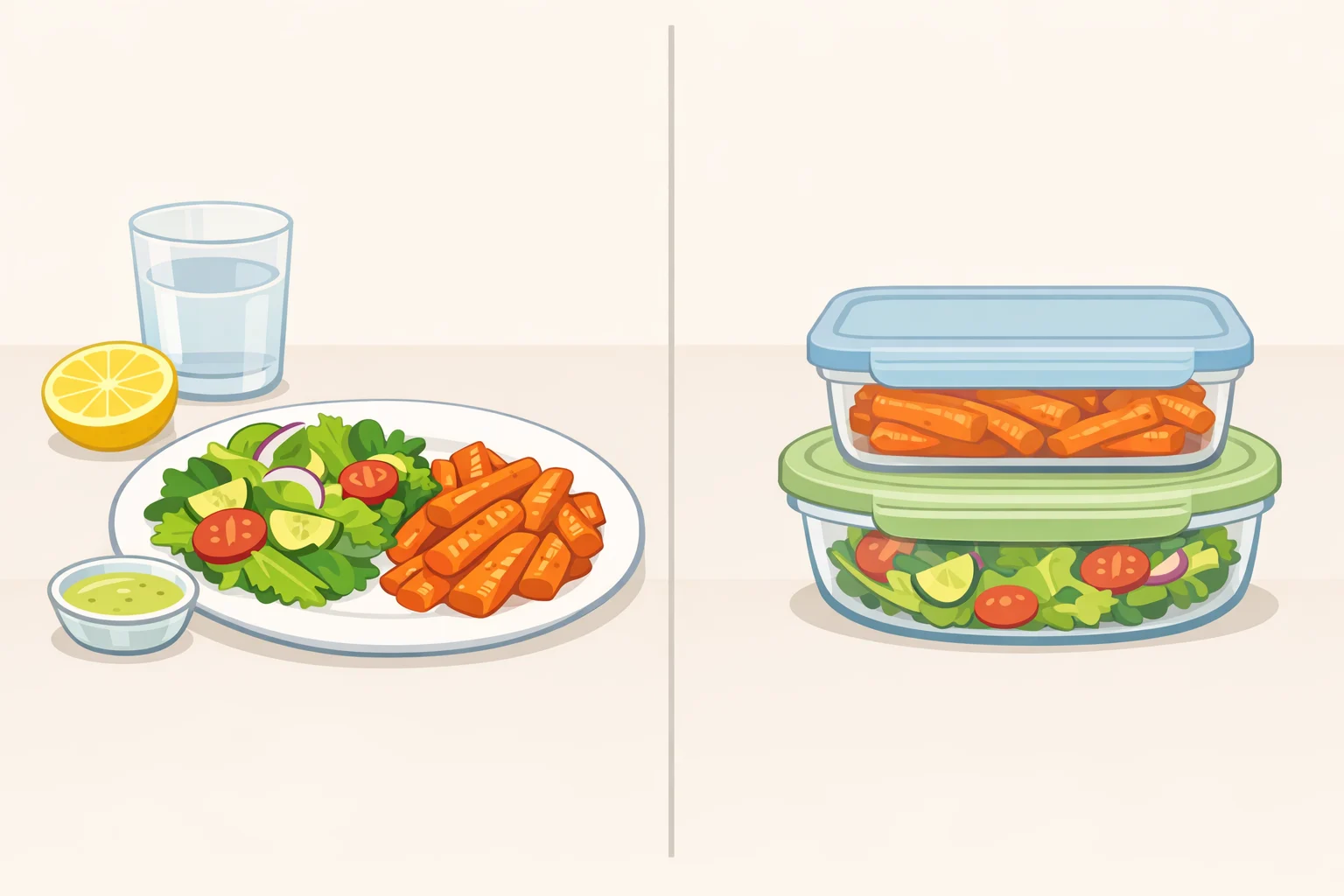
Six tablespoons of butter for 2 pounds of carrots is not a light vegetable side. Beyond the calorie count already covered, that butter packs 7.2 grams of saturated fat into each serving of The Kitchn's version (The Kitchn). Sandra, a tester quoted by The Kitchn earlier this year, backed that up firsthand: she praised the butter-thyme sauce but noted that a small portion was plenty (The Kitchn).
That richness is worth planning the rest of the plate around. A vinegar-dressed salad or a citrus-forward side does more for an Easter spread next to this dish than another buttery one would, since something on the table needs to cut against all that caramelized sugar and fat.
Storage guidance differs slightly between the two versions. The Kitchn's leftovers keep refrigerated for up to 5 days, while Umami recommends using theirs within 3 (The Kitchn; Umami). Reheat in a 350°F oven or in 30-second microwave bursts until warmed through, per both sources' instructions (The Kitchn; Umami).
Beyond the Easter table
The brown-then-braise sequence adapts to other vegetables long after the ham platter is cleared. The Kitchn applies the same method to onions, cabbage, cauliflower, and sweet potatoes, though each vegetable needs its own timing rather than a straight carrot-for-cabbage swap (The Kitchn). Get comfortable with carrots this Easter, and the rest of that list becomes a lot less intimidating come the next holiday that overloads the oven.