Burrito Zucchini Noodles Recipe: Crisp, Not-Soggy Zoodles
Zucchini is nearly all water, and that water is the reason zoodle dishes so often turn watery instead of staying crisp. Cook the noodles too long, or skip the moisture-removal step, and they collapse into a soggy pile (Real Simple Good, a guide published about four years ago). This burrito zucchini noodles recipe sidesteps that problem by design. It's a Mexican zucchini noodle recipe at heart: instead of cooking the zoodles into submission, it serves them raw or barely warmed, then lets hot, well-seasoned black beans do the work a sauce normally would, softening the noodles just enough without ever asking them to sit in a hot pan (This Healthy Kitchen, nearly two years ago).
This is a burrito zoodles recipe built for a weeknight. Total time runs about 22 minutes for four servings (This Healthy Kitchen). Get the moisture step right on the first try and there's no soggy bowl to fix later. This guide covers the exact prep, the assembly order, and the decisions, packaged zoodles, a heartier roasted version, and make-ahead storage, that determine whether it turns out right.
What you'll need
Video of the Day
For four servings, gather:
- 3 medium zucchini (or store-bought pre-cut zoodles)
- 1 (15-ounce) can black beans, drained and rinsed
- 2 tablespoons lime juice, about 1 large lime
- 1 teaspoon smoked paprika
- 1 teaspoon chili powder
- ½ teaspoon onion powder
- ½ teaspoon garlic powder
- 1 cup cherry or grape tomatoes, halved
- ½ cup corn kernels
- Salt and pepper, to taste
- Optional toppings: fresh cilantro, crema fresca, avocado slices, lime wedges
(This Healthy Kitchen)
You'll also want a spiralizer or vegetable peeler, a colander, paper towels, a saucepan for the beans, and shallow bowls for serving. A spiralizer is the usual tool for turning zucchini into spaghetti-like strands. Without one, a vegetable peeler works too, producing wider ribbons closer to pappardelle than spaghetti (America's Test Kitchen, nearly two years ago).
Video of the Day
How to make this burrito zucchini noodles recipe without soggy zoodles
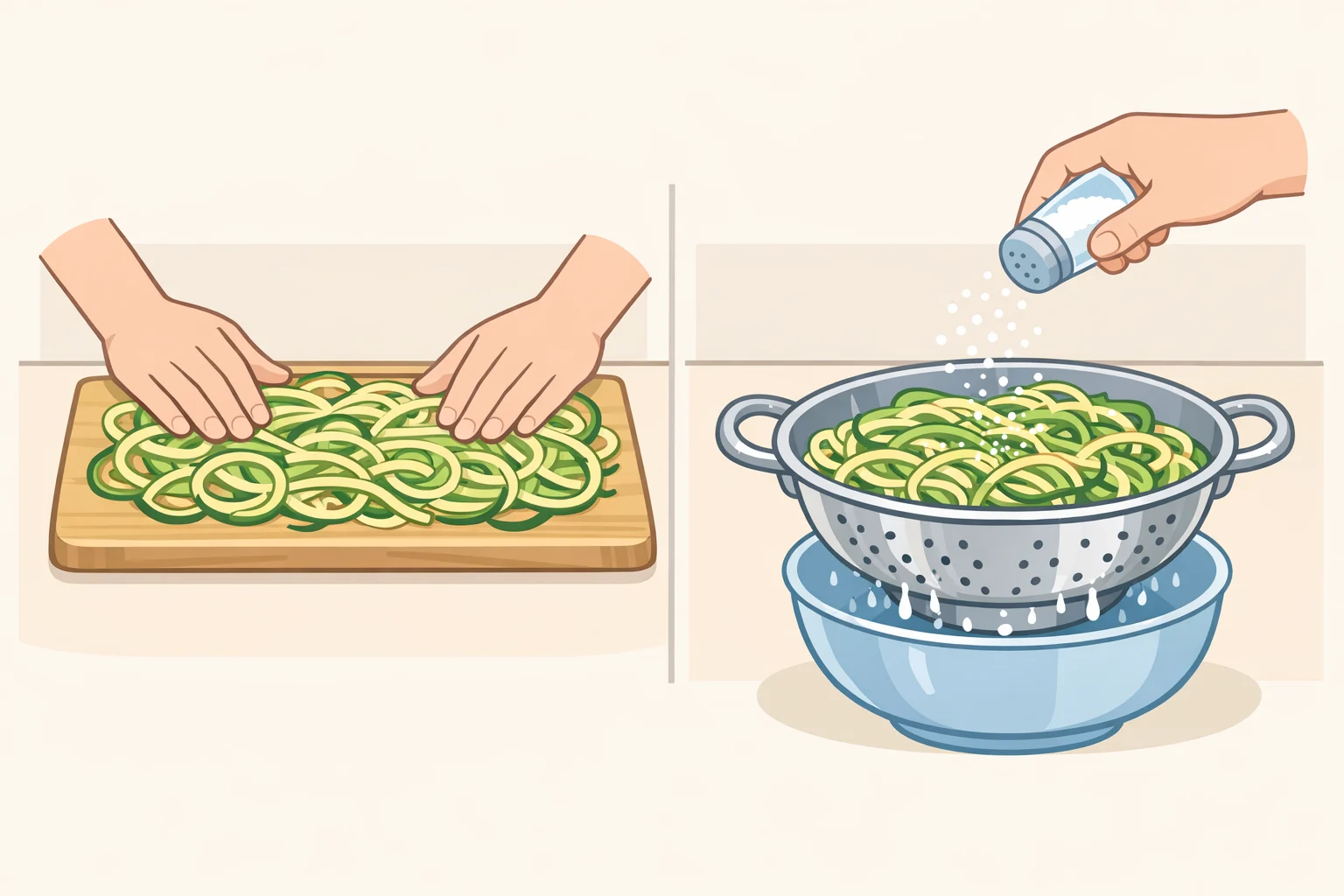
Getting water out of the zucchini before it reaches a bowl is what separates a crisp burrito zoodle bowl from a watery one. Skip this and even perfectly seasoned beans end up swimming.
-
Spiralize 3 medium zucchini into noodles. If using a peeler instead, shave the zucchini into wide ribbons. Three medium zucchini yield enough zoodles for four servings (This Healthy Kitchen).
-
Sprinkle with a dash of salt, toss, and let sit in a colander for 10 to 15 minutes. Salting helps draw out excess moisture, and the colander gives it somewhere to go besides your bowl (A Healthier Michigan, last summer; This Healthy Kitchen).
-
Wrap the drained zoodles in a paper towel and squeeze gently. The goal is a firm, even squeeze that leaves the noodles pliable but no longer dripping. A rough wringing motion risks tearing the strands, so keep the pressure steady rather than aggressive (A Healthier Michigan).
-
Decide whether to warm the noodles or serve them raw. Warming is optional; cooking them isn't necessary at all. If you do want them warm, sauté for 1 to 2 minutes in a hot pan or microwave for about 1 minute, no longer. Heating them too long makes zoodles watery and overly soft, so treat these times as a ceiling (Real Simple Good; This Healthy Kitchen). Zoodles keep releasing moisture even after the first squeeze, so give them one more light press with a paper towel after sautéing or microwaving, before they go into the bowl (America's Test Kitchen).
A well-seasoned bean topping cannot rescue zoodles that were never properly drained. Everything else in this recipe assumes these four steps happened first.
Assemble the bowl
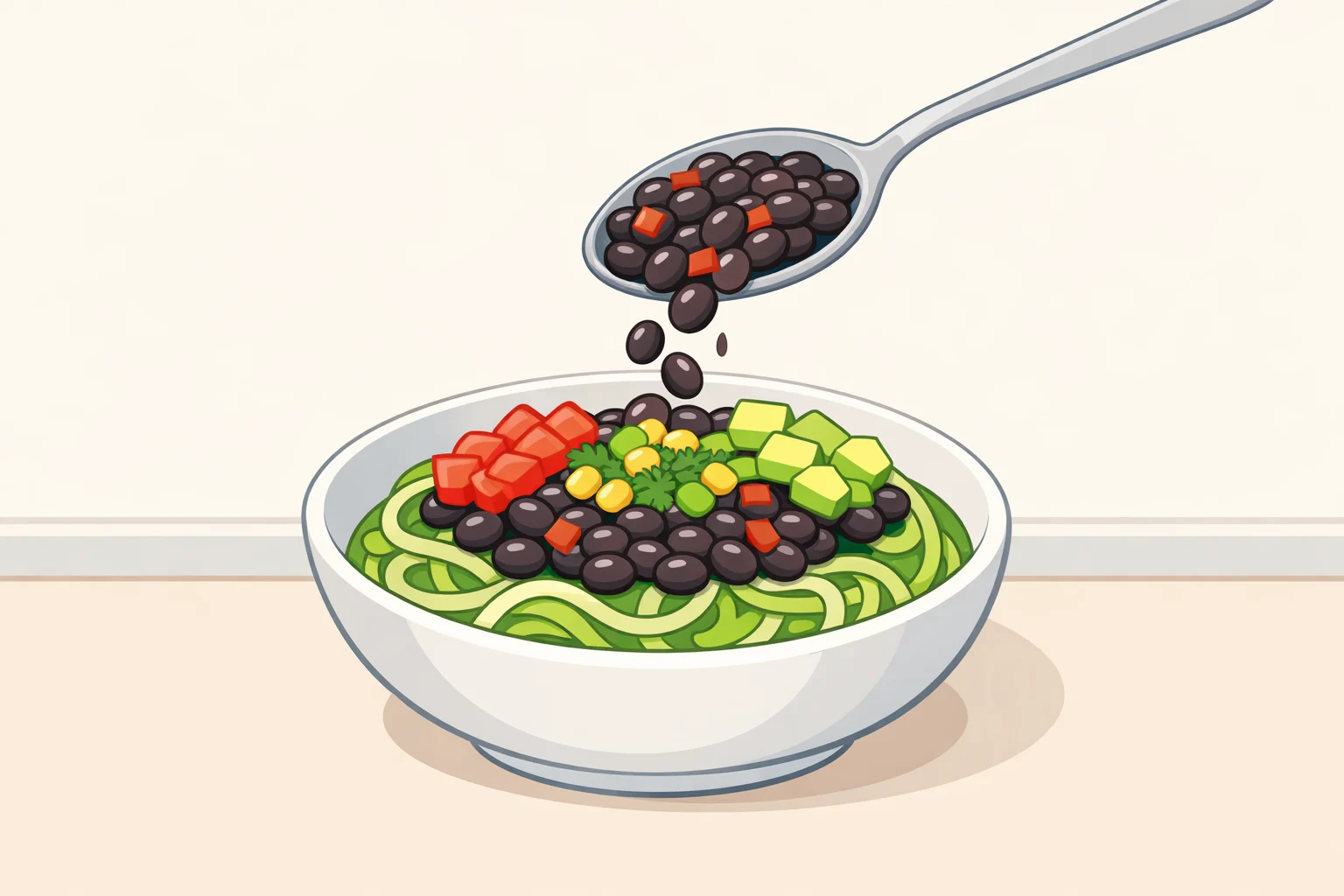
The beans can warm while the zucchini sits in the colander, so the two processes run at the same time rather than one after another.
-
Warm the beans with lime juice and spices. Combine the drained, rinsed black beans with 2 tablespoons lime juice, 1 teaspoon smoked paprika, 1 teaspoon chili powder, ½ teaspoon onion powder, ½ teaspoon garlic powder, and salt and pepper to taste in a saucepan. Heat through for a few minutes so the spices absorb into the beans, then turn off the heat (This Healthy Kitchen).
-
Divide the zoodles into shallow bowls. Add the halved tomatoes and corn kernels, then spoon the hot bean mixture over the top (This Healthy Kitchen).
-
Top and serve immediately. Finish with any combination of fresh cilantro, crema fresca, avocado slices, and lime wedges (This Healthy Kitchen).
Zucchini is lean and mild on its own, which is why this dish leans on a rich, boldly seasoned topping instead of a thin sauce poured over raw noodles. The hot beans carry flavor that zucchini can't supply by itself (America's Test Kitchen).
For a zucchini noodles with taco seasoning variation, swap the listed spice blend for a measured packaged taco seasoning, then go easy on the added salt since store-bought blends vary in sodium.
Troubleshooting a watery or bland bowl
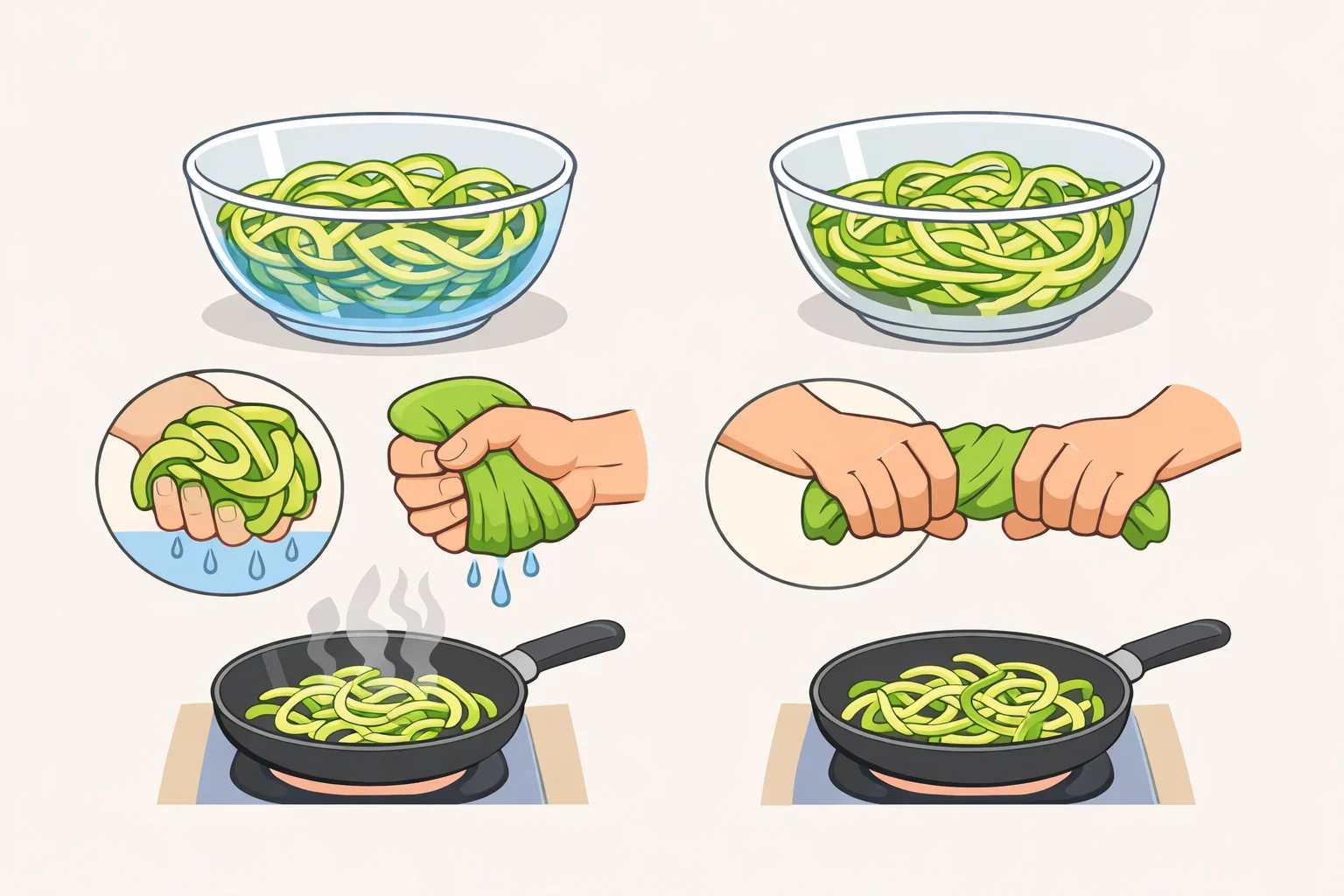
Liquid pooling at the bottom. This usually traces back to an incomplete squeeze, but not always. Zoodles continue to release moisture even after draining, and heating them a beat too long has the same effect, so check both before assuming a step was skipped (America's Test Kitchen; This Healthy Kitchen).
Flavor tastes flat. The beans are doing the heavy lifting here, so make sure they actually heat through long enough for the spices to bloom rather than just being stirred in cold. A short simmer, not a quick toss, is what builds flavor.
Zoodles gone mushy. This almost always means too much heat for too long. Stick to the 1- to 2-minute sauté or roughly 1-minute microwave window, and remember that raw is a legitimate serving option here, not a shortcut (This Healthy Kitchen).
Fresh bowl or roasted zoodles: two different dishes
Using packaged zoodles. Pre-cut zucchini noodles from the produce section skip the spiralizing step, but they degrade fast, so buy them close to cooking day (America's Test Kitchen). The same salt-and-drain treatment still applies before assembly, regardless of where the noodles came from (This Healthy Kitchen).
Want it heartier and warmer? Roasting is a distinct alternative, not a variation on the fresh-bowl steps above, and it uses a different quantity of zucchini. Toss 3 pounds of spiralized zucchini, not the 3 medium zucchini used in the fresh version, with 1 tablespoon oil and 1½ teaspoons table salt, then roast on a sheet pan at 375°F until softened, about 10 minutes (America's Test Kitchen). This produces a softer, more pasta-like texture, but it's built for a larger batch, so the calorie and serving figures below don't carry over directly.
Making it ahead. Home-spiralized zoodles that have been salted and drained keep in an airtight container in the fridge for three to five days. Place a paper towel over them before sealing, to catch moisture that keeps releasing (A Healthier Michigan). For longer storage, spread the zoodles in a single layer without overcrowding and freeze for one to two hours before transferring to a sealed container, where they'll keep for up to three months. Thaw the portion you need by moving it to the refrigerator the night before (A Healthier Michigan). Store-bought pre-cut noodles don't hold up nearly as long and are best used soon after purchase (America's Test Kitchen).
Serving and substitutions
Zoodles pair easily with extra protein, or can be combined with regular pasta for anyone at the table who wants more bulk or a familiar noodle texture (A Healthier Michigan). The source material doesn't specify which protein works best, so treat this as an open slot: shredded chicken, seared tofu, or ground turkey would all sit comfortably alongside the spiced beans without changing the core method.
A low-carb burrito bowl with zucchini noodles
One serving of this bowl runs about 149 calories, 9 grams protein, 28 grams carbohydrate, and 10 grams fiber, per the recipe's own published nutrition figures, a reasonable estimate rather than an independently verified lab analysis (This Healthy Kitchen). Twenty-eight grams of carbohydrate is not nothing. Zoodles are commonly treated as a low-carb pasta swap (America's Test Kitchen), but this complete bowl still carries real carbs from the beans and corn, which is exactly what makes it filling rather than just light.
Bringing it together
Salting, draining, and squeezing the zucchini, not cooking it longer, is what keeps this bowl fresh and crisp instead of watery (This Healthy Kitchen; A Healthier Michigan). That principle travels well beyond this one dish: lean, watery vegetables need a bold, clingy flavor component to stand in for pasta, not a thin sauce poured over the top (America's Test Kitchen).
Once the salt-and-squeeze routine feels automatic, try applying it somewhere else. A garlicky shrimp scampi over zoodles uses the same logic, a thick, clingy sauce standing in for the spiced beans here, and it's worth testing once this bowl becomes second nature.