Things to Know Before Buying a Carpet Cleaner: Buyer's Guide
The instinct to buy the biggest, priciest carpet cleaner on the shelf is a mistake. Bigger and more expensive machines don't necessarily clean better, according to Consumer Reports testing updated earlier this year. Full-sized machines in its current ratings range from $120 to $700, and portable cleaners score lower in lab tests than nearly every full-sized model, but that's because they're built for an entirely different job (Consumer Reports, updated earlier this year).
This carpet cleaner buying guide walks through six things to know before buying a carpet cleaner, so the machine matches the mess rather than the marketing. Skip any one of them and you risk ending up with something too weak, too heavy, too loud, or simply overkill for how often it'll actually get used.
What to look for when buying a carpet cleaner: full-size vs. portable
Video of the Day
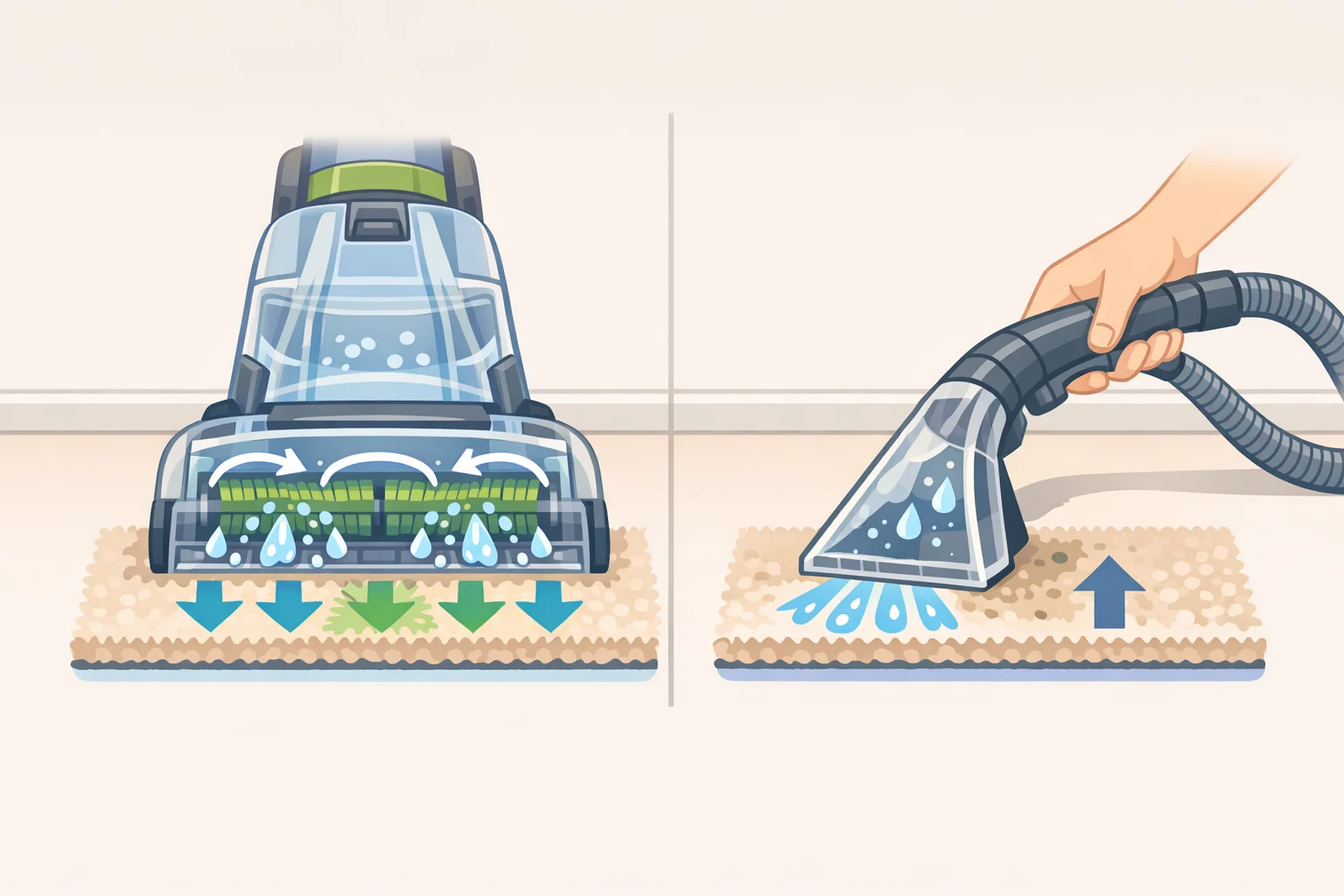
Start with the job, not the specs sheet. Full-sized machines clean with spinning bristle heads that scrub mechanically, while portable models only apply and extract solution through a hose attachment. The brush heads don't spin at all (Consumer Reports). That means a stubborn stain tackled with a portable will need extra elbow grease to come out.
Portables are genuinely good at specific things: stairs, the space under furniture, upholstery, and car interiors. They're not designed to deep-clean a large rug carrying months or years of embedded dirt (Consumer Reports). Within the portable category, wider-nozzle models performed better in CR's testing, largely because they pick up water as they dispense it, which cuts down on repeat passes over the same spot.
A low test score on a portable isn't a red flag. It's a mismatch warning if you're expecting whole-room results from a spot-cleaning tool.
Video of the Day
Run the buy-vs.-rent-vs.-hire math before you commit
Buying isn't always the smart move, and the numbers make that case plainly. In an August 2024 cost comparison, Consumer Reports priced out renting, hiring a service, and buying outright for a hypothetical home with 1,140 square feet of carpet across three rooms and three area rugs (Consumer Reports).
Renting a Rug Doctor from Home Depot ran about $40 a day at the time, plus roughly $18.95 for enough solution to cover that square footage, putting a single cleaning at about $58.95. Hiring a professional service for the same job cost $403 in Kansas City and $701 in New York City, a gap that shows just how much regional pricing can swing. Buying landed in between: CR's top-rated model at the time, the Bissell ProHeat 2x Revolution Pet Pro Plus, cost about $240 (roughly $259 with solution for the first clean), while the Hoover PowerDash Pet Advanced ran about $140 ($159 with solution).
Those specific figures are now two years old, so check current local rental and service rates before deciding. But CR's underlying rule of thumb still holds: clean more than a handful of times a year and ownership pays for itself. Clean less than that, and renting saves both money and closet space.
Carpet cleaner size, weight, and tank capacity
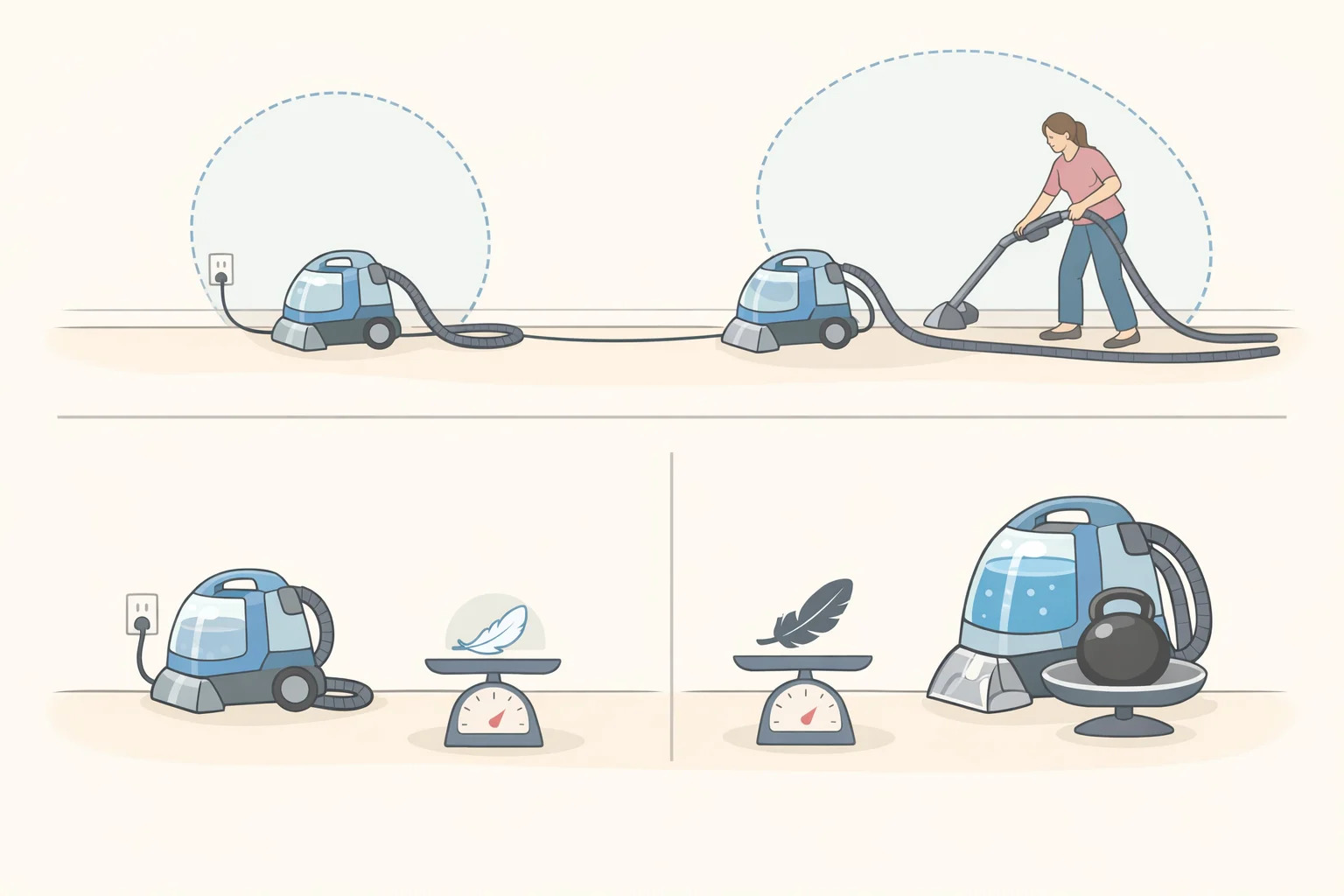
A carpet cleaner that's a hassle to haul, plug in, or store tends to end up gathering dust in the garage, regardless of how well it scrubs. A full tank adds 6 to 15 pounds to a full-sized machine, and a filled unit can weigh as much as 60 pounds (Consumer Reports; Consumer Reports). Tested portables, by contrast, range from just 9 to 19 pounds full, a meaningful difference for anyone carrying a machine up a flight of stairs or squeezing it around furniture.
Cord and hose length matter too, especially in older homes with fewer outlets. Full-sized cords typically run 20 to 22 feet, with some reaching 29 feet, while the hoses on tested portable units span only 7 to 9 feet (Consumer Reports). Measure the room and the nearest outlet before assuming a machine will reach.
Portables take up far less closet space, but that convenience comes with smaller clean- and dirty-water tanks. On anything larger than a spot job, expect more mid-cleaning trips to refill and empty (Consumer Reports).
Prioritize water extraction and drying, not just stain removal
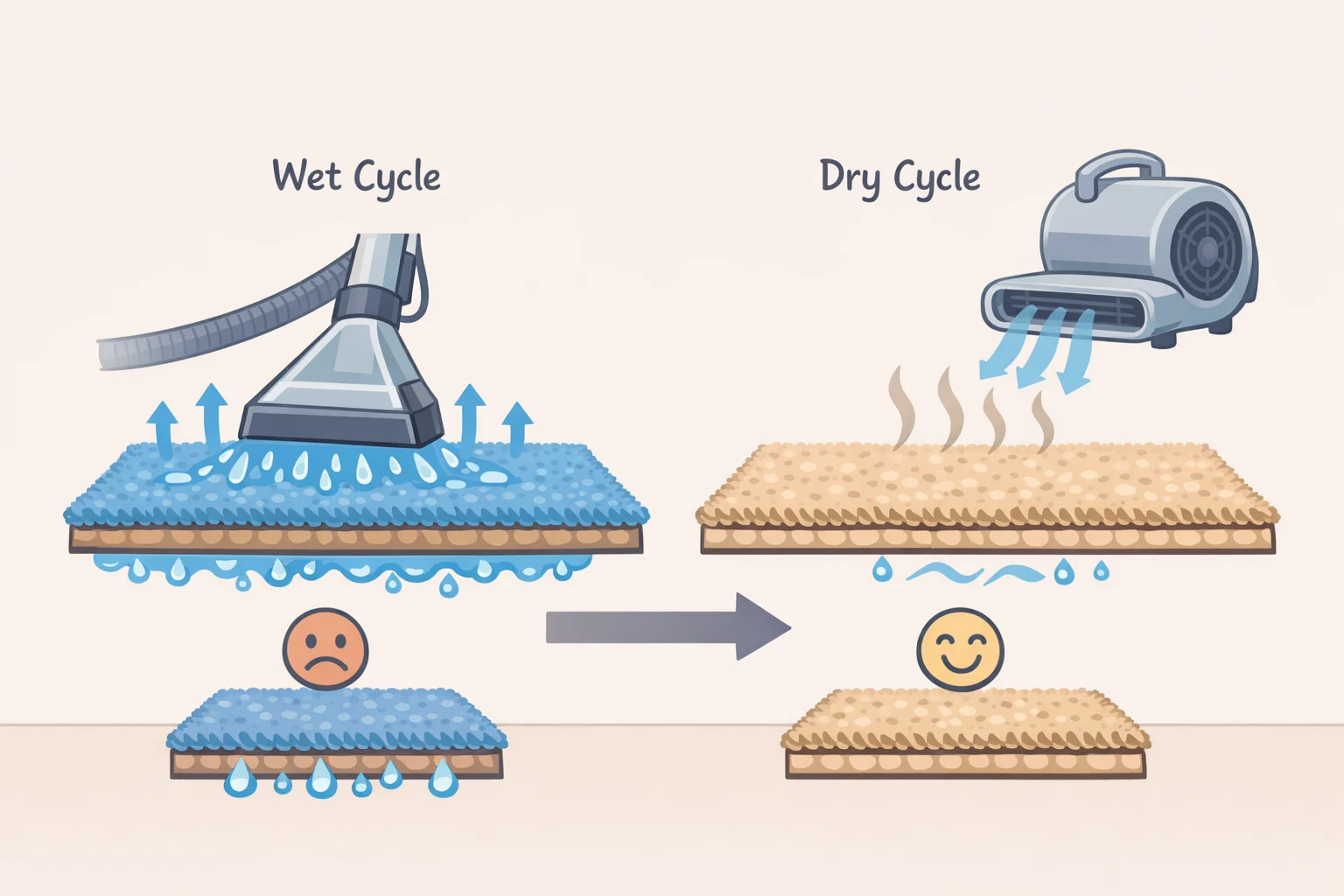
A carpet that looks clean right after cleaning isn't the whole story. CR scores drying performance based on how much water a machine actually removes, not on visual appearance alone (Consumer Reports). In its lab evaluation, technicians run four wet and four dry cycles per model to measure that extraction consistently. Separately, CR's own guidance for home use recommends repeating wet and dry passes until the solution coming back out of the carpet runs clear, which is a good rule of thumb regardless of which machine is doing the work.
The stakes here go beyond appearance. The EPA notes that carpet left damp can become a primary source of microbial growth, which frequently leads to adverse health effects (U.S. EPA, guidance last updated last year). A machine that leaves carpet soggy can create a bigger problem than the stain it just removed. Drying performance deserves at least as much attention as the "deep cleaning power" language on the box.
Expect real noise, and plan for it
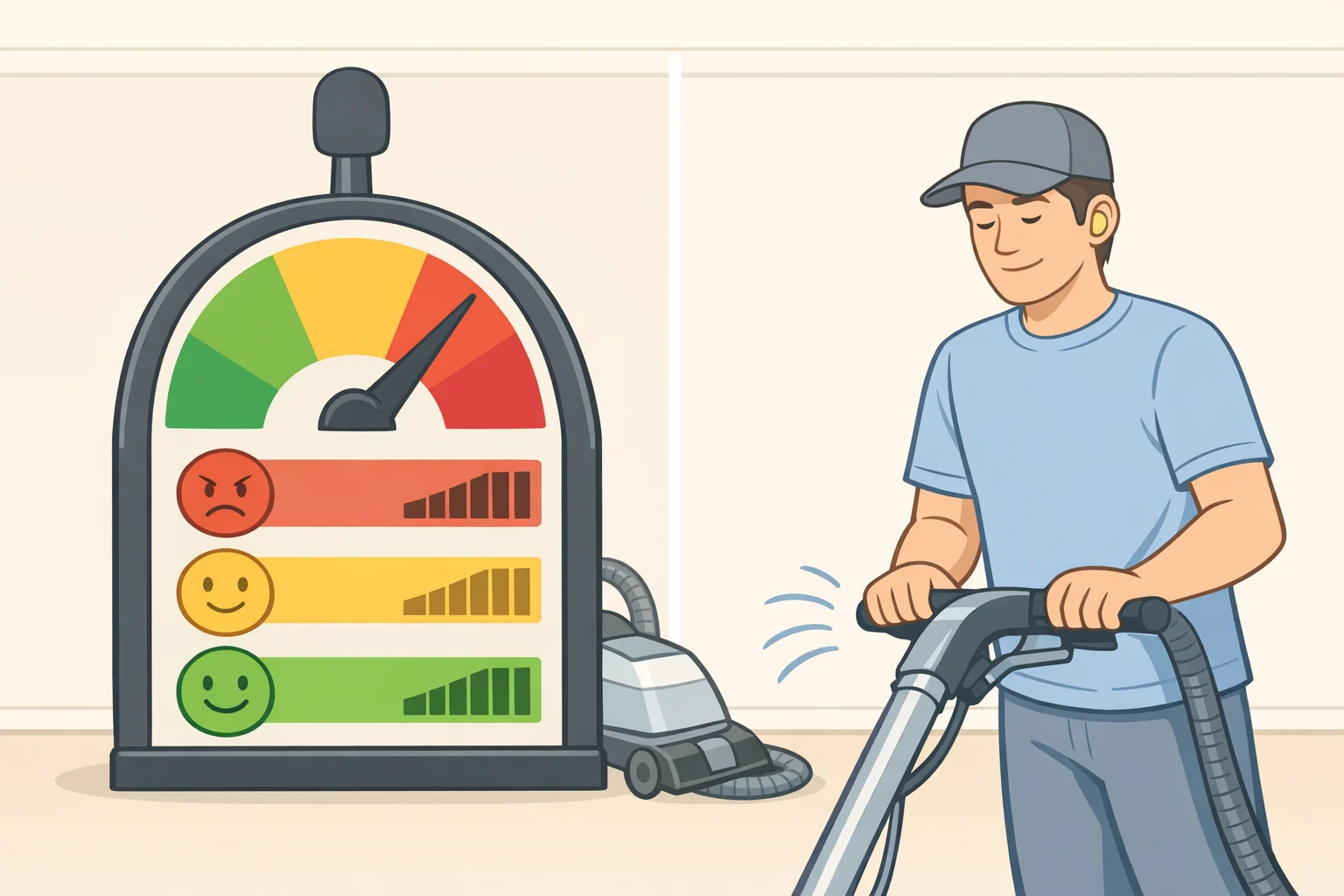
Carpet cleaners are loud machines, full stop. CR measured an average of 80 dBA across the models it tested and recommends hearing protection for anyone running one for an extended session (Consumer Reports). Portables aren't the quiet alternative you might expect: some tested nearly as loud as full-sized machines, with readings approaching 90 dB. One tester's smartwatch flagged the room as a "loud environment," and CR's team noted that's roughly the threshold at which they'd recommend hearing protection during their own lab work (Consumer Reports).
If a cleaning session is going to run long, CR suggests earplugs or noise-canceling headphones rated for protection up to 85 dBA (Consumer Reports). It's an easy factor to overlook in a store aisle or a product listing, but it decides whether cleaning day is a quick chore or a genuine household disruption, particularly with a napping toddler, a nervous dog, or a home office down the hall.
Know when a carpet cleaner is the wrong tool
A carpet cleaner supplements a vacuum. It doesn't replace one. The EPA describes carpet as a reservoir for dust, dirt, pollen, mold spores, and pesticides tracked in from outside or generated indoors (U.S. EPA). Regular, effective vacuuming, not occasional deep cleaning, is what actually keeps those particles from accumulating. Inadequate maintenance lets debris build up over time, and some studies indicate that poorly maintained carpet can release significant quantities of particles into the air during ordinary daily activity, according to the EPA. Young children who play on the floor have more direct contact with whatever's been left behind.
There's also a hard boundary worth knowing before a purchase: a carpet cleaner isn't the right tool for a flood or a major leak. The EPA's guidance is specific here: carpet that's taken on significant water damage should be removed and discarded, or steam cleaned and thoroughly dried before it's reinstalled (U.S. EPA). That's a remediation job, not a weekend project for a home appliance.
Choosing between them
The right purchase depends less on rating and more on frequency and physical reality: how often the carpet actually needs cleaning, how much weight and hauling the household can handle, and whether the job at hand is a spilled glass of wine or years of ground-in dirt. A portable earns its keep on stairs, upholstery, and quick spot jobs. A full-sized machine earns its keep on whole rooms with real buildup, provided there's somewhere to store 40-plus pounds of appliance.
The rent-versus-buy calculation is worth revisiting each cleaning season rather than deciding once and forgetting about it. Occasional use still favors renting; anything beyond a handful of cleanings a year tips the math toward ownership.
One development worth watching: some brands are currently developing cordless carpet cleaners (Consumer Reports). Battery runtime, tank size, and cleaning performance on cordless models haven't been tested the way corded machines have, so it's not yet a reason to hold off on a purchase that solves today's problem. It's simply a category to check back on before the next buying cycle.