How to pick a ripe peach: a Georgia farmer's method for the bin, the counter, and the fridge
By the end of this guide, you'll know how to pick a ripe peach on the spot and how to buy a deliberate mix of ripeness stages so you're eating well for several days rather than scrambling to finish the whole bag at once.
Tyler Wainwright grew up on a peach farm in Taylor County, Georgia, and now works at Lane Southern Orchards in Peach County. He can read a peach in seconds. His method covers two checks, one visual and one tactile, but the reflex it replaces is deeply ingrained: most shoppers pick up a peach and squeeze it with their fingertips. That bruises the fruit. NC State Extension notes that peaches are extremely delicate and that commercial pickers are specifically instructed to avoid fingertips because of bruising risk. Wainwright's approach is gentler and more diagnostic.
Worth knowing before you start: these steps work best on peaches harvested at the right time. Peaches bound for distant markets have to be picked while still quite firm to survive weeks of transit, and Wainwright says the flesh of those fruit often never develops full juice or sweetness, turning out mealy and dry instead of succulent (AJC, this month). NC State Extension confirms the underlying problem: peaches harvested too early, while still green, frequently fail to ripen into acceptable quality. The method below won't rescue an underharvested peach, but it will help identify one before it goes in your bag.
Three things covered here: how to read a peach visually, how to apply the right kind of touch test, and how to buy a staggered mix so your eating window lasts more than an afternoon.
How to tell if a peach is ripe: start at the stem end
Video of the Day
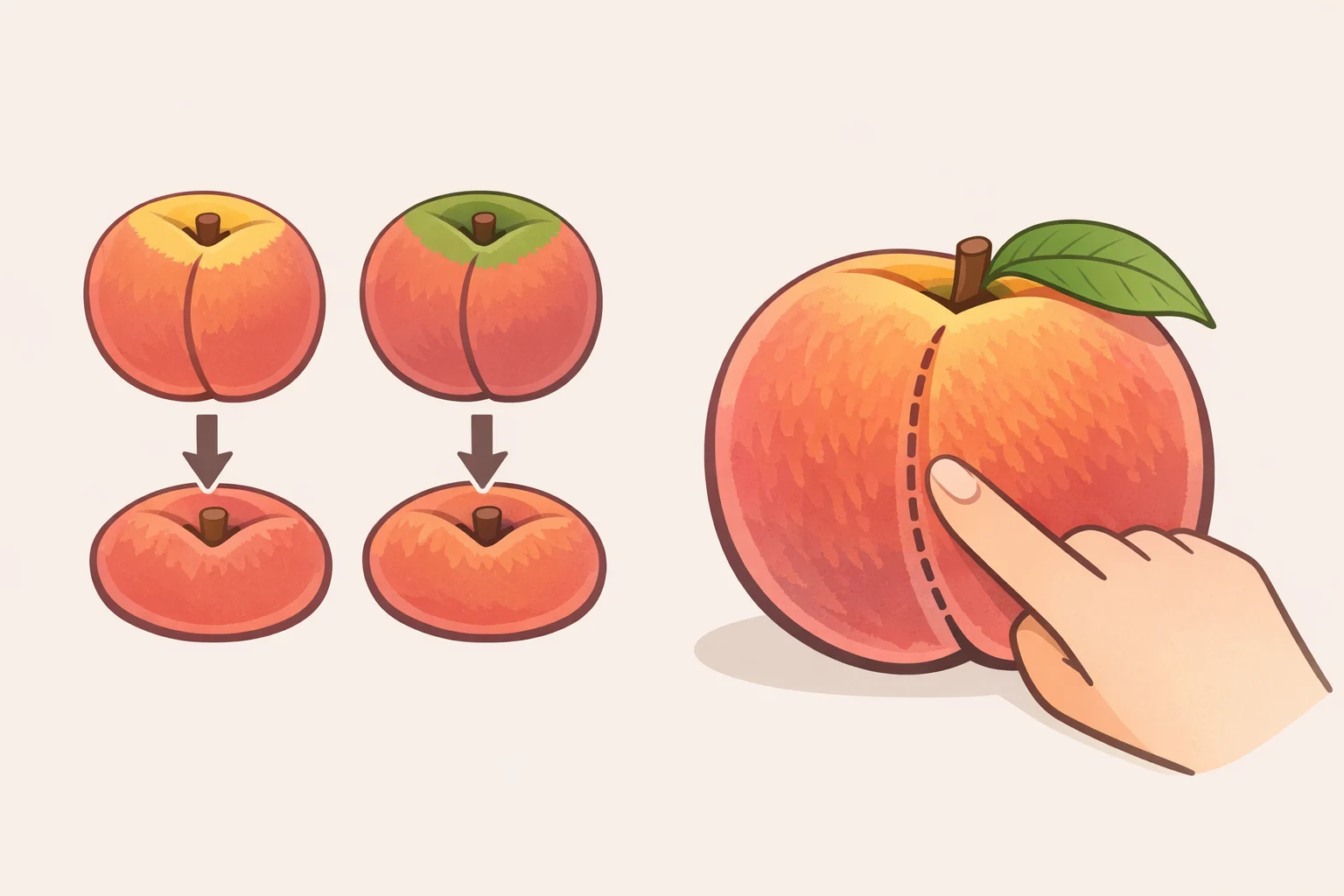
The first check is visual, and most people get it backwards.
Red blush, the deep crimson that makes a peach look beautiful in a display bin, is a variety characteristic, not a ripeness marker. Wainwright directs attention to the area around the stem instead. What he's looking for is a good background color: yellow qualifies, even a pale golden tone is fine. Dark green at the stem end is an immediate disqualifier (AJC, this month). NC State Extension confirms this directly: green ground color is a recognized indicator of immaturity. A peach with a green stem end may have been picked too early to ripen well, no matter how long you leave it on the counter.
Also look at the shape before picking it up. Wainwright describes a good peach as "soft all around, good size, it's not oddly shaped." The more specific structural tell is the ridge running lengthwise down the fruit, called the suture. On a properly mature peach, it should be fully rounded and even on both sides; NC State Extension flags uneven suture development as a sign of immature fruit. The shape check also screens for insect damage: NC State notes that damage during early fruit development causes a specific type of deformity called cat facing. One side noticeably flatter than the other is worth noting before you reach for the fruit.
Peaches that have spent longer in transit are more likely to have been pulled early, so this visual step does more work at a supermarket than at a farm stand. Ten seconds on stem-end color and shape, before touching anything, filters out most of the obvious problems.
- Look for: Warm background color (yellow, gold, or orange) at the stem end; evenly rounded sides
- Pass on: Any dark green near the stem; anything noticeably lopsided or flat on one side
Video of the Day
Step 2: Cradle for give, don't pinch for softness
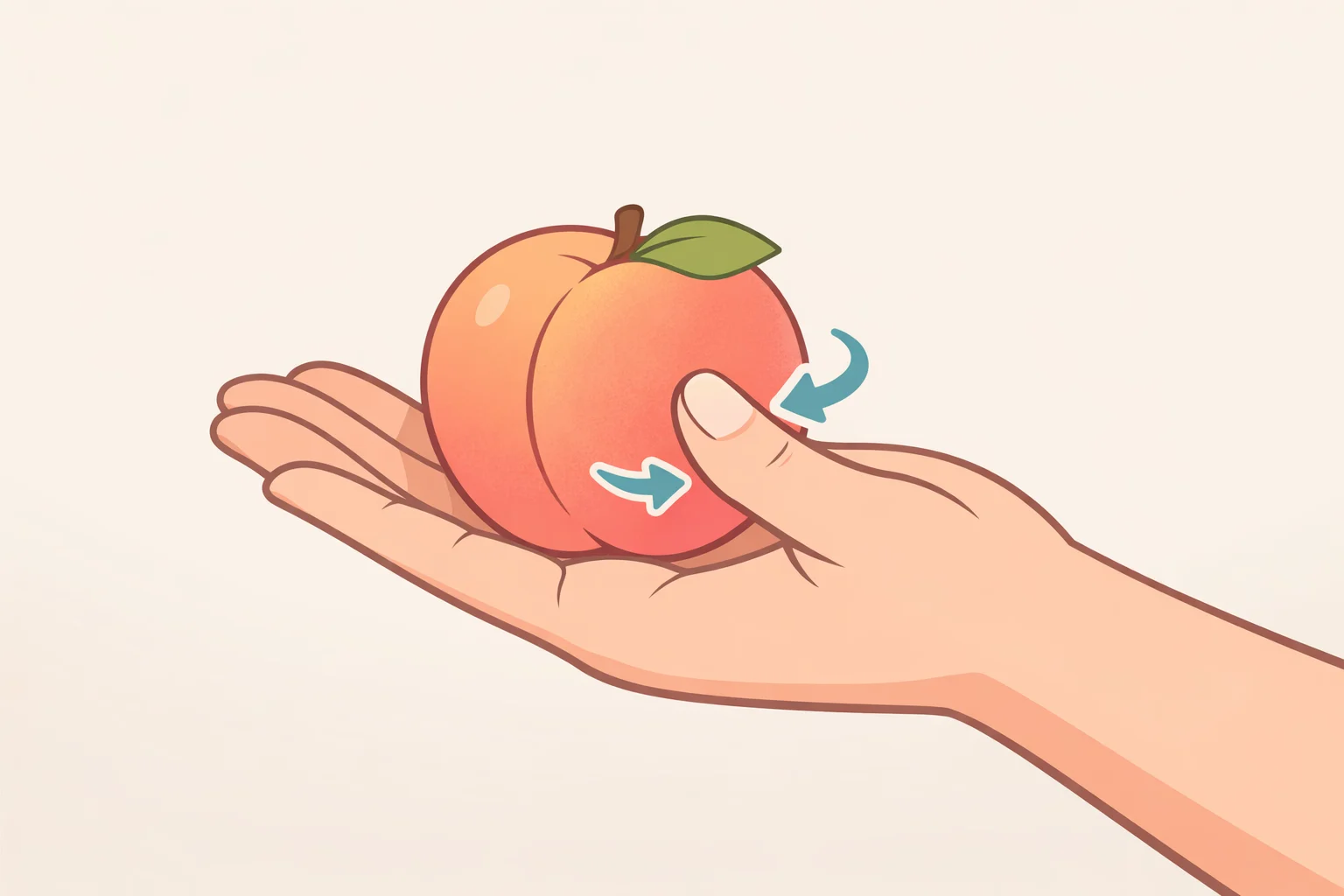
Once the visual check clears, pick up the peach and cradle it in your palm, the whole fruit resting against your hand rather than gripped between your fingers.
You're not checking for softness. You're checking for slight give. Wainwright's standard: "a little bit of give" and definitively "not mushy" (AJC, this month). Lanier Pearson of Pearson Farm describes the same target almost word for word: a peach ready to eat will be "slightly soft to the touch" and give a little under light pressure (Allrecipes, this month). Both farmers specifically caution against squeezing hard.
Apply gentle, even pressure with your whole palm. A peach that yields immediately under minimal cradling is already past peak. The target is the narrow middle: firm enough to hold its shape, soft enough that you feel a slight depression when you press gently. Think of the give you'd feel pressing the pad of your thumb against the base of your other hand, not rigid, not yielding, but responsive.
Using your palm rather than fingertips matters for two reasons. It distributes pressure so it doesn't bruise the fruit, and it gives a more honest read. Fingertips concentrate force on a small spot and can register localized softness that doesn't reflect the whole fruit. A palm tells you how the peach is doing overall.
- Ready now: Slight, even give across the surface; holds its shape; no soft patches
- Overripe: Yields immediately under minimal pressure; any mushy areas
- Not ready: Completely unyielding, the feel of an unripe plum or a billiard ball
Step 3: Buy across a ripeness range, not all at once
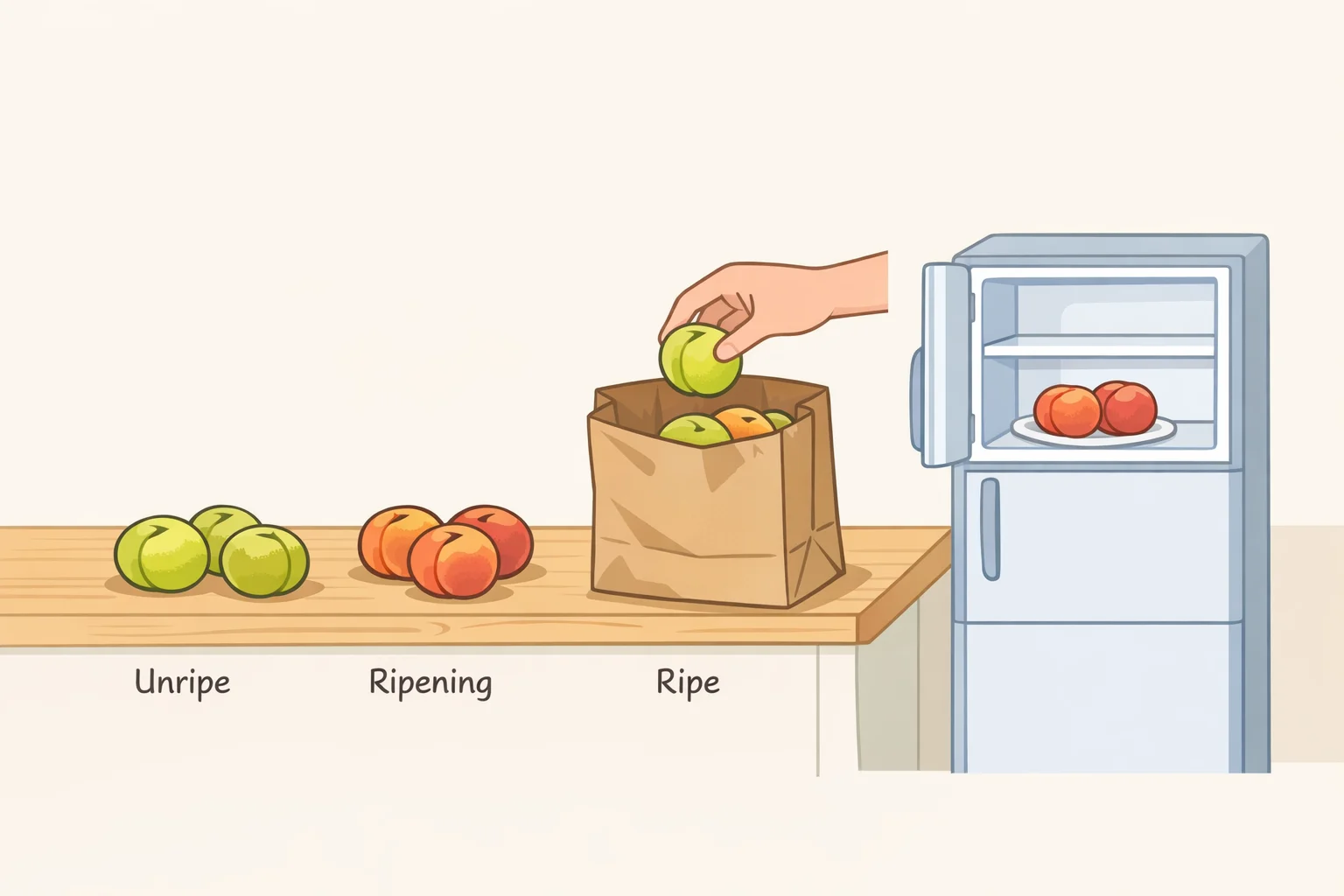
Even a well-executed selection at the bin becomes frustrating if every peach you buy is at the same stage. Peaches hold their peak for a short window, and a bag of uniformly ripe fruit creates real pressure to eat them all before they turn (Allrecipes, this month).
The smarter approach is to choose a deliberate mix: a few that pass both the color and give test right now, and a few that are visually clear of dark green but still firm to the palm. The firm ones will continue softening at room temperature. Wainwright recommends the counter or a shaded spot outside, specifically not in direct sun, which accelerates ripening unevenly. A covered porch works well (AJC, this month). To speed things up, place firm peaches in a paper bag at room temperature for 12 to 24 hours, but check them frequently; they can overshoot quickly (Allrecipes, this month).
The refrigerator guidance comes down to one rule: don't refrigerate peaches that still need to ripen. Commercial cold storage holds peaches near 32°F with precise humidity control. Home refrigerators run warmer than that, right in the temperature range that UGA CAES identifies as a chilling-injury zone, between 36 and 46°F, where peaches develop mealy texture and dry flesh. Refrigerate only peaches that have already reached the give you're looking for; keeping them cold at that point holds their current ripeness rather than advancing it (Allrecipes, this month).
- Buying strategy: Choose a mix, some ready now, some a day or two out
- Room-temp ripening: Counter or covered porch in shade; no direct sun; paper bag to accelerate
- Refrigeration: Only for already-ripe peaches; never refrigerate still-firm peaches
When every peach in the bin is too firm
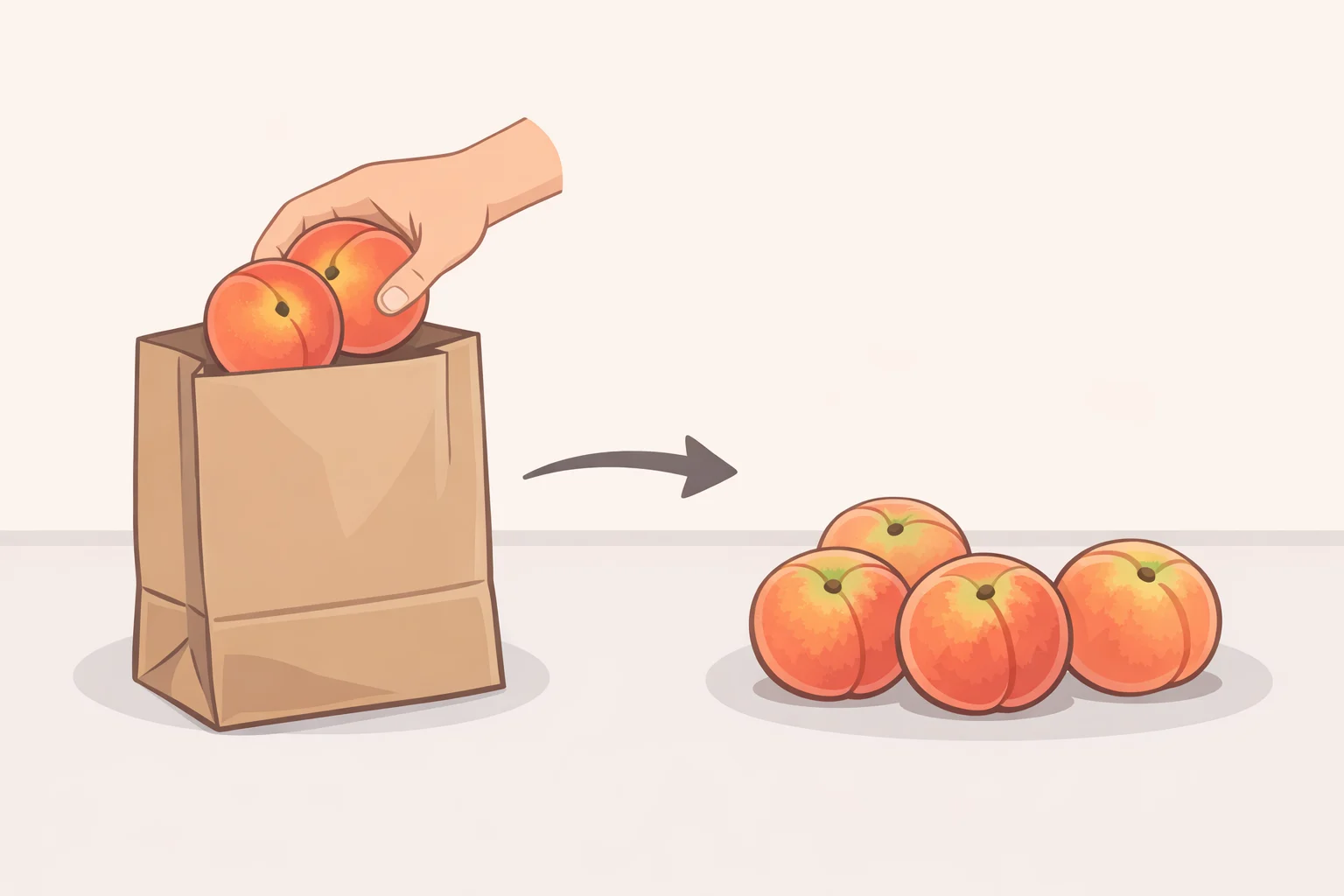
Sometimes the whole display is rock solid, especially early in a retail cycle when a new shipment has just arrived. That's not a disqualifier, but it changes what you're doing: you're no longer selecting for today, you're selecting for the next few days.
Apply the visual check even more carefully in this situation. Stem-end color is your main signal when you can't rely on give at all. Choose the peaches showing the warmest background tones, set the firmest aside for the paper bag, and put the rest on the counter. Wainwright notes that peaches will continue ripening and softening after harvest, like tomatoes, though he's clear that "they won't have the big transformation like a tomato" (AJC, this month). A peach with good color but no give yet can be excellent in two days. A peach with dark green at the stem may never get there.
The skill, once it clicks, is less about finding one perfect peach than building a staggered bag. Get that right, and you're not racing the calendar.
The full in-bin sequence
The method takes about thirty seconds per peach once you've done it a few times. In order:
- Check the stem end. Look for yellow or warm background color. Dark green is a disqualifier; no amount of counter time reliably fixes a peach picked before it was ready (NC State Extension).
- Check the shape. The ridge running down the side should be evenly rounded. A flat or underdeveloped side signals the fruit wasn't mature at harvest.
- Cradle, don't pinch. Rest the peach in your palm and apply light, even pressure. You're looking for a slight give, not mush, not a rock. Wainwright's standard: "a little bit of give, but not overripe" (AJC, this month).
- Buy a mix of stages. Take a few that are ready now and a few that still have some firmness. Stagger your eating window across several days rather than racing through a uniform batch (Allrecipes, this month).
- Ripen at room temperature in shade; refrigerate only at peak. The covered-porch guidance and the chilling-injury zone are the two details most home guides omit, and they're the ones that explain why peaches so often disappoint even when you thought you bought good ones.
Wainwright developed his read over years in the orchards. The technique improves with repetition. But the visual check alone, background color and shape before you touch anything, will filter out most of the disappointing peaches before they make it into your bag.