How to Store Zucchini So It Lasts Longer: What the Science Actually Says About Your Fridge
The best way to store zucchini is dry, unwashed, and loosely bagged in the crisper drawer. Use it within five to seven days. That is the honest answer, and the rest of this guide explains why even that window is harder to hit than it sounds.
The core problem: zucchini is cold-sensitive, and a standard home refrigerator is likely colder than zucchini prefers. The UC Davis Postharvest Research and Extension Center puts the ideal storage temperature for soft-rind summer squash at 41°F to 50°F (5°C to 10°C). At temperatures below 41°F, summer squash can begin showing chilling sensitivity within a day or two, and storage below that threshold for three to four sustained days will generally cause chilling injury. Chilling injury is also cumulative, meaning cold exposure during field handling, transport, or time on the store's display case all count against the same clock. A zucchini that declines faster than expected under decent home storage has often already been cold-stressed before it reached your kitchen.
This guide covers whole, uncut zucchini. Freezing is included at the end for readers with more than a week's worth to deal with; it is not the main event.
Step 1: Start with the right zucchini
Video of the Day
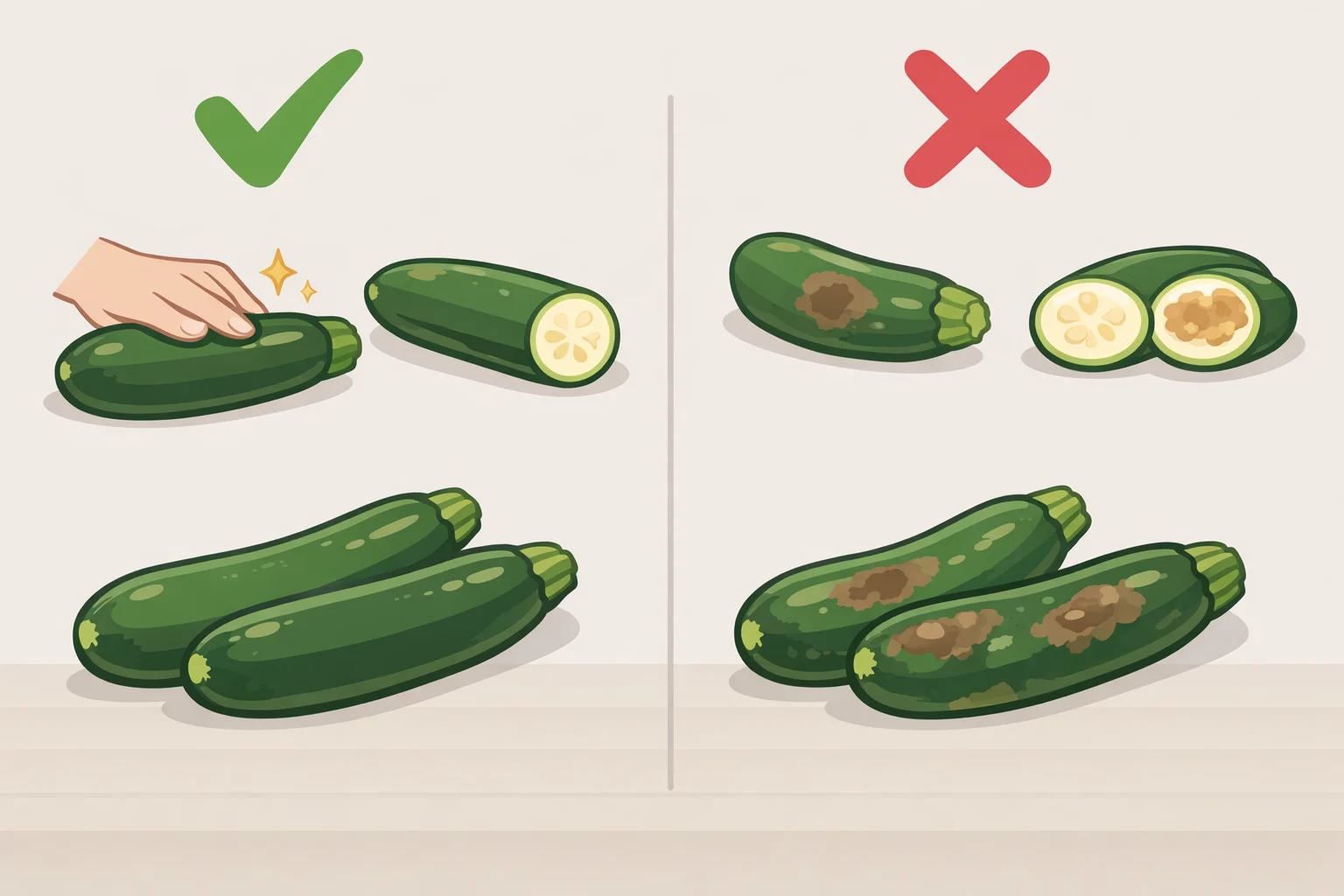
Good storage begins before the vegetable reaches the fridge. Oregon State University Extension advises choosing young, tender squash. Once zucchini reaches overmaturity, its rind hardens and seeds toughen, and no storage method will fix that. Storage is a ceiling, not a floor.
Physical condition at purchase matters just as much as age. Washington State University Extension notes that summer squash has thin, fragile skin, and any abrasion or bruising creates entry points for decay. UMass Extension reinforces the point: produce that is already bruised, disease-affected, or damaged will not hold well regardless of conditions. Handle zucchini more like an egg than a potato.
At the store or market, look for firm skin with no soft spots, pitting, or discoloration. Skip anything with obvious skin damage, and carry it carefully on the way home. Stacking heavier produce on top in a bag is enough to start the decay clock early.
Video of the Day
Step 2: Should zucchini be refrigerated? A quick decision framework
Before getting into how to store it, decide where.
If you are cooking it today or tomorrow, leaving it out is workable, but quality drops fast at typical kitchen temperatures, so do not plan to wait longer than that. If you will use it within a week, refrigerate it in the crisper drawer in a loosely vented bag. If you cannot use it within a week, freeze it. The freezing method is covered in the final section.
The range in published guidance reflects real variation in home storage conditions. University of Maine Cooperative Extension puts refrigerator life at two to three days. WSU Extension says up to a week with careful handling. The UC Davis Postharvest Research and Extension Center reports that zucchini has been stored at 41°F with acceptable market quality for up to two weeks, while noting that summer squash ideally should not be stored longer than ten days even under those conditions.
Two to three days reflects minimal-effort storage. Five to seven days is achievable with the steps below. Two weeks is a commercial postharvest benchmark that very few home refrigerators can replicate, so treat it as an upper bound, not a target.
How to store zucchini in the fridge: step by step
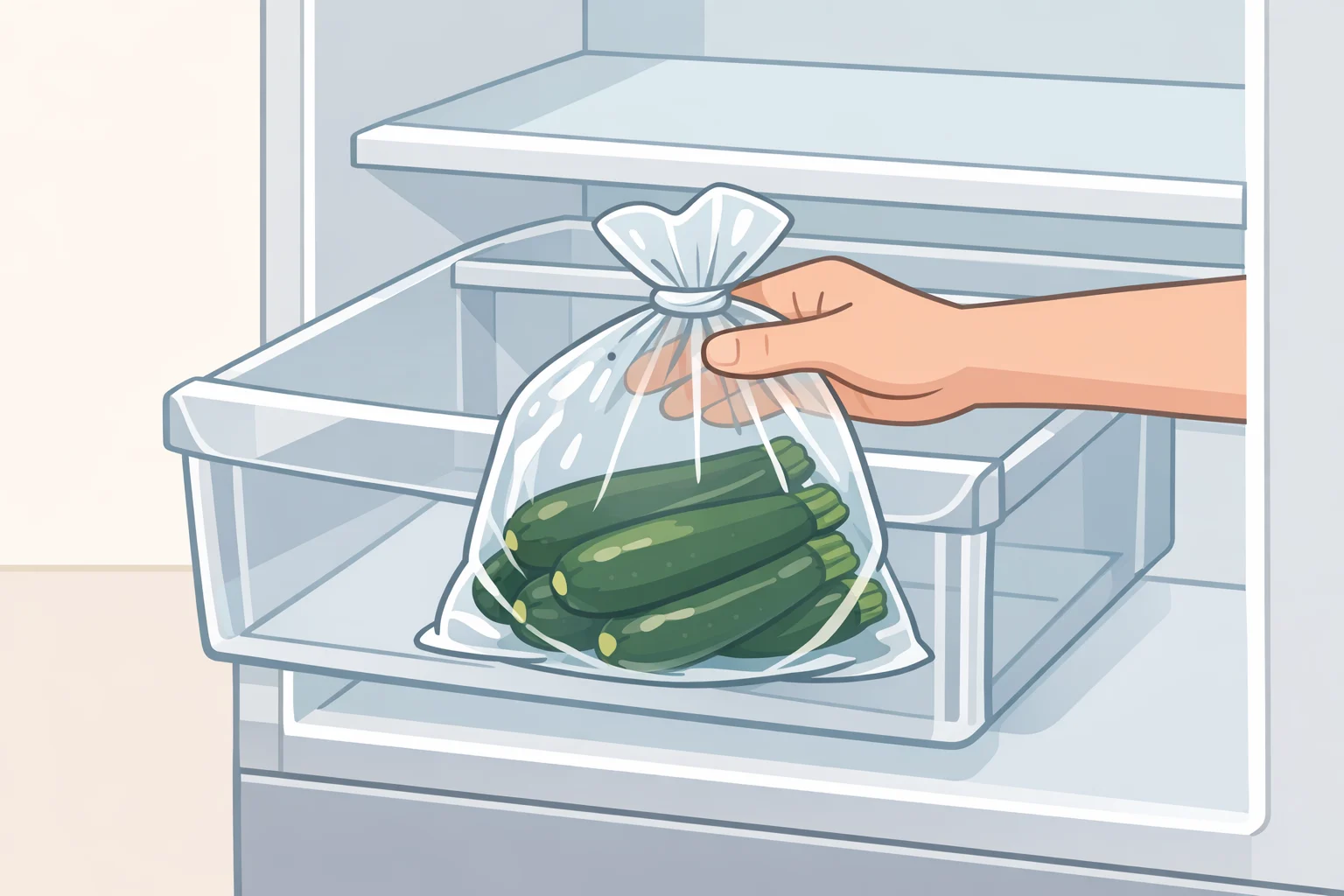
The single most important rule: do not wash zucchini before storing it. WSU Extension is direct on this point washing adds surface moisture that accelerates decay. Wash it immediately before using it, not before refrigerating it.
University of Maine Cooperative Extension recommends wiping zucchini clean before bagging; a dry cloth or paper towel removes surface dirt without wetting the skin. Then bag it loosely. The goal is maintaining humidity around the zucchini without trapping moisture against the skin where it promotes rot. The UC Davis Postharvest Research and Extension Center targets 95% relative humidity for summer squash storage, and a slightly open bag or one with a few small holes strikes the right balance. WSU Extension specifically recommends perforated bags for this purpose.
Put the bag in the crisper drawer, not on the main refrigerator shelf. The crisper is the best available spot in most home fridges for produce that needs slightly warmer, more humid air than the main compartment provides.
One important caveat on temperature: the UC Davis Postharvest Research and Extension Center notes that storage below 41°F for more than one to two days can initiate chilling sensitivity, and three to four sustained days below that threshold will generally produce chilling injury. Cucurbits as a category are particularly vulnerable to cold stress in home storage, as University of Minnesota Extension noted last year. If your refrigerator runs cold, plan to use zucchini within two to three days rather than pushing toward a week.
Step by step:
- Wipe the zucchini dry with a clean cloth or paper towel. Remove visible dirt without wetting the skin.
- Place it dry and unwashed in a plastic or reusable produce bag. Leave the bag slightly open or punch three to four small holes for airflow.
- Put the bag in the crisper drawer, away from the back wall where temperatures drop furthest.
- Use within five to seven days. If your fridge runs particularly cold, use within two to three days.
How to tell when zucchini is going bad
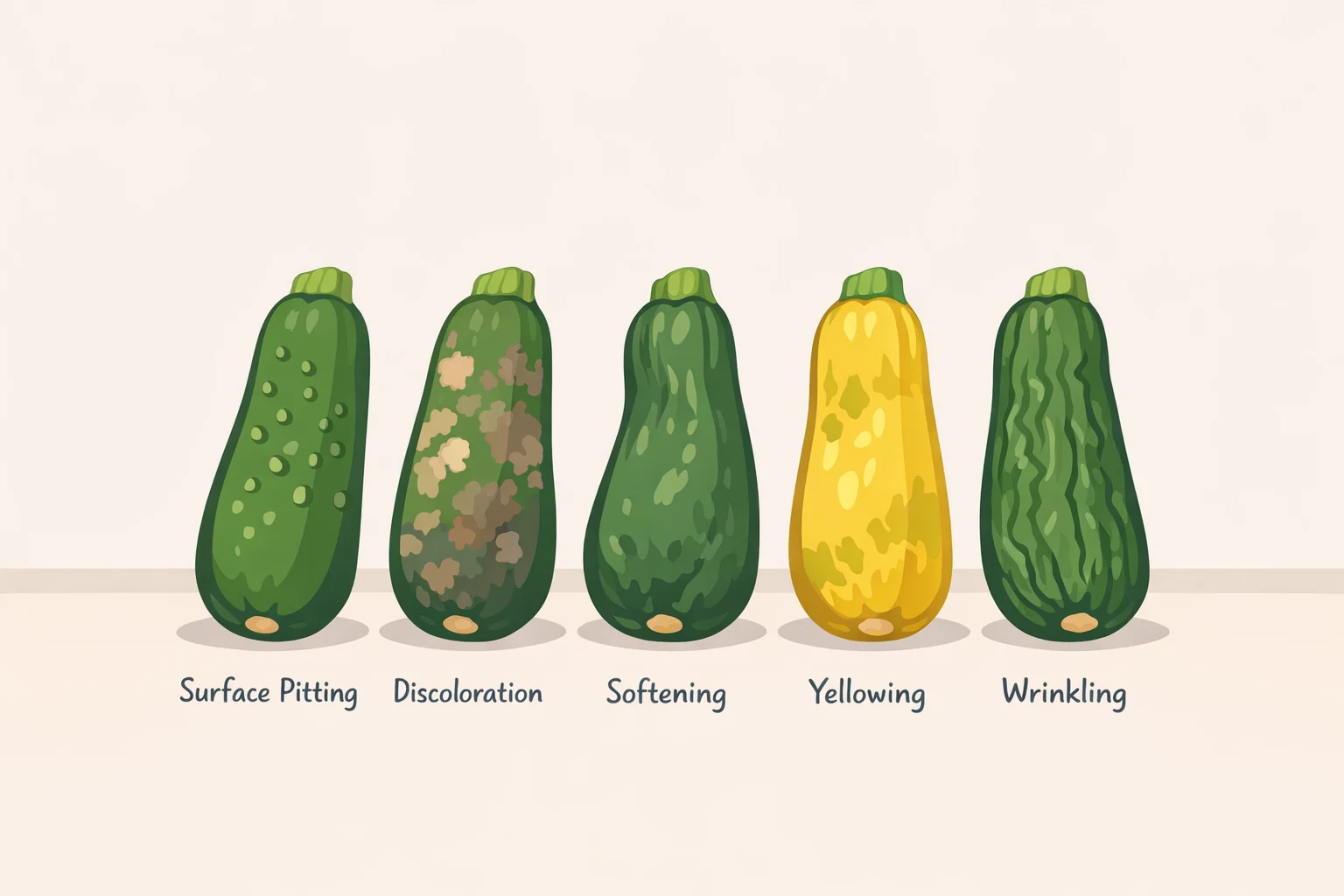
Chilling injury and natural decay produce overlapping symptoms, so it pays to know what to look for. The UC Davis Postharvest Research and Extension Center describes the progression: surface pitting (small, sunken spots), discoloration, and browning appear first, and they can accelerate rapidly once the zucchini returns to room temperature. A zucchini that looked acceptable in the fridge may deteriorate quickly once it sits on the counter.
With extended storage, UC Davis postharvest research indicates that shriveling, yellowing, and active decay become more likely, particularly after the vegetable is moved back to ambient temperature.
What the signs tell you:
- Surface pitting, isolated soft spot: The affected area has broken down. Trim well past it and cook the rest immediately.
- Widespread softening, yellowing skin, or off smell: These indicate breakdown beyond what trimming can address. Discard.
- Slight surface wrinkling on otherwise firm skin: Moisture loss is underway. Still usable, but cook it soon.
Check refrigerated zucchini every two to three days. Do not assume it is fine until the day you need it.
What to do when you have more zucchini than you can use this week
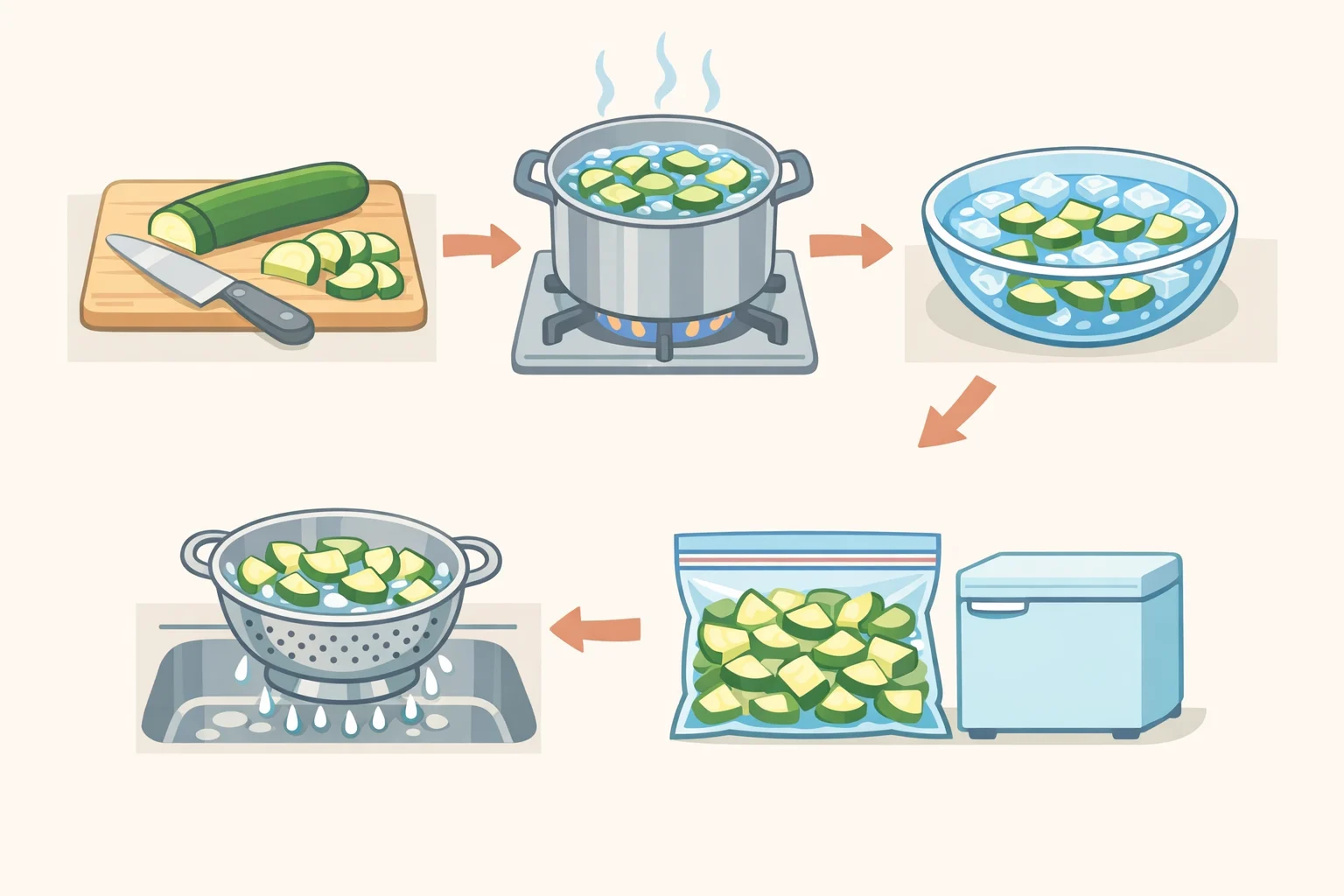
Freezing is the most practical option for surplus zucchini. OSU Extension recommends slicing it into half-inch pieces, blanching in boiling water for three minutes, cooling immediately in ice water, draining thoroughly, and packing into moisture and vapor-resistant freezer bags or containers. Store at 0°F or below for best quality.
Grated or spiralized zucchini headed for baked goods skips the blanching step entirely. OSU notes that spices and other ingredients in baked recipes mask any flavor changes that develop in unblanched frozen zucchini. Thaw it first and drain off the liquid before adding it to a recipe.
On canning: OSU Extension explicitly states that canning plain zucchini or summer squash is no longer recommended. There are unresolved questions about safe processing times, and the product quality is poor. Zucchini can be safely canned with tomatoes using a tested recipe, where the acidity creates a safe environment for pressure canning. Do not attempt to can plain zucchini.
The realistic goal
Zucchini is short-lived. Everything above is about slowing decline, not eliminating it. Even under good conditions, five to seven days in a home refrigerator is the practical ceiling, and the quality of what you bring home sets the upper limit before you ever open the crisper drawer.
If you are buying from a farmers' market and the zucchini has already spent time in a cooler before you picked it up, treat it as closer to the two-to-three-day end of the range. Same if it looked like it had been sitting in the store's cold case for a while. Refrigerate it the same day you bring it home, use it sooner rather than later, and freeze anything you cannot get to within the week.