Grilled steak salad recipe: how to make it dinner-worthy
This guide walks you through a complete grilled steak salad recipe: how to choose and prep the cut, how to cook it to the right temperature, how to rest and slice it correctly, and how to build a dressing with enough acid to keep the plate from feeling heavy. Active time is 30 minutes or less. The dry-brine step adds 30 minutes of hands-off time beforehand, and it matters.
The Kitchn, Bon Appétit, and NYT Cooking all converge on the same formula: well-seared medium-rare steak, a sturdy green base, charred or fresh vegetables, and a punchy acid-forward dressing. This guide explains why each piece matters and what goes wrong when you skip steps.
What you'll accomplish: Buy a flank or strip steak, pull it at the right internal temperature for the cut, rest it fully, slice it against the grain, and plate it over butter lettuce with a scallion-lemon vinaigrette. That's the default. The variations follow naturally once the base version is locked in.
Before you start: An instant-read thermometer is the one tool that makes the rest of this guide work. Everything here depends on hitting specific internal temperatures, and guessing by color or timing alone won't get you there consistently.
Step 1: Choose your cut and prep it correctly
Video of the Day
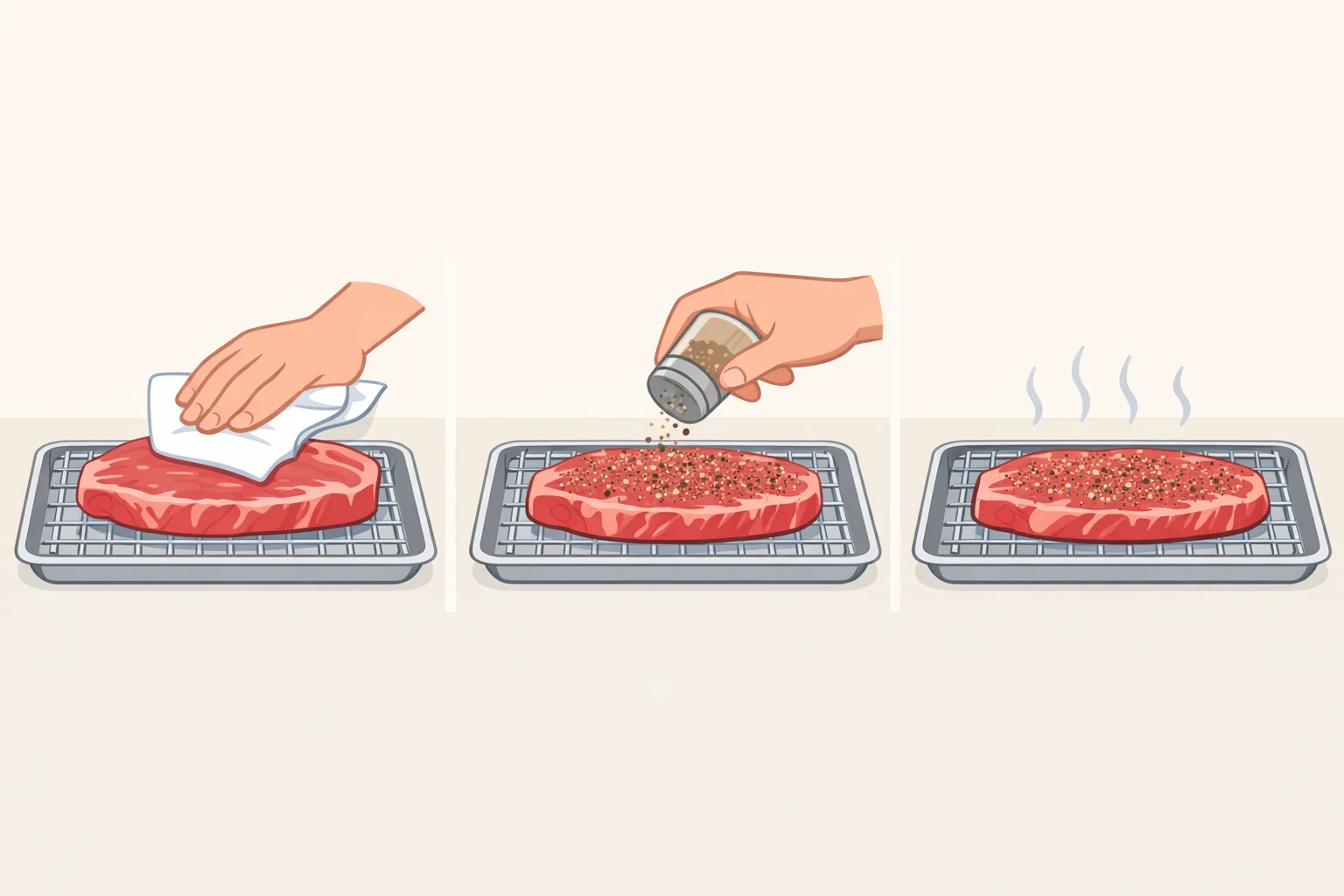
The default here is flank steak or NY strip. Both are widely available and well-suited to salad. Here's how they differ:
- Flank or skirt steak: thin, fast-cooking, strong beef flavor. Serious Eats notes these cuts benefit from frequent flipping over very high heat, which keeps the narrow margin between rare and overcooked from closing before you've built a sear. They must be sliced thin and against the grain, or the texture suffers.
- NY strip: thicker, more forgiving, slightly richer. The Kitchn uses 1-inch boneless strip steaks, cooked 4–5 minutes per side at high heat. More room for error; more fat in each bite. Wider window between underdone and overdone, which makes it easier to time alongside other components.
- Rib-eye: richest of the group. Bon Appétit uses thick-cut rib-eye; the salad skews heavier as a result. Pair it with a higher-acid dressing and lighter greens.
The dry-brine: plan for it, even briefly. Pat the steak completely dry with paper towels, season all over with kosher salt and black pepper, set it on a wire rack over a sheet pan, and leave it uncovered. Serious Eats explains the mechanism: salt draws moisture to the surface, dissolves into it, and gets reabsorbed into the meat, where it loosens muscle proteins and improves juiciness. The surface dries out in the process, and a drier surface produces a deeper sear. Minimum 30 minutes; up to 8 hours refrigerated works even better.
Timing note: the active cook is 30 minutes. The dry-brine sits outside that window. If cooking tonight without advance prep, salt the steak first, then prep greens and dressing while it rests you'll still eat in under an hour.
Target temperatures by cut:
- Thin cuts (flank, skirt, hanger): Pull at 110–115°F; carryover brings it to medium-rare after resting (Serious Eats)
- Thicker cuts (strip, rib-eye): Pull at 120–130°F for medium-rare (The Kitchn; Bon Appétit)
- Safety note: The USDA FSIS recommends a minimum of 145°F with a 3-minute rest for whole-cut beef. Most culinary sources target medium-rare at lower temperatures. Use a thermometer and make an informed choice.
Video of the Day
Step 2: Cook and rest the steak
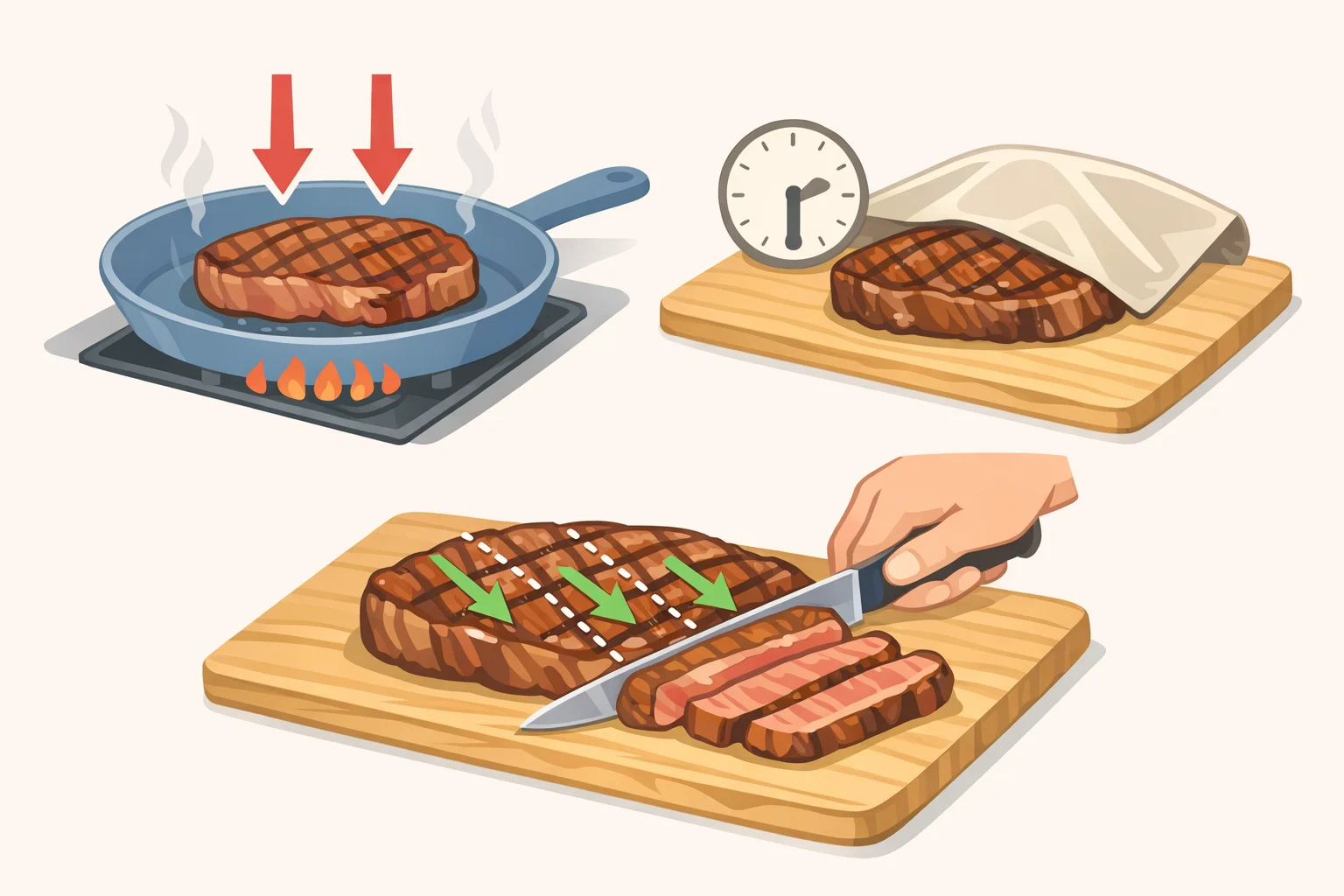
Heat your surface hard first. For an outdoor grill, target 450–500°F over direct heat before the steak touches the grates The Kitchn and The Wooden Skillet both specify this range. For a cast iron skillet, heat over high until the pan just starts to smoke, then add a neutral oil canola or vegetable and swirl to coat. Both sources specify neutral oil for the sear; save the olive oil for the dressing.
Cook and flip with purpose.
- Thicker cuts (strip, rib-eye): 4–5 minutes per side, turning once, until the crust is deep brown
- Thin cuts (flank, skirt): 3–5 minutes per side, flipping every minute. Serious Eats explains why: frequent flipping limits the band of grey overcooked meat inside, which on a narrow steak is the difference between a good result and a dry one
Don't crowd the pan. If two steaks are touching, steam builds between them and the sear stalls. Use a large skillet or cook in batches.
Rest before slicing. Transfer the cooked steak to a cutting board, tent loosely with foil, and let it sit for 5–10 minutes. Per Serious Eats, resting allows the juices to redistribute evenly through the muscle fibers; skip it and they pool on the board instead. Use this window to make the dressing and char the corn both fit comfortably inside the rest time.
Slice against the grain, thin. Find the direction of the muscle fibers and cut perpendicular to them. NYT Cooking is direct on this for flank: keep it on the rare side and slice thinly against the grain. Lean cuts turn chewy fast if sliced with the grain or cut too thick. Target ½-inch slices or thinner.
Step 3: Build the easy grilled steak salad with vinaigrette
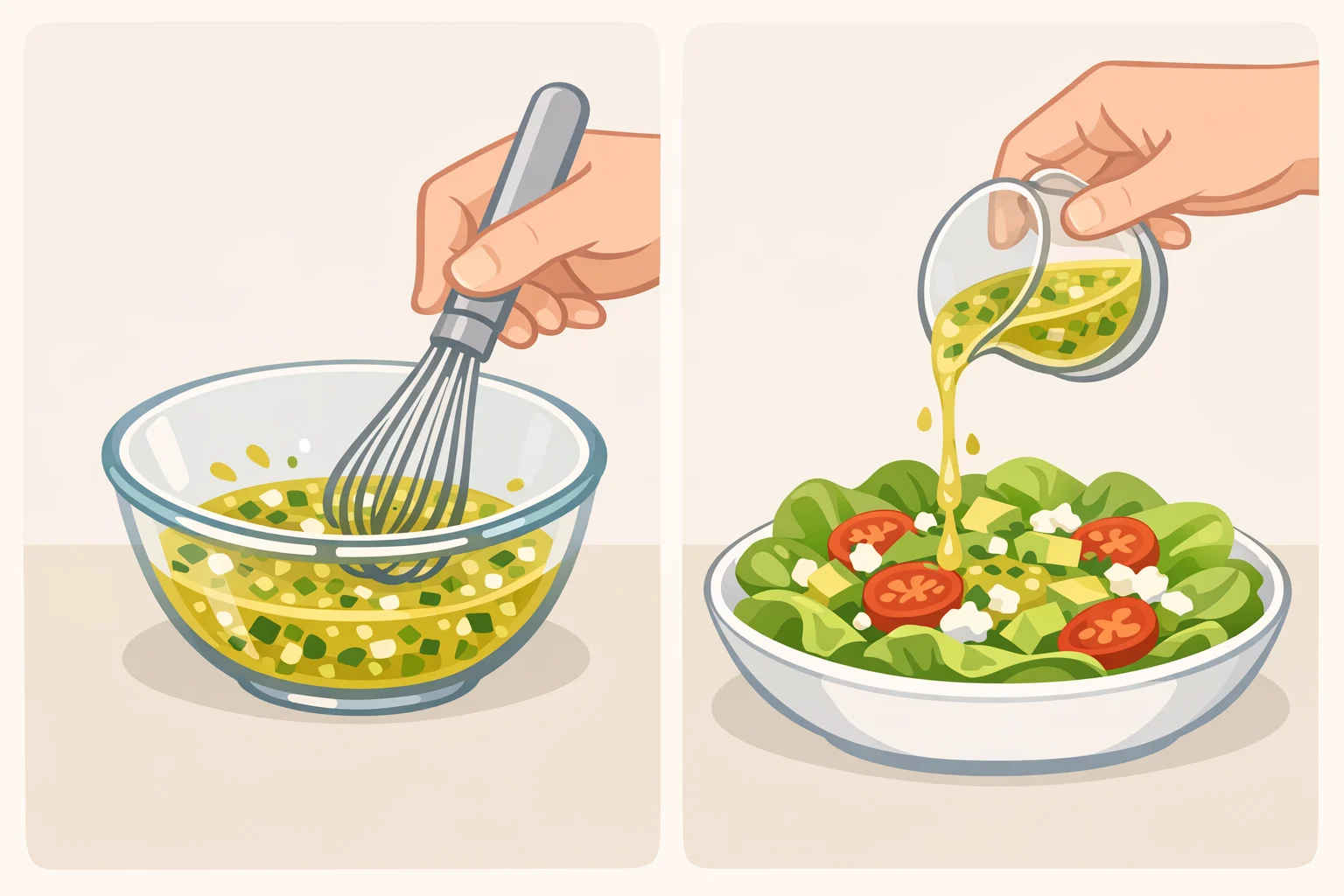
The dressing is doing structural work here, not decoration. Rich steak and creamy cheese need something sharp and acidic to keep the plate from going flat. A well-built vinaigrette is also what distinguishes this as a proper dinner rather than a steak plate with leaves arranged around it.
The default dressing: scallion-lemon vinaigrette. Whisk together ⅓ cup olive oil, 3 tablespoons fresh lemon juice, 4 thinly sliced scallions, 1 teaspoon Dijon mustard, and 1 teaspoon honey; season with salt and pepper (The Kitchn). Bright and clean, ready before the steak finishes resting. One reviewer called the scallion dressing "simple and flavorful" that's the right target for a weeknight build. Start here on the first pass.
Two variations worth knowing:
- Feta dressing: blend 6 oz. feta, ¼ cup lemon juice, 2 tablespoons mayonnaise, 1 tablespoon honey, and 1 tablespoon olive oil with a splash of water until smooth (Bon Appétit). Salty and intense Bon Appétit describes it as Caesar-like and better suited to a romaine base and thicker steak.
- Chimichurri: herb-heavy, garlicky, olive oil-forward. The Wooden Skillet and Serious Eats both position chimichurri as the defining sauce in this style of steak salad. Best with flank or skirt.
The default build:
- Arrange butter lettuce or romaine leaves on a platter or in shallow bowls. Butter lettuce is softer and pairs well with a mild vinaigrette; romaine holds up better under a heavier dressing like the feta version.
- Add charred corn (5 minutes in a dry cast iron pan over medium-high, per The Kitchn), halved cherry tomatoes, diced avocado, and crumbled feta.
- Drizzle about half the dressing over the base. Add the sliced steak last, shingled on top, still slightly warm.
- Finish with the remaining dressing and a handful of torn fresh basil leaves.
On proportions: The Kitchn portions two 12-ounce strip steaks across four servings. That ratio works enough protein to anchor the meal, but the greens and vegetables have enough presence that each forkful picks up both. Underload the base and it reads like a steak plate with garnish.
Dress the greens at the last possible moment. Dressed lettuce sitting under warm steak for more than a few minutes goes limp. If serving over time, keep the dressing on the side.
Make-ahead option: All produce prep and the dressing can be done up to a day ahead, stored in separate airtight containers (The Kitchn). Cook the steak fresh.
Scaling, leftovers, and what to make next
Cooking for two. The default recipe from The Kitchn yields four servings from two 12-ounce strip steaks. For two people, one steak is enough halve the dressing and produce accordingly. Cooking for a larger group means batching the steaks sequentially; tent the finished ones together and rest them collectively before slicing.
Flank vs. strip: the real difference. Strip has a wider window between underdone and overdone. Flank delivers more beef flavor and a cleaner slice, but it punishes distraction the margin between juicy and dry is narrow on lean cuts, as NYT Cooking notes. When timing the cook alongside other components, strip is the more practical choice. When the grill has your full attention, flank earns its place.
Leftover strategy. Steak holds up cold far better than dressed greens do. If there's any chance of leftovers, store all components separately in airtight containers for up to one day (The Kitchn). Cold sliced steak, leftover vinaigrette, and fresh greens make a faster second meal than starting over.
Once the default version is dialed in flank or strip, scallion vinaigrette, butter lettuce base the chimichurri variation with marinated flank is the natural next step. Same technique, considerably more complex flavor.