Gochujang Cucumber Salad Recipe: Keep It Crisp Every Time
Salting and fully drying the cucumbers matters more than anything else in this recipe. Get that step right and the gochujang cucumber salad recipe takes care of itself. Skip it and even a well-balanced dressing turns into a diluted puddle within minutes.
This guide walks through making oi muchim, a Korean cucumber salad with gochujang paste, so the cucumbers stay genuinely crunchy through serving. It takes about 40 minutes total, most of it hands-off.
What you'll need before you start:
- 1 lb (450-500g) English or Persian cucumbers
- Kosher salt (if using table salt, use half the volume table salt is denser and will oversalt, per Serious Eats)
- Gochujang paste, available at Asian grocery stores and most Whole Foods or Trader Joe's locations (Whisk Affair)
- Rice vinegar, soy sauce, toasted sesame oil, garlic, a sweetener (honey or sugar), sesame seeds
- A colander, a bowl, and paper towels or a salad spinner
Why the cucumber choice matters before the dressing does
Video of the Day
Most oi muchim recipes call for English or Persian cucumbers, and the reason isn't arbitrary. Serious Eats notes that English cucumbers don't need peeling and have tender, nearly seedless interiors that hold up well in raw preparations. Standard waxed cucumbers from conventional grocery stores have thicker skins and larger seed cavities, both of which affect texture and water content once salt hits them. Persian cucumbers are a solid alternative: smaller, thin-skinned, and similarly low-seed. Either works for this Korean cucumber salad with gochujang; a standard waxed cucumber won't ruin the dish, but peeling becomes necessary and the texture is noticeably different.
Gochujang is the other ingredient worth understanding before measuring. It's a fermented Korean red chili paste made from chili powder, glutinous rice, fermented soybeans, and salt. The fermentation is what separates it from simply adding heat. The paste brings depth, a faint sweetness, and a sticky body that helps the dressing cling to the cucumber slices rather than pool at the bottom of the bowl. Gochugaru, by contrast, is dried and ground it adds heat and color, but not that fermented complexity. Recipes that use only gochugaru produce a spicier, flatter result. The two are different tools, not interchangeable substitutes.
On sesame oil: the baseline dressing here uses 1 teaspoon, which is lower than some recipes. Sesame oil is a finishing flavor, added last because heat and over-mixing dull it quickly. Keep it restrained and it reads as an accent; use it as a base and it takes over. For a gochujang cucumber side dish, the paste should lead.
Video of the Day
Step 1: Slice, salt, and get the cucumbers actually dry
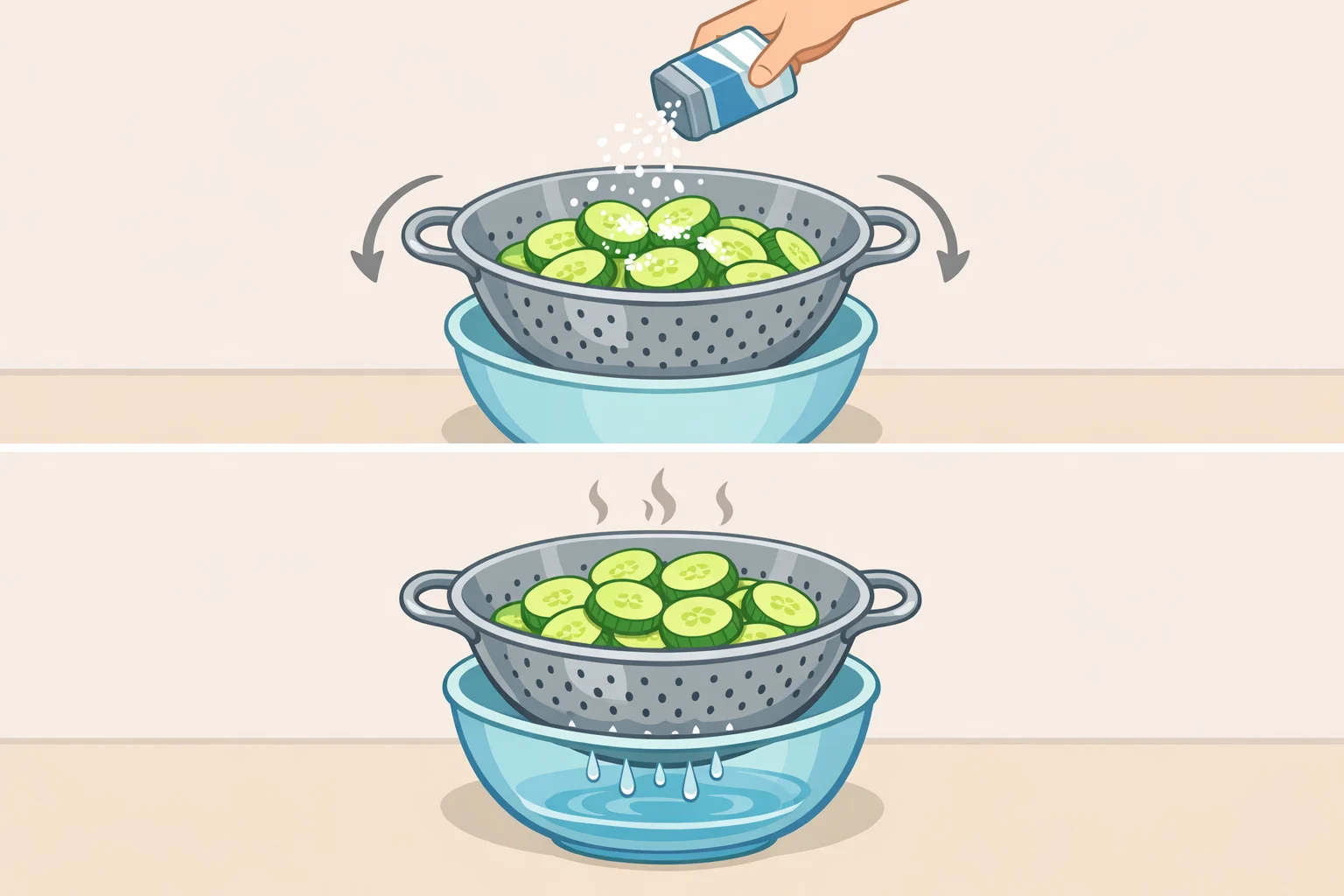
This is the step that separates a crisp salad from a soggy one. Do not rush it.
1. Slice the cucumbers into ¼-inch rounds. Thinner than that and they'll go limp before you finish eating. Salad Alchemy notes that ½-inch gives the most satisfying bite, though slices anywhere from ¼ to ½ inch are reasonable depending on preference.
2. Toss with salt in a colander set over a bowl. Use 1½ teaspoons Diamond Crystal kosher salt per pound of cucumbers, or ¾ teaspoon if using table salt, per Serious Eats. Cooking with Kendra salts for 10 minutes at room temperature; Whisk Affair goes 15-20 minutes; Salad Alchemy recommends at least 30 minutes, noting that the longer the cucumbers sit, the more water releases through osmosis and the crisper the final result. Twenty minutes is a reasonable default.
3. Dry the cucumbers thoroughly more thoroughly than feels necessary. Pat firmly with paper towels until the slices feel tacky and slightly dry to the touch, not just damp (Cooking with Kendra). A salad spinner is faster: Serious Eats uses a spin-then-pat method after a 30-minute rest, with paper towels as the stated alternative. Either works. The cucumbers should look matte, not glistening.
Why does this matter so much? Serious Eats explains the mechanism: salting draws out excess moisture and seasons the cucumber throughout, keeping slices crisp and preventing the dressing from thinning out. Surface moisture on the slices at the moment of dressing will dilute the gochujang paste immediately, turning a sticky, punchy sauce into something thin and flat.
Should you rinse the salt off? Whisk Affair rinses under cold water before drying; Korean Bapsang skips the rinse entirely and warns explicitly against squeezing the cucumbers, which bruises them. Skip the rinse if you used the correct amount of salt, rinse if you went heavy. Either way, the cucumbers must be completely dry before the dressing goes on.
Troubleshooting moisture:
- Salad is watery after dressing: The cucumbers weren't dry enough, or they sat dressed too long before serving. Extend drying time and serve within 30 minutes of combining.
- Cucumbers taste too salty: Rinse under cold water and pat dry again, or reduce salt by a quarter next time.
- Slices are already soft before the dressing: They were sliced too thin, or they rested too long without being dried. Stick to ¼-inch minimum.
How to make gochujang cucumber salad without the dressing going watery
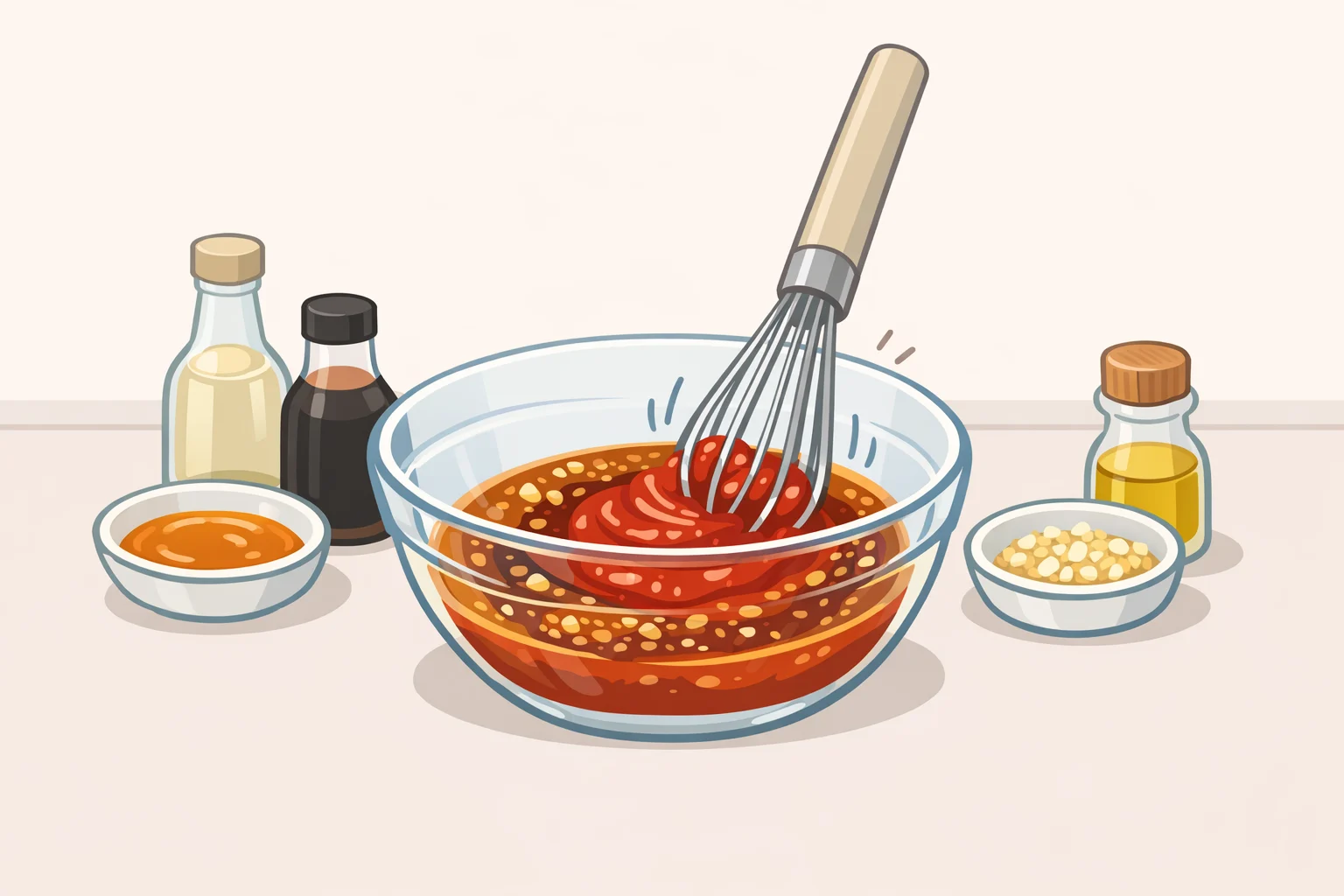
Build the dressing while the cucumbers release their water. The timing works out to roughly the same window.
This baseline formula draws from the consistent core across Whisk Affair, Cooking with Kendra, and Salad Alchemy:
- 1½ tablespoons gochujang paste the fermented backbone; this amount gives clear heat without overwhelming the cucumber
- 1 tablespoon rice vinegar the tang that keeps the dressing from feeling heavy
- 1 teaspoon soy sauce depth and salt; reduce slightly if you didn't rinse the cucumbers
- 1 tablespoon honey (or 1-2 teaspoons sugar) start here; the dressing should read sweet-spicy, not pure fire
- 1 clove garlic, finely minced
- 1 teaspoon toasted sesame oil add this last; it's a finishing flavor, not a base
- 1 teaspoon toasted sesame seeds
Whisk until fully combined and the gochujang is completely incorporated. The dressing should look cohesive and slightly thick, not streaky.
The balance between these ingredients isn't accidental. Rice vinegar is mild enough to brighten the dressing without competing with the paste. Soy sauce adds savory depth that plain salt can't replicate. Honey rounds off the edges; without it, gochujang at this quantity reads sharper than most people want in a banchan context.
Adjusting heat and sweetness:
- Want more heat? Add 1 tablespoon gochugaru (Korean red chili flakes). Cooking with Kendra uses 2 tablespoons alongside the gochujang paste that's the spicier end of the range across the recipes surveyed here.
- Want a sweeter profile? Whisk Affair uses 2 full tablespoons of honey, which produces a noticeably rounder, mellower result. Add the second tablespoon after tasting.
Step 3: Combine, chill, and serve the same day
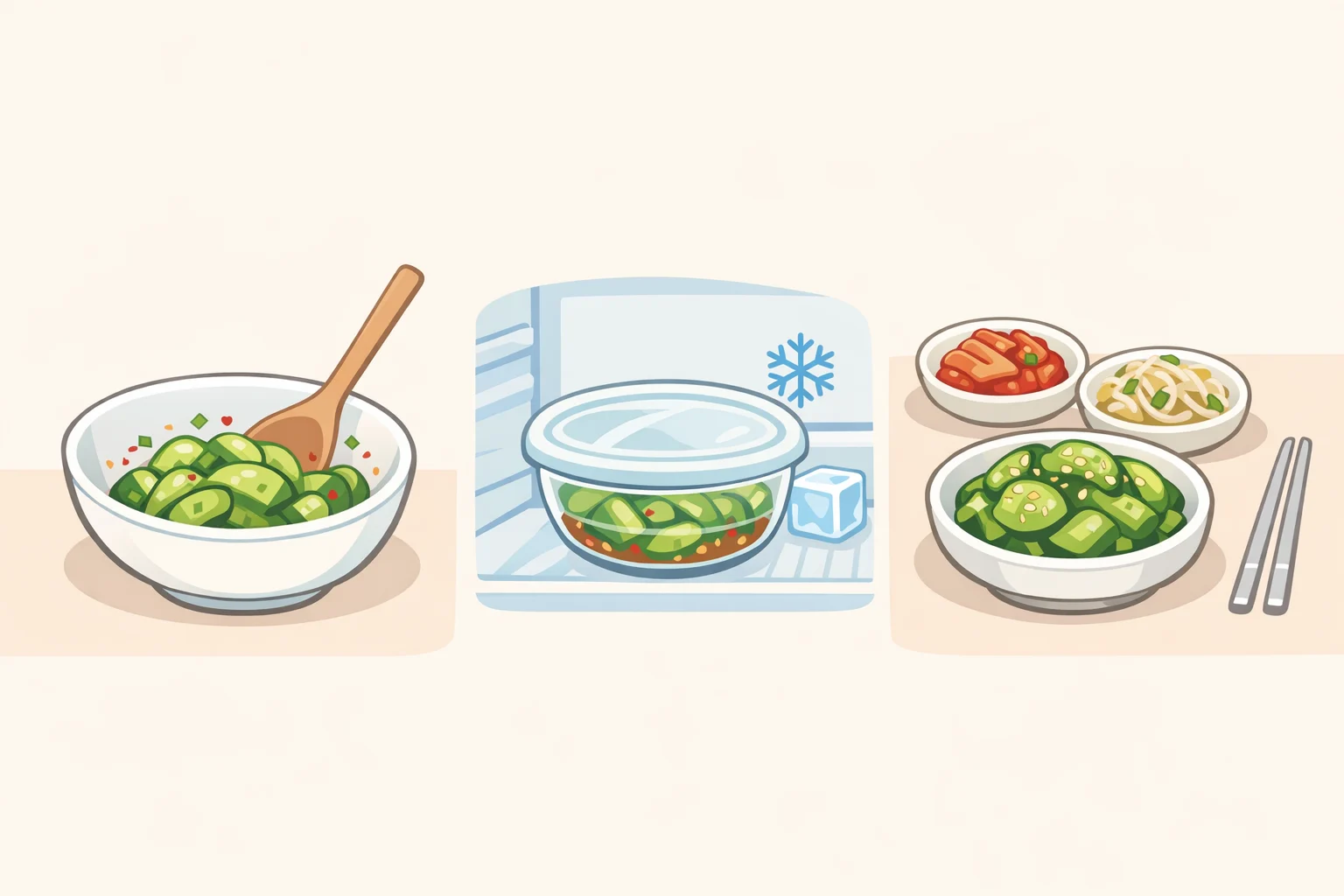
4. Fold the dry cucumbers into the dressing. Gently, not vigorously. Folding keeps the slices intact and ensures even coating without breaking them down. Cooking with Kendra specifies folding explicitly for this reason.
5. Refrigerate for 15-20 minutes before serving. This lets the dressing absorb into the cucumbers and the flavors settle. Salad Alchemy recommends a minimum of 15 minutes; Whisk Affair allows up to 30. Don't push much past 30 minutes at this stage or the cucumbers will begin softening noticeably.
6. Serve cold as a banchan alongside steamed rice, grilled meat, or cold noodles. Salad Alchemy notes it works particularly well alongside spicy ramen or naengmyeon as a cooling contrast. Top with extra sesame seeds before bringing it to the table.
When to eat it and how long it keeps
Eat it the day you make it. That's the consistent position from the most reliable sources on this dish.
Cooking with Kendra is the most specific: maximum crunch lasts about two hours after dressing. The salad holds in an airtight container for up to two days, but the texture changes the cucumbers soften, the dressing thins slightly, and the result tastes more pickled than fresh. Whisk Affair aligns: best fresh, edible for 2-3 days. Expect the two-day version to be a different experience, not a ruined one.
One source in the research set suggests the salad keeps for up to two weeks. That conflicts with every other source on this dish and reflects a very different expectation about texture something closer to a quick pickle than a fresh cucumber salad. Plan for two days maximum if crunch is the goal.
To get ahead: Serious Eats recommends making a comparable dressing up to three days in advance and refrigerating it separately. Apply that approach here mix the gochujang dressing up to three days ahead and store it refrigerated. Salt and dry the cucumbers the day you're serving. Combine everything 15-20 minutes before the meal.
The day-of timeline: 20 minutes of salting, 5 minutes of drying and mixing, 15-20 minutes of chilling. Everything except the salting is active work. That's what makes this practical as a weeknight side alongside whatever's already cooking.