How to Make a Radler: Ratios, Lagers, and Mixers
The bartender's secret for a crisper summer beer isn't a frosted glass or a handful of ice. It's intentional dilution with the right ingredient. A Radler, equal parts light lager and sparkling lemonade, keeps everything that makes beer taste like beer while adding effervescence and citrus lift. The drink is thought to date to 1922, and the logic behind it hasn't changed.
Light lagers are highly carbonated, crisp, and refreshing, qualities that make them especially welcome on a hot day, according to Food & Wine. Citrus pairs naturally with that profile: even a lemon wedge can highlight the bright, floral aromatics already present in the style. Mixing equal parts sparkling lemonade and lager pushes those qualities further, adding effervescence and a touch of sweetness while the beer's dry character keeps the mixer's sugar in check, per Food & Wine.
This guide covers exactly how to make a radler: which lager to use, what sparkling lemonade to buy, how to dial the ratio, and what the finished drink should taste and feel like, plus what to do when sparkling lemonade isn't available.
Why a radler tastes crisper than beer over ice
Video of the Day
Carbonation is CO₂ dissolved in liquid. Colder temperatures allow more of it to stay dissolved; at higher temperatures beer can retain roughly half to two-thirds of the carbonation it holds when properly cold, according to Craft Beer & Brewing. Ice gets you cold fast, but as it melts it dilutes the beer without contributing anything back.
When InsideHook tasters tried ice in a pilsner, an IPA, and a stout last September, the pattern held across all three: dilution stripped the defining character from each style. The pilsner lost its bready, creamy mouthfeel. The IPA lost hop character. For the pilsner specifically, tasters broadly agreed that refrigerating beforehand or using a chilled glass produced better results. Lagers are more forgiving of dilution than hop-forward or richer dark styles, since their flavor profile is less intricate, but even a diluted lager just becomes thinner and flatter, per The Drinks Project.
Ice in beer is a legitimate choice in certain contexts. A pale lager over ice at an outdoor table in Bangkok or Mexico makes sense as a refreshment strategy rather than a flavor statement, and Craft Beer & Brewing notes that tradition directly. The question here is narrower: if the goal is crispness, a Radler is a more reliable tool. Sparkling lemonade adds carbonation and citrus brightness instead of subtracting flavor.
Video of the Day
How to make a radler
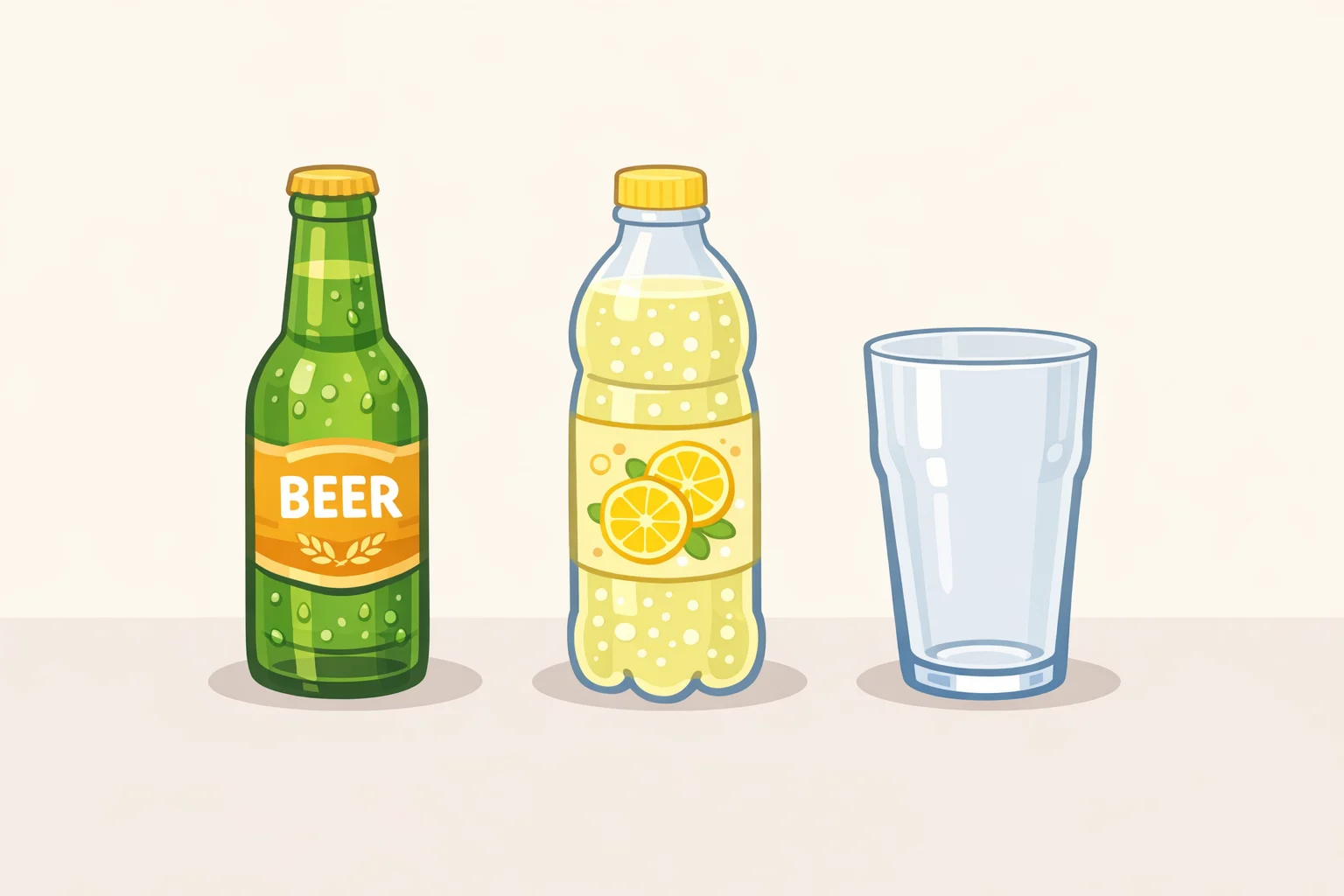
What you need: One cold can or bottle of light lager. One cold bottle of sparkling lemonade. A pint glass or large tumbler.
Step 1: Chill both liquids for at least two hours before you need them. Beer stales four times faster when unrefrigerated, with the lightest and most hop-forward beers declining soonest, according to Craft Beer & Brewing. Starting cold means the drink stays crisp without ice compensating for lost temperature.
Step 2: Choose the right lager. Use something highly carbonated, crisp, and low in bitterness. A Mexican lager (Modelo Especial, Pacífico, Victoria), a German helles, or a standard American light lager all work well. The lager's dry character is what keeps the lemonade's sweetness from taking over; that balance is the whole drink, as Food & Wine describes it. Skip IPAs: the hop aromatics will fight the citrus rather than settle alongside it. Skip anything rich, roasty, or high in ABV for the same reason.
Step 3: Choose your mixer. Sparkling lemonade is the right call for this radler recipe: carbonated, moderately sweet, clean citrus flavor. San Pellegrino Limonata is reliable; the sweetness is present but not aggressive, and the carbonation holds up in the mix. Fever-Tree Sparkling Lemonade runs drier and suits a slightly more beer-forward result. A decent generic sparkling lemonade works fine as long as it doesn't taste like candy. Taste it straight before mixing: if it's pleasant on its own, it'll work in the glass.
No sparkling lemonade available? Use plain soda water with a generous squeeze of fresh lemon, about half a lemon per serving. You lose a bit of sweetness and get a leaner, sharper result. Lemon-lime sodas like Sprite work in a pinch but push the sweetness further than ideal.
One thing to avoid entirely: still lemonade. The sparkling mixer's whole contribution to this sparkling lemonade and lager combination is carbonation and brightness. Use a still liquid and the drink will taste noticeably flat and soft.
Step 4: Pour the lager into the glass first. Fill it halfway, roughly 6 ounces in a standard pint glass. Tilt the glass slightly and pour against the side to manage foam. Steady and controlled is all that's required.
Step 5: Add the sparkling lemonade slowly, down the side of the glass. Keep the glass tilted and pour gently. The standard starting ratio is 50/50. From there: 60% lager and 40% lemonade gives a boozier, slightly drier result; 40% lager and 60% lemonade is sweeter and lighter. Start equal, then calibrate on the next round.
Step 6: Don't stir. Serve immediately. The two liquids combine without help. Stirring knocks out carbonation. Drink while the fizz is at its peak.
Optional: Squeeze a lemon wedge over the top. Citrus amplifies the aromatics already present in a light lager; the floral, bright notes become more pronounced with even a small addition of fresh juice, per Food & Wine. Takes thirty seconds and noticeably improves the drink.
What it should taste like: Lighter in body than straight beer, with more effervescence, a clean citrus note up front, and a dry finish where the lager reasserts itself. Sweetness present, not leading. If it tastes flat, the lemonade wasn't cold enough or went in too fast. If it tastes like lemonade with a splash of beer, the ratio skewed too far toward mixer.
Troubleshooting:
- Too sweet: Shift to a 60/40 lager-heavy ratio, or try a drier lemon soda
- Too flat: Both liquids need to be colder, or the mixer was still rather than sparkling
- Too foamy: Slow the pour and keep the glass tilted throughout
- Too bitter: Wrong lager; switch to something lighter and more neutral
Best beer and lemonade for a radler
The mixer matters more than most people expect. A sparkling lemonade with sharp, artificial sweetness will tip the whole drink in the wrong direction.
San Pellegrino Limonata is the most reliable all-purpose choice: carbonation is strong enough to hold up in the mix, sweetness is noticeable but not cloying. Fever-Tree Sparkling Lemonade runs drier and suits a more beer-forward result. Generic supermarket sparkling lemonade works fine as long as the flavor is clean citrus rather than candy.
For the lager: the more neutral, the better. A Mexican lager's light character and high carbonation make it one of the most compatible options. A German helles brings a bit more malt weight but stays clean. Standard American light lagers do the job without complicating things. The one consistent rule is to avoid anything with significant hop presence or residual sweetness; both will clash with the citrus rather than integrate with it.
Shandy vs. radler: what's the difference?
The terms get used interchangeably now, but they originated about 70 years apart. The Shandy, originally called the Shandygaff, appeared in England in the 1850s as a combination of beer and ginger ale or ginger beer. By the end of that century, lemonade had replaced ginger as the more common mixer and the "gaff" had been dropped, per Food & Wine.
The Radler is specifically Bavarian. Beer garden owner Franz Xaver Kugler is thought to have created it in 1922, according to Food & Wine, when a large group of cyclists arrived unexpectedly at his garden outside Munich and he stretched his remaining lager by mixing in citrus juice. Radler is the German word for cyclist, and Mass refers to a one-liter beer mug; the drink was originally called a Radlermass before the name shortened. Its identity has always been tied to hot weather and low-stakes refreshment.
For practical purposes, ordering a Shandy or a Radler gets you to the same place: beer plus citrus, split roughly equal, served cold. This summer beer cocktail format is the same drink under two names, separated by geography and a few decades.
The underlying logic extends further. A chelada covers similar territory with lime and salt instead of lemon and sweetness: Mexican lager, fresh lime juice, and a salted rim, as InsideHook describes it. A michelada adds tomato juice and spicy seasonings to that base, a tradition rooted in Mexico and Central America, per Craft Beer & Brewing. Both drinks work from the same premise: cold lager plus acid plus something sharp. The Radler is the simplest version of that idea, which is exactly why it's still around after a century.