5 Laundry Mistakes That Make Clothes Look Dirty After Washing
Pull a load out of the washer and find it still looks dingy, gray, or faintly musty, and the instinct is to blame the machine. Usually, the machine is fine. The laundry mistakes that make clothes look dirty are almost always process errors, and most of them are fixable without buying anything new.
The average American household runs eight to ten loads of laundry per week, per Puget Sound Consumers' Checkbook. That's a lot of cycles for the same errors to compound. This guide identifies five specific mistakes behind the most common visible symptoms gray whites, lint-covered darks, musty-smelling towels, and stains that survive multiple washes and gives a concrete fix for each.
Before starting: You'll need your regular detergent (liquid or pods work best), something for spot treatment, and about five minutes to sort a load properly.
Why clothes look dirty after washing: the three root causes
Video of the Day
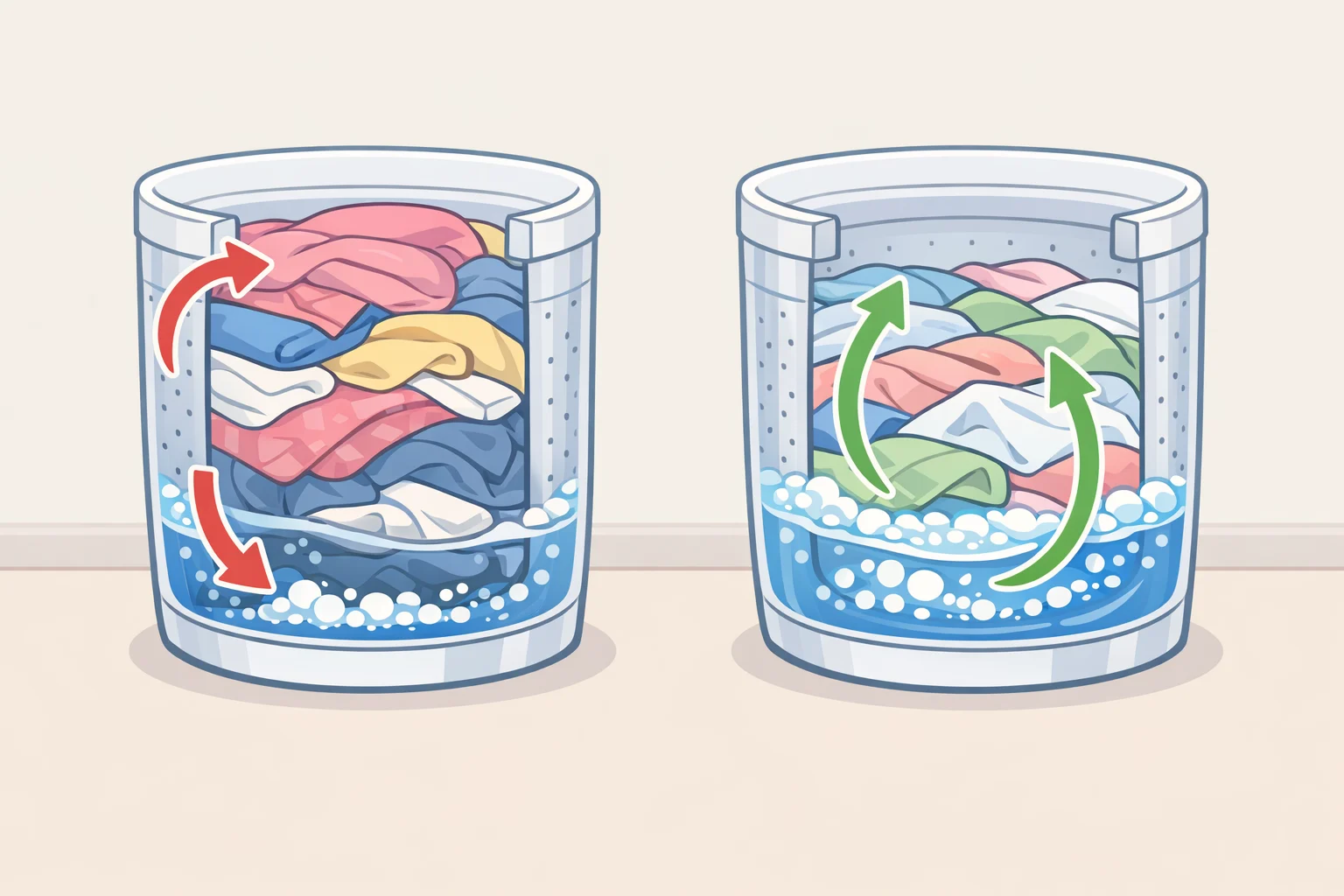
Before getting into the specific mistakes, it helps to know which mechanism you're dealing with. All five errors below trace back to one of three things:
- Poor circulation: The drum is too full or the load is unbalanced, so water and detergent can't move freely through the fabric.
- Residue buildup: Too much detergent, fabric softener, or dryer sheets coat the clothes and the machine with film that dulls, stiffens, or traps odors.
- Heat-set stains: A stain that wasn't cleared before drying is likely permanent.
Clothes coming out gray or dull? Start with detergent amount and load size. Musty smell? Look at the machine and what you're adding to it. A stain that made it through the dryer may already be set. You probably don't have all five problems at once use this as a triage guide.
Video of the Day
Mistake 1: Overloading the washer or dryer
If a whole load comes out uniformly dingy not stained, just not clean this is the likely cause.
Clothes and detergent solution need to circulate freely to transfer dirt out of fabric. Pack the drum too tight and that process breaks down.
- For top-loaders, fill loosely and leave space at the top. There's usually a plastic ring near the top of the drum; don't go above it. Cram in too much and the washer simply won't be effective items may need rewashing, which costs time and energy without solving the underlying problem, per Puget Sound Consumers' Checkbook.
- The same logic applies to the dryer. Clothes need room to tumble and hot air needs space to move. An overfilled dryer leaves things damp and, over time, prone to mildew smell, per Puget Sound Consumers' Checkbook.
- Front-load machines handle overstuffing differently but aren't immune. Because they use less water, an overcrowded drum leaves fabric with less water contact and a compromised rinse, per Consumer Reports.
The fix: Fill loosely and leave visible space at the top. If you're regularly tempted to squeeze in one more item, that's the load to split.
Mistake 2: Sorting by color and ignoring weight

If clothes come out unevenly clean, still wet in spots, or covered in lint, weight sorting is a likely culprit.
Most people know to separate lights from darks. Fewer know that sorting by fabric weight matters just as much and that mixing certain item types causes specific, visible problems.
- Mixing heavy and light items throws the spin cycle off balance. Towels absorb far more water than sheets; washed together, the waterlogged towels can prevent the machine from reaching full spin speed, leaving everything wetter and less clean, per Puget Sound Consumers' Checkbook. Consumer Reports flags the same issue: heavy pillows with light sheets produce a spin-cycle imbalance that shortchanges both.
- Towels washed with clothing leave lint on everything. Cornell's apparel expert notes this directly and recommends keeping towels in their own load (Cornell University). New dark denim should also run separately the pigments can bleed onto other fabrics in the first several washes (Cornell University; UW–Madison Housing).
- Heavily soiled items anything from outdoor work or with grease should wash alone. The dislodged soil doesn't disappear; it redistributes to everything else in the drum (Cornell University).
The fix: Sort by weight, not just color. Towels together, sheets together, clothing together, delicates alone. New dark items run separately for the first few cycles. Extremely dirty workwear gets its own load.
Mistake 3: Using too much detergent
If whites have gradually gone grayish, or clothes feel stiff and slightly coated, check the detergent amount first.
More detergent does not mean cleaner clothes. Past a certain point, the opposite is true.
A medium load needs roughly three tablespoons of liquid detergent about a shot glass worth. Beyond that, it leaves residue on fabric and builds up inside the machine, according to Consumer Reports. The dosing lines on most caps are set well above what most loads actually need. Excess detergent causes whites to turn grayish over time; the machine runs extra rinse cycles trying to compensate and often still doesn't clear the buildup completely (Cornell University).
Detergent type matters, though not in the way most people expect. Liquids and pods perform somewhat better overall in general testing, while newer sheet and strip formats lag behind both, per Puget Sound Consumers' Checkbook. A 2025 textile study adds a useful wrinkle: the powder detergent tested which contained bleach activators and optical brighteners in its specific formulation did a better job maintaining whiteness in white fabrics over 25 wash cycles, while the liquid detergent better preserved color in darker fabrics (Tekstilna Industrija). That's a lab result from one formulation, not a universal rule. The practical takeaway: liquid or pods for colored and dark loads; consider powder if white-only loads are losing brightness.
Pods and sheets go directly in the drum with the clothes, not in the detergent dispenser tray, which they can clog (UW–Madison Housing).
The fix: Start at the minimum amount shown on the label and adjust only if results are unsatisfactory. Ignore the fill line on the cap it's generous by design, per Consumer Reports and Puget Sound Consumers' Checkbook.
Mistake 4: Putting stained clothes straight into the dryer
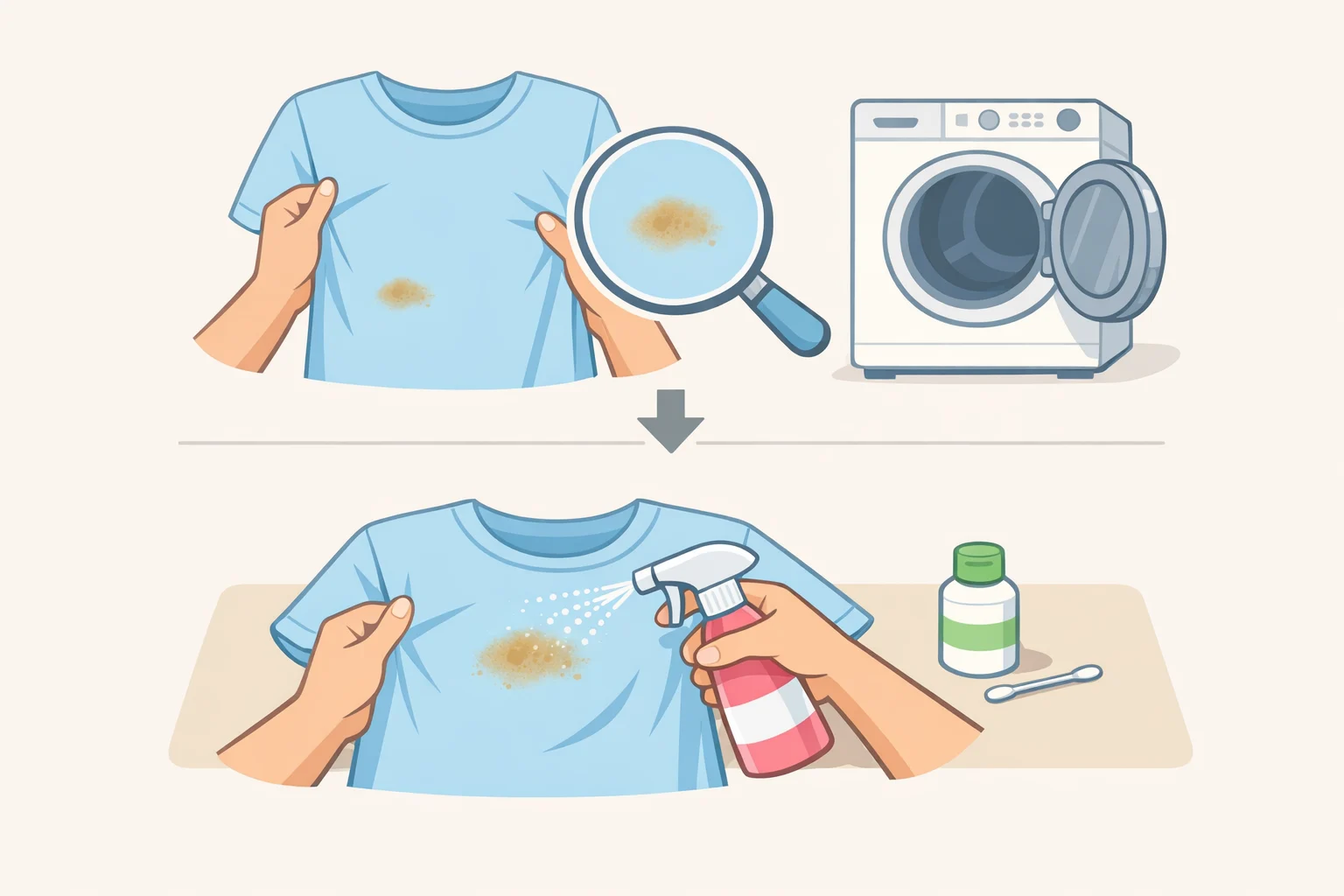
If a stain survived the wash cycle and the item went through the dryer, it's likely permanent.
Heat is what turns a stubborn stain into a set stain. The wash cycle is rarely where the process fails it's what happens before and after.
Act fast with a fresh stain. Blot the excess, apply a pretreatment and let it sit. A quality liquid detergent works as well as a dedicated pretreater, per Puget Sound Consumers' Checkbook. For tough stains, pretreating, rinsing, pretreating again, and rinsing a second time in the sink before the wash cycle can make a real difference. Once a stained item goes into the dryer, heat bonds the stain to the fabric and can make removal difficult or impossible, per Consumer Reports. This is the step most people skip: checking the item after washing, before it goes near the dryer.
Water temperature plays a role, too. Cold water works well for lightly soiled loads, but Cornell's apparel expert finds it harder to remove stains in cold even with pretreatment, and recommends warm water when an active stain is involved (Cornell University).
The fix: Pretreat before washing. After the cycle ends, check the item before it goes in the dryer. If the stain is still visible, pretreat again. The dryer locks in whatever the washer didn't finish it's not a second attempt at removal.
Mistake 5: Using fabric softener and dryer sheets, and neglecting the machine
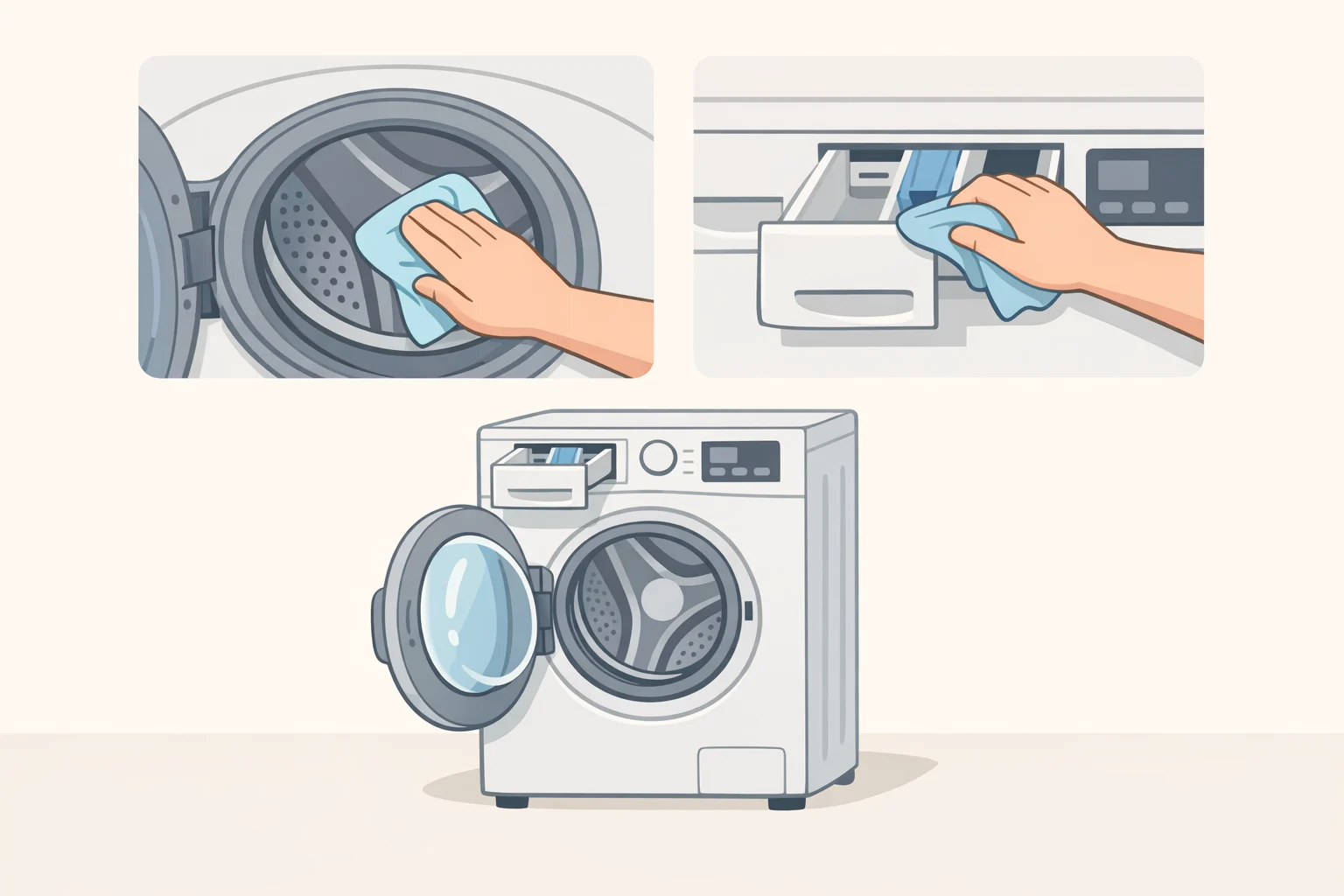
If laundry smells musty out of the dryer, or towels have stopped absorbing well, residue is the most likely cause from products and from the machine itself.
The products most associated with fresh, clean laundry are a direct cause of buildup and dull, musty results over time.
Fabric softener works by depositing a layer of electrically charged chemical compounds onto fabric fibers. Used repeatedly, that layer accumulates into a waxy film that dulls fabric and coats the inside of the washing machine, creating conditions where mildew can grow, per Consumer Reports. It also reduces towel absorbency and degrades moisture-wicking performance in athletic wear (Cornell University). Dryer sheets have the same coating effect in the dryer. They leave residue on the moisture sensor typically two metal strips inside the drum which reduces its accuracy and causes loads to finish under- or over-dried, per Puget Sound Consumers' Checkbook and Consumer Reports.
Machine maintenance is the other half of this problem. Front-loading washers are particularly prone to mold in the door gasket and detergent tray. Skip the wipe-down after the last load of the day, and visible mold on the gasket and a smell that transfers to clothing are the result, per Puget Sound Consumers' Checkbook. Excess detergent and fabric softener feed this cycle the residue left behind promotes mildew growth, and adding more scented products to compensate only makes it worse, per Consumer Reports. Many front-loaders also have a pump filter behind a small access door at the front base of the machine. A clogged filter impairs drainage, which means clothes may finish a cycle sitting in water that hasn't fully drained, per Puget Sound Consumers' Checkbook.
The fix: Skip the fabric softener. Tumble drying softens fabric without any additive, according to Cornell's apparel expert (Cornell University). If you've been using dryer sheets, clean the moisture sensor with a cotton ball dipped in isopropyl alcohol, per Puget Sound Consumers' Checkbook. After the last load of the day, wipe the gasket and detergent tray, then leave the door and dispenser slightly open to dry skip this if young children are in the home. Check the owner's manual for pump filter location and cleaning frequency. One firm caution: don't use vinegar to clean the machine. Consumer Reports warns it degrades rubber hoses and seals, particularly in front-loaders.
What to change first this week
Match the symptom to the fix and start with one change, not all five at once.
- Gray or dull whites: Cut the detergent amount. If the problem persists after several loads, try switching from liquid to powder for white-only loads, based on what the tested formulation in the 2025 textile study showed about whiteness retention.
- Lint on dark clothes, or uneven cleaning: Separate towels from clothing. Check that like-weight items are washing together.
- Musty smell on clean laundry: Start with the machine wipe the gasket, open the door between loads, check the pump filter then eliminate softener products (Consumer Reports).
- Stains that survived the wash: Going forward, check every stained item before it goes in the dryer (Consumer Reports).
If you change only two habits, reduce the detergent and stop mixing towels with clothing. Those two fixes address most dingy-load complaints without buying a single new product.