How to Make an Apothecary Chest

Apothecary chests go back to the Middle Ages. An apothecary, a medical professional that dispensed medication, would use the chests to store ingredients and medications in these chests. Today, apothecary chest reproductions can be used in the home as storage pieces. You can buy a variety of styles of apothecary chests, but they can get quite expensive. Making your own apothecary chest saves you money and gives you the opportunity to customize the color and other aspects of the design to suit your taste and décor.

Things You'll Need

  • 4 pine panels, at least 24 inches wide x 34 inches long
  • 2 hardwood panels, 1/4-inch thick x 4 feet wide x 8 feet long
  • 16 drawer knobs
  • Power drill
  • Wood glue
  • Circular saw
  • Dado set
  • 4-penny finishing nails
  • 2-penny common nails
  • 8-penny finishing nails
  • Hammer
  • Measuring tape
  • Band saw (optional)
  • Miter saw
  • Belt sander
  • Clamps
  • Tack cloth
  • Polyurethane stain
  • Paintbrush
  • 1200 fine-grit sandpaper
Show More

Instructions

    • 1

      Cut out all of your wood into the measurements needed for both the pine and hardwood, using your circular saw. You should have the following pieces and measurements:

      2 sides ¾-inch x ¼-inch x 30¼-inch pine
      1 top ¾inch x 15inch x 31-inch pine
      5 partitions ¾-inch x 14-inch x 28-inch pine
      1 filler strip ¾-inch x ¾- inch x 28-inch pine
      12 drawer guides ¾-inch x ¾-inch x 12½-inch pine
      12 drawer dividers ¾-inch x 1½-inch x 6 1/16-inch pine
      1 base, front ¾-inch x 4¼-inch x 31-inch pine
      2 base, sides ¾-inch x 4¼-inch x 15-inch pine
      1 back ¼-inch x 28¾-inch x 28¾-inch hardwood
      16 drawers, front ¾-inch x 6-inch x 6-inch pine
      32 drawers, sides ½-inch x 5...-inch x 13¾-inch pine
      16 drawers, bottom ...-inch x 5...-inch x 13¾-inch hardwood

    • 2

      Cut a ¼-inch deep x ...-inch wide rabbet into the back edges of the side pieces, using your dado set and circular saw. The back piece will fit into these rabbets.

    • 3

      Attach the drawer guides to the partition pieces, using wood glue and 4-penny finishing nails. The drawer guides should be flush with the back parts of the partitions. Provide 6 1/16-inch spacing between the drawer guides.

    • 4

      Attach the filler strip to the partition that you will use at the top of the casing, using wood glue and 4-penny nails.

    • 5

      Attach the partitions and the sides, using wood glue and 8-penny nails. Measure the space between the partitions with the measuring tape to check that you have maintained the 6 1/16-inch spacing; adjust before nailing completely.

    • 6

      Shape your drawer fronts and top piece on the sides and edges with your sander.

    • 7

      Attach the top piece to the side pieces using wood glue and 8-penny nails. Attach the back piece using 2-penny common nails.

    • 8

      Add miter cuts to the corners of the base pieces with your miter saw. If desired, add a scroll design to your base pieces with a band saw.

    • 9

      Attach the base pieces to the bottom of the casing using wood glue and 4-penny nails.

    • 10

      Cut ...-inch grooves into each of the drawer side pieces with your dado set and your circular saw.

    • 11

      Glue the sides and backs together using wood glue, then nail using 2-penny common nails.

    • 12

      Slide the bottom into place and tack, using 2-penny nails. Glue your front pieces on and secure using 2-penny nails. Add clamps to hold the fronts in place until the glue dries.

    • 13

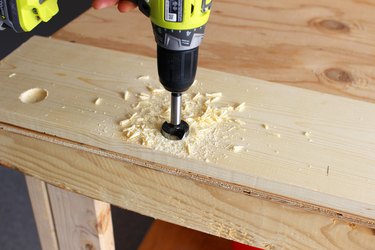
      Drill a hole into the middle of each drawer front. Remove your clamps. Lightly hand-sand the top, front and sides of the casing, as well as the drawer fronts, with 1200-grit sandpaper.

    • 14

      Use the tack cloth to wipe away any sanding dust.

    • 15

      Apply your polyurethane stain to the parts of the apothecary chest that you sanded. Follow the grain of the wood and apply light, even coats. Allow one coat to dry before you apply another.

    • 16

      Place the drawers into position in the cabinet's casing when your stain finish has dried completely.

Tips & Warnings

  • During your initial cutting, it is helpful to cut your drawer front at least 1/8-inch over to allow extra material for sanding.

Related Searches:

References

Comments

You May Also Like

  • How to Build Kitchen Cabinets

    Save money by building your own kitchen cabinets! If you like home improvement projects, building your dream kitchen is easy. With the...

  • How to Make Guitar Cabinets

    Building your own speaker cabinet for guitar can be a fun, rewarding experience. By making a custom guitar cabinet, you can save...

  • How to Define an Apothecary

    Most people only know the word "apothecary" as an outdated term for "pharmacist" (or "chemist" in the United Kingdom). However, apothecaries in...

  • How to Build a Cabinet

    Building a cabinet can be simple to extremely challenging depending on what kind you're building and what design you're working on. Regardless,...

  • How to Make a Cabinet Door

    Your kitchen needs a facelift. But rather than replace all the kitchen cabinets, you can opt to simply refinish or replace only...

  • How to Make a Wood Chest

    Wood chests are practical storage items that can be as small as a jewelry box or as large as a toy chest,...

  • Bathroom Linen Cabinet Ideas

    The heyday of the formal bathroom linen cabinet has passed. Blame lack of space or lack of interest, but many people have...

  • How to Build a China Cabinet

    China cabinets are a great way to put your best plates on display. Although building a china cabinet can be difficult, its...

  • How to Make an Aladdin Costume

    A popular Disney character, Aladdin provides an easy costume to make for your child on Halloween. Everything except the hat can be...

  • Candle Making Apothecary Jar Information

    Candles make wonderful holiday gifts, and you can easily make your own apothecary jar candles to give to your family or friends...

  • DIY Vintage Labels

    Labels made by apothecaries and other professions from decades ago have a certain flair that some more modern bottles can lack. If...

  • How to Make Cabinet Drawers

    The key to making cabinet drawers is first to determine the roller assembly you want to use. Some don't require much of...

  • How to Build an Ice Chest

    Build an ice chest/cooler from a plastic or rubber tub that you have lying around the house gathering dust in one afternoon....

  • How to Make Your Own Cardboard Chest

    Help your kids to make their own treasure chest out of cardboard. You will be doing some environmentally friendly recycling while creating...

  • Apothecary Jars and Crafts

    Apothecary jars are jars with lids that come in a variety of sizes. Pharmacists, or apothecaries, used the jars to store wet...

  • Things to Fill an Apothecary Jar With

    Things to Fill an Apothecary Jar With. Apothecary jars are highly adaptable and can be used to store items or simply to...

  • How to Decorate an Apothecary Jar

    Apothecary jars are the perfect way to dress up many areas in your home. They can be used as accessories in your...

  • How to Build an Underground House

    If you are the type of person who likes to be different, a radical yet practical idea that is becoming more and...

Related Ads

Featured