Things You'll Need
1 gallon jar with lid
1 oz. coconut carrier oil
1 oz. sandalwood oleoresin
40 drops polysorbate 20
2 cups of floral hydrosol
1 muslin tea bag (5-by-5 inches)
2 cups assorted flower petals
1 oz. sodium lactate
1 qt. decorative decanter with stopper
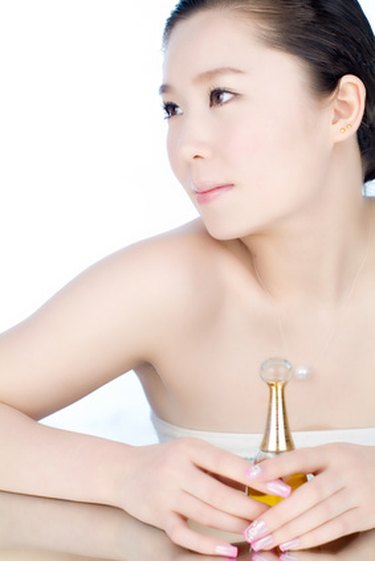
An attar perfume, unlike commercially produced fragrances, contains no alcohol or synthetic materials. Made from botanical materials, attar perfumes are widely popular in the Middle East and in India. Making your own natural attar perfume with flowers and other natural botanicals gives you a craft hobby that results in natural, signature scents for your use. They also make ideal gifts for people in your life who like to smell fresh without using chemicals.
Step 1
Add the sandalwood oleoresin and coconut carrier oil to the one gallon jar. Sandalwood oleoresin is a natural botanical oil that is concentrated. Sandalwood is also a common base fragrance in attar perfumes due to its ability to carry delicate scents that are added to it. Like the other ingredients needed in this formula, it can be purchased from a craft and hobby supply store.
Video of the Day
Step 2
Add the polysorbate 20 to the jar. Polysorbate 20 is an emulsifier that blends oil and water.
Step 3
Add the floral hydrosol, or water, to the jar. Floral hydrosols are the distillations of natural flower materials. Such scents include rose, lavender, chamomile, geranium and many others. Choose a hydrosol depending on the scent you find most appealing.
Step 4
Stuff the flower petals into the muslin pouch and tie it shut. Stuff as many as you can into the sack, up to two cups, compressing them as needed. Use the petals of roses, lavender, lilac or other highly aromatic flowers. You may also use the leaves of lavender and some botanical materials; however, the oils from the flowers are less concentrated and may be safer for direct to skin use than the leaves. The choice is yours and depends entirely on what scents you like.
Step 5
Drop the sack into the one gallon jar and secure the lid. Let the jar sit for two weeks, undisturbed, in a dark and dry area.
Step 6
Squeeze the muslin sack containing the oil-soaked flower petals into the jar every two days for an additional week. This expels the natural botanical essences from the petals.
Step 7
Stir in 1 oz. of sodium lactate. Sodium lactate is a preservative that keeps bacteria from forming in your attar perfume. This can be obtained from a craft or hobby supply shop or online vendor.
Step 8
Dump the remaining liquid in the jar, after the three weeks have passed, into the glass decanter. Make sure to squeeze the muslin pouch another couple of times to further take advantage of the flower essences. Place the stopper into the opening of the decanter to create both a decorative accent and seal the highly aromatic attar perfume.
Tip
Remove the stopper from the bottle and dab the wet end onto your pulse points.
Video of the Day