How to keep roasted broccoli tender: the foil trick explained
The fix for dry, leathery roasted broccoli isn't a different oven temperature or a heavier hand with the olive oil. It's a piece of foil, applied after the broccoli already has good color, that traps steam long enough to finish cooking the vegetable without drying it out further. Learning how to keep roasted broccoli tender comes down to timing: roast hot and dry until browned, then let trapped steam do the rest.
Broccoli is a strange vegetable to roast well. Its thick stalks and loosely packed, air-filled florets don't cook at the same rate, and getting heat to penetrate the stem without scorching the flower clusters is a genuinely tricky balance, Serious Eats found in testing last year. Most home cooks solve this by either undercooking the stalks or overcooking the florets. There's a better way, and it beat standard oven-roasting in a head-to-head comparison: a roast-then-steam method earned a perfect 10/10 for texture and browning, while conventional oven-roasting topped out at 7/10, according to The Kitchn's testing two years ago.
This guide walks through that method step by step, explains the food science behind why it works, and flags the specific mistakes, wrong pan liner, wrong oven setting, wrong order of operations, that quietly undo it.
Why does roasted broccoli turn dry and leathery?
Video of the Day
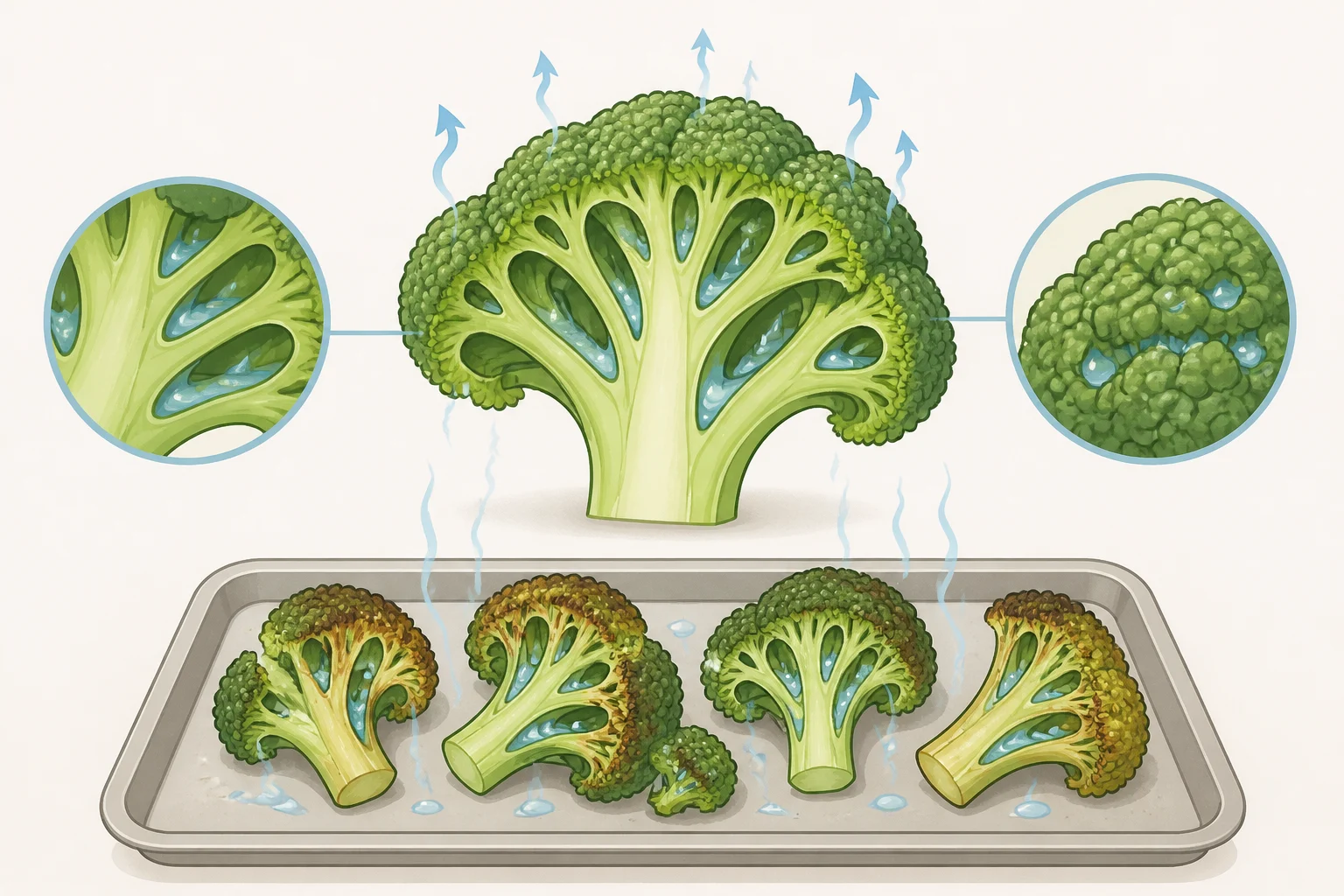
The core problem is shape. A broccoli floret is basically a cluster of tiny buds fanned out around a stem, with air pockets between them. That structure gives roasted broccoli its best quality, crispy edges, but it also means moisture has nowhere to hide. Even broccoli cut flat on one side still presents a tangle of air spaces, tender buds, and dense stalk to the oven's heat, Serious Eats notes, which makes even cooking unusually difficult.
Temperature and time make this worse than cooks tend to expect. Testing broccoli at 350°F, 425°F, and 500°F across multiple time settings found that low-and-slow roasting is actually the riskier choice: cooking broccoli at lower heat for longer lets its open, fanned-out shape bleed moisture continuously until the texture turns dehydrated and leathery, Serious Eats reported from testing earlier this year. High heat for a shorter window beats gentle heat for a long one.
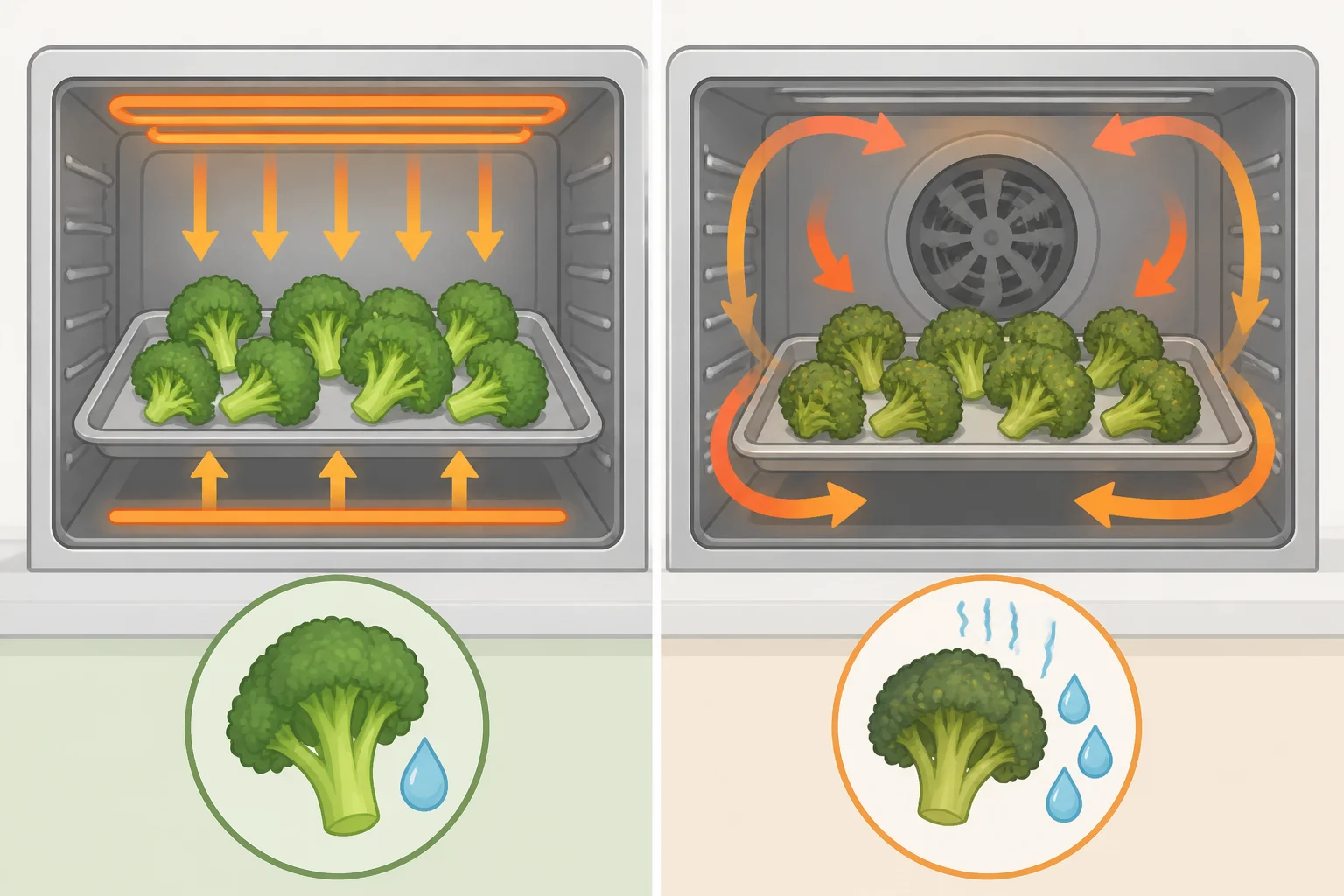
The oven's fan setting matters too, but only in a specific way worth getting right. In that same testing, convection dried broccoli too quickly, pulling moisture out of the florets faster than a conventional bake setting would. That airflow works well on denser, water-rich vegetables like zucchini, where moisture loss helps concentrate flavor. Broccoli's open structure just can't tolerate it. The recommendation is simple: skip convection and stick with conventional bake for broccoli specifically.
Put those two facts together and the tension becomes clear. High heat is what gives broccoli its caramelized edges and real flavor, but that same heat, combined with the vegetable's airy shape, is exactly what dries it out if the oven runs uninterrupted until the stalks are fully tender. The fix isn't cooking it less aggressively. It's knowing when to stop roasting and start steaming.
Video of the Day
How to keep roasted broccoli tender with foil: the step-by-step method
Before starting, gather a rimmed baking sheet, a sheet of aluminum foil, fresh broccoli cut into similarly sized florets or wedges, oil, salt, and an oven capable of reaching 425°F on its conventional bake setting, not convection.
- Cut the broccoli into similarly sized florets or wedges, toss with oil and salt, and spread everything in a single layer on the baking sheet. Crowding the pan traps steam prematurely and blocks browning, so give the pieces room.
- Roast uncovered at 425°F for about 10 minutes. This matches the timing in The Kitchn's tested steam-roast method, though slightly larger florets may need a minute or two more. Look for tips that have started to brown and caramelize at the edges while the stems still resist a fork; that resistance is the cue the broccoli needs the steam finish, not more dry roasting.
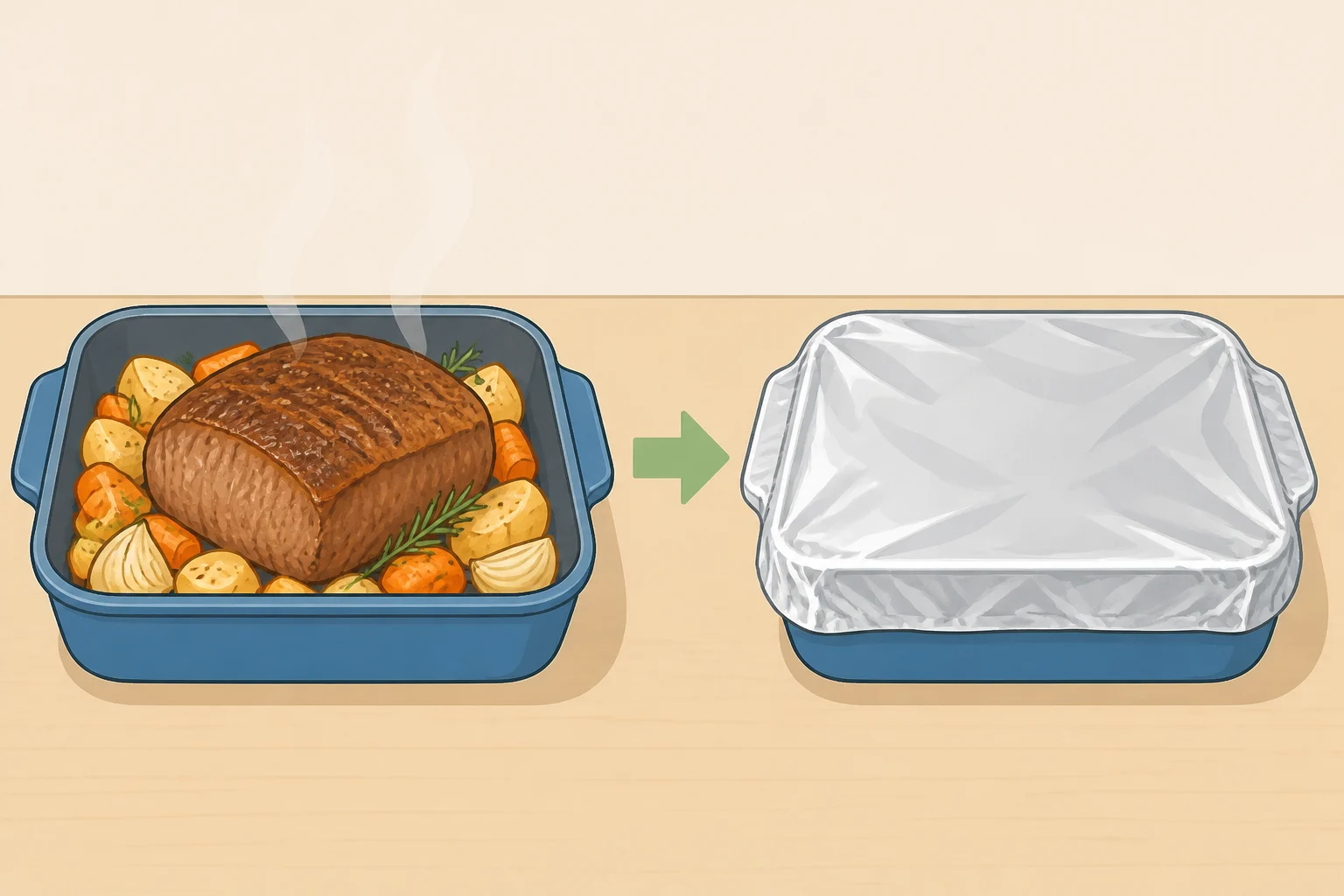
- Pull the pan from the oven and immediately cover it tightly with foil. A loose drape won't do it. The seal needs to hold steam against the broccoli rather than let it vent off the sides.
- Choose one of two finishing methods. Either let the covered pan sit off the heat for about 10 minutes, or turn the oven off entirely and slide the covered pan back in for 5 minutes. Both approaches finish the broccoli with residual and trapped heat instead of continued dry roasting, Serious Eats found.
- Uncover and serve. The broccoli should be browned at the edges, tender at the stem, and nowhere near leathery.
This steam-roasted broccoli with foil approach works because of a basic property of water most cooks never think about in the kitchen. Water has an unusually high latent heat of vaporization: it takes 540 calories to turn one gram of water into steam at the boiling point, compared to just 1 calorie to raise that same gram by a single degree, according to Serious Eats. That stored energy doesn't disappear. When steam trapped under the foil hits the cooler broccoli surface and condenses back into liquid, it releases that same 540 calories per gram straight into the vegetable, gently finishing the cooking without exposing it to more drying oven air.
Order matters here, and it only runs one direction. Repeated testing found that steaming broccoli before roasting slows down browning and dulls flavor, likely because the moisture shuts down enzyme activity tied to flavor development, or because it exposes the florets to their own natural acids in a way that interferes with the Maillard reaction, Serious Eats reported. Brown first. Steam last. Reversing the sequence costs flavor without buying back any tenderness.
How this crispy-tender roasted broccoli method compares to other techniques
The Kitchn ran broccoli through seven cooking methods side by side, using the same pound of crowns, the same seasoning, and a 10-point scale where a perfect score meant crisp-tender texture with moderate, not charred, browning. Air frying scored a 4/10. Steaming and microwaving landed in the middle, at 5/10 and 5.5/10. Skillet-roasting hit 6/10, sautéing reached 8/10, and standard oven-roasting came in at 7/10. Only the steam-roast method, roast for 10 minutes, tent with foil, turn off the oven, finish for 5 more minutes, scored a perfect 10/10 for crisp-tender texture and balanced browning, in testing The Kitchn published two years ago.
For cooks chasing maximum char rather than this balance, there's a legitimate alternative that skips the steam step entirely. America's Test Kitchen roasts broccoli flat-side down on a baking sheet preheated at 500°F, getting both the stalks and crowns well browned and fully tender in just 9 to 11 minutes, according to that recipe from last year. That method relies on a screaming hot, preheated pan and a short cook time to reach tenderness in a single pass. It doesn't test or call for a foil rest afterward, so it's worth treating as a separate, deliberately aggressive technique rather than something to layer the steam finish onto.
Neither temperature is objectively correct. 425°F with the foil finish is the dependable, forgiving choice for most kitchens. 500°F on a preheated sheet suits cooks who want deep char fast and don't mind the narrower margin for error that comes with higher heat.
Troubleshooting: how to roast broccoli without drying it out
A few small setup choices separate crisp-tender broccoli from a mediocre, limp result, and they're easy to get wrong without realizing it.
Skip the convection setting. Convection fans are marketed as a way to roast vegetables faster and more evenly, but broccoli's airy, open florets lose moisture too quickly under that constant airflow. Stick with conventional bake, as Serious Eats' testing recommends.
Avoid parchment paper if deep browning is the goal. Parchment has a thermal conductivity of roughly 0.18 W/m·K, compared to aluminum's roughly 237 W/m·K, which means it transfers far less heat from the pan into the food sitting on top of it. In side-by-side testing of broccoli, zucchini, and carrots on bare metal, foil, and parchment, the parchment-lined vegetables consistently came out limper and paler, while bare oiled aluminum browned best and foil came in a close second, Serious Eats found in tray-lining tests last year. Save parchment for easy cleanup jobs where char isn't the point, like cookies.
Don't steam before roasting. This is the most common mistake cooks make once broccoli starts to look like it might scorch: adding moisture early feels protective, but it slows browning and mutes flavor, for the enzyme and acidity reasons explained above. The steam belongs at the end, sealed in by foil, not at the start.
Don't pull the foil off early. The condensation step needs its full five or ten minutes to release enough stored heat to finish tenderizing the stalks. Peeking too soon vents the trapped steam and leaves the method half-finished.
Wrapping up
Roast hot and uncovered until the broccoli browns, then trap steam under foil for five to ten minutes. Skip convection, skip parchment if char is the goal, and keep steam out of the process until the very end. That's the whole method, and it's forgiving enough to work on a weeknight.
The latent-heat logic isn't unique to broccoli's chemistry, just to its shape: thick stalk, airy florets, lots of surface area for moisture to escape. Cauliflower and broccolini share that same structural problem, though neither has been tested with this exact foil method in the available research. Worth trying the same roast-then-steam sequence next time either one lands on the sheet pan, as an experiment rather than a guarantee.