Chocolate Chip Cookie Cake Recipe: Bake One Today, No Chill
This chocolate chip cookie cake recipe skips every step that usually slows down cookie baking: no scooping, no rolling dough into balls, no waiting on the fridge. Think of it as a giant chocolate chip cookie cake, all the flavor of the classic cookie, scaled up and sliced instead of scooped, built to feed 8 to 10 people in about two hours from mixing bowl to first slice. Baked right, it turns out soft in the center and chewy at the edges, with chocolate chips throughout (Sally's Baking Addiction, last year).
This recipe also skips the chilling step that a lot of chocolate chip cookie recipes build in by design, not by accident. Some recipes call for refrigerating portioned dough balls for several hours or overnight, which produces a taller, less-spread cookie because the butter has time to firm back up before it hits the oven (Fountain Avenue Kitchen, in 2024). That logic applies to individual scoops of dough that need to hold their shape under heat. A cookie cake is pressed flat into a pan on purpose, so there's no shape to protect and no clock to watch before baking begins. What follows is the full recipe for an easy chocolate chip cookie cake, fixes for the problems that show up most often when baking one in a pan, a same-day-versus-make-ahead decision guide, and how to store what's left.
What you need for a homemade chocolate chip cookie cake
Video of the Day
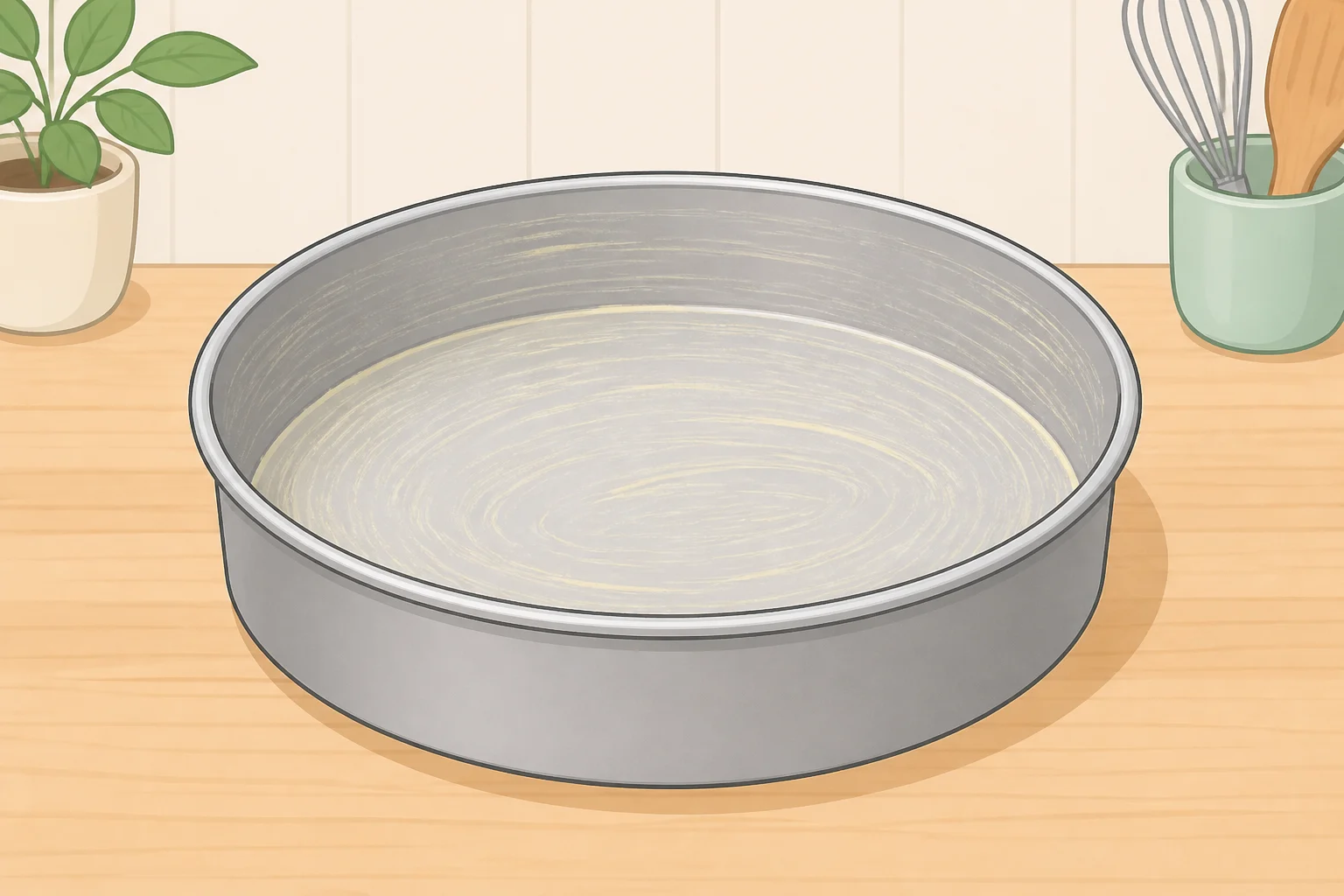
This recipe makes one 9-inch cookie cake, with about 20 minutes of active prep and 22 to 26 minutes in the oven. The only equipment required is a 9-inch round cake pan or pie dish and a hand or stand mixer (Sally's Baking Addiction, last year).
- 170g (3/4 cup) unsalted butter, softened
- 200g (1 cup) packed brown sugar
- 1 large egg plus 1 egg yolk, at room temperature
- 2 teaspoons vanilla extract
- 250g (2 cups) all-purpose flour, spooned and leveled
- 2 teaspoons cornstarch
- 1 teaspoon baking soda
- 1/2 teaspoon salt
- 270g (1 1/2 cups) semi-sweet chocolate chips
(Sally's Baking Addiction, last year)
Butter temperature is worth getting right before the mixer even turns on. It should dent easily under a finger without feeling greasy or looking shiny; butter that's still cold won't cream into a smooth, aerated base, and butter that's melting won't either.
A few baking guides suggest an alternative worth knowing about: melting the butter and letting it cool slightly before mixing it with the eggs, rather than creaming it soft. That swap tends to produce a denser, richer bite, which is part of why it shows up often in recipes for chocolate chip cookie cake specifically (What's in the Pan, earlier this year). The one thing to avoid either way is butter that's still hot: it can melt the sugar too fast or partially cook the eggs the moment they go in (What's in the Pan, earlier this year).
Video of the Day
How to make chocolate chip cookie cake in a cake pan
-
Preheat and prep the pan. Heat the oven to 350°F (177°C) and grease a 9-inch cake pan or pie dish with nonstick spray (Sally's Baking Addiction, last year).
-
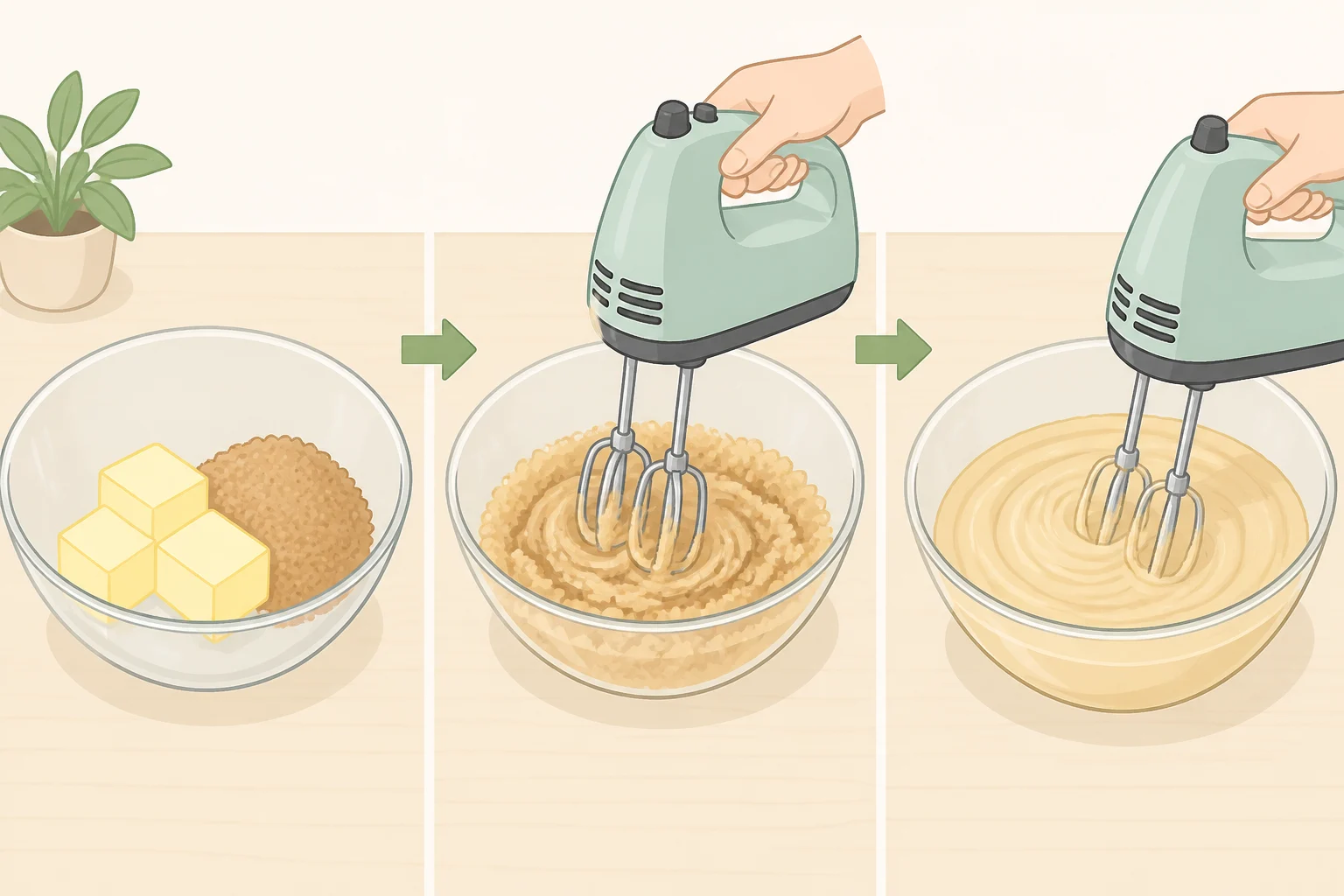
Cream the butter and sugar, then add the eggs. Beat the softened butter and brown sugar on medium speed until creamy, about 3 minutes, scraping the bowl and beater at least once partway through. Add the egg, egg yolk, and vanilla, scraping again as needed, until the mixture looks uniformly pale and smooth with no streaks of unmixed butter (Sally's Baking Addiction, last year). That scraping step matters more than it looks: a streak of butter left clinging to the side of the bowl never fully incorporates, and it bakes at a different rate than the rest once the dough hits the oven.
-
Mix in the dry ingredients and chocolate chips. Whisk the flour, cornstarch, baking soda, and salt together in a separate bowl, then add it to the wet mixture on low speed until just combined. Add the chocolate chips and mix for about five seconds, just long enough to distribute them evenly (Sally's Baking Addiction, last year). Expect the dough to feel quite thick at this stage, closer to cookie dough than cake batter (Sally's Baking Addiction, last year).
-
Press the dough evenly into the pan. Use hands or a spatula to spread it flat to the edges so it bakes at a consistent thickness all the way through (Sally's Baking Addiction, last year).
-
Bake and judge doneness by sight. Bake for 22 to 26 minutes, though it can take closer to 30 depending on the oven, until the top turns golden brown across the whole surface. Test with a toothpick in a spot without visible chips: it should come out mostly clean with a few moist crumbs clinging to it (Sally's Baking Addiction, last year). If the edges are browning fast while the center still looks underdone, loosely tent the pan with foil after about 15 minutes to slow them down (Sally's Baking Addiction, last year).
-
Cool completely before cutting. Set the pan on a rack and let it cool completely, so the cake firms up enough to slice cleanly. Run a knife or spatula around the edge, then either slice it right out of the pan or loosen it onto a serving plate, whichever suits the crowd (Sally's Baking Addiction, last year). Frosting or sprinkles are optional from here; Sally's original version tops it with chocolate buttercream, but the cake holds together without any decoration at all (Sally's Baking Addiction, last year).
Fixing the three most common problems
Patchy or uneven thickness across the cake is usually a sign that the butter and sugar weren't creamed all the way through. A streak that never got incorporated bakes at a different rate than the rest of the dough, and in one big cake there's nowhere for that kind of flaw to hide. Scraping the bowl and beater partway through creaming, not just at the end, is the fix already built into the method (Sally's Baking Addiction, last year).
If the edges brown faster than the center sets, tent the pan loosely with foil after about 15 minutes. That slows browning around the rim while the middle catches up (Sally's Baking Addiction, last year).
Uncertainty about doneness is common with a dough this loaded with chocolate, since a few crumbs of melted chip clinging to the toothpick can look like wet batter at a glance. Test in a spot without visible chips, and look for a mostly clean toothpick with a few moist, not wet, crumbs, on a top that's turned an even golden color (Sally's Baking Addiction, last year).
Same-day or make-ahead?
Baking today is the default: mix, press, and bake right away (Sally's Baking Addiction, last year).
Prepping a day or two out works too. The mixed dough can sit covered in the fridge for up to three days before it gets pressed into the pan and baked, which is handy if the work needs to split across two days (Sally's Baking Addiction, last year). That flexibility matters most when the cake is for a party or potluck and there isn't a free two-hour window on the day itself.
Neither path changes the outcome much. The same-day bake follows the method this recipe is built around, and the rested version just moves part of the work earlier, which matters more for a schedule than for the cake itself.
Storing and freezing the cake
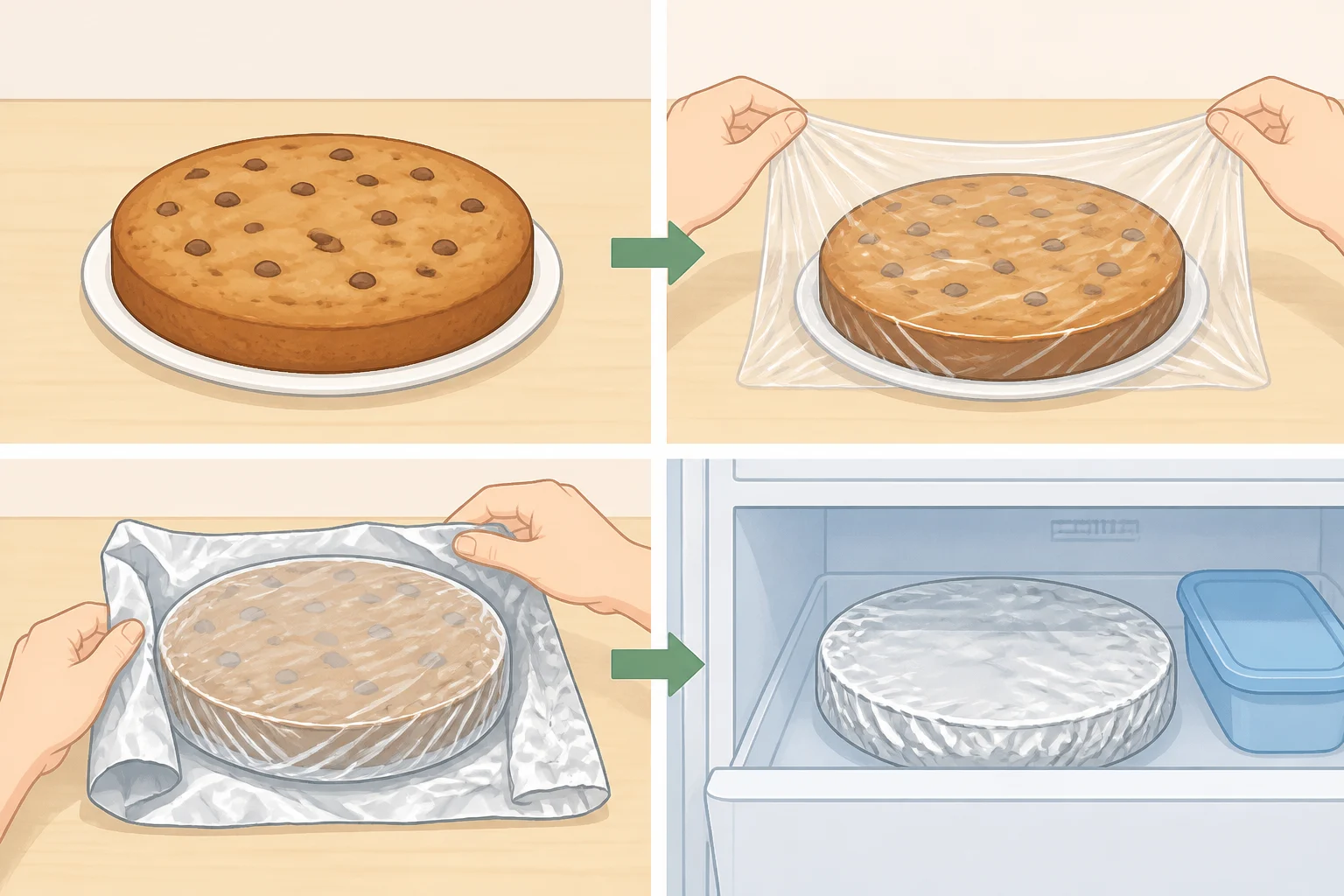
Once baked, the cake keeps for up to three days at room temperature or up to three months in the freezer (Sally's Baking Addiction, last year):
- Room temperature: Keep it tightly covered for up to three days.
- Freezer: Wrap it in a layer of plastic wrap followed by a layer of foil and freeze for up to three months.
- Thawing: Thaw completely in the wrapping before slicing. If using frosting, make it fresh the day the cake will be served rather than freezing it on the cake.
The takeaway
On the original recipe, one longtime baker says cookie cake has quietly replaced birthday cake in her family, requested every year without fail (Sally's Baking Addiction, last year). That kind of staying power says something about a dessert built around one unglamorous idea: skip the fuss, bake the whole thing at once.
Once the base method is down, it's easy to vary: swap in a different chocolate blend, stir in nuts, or try the melted-butter swap mentioned earlier for a denser bite. Either way, the format holds up whether the dough goes into the oven the moment it's mixed or sits in the fridge for a day or two first.