How to make creamy scrambled eggs without milk or cream
Milk and cream are the usual fix when scrambled eggs turn out rubbery, poured in as a rescue once the eggs already look sad in the pan. That treats the symptom, not the cause. Here's how to make creamy scrambled eggs without milk or cream using salt, timed right, plus the handful of habits that do the actual work of keeping curds tender.
Heat is what turns eggs tough in the first place. It makes the egg proteins unfold and bond into a network tight enough to squeeze out water, which is the real mechanism behind dry, rubbery curds, according to America's Test Kitchen (10 months ago). Salting the eggs before they hit the pan limits that bonding, producing what ATK calls a "softer, more delicate protein network."
What follows is a complete method built around salting, heat control, and timing, with a short variation for readers who want bigger, fluffier curds, and a note on where butter and dairy still earn a place. One clarification up front: this method skips milk and cream, which is what most people mean by dairy-free scrambled eggs, but it still calls for a small amount of butter for flavor and as a heat gauge. Swap in a neutral oil or a dairy-free butter if you want eggs with no dairy at all; the technique works the same either way.
Why salt is a real lever for tender eggs
Video of the Day
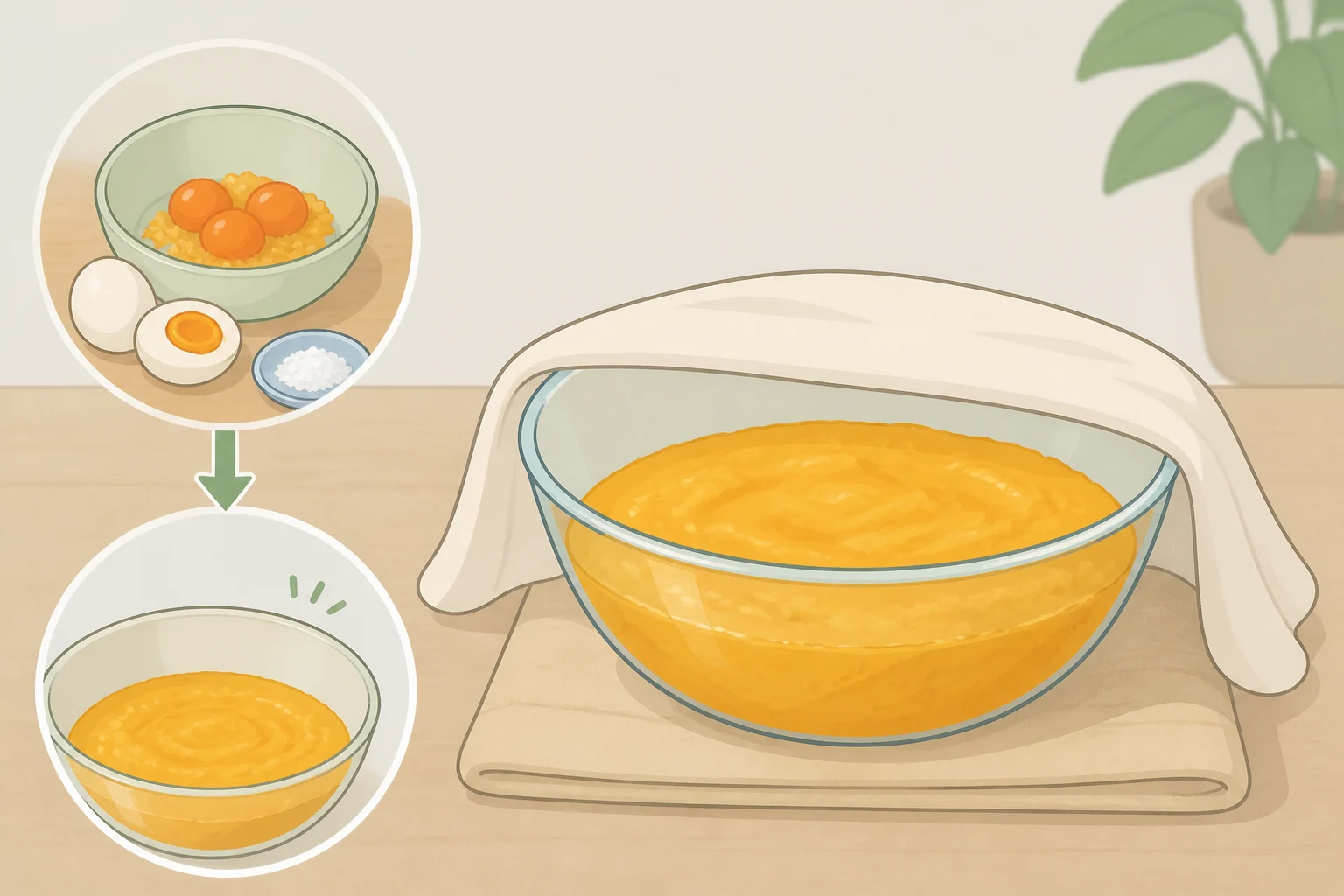
Letting the salted eggs sit before cooking adds a second payoff. The salt loosens the proteins in the egg whites, so they blend more completely into the yolks and produce an even golden color with no streaks, per America's Test Kitchen (10 months ago).
Salt isn't the whole story, and ATK doesn't pretend otherwise. Its own research frames pre-salting as one lever among several: temperature control and stirring technique matter just as much, and a splash of added liquid, dairy or otherwise, tenderizes further by diluting the proteins so they can't crosslink as tightly (America's Test Kitchen, 10 months ago). That's the frame for this article: salt is the best dairy-free lever available, but heat, stirring, and timing carry the rest of the load, which is exactly what the step-by-step method below delivers.
Video of the Day
How to make creamy scrambled eggs without milk or cream: the base method
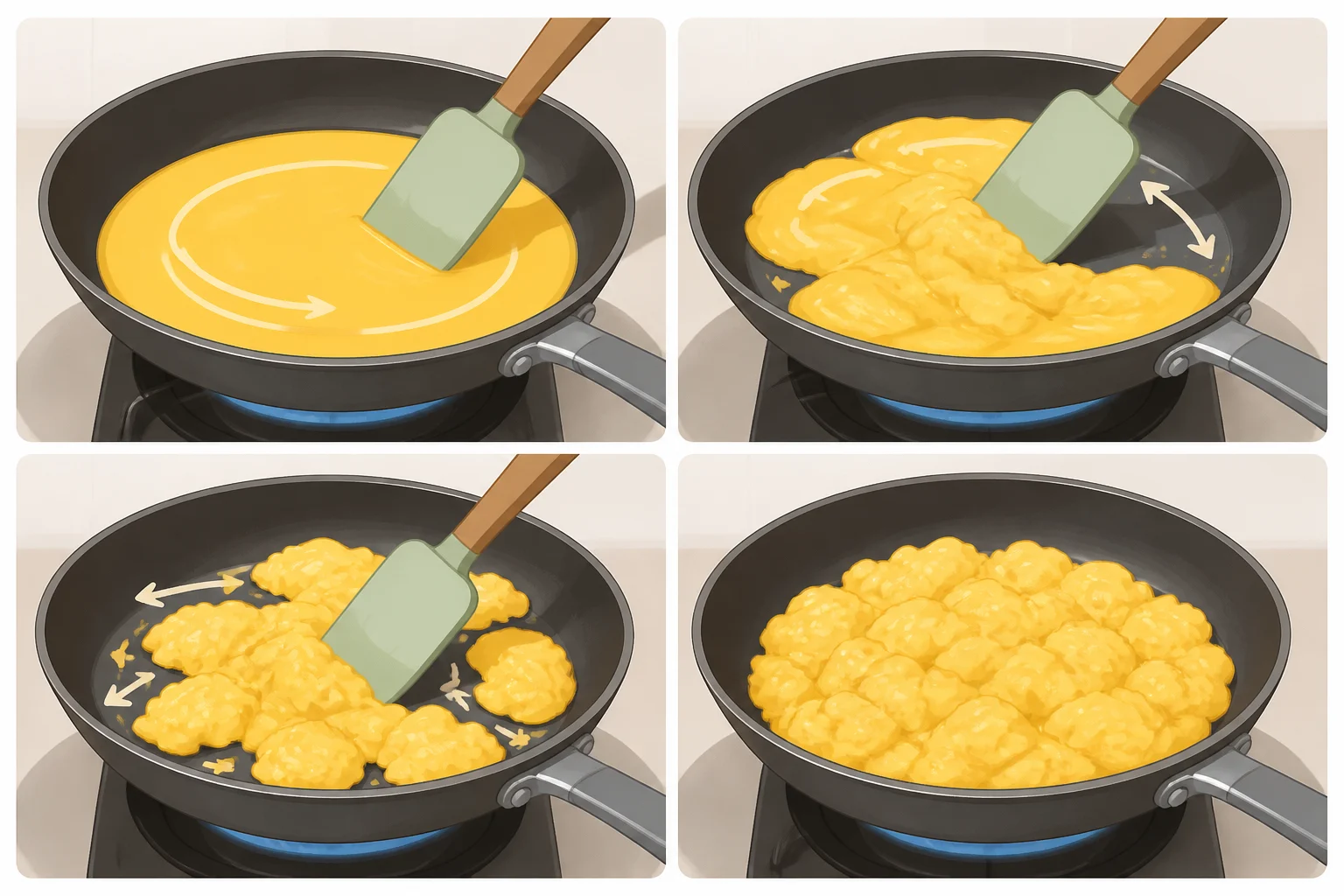
This method leans on America's Test Kitchen's guidance on skillet size, butter, and stirring technique, leaving milk and cream out of the eggs themselves. No single source tests this exact formula as one recipe, but every step comes from tested technique.
You'll need: 4 to 5 large eggs, a pinch of salt per egg (roughly ⅛ to ¼ teaspoon total for five eggs, with ¼ teaspoon as a reasonable starting point), 1 tablespoon butter, and an 8-inch nonstick skillet, which works for up to six eggs (America's Test Kitchen, 10 months ago).
- Whisk the eggs and salt together until the mixture turns a uniform pale yellow with no visible streaks of white. Nothing else goes in at this stage: no milk, no cream, no water. The tenderizing comes from salt alone.
- Melt the butter in the skillet over low heat. Its job here is mostly visual: once it sizzles evenly across the surface, the pan is hot enough (America's Test Kitchen, 10 months ago). A smaller skillet helps too, since it limits surface area and slows cooking, giving more time to control the final texture (America's Test Kitchen, 10 months ago).
- Pour in the eggs and keep them moving over low heat. The hotter eggs get, the more tightly their protein network cinches, which is what eventually squeezes out moisture and turns a scramble rubbery, per America's Test Kitchen (10 months ago). Keeping the burner low slows that process down and buys time to judge curd size before anything overcooks. Scrape constantly with a flexible spatula; this redistributes cooked curds and pushes raw egg down toward the hot surface, keeping curds small instead of letting them dry out and grow large (America's Test Kitchen, 10 months ago).
- Watch for small, glossy curds rather than a solid mass. The eggs should look soft and slightly wet, never set all the way through.
- Pull the pan off the heat while a little visible liquid egg remains. America's Test Kitchen (10 months ago) recommends stopping here, since carryover heat keeps cooking the curds even off the burner.
- Choose your finish. Serve immediately for a softer, slightly loose scramble. For eggs that are fully set but still tender, break any large curds apart to expose the wet pockets underneath, cover the pan, and let residual heat finish the job for roughly 1 to 3 minutes, a technique adapted here from America's Test Kitchen's milk-based recipe for use without added liquid (America's Test Kitchen, 10 months ago; America's Test Kitchen, 10 months ago).
If you're hunting for a secret ingredient for scrambled eggs, there isn't a single one. Salt matters, but so do heat, stirring, and timing; the method is a sequence of small decisions working together, not one trick doing all the lifting.
If you prefer fluffy scrambled eggs without cream
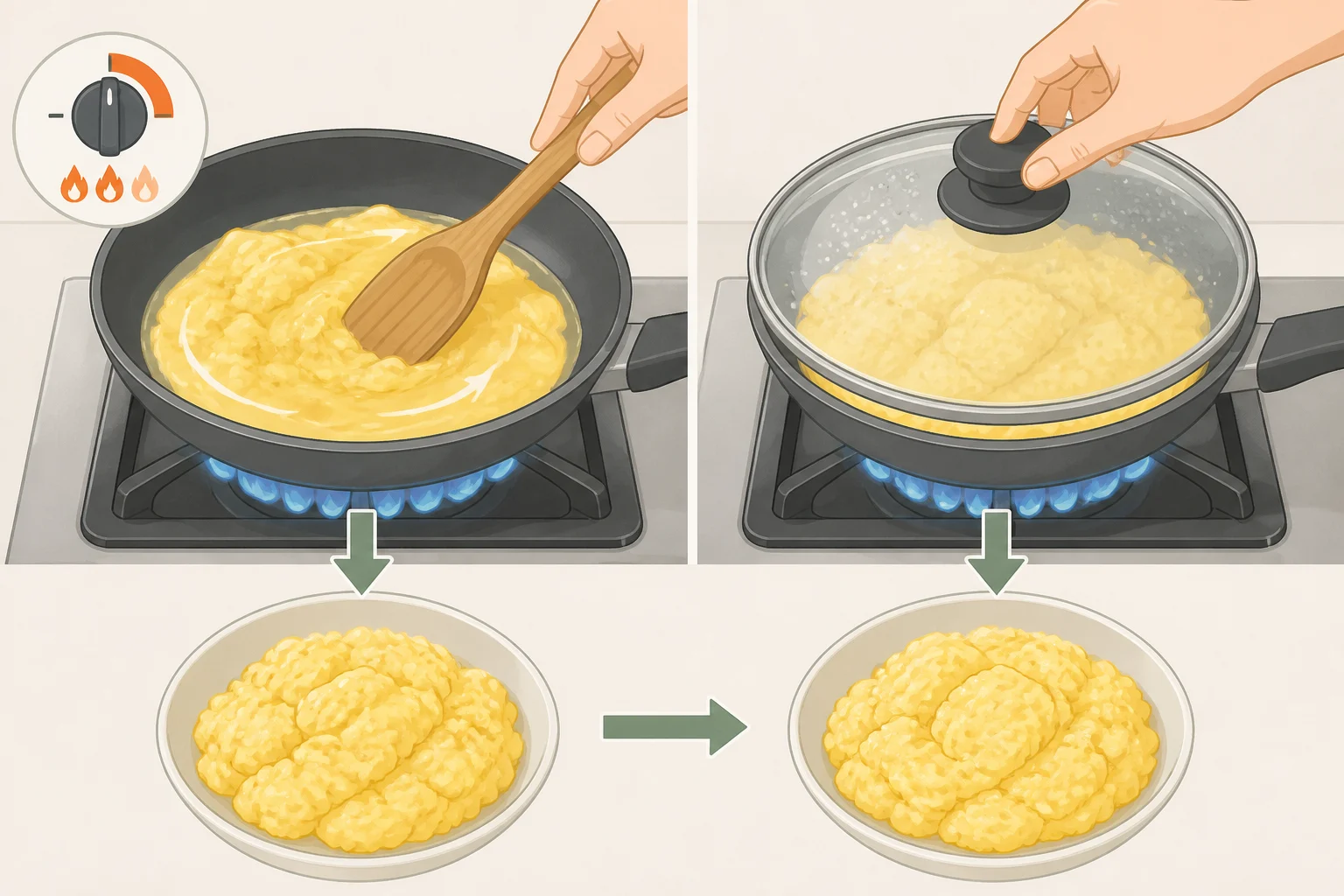
The base method above produces small, glossy curds. For larger, airier ones instead, change the heat and, if you want, add a small amount of liquid. Water works as well as milk here, since the mechanism is dilution of the proteins, not fat content (America's Test Kitchen, 10 months ago).
Here's the full procedure, adapted from America's Test Kitchen's recipe to swap water for milk:
- Whisk five eggs with 1 to 2 teaspoons of water per egg, plus the salt, until smooth. The added liquid dilutes the proteins further and helps the curds puff as they cook (America's Test Kitchen, 10 months ago).
- Melt a tablespoon of butter in an 8-inch nonstick skillet over medium heat, swirling the pan to coat the bottom evenly.
- Add the eggs and raise the heat to medium-high. The more aggressive heat converts more of the eggs' water content into steam, which puffs the curds into bigger, lighter pieces (America's Test Kitchen, 10 months ago).
- Stir slowly but constantly, scraping the bottom and sides, until the eggs clump and the spatula leaves a broad trail across the pan, about 2 minutes for five eggs (America's Test Kitchen, 10 months ago).
- Remove the pan from the heat, break the eggs into large clumps, cover, and let residual heat finish the job for 1 to 3 minutes.
Scaling up for a crowd changes the numbers more than you'd expect. For 24 eggs in a 12-inch skillet, America's Test Kitchen's crowd-size version stretches active cooking to 5 to 7 minutes and the covered rest to 2 to 4 minutes (America's Test Kitchen, 10 months ago). That timing comes from ATK's own tested recipe for a crowd, not from scaling this article's no-milk version directly, so treat it as a close guide rather than an exact match. Both versions, creamy and fluffy, rest on the same salting-and-carryover foundation; heat level and liquid are just the dials you adjust for the texture you're after.
Where butter and dairy still fit
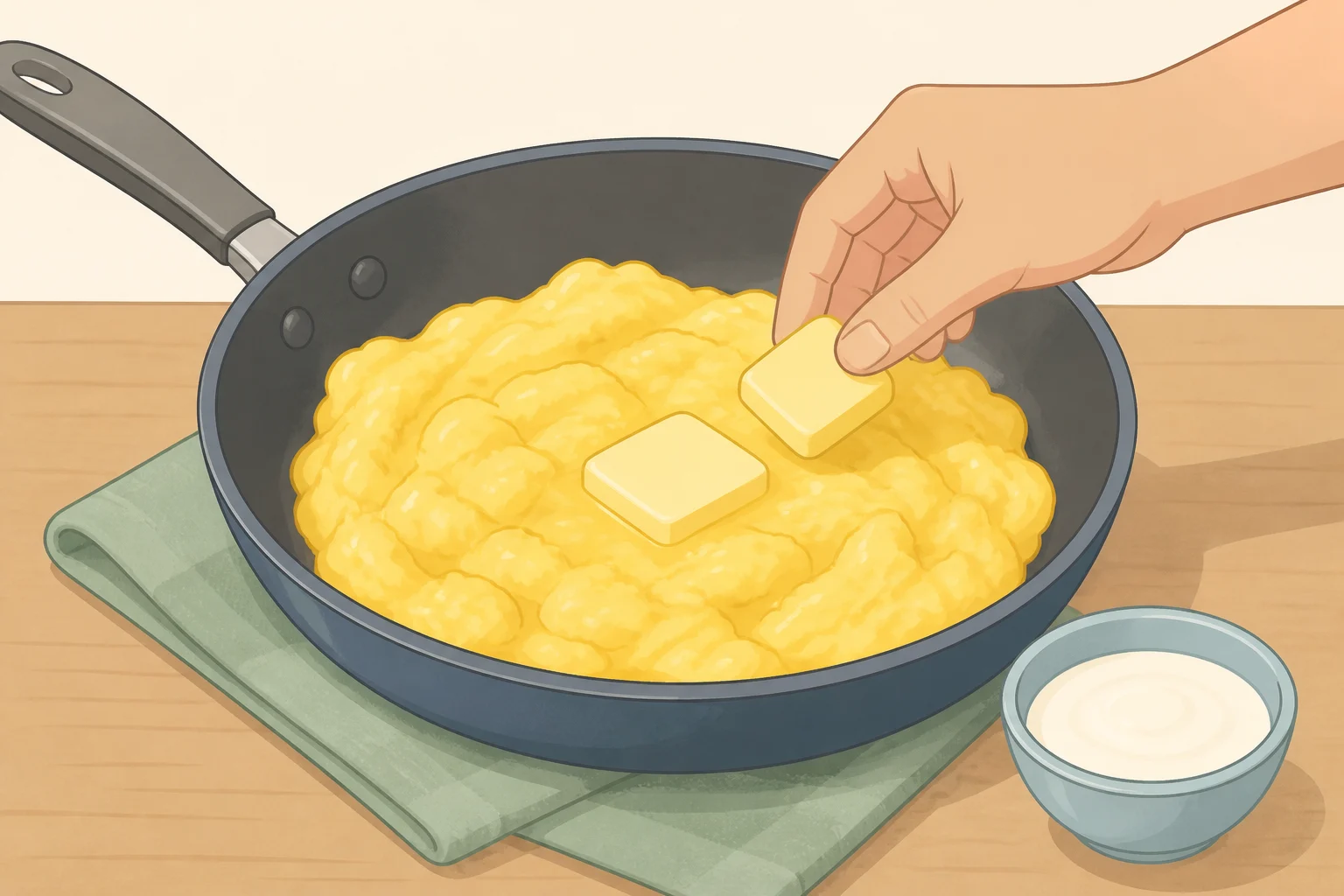
Dairy can still improve richness, but it was never the only route to tender eggs, which is really the point of everything above. Higher-fat dairy, like half-and-half or heavy cream, makes eggs more flavorful, and the higher the fat content, the richer they taste (America's Test Kitchen, 10 months ago). That's a genuine upgrade, but it layers on top of the salt-and-technique foundation rather than fixing a texture problem the method above already handles.
If restaurant-style scrambled eggs at home means rich and luxurious to you rather than simply tender, cream is a legitimate way to get there. Butter still carries its own job too: beyond signaling when the pan is ready, it adds a subtle flavor of its own, a small thing that adds up over a plate of eggs (America's Test Kitchen, 10 months ago).
Once the base method feels automatic, the choice is really just about heat: low and slow for small, custardy curds, or medium-high for a fluffier, brunch-style scramble. Either way, salt and timing, not a carton of milk, are what keeps the eggs tender.