Best pasta brands at the grocery store: the bronze-cut guide
Ask three chefs for the best pasta brands at the grocery store, and you'd expect three different answers. When The Kitchn interviewed three working chefs last year, two of them landed on the same product line: Barilla's Al Bronzo. Chef Giuliano Isidori goes further, naming the rigatoni specifically as his pick for Sunday gravy. The third chef, Emshika Alberini, praised standard Barilla more broadly for its consistency and range of shapes, rather than pointing to one specific box.
That split matters, because it points to something more useful than a brand recommendation. Isidori says he "always" reaches for bronze-cut pasta, and picks Barilla's rigatoni because its rough ridges hold onto his Sunday gravy (The Kitchn, last year). Chef Evan Hennessey, who otherwise prefers pasta imported from Italy, recommends Al Bronzo when choosing pasta made in the United States, and lays out his shopping criteria in plain terms: 100% durum wheat and water, bronze-cut, slow dried (The Kitchn, last year). Neither chef is defending a logo. They're describing a manufacturing process.
That process is bronze-die extrusion, and once a shopper knows what it looks like on a package, the specific box in hand matters a lot less.
Which chef-recommended pasta brands make the cut?
Video of the Day
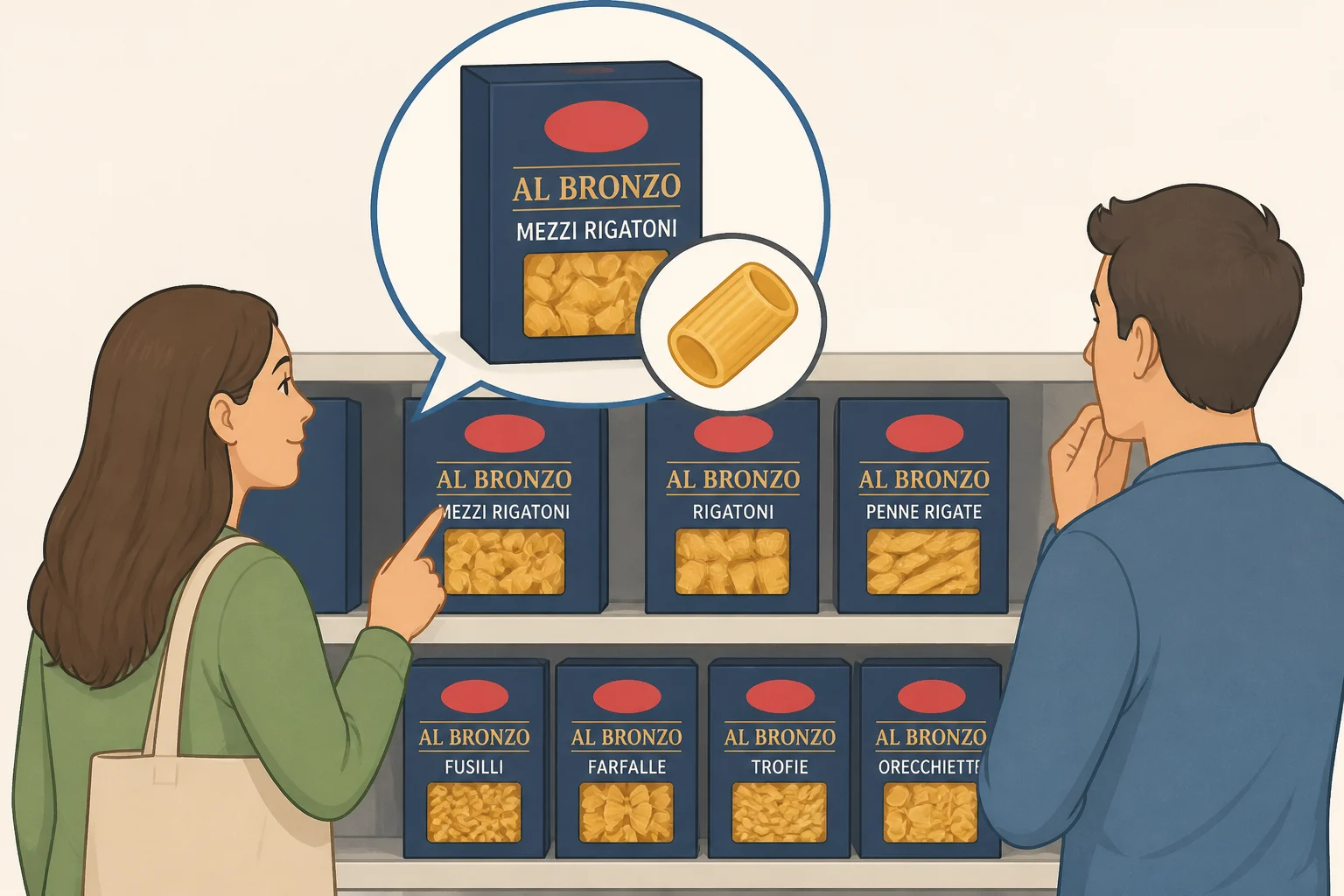
The product chefs mentioned most is Barilla Al Bronzo Mezzi Rigatoni. The Kitchn listed it at $3.62 for 14.1 ounces through Instacart when these interviews ran last year, though grocery delivery prices shift often, so treat that figure as a snapshot rather than a current quote (The Kitchn, last year).
Isidori's reasoning is tactile: rigatoni's coarse ridges are built to hold something as thick as gravy. Hennessey's reasoning reads more like a checklist, and even though his own taste runs toward Italian imports, he recommends Al Bronzo when choosing pasta made in the United States (The Kitchn, last year).
Alberini's case is different. She credits standard Barilla, not the Al Bronzo line, for the kind of consistency and shape range, from spaghetti to orzo to farfalle, that works equally well in a restaurant kitchen and a weeknight dinner (The Kitchn, last year). That's three chefs' opinions from a single interview-based article, not a blind tasting or an industry survey. Useful signal, not proof, and worth remembering before treating any list of the best dried pasta brands as settled.
Barilla isn't the only producer working with bronze dies, and the available reporting offers a few other reference points worth knowing, even without a head-to-head taste test:
- Barilla Al Bronzo Mezzi Rigatoni the chef pick above, priced around $3.62 for 14.1 ounces via Instacart (The Kitchn, last year).
- De Cecco the brand America's Test Kitchen used in its bronze-cut-versus-Teflon-cut comparison, and one of three brands Tasting Table says each offers around 50 bronze-cut varieties (America's Test Kitchen, in 2023; Tasting Table, last year).
- La Molisana and Pasta Rummo the other two brands in that same Tasting Table count, worth knowing for shoppers chasing shape variety rather than one flagship product (Tasting Table, last year).
- Rustichella d'Abruzzo not tested directly in this reporting, but it built an American following after Dean & DeLuca started using it in pasta dishes at its New York store back in the 1980s (Tasting Table, last year).
The brand name is a proxy for a production choice happening at the die. The next section covers what that choice actually does to the pasta.
Video of the Day
What makes high-quality dried pasta? The bronze-cut explanation
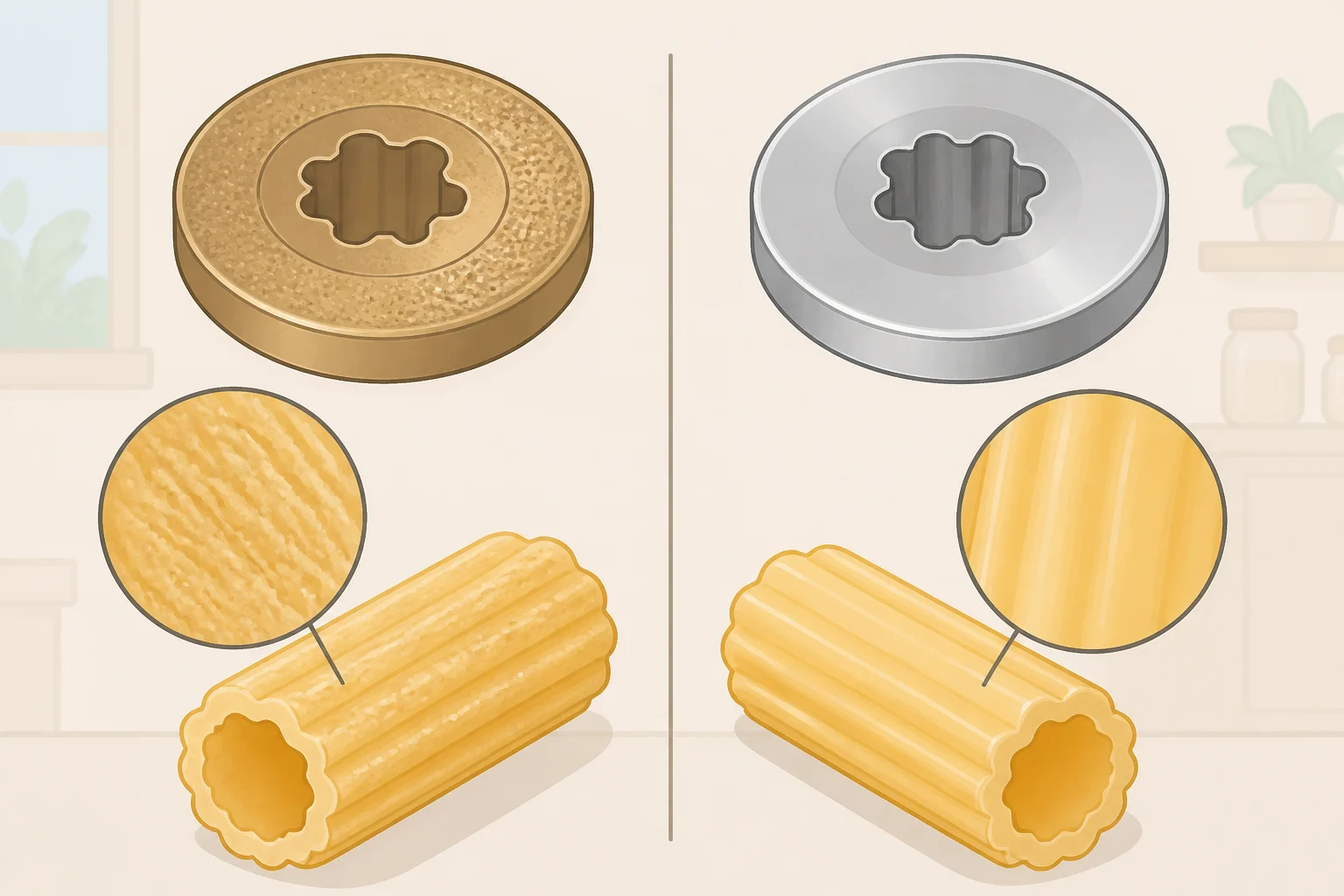
Bronze-cut pasta is dough pushed through a die, a metal plate stamped with shape-specific holes, where the metal itself is uncoated bronze rather than Teflon-coated (Tasting Table, last year; America's Test Kitchen, in 2023). Bronze is naturally porous, so dough forced through it comes out with a coarse, matte surface. Teflon is slick by design, so dough forced through it comes out smooth, almost glassy (America's Test Kitchen, in 2023).
America's Test Kitchen measured that difference instead of just describing it. Comparing De Cecco (bronze-cut) and Ronzoni (Teflon-cut) fettuccine under magnification, De Cecco's surface looked distinctly scaly while Ronzoni's looked smooth and glassy. Boiling both in blue-dyed water made the difference visible without a microscope: the bronze-cut noodles turned a noticeably richer blue than the Teflon-cut ones, evidence of greater surface absorption that's consistent with better sauce adhesion, not a direct sauce test on its own (America's Test Kitchen, in 2023). Picture a pane of glass next to a sheet of fine sandpaper. Sauce slides off one and catches on the other.
Two separate manufacturing decisions get conflated here, and they're worth untangling. The first is the die material. Teflon-coated dies reduce friction and heat during extrusion, which makes production faster, cheaper, and easier on machinery over time, a cost decision, not a drying decision (America's Test Kitchen, in 2023). The second is drying time and temperature, which happens to correlate with die choice in most commercial operations without being dictated by it. Pasta dried fast at high heat caramelizes its surface starches and turns a deeper yellow; pasta dried slowly at lower heat, often for more than a day, stays paler (Tasting Table, last year). The color shift comes from the drying process, not from the bronze itself, though the two tend to travel together on a supermarket shelf.
How to choose the best pasta brands at the grocery store
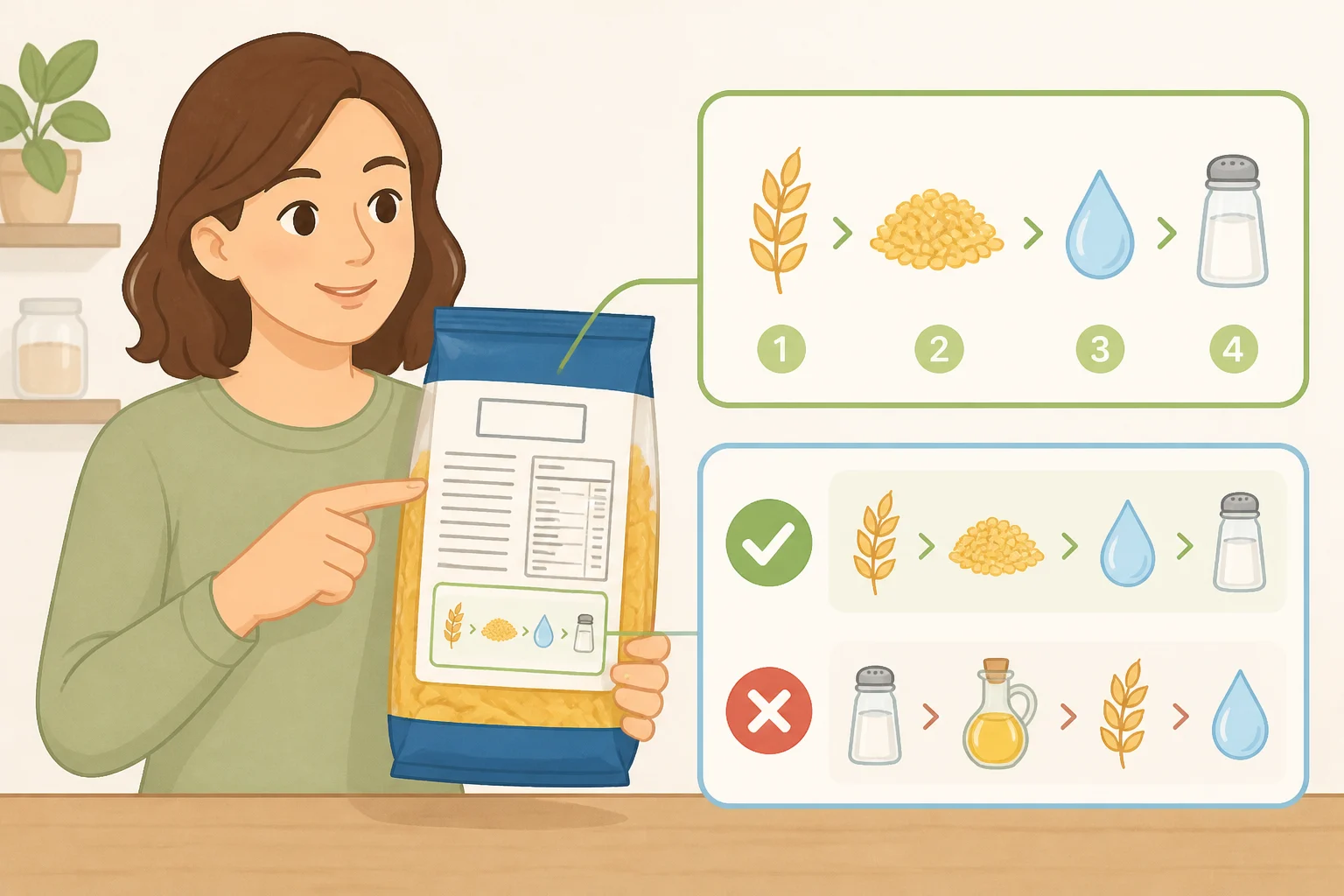
Start with the package. America's Test Kitchen says bronze-cut brands will often identify the method as "bronze-cut" or "bronze-die" right on the label, since the texture difference is hard to judge by eye alone (America's Test Kitchen, in 2023). Treat an unlabeled box as unconfirmed rather than assuming it isn't bronze-cut.
Hennessey's criteria give shoppers a shortcut for narrowing down the best boxed pasta to buy: 100% durum wheat and water on the ingredient list, paired with bronze-cut extrusion and slow drying (The Kitchn, last year). Those are the standards he says he applies himself when selecting dry pasta.
When the label stays vague, read the pasta itself. A paler, more matte color rather than a deep uniform yellow, paired with a visibly rougher surface, points toward bronze-die production and slower drying (Tasting Table, last year; The Kitchn, last year). Hennessey flags exactly these two cues on the shelf (The Kitchn, last year).
Price is the next filter. Bronze-cut pasta generally costs more than standard supermarket pasta, because the slower, lower-heat drying process takes more time and care than fast Teflon-die production (Tasting Table, last year). Expect to pay a premium and don't be surprised by it.
Shape is worth factoring in too, as a matter of ordinary cooking sense rather than anything measured in the sources here: a ridged, tubular shape like rigatoni has more surface area to hold a thick, chunky sauce than a thin strand would, which lines up with why Isidori reaches for rigatoni over spaghetti with his gravy (The Kitchn, last year).
Tasting Table recommends around five quarts of water per pound for bronze-cut pasta, a bit more than many boxes call for by default, since the rougher surface soaks up liquid faster than a smooth noodle does (Tasting Table, last year).
Some consumer coverage also claims bronze-cut pasta is more nutritious or easier to digest, on the theory that slower drying preserves more of the wheat's original character (Tasting Table, last year). That claim shows up often in food writing, but nothing in the sources reviewed for this article points to an actual nutritional study behind it. Treat it as an unverified talking point, not an established fact.
The cooking technique that makes bronze-cut pasta worth buying
Buying the right box solves half the problem. Cooking it well finishes the job.
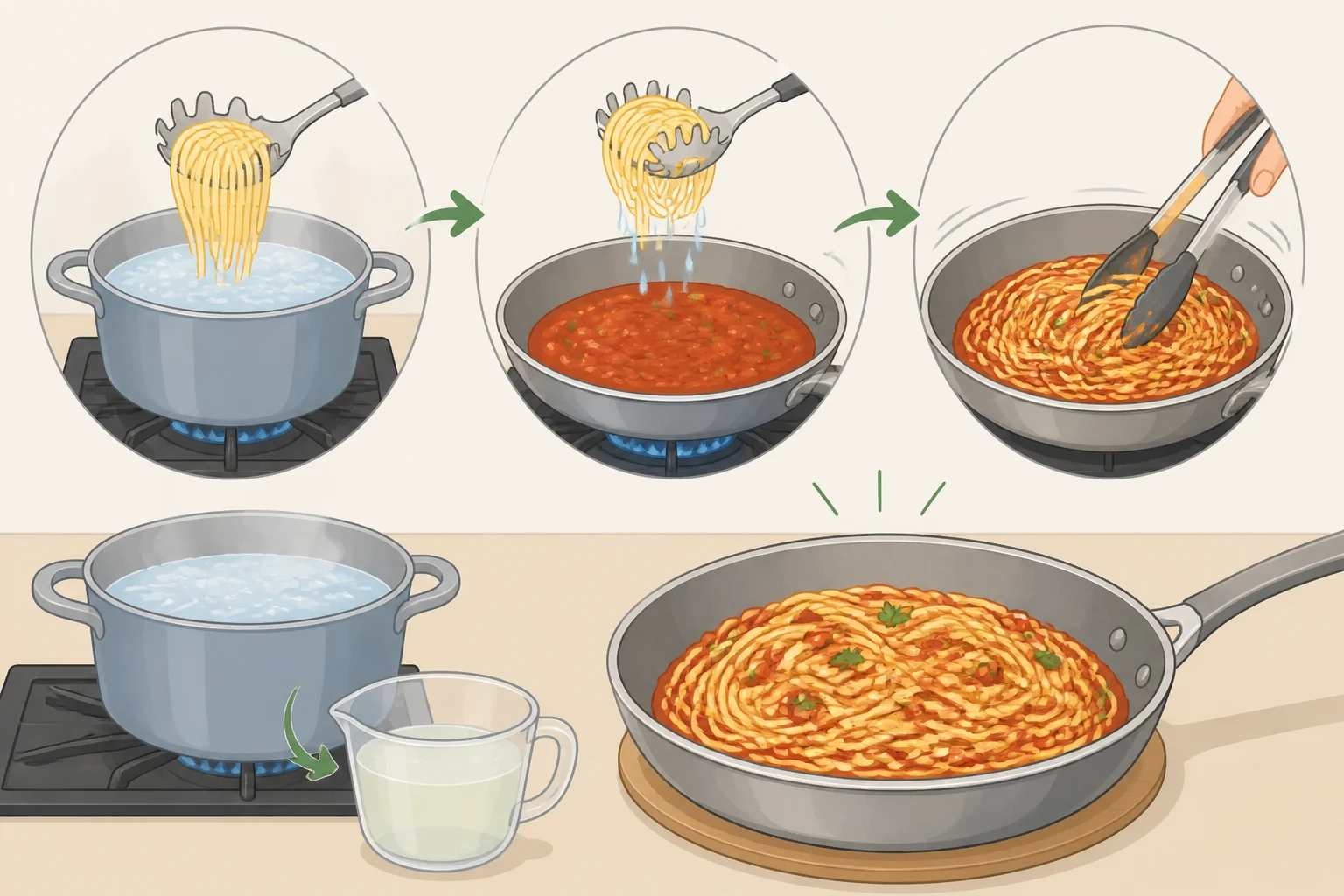
The base method barely differs from any other dry pasta: salted boiling water, enough of it, the time on the box, then drain (Tasting Table, last year). The adjustment worth making lives in the last few minutes before draining.
If the pasta is headed into a simmering sauce rather than straight onto a plate, drain it a few minutes before the package's suggested time so it finishes cooking directly in the pan (Tasting Table, last year). Bronze-cut noodles shed more surface starch as they cook, so finishing them alongside the sauce gives that starch somewhere useful to go: binding sauce to noodle instead of thickening water that gets poured down the drain (Tasting Table, last year).
Skip the rinse. Set aside a cup of the starchy cooking water before draining, then stir a splash into the pan. It helps the sauce and pasta come together into one cohesive dish instead of sauce pooling separately at the bottom of the bowl (Tasting Table, last year).
Cacio e pepe makes the case plainly. The dish runs on four ingredients, pasta, pasta water, pecorino romano, and black pepper, and bronze-cut noodles are what keep the sauce from separating into a greasy puddle: the starchy water they release blends with the cheese into a coating that clings to every strand rather than sitting on top of it (Tasting Table, last year).
The label matters more than the logo
The best pasta brands at the grocery store come down to a production choice, not a logo. Barilla Al Bronzo is the featured example here mostly because three chefs happened to name it in the same set of interviews, and Isidori's rigatoni pick is a reasonable place to start.
The transferable skill is reading any box before it goes in the cart: check for "bronze-cut" or "bronze-die" on the label, and if that's absent, look for a paler, rougher noodle rather than assuming the worst.
Barilla's 2022 launch expanded its own lineup to include bronze-cut versions of spaghetti, fusilli, and linguine, from a company whose annual sales, sauces included, have reached almost $5 billion in recent years (Tasting Table, last year). Whether more mainstream brands follow suit matters less than whether shoppers know what to check for once they do.