How to Keep Stink Bugs Out of Your House in Fall: Full Guide
In places where brown marmorated stink bugs are established, homeowners can watch them enter a house by the hundreds or thousands as the season turns, according to the U.S. EPA. They aren't after crumbs in the pantry. They're after a protected place to spend the winter, and on a warm fall afternoon, a house looks like exactly that.
This guide covers how to keep stink bugs out of your house in fall: why the bugs show up when they do, where they typically get in, and a zone-by-zone sealing plan to close those gaps before the fall rush peaks. It also covers what actually helps once bugs are already inside, and what doesn't.
Why do stink bugs come into houses in the fall?
Video of the Day
Brown marmorated stink bugs (BMSB) aren't native to North America. The species arrived from Asia sometime in the mid-1990s, likely as a stowaway in a shipping container, and was first officially collected in Allentown, Pennsylvania, in September 1998 (U.S. EPA; Penn State Extension). It has spread quickly since then. EPA data describes the bug as established in 38 states and the District of Columbia, while a more recent count from NC State Extension, current as of earlier this year, puts the figure at 47 states (U.S. EPA; NC State Extension). The heaviest concentrations remain in the mid-Atlantic, where the species first took hold (U.S. EPA).
An adult is roughly 17 millimeters long, about two-thirds of an inch, and shield-shaped, nearly as wide as it is long (Penn State Extension). The markers that help distinguish it from other stink bugs are lighter bands on the antennae and darker bands on the membranous rear edge of the front wings (Penn State Extension). The name comes from scent glands on the abdomen and thorax, which release an unpleasant odor when the insect is disturbed or crushed (U.S. EPA; Penn State Extension).
The fall invasion follows a predictable life cycle. Adults emerge in late spring, mate, and lay eggs from May through August. As days shorten in early August, they stop laying eggs entirely, and by September and October they're actively searching for structures, dead trees, and other sheltered places to enter diapause, a hibernation-like state in which they don't feed or reproduce (NC State Extension). On warm fall days, that search draws them to the outside of houses in large numbers before they work their way in (Penn State Extension).
One reason the species has become such a persistent household nuisance: it has few natural enemies in North America, a gap that lets populations build up wherever it establishes (NC State Extension). Once bugs are inside, the practical concerns are limited. They don't bite, don't spread disease, and don't reproduce or feed indoors (U.S. EPA; NC State Extension). NC State does flag one exception: while the bugs usually don't damage property, large numbers have been known to clog heat pumps and other power equipment (NC State Extension). A small share of people are also sensitive to the bugs' odor and can develop mild allergic symptoms, and crushing one against skin can cause localized dermatitis in a small percentage of the population (Penn State Extension).
Video of the Day
Where do stink bugs get into a house?
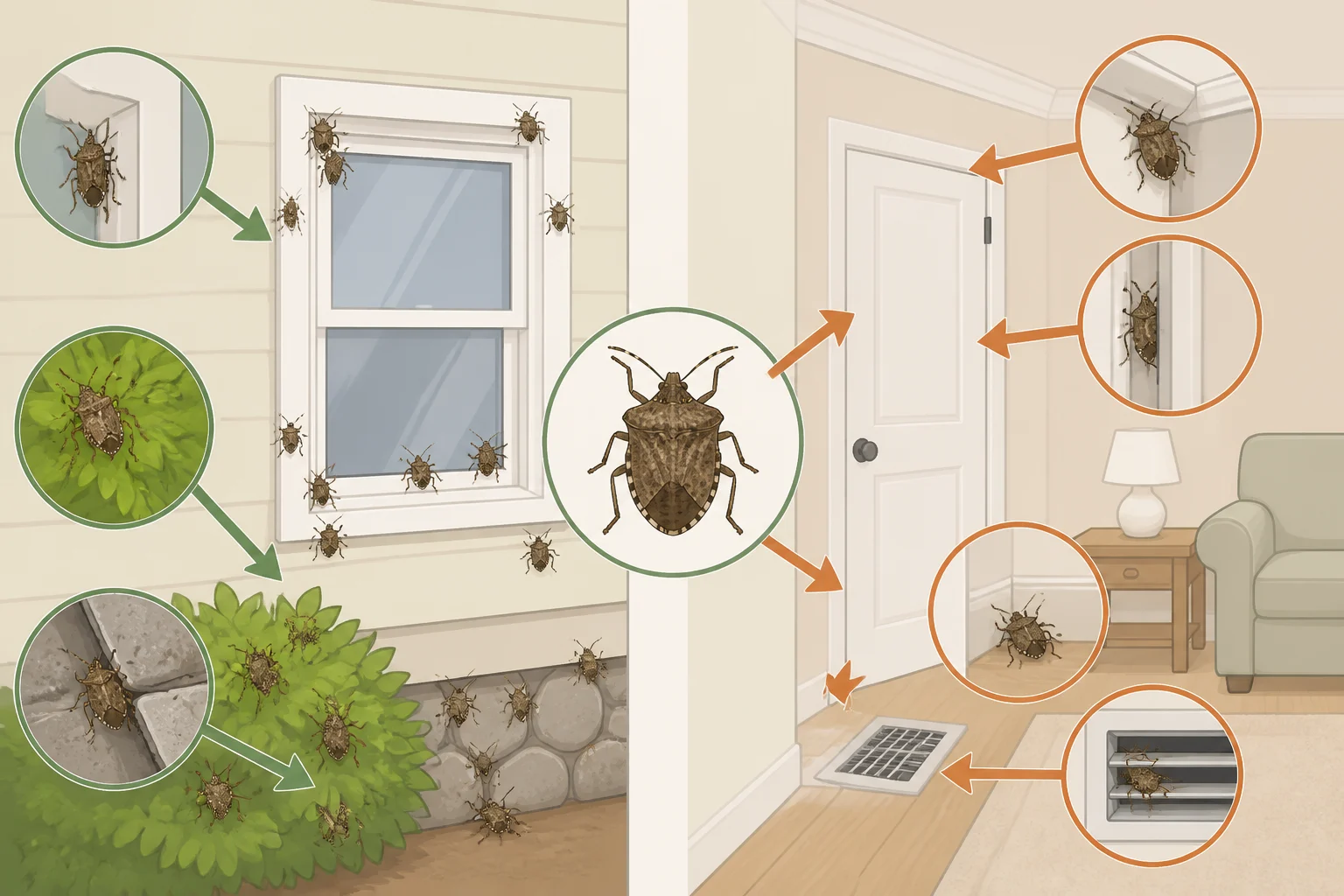
Before any sealing work makes sense, it helps to separate an active entry point from a bug that's simply resurfacing from somewhere it got in weeks earlier.
During early autumn, stink bugs are frequently visible clustered on the outside of buildings, or just inside near doors, windows, and similar openings (U.S. EPA). That clustering is useful: wherever bugs are massing on siding or around a window frame marks an exterior area worth inspecting first, even if it doesn't guarantee that's the only way in.
Bugs that entered earlier in the season may also emerge later from wall voids or attic spaces and turn up almost anywhere in living areas, including bookcases, under furniture, or behind trim (U.S. EPA). A stink bug spotted indoors well after the fall rush may simply be one that came in earlier and is only now working its way out of a wall cavity, which makes the original entry point harder to trace. Typical indoor emergence spots include cracks under or behind baseboards, gaps around window and door trim, and openings around exhaust fans or ceiling light fixtures (Penn State Extension; U.S. EPA).
How to keep stink bugs out of your house in fall: the sealing plan
Penn State Extension identifies mechanical exclusion, sealing every gap a bug could use to get inside, as the best method to prevent stink bugs from entering your home (Penn State Extension). That's the whole idea behind brown marmorated stink bug prevention: close the gaps before the bugs find them. Work through the house zone by zone, starting outside and moving in.
Exterior perimeter
Inspect the ground within a few feet of the foundation for debris and edible vegetation, then rake it away so the area doesn't attract pests looking for cover close to an entry point (U.S. EPA). This is specifically about the strip of ground touching the house, not the whole yard. Leaf litter elsewhere on the property shelters overwintering pollinators and other beneficial insects, so there's no reason to strip the entire lawn bare for this (Penn State Master Gardener). If vegetation near the foundation is harboring a large population, a licensed pest control professional can treat it directly (U.S. EPA).
Entry doors
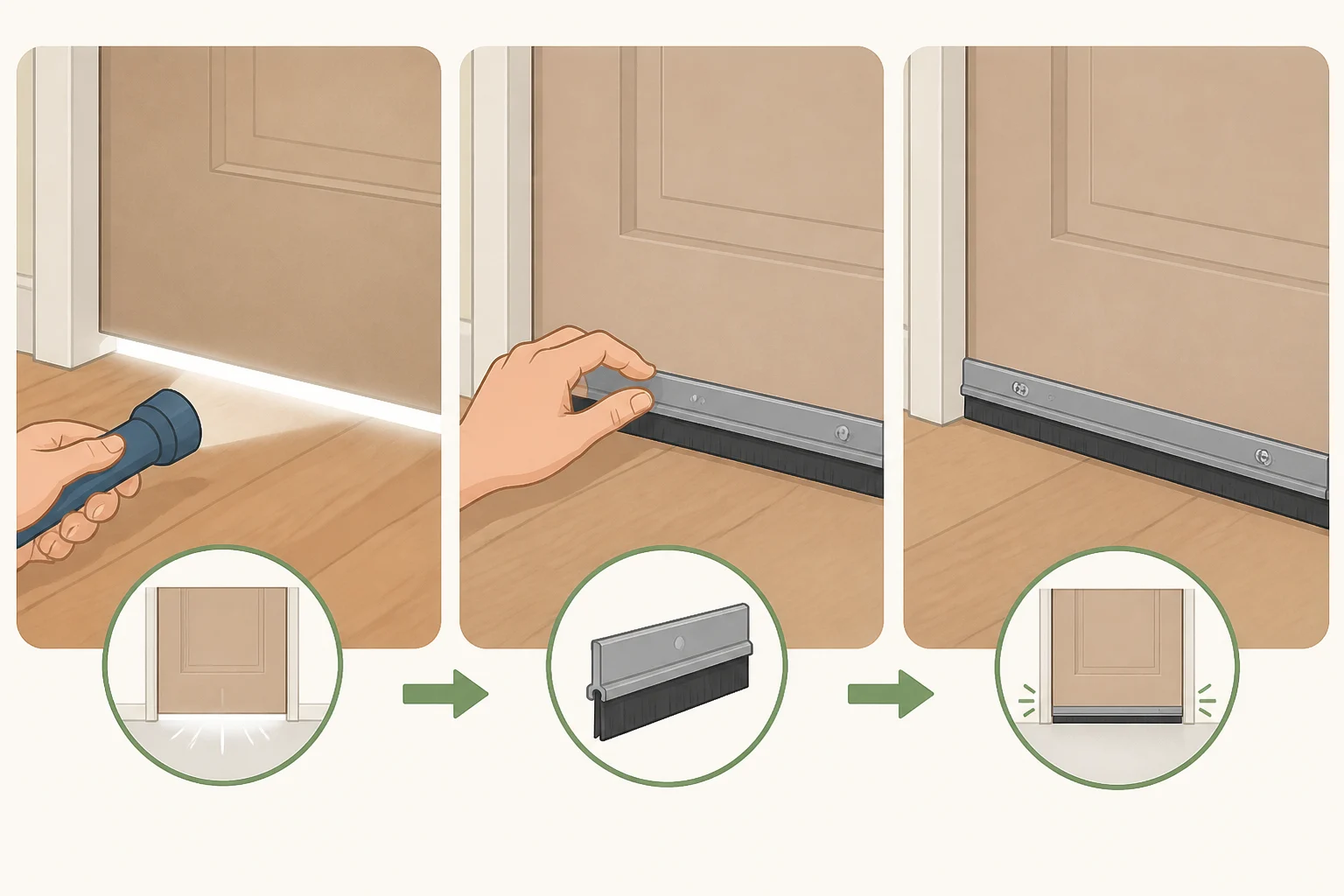
Check every exterior door for daylight visible around the edges. Where you see any, weather-strip the frame or install a door sweep (U.S. EPA).
Windows
Caulk window frames on both the interior and exterior sides of the house (U.S. EPA). Doing both sides matters more than it sounds: a frame that looks sealed from indoors can still be open on the exterior face.
Foundation and crawlspace
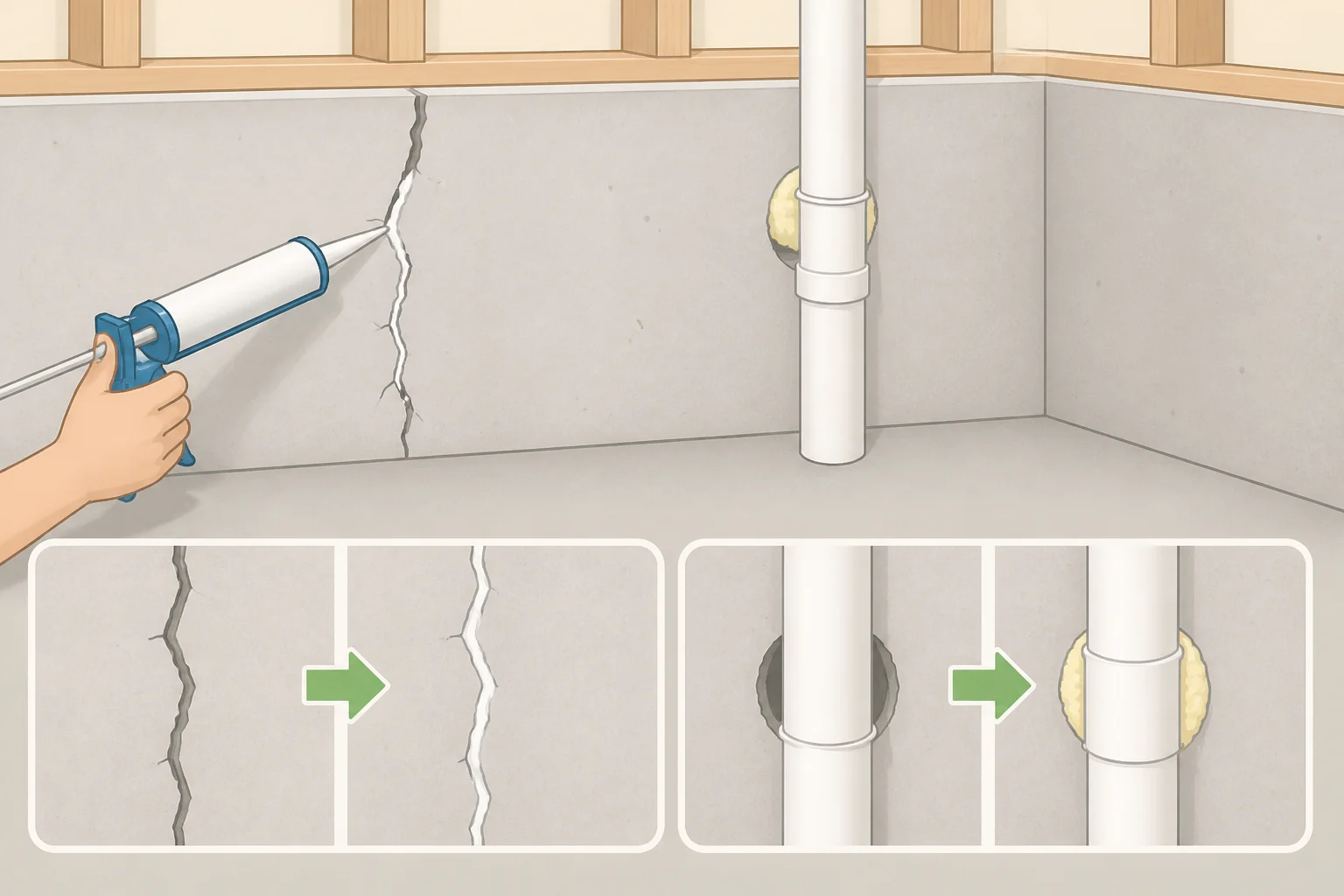
Inspect the foundation for cracks and seal them to close off a potential entry point, and secure any openings into the crawlspace (U.S. EPA). Where exposed plumbing pipes pass through the foundation or crawlspace, caulk the small gaps and pack larger ones with steel wool before caulking over them (U.S. EPA).
Attic and chimney
Cap or screen the top of the chimney if the house has a fireplace (U.S. EPA). Remove window air conditioning units for the season, one of the steps Maryland Extension recommends alongside caulking and weather stripping (University of Maryland Extension).
Interior backup layer
Even a carefully sealed exterior can miss something, so seal cracks to keep stink bugs out from the inside as well. Caulk gaps under and behind baseboards, around window and door trim, and near exhaust fans or ceiling light fixtures, the exact spots bugs emerge from once they're already inside a wall void (Penn State Extension).
If sealing the whole exterior isn't realistic, whether because of an older house or a tight budget, a licensed pest control professional can apply exterior treatments as a supplement, covered in more detail below.
How to get rid of stink bugs already inside your house
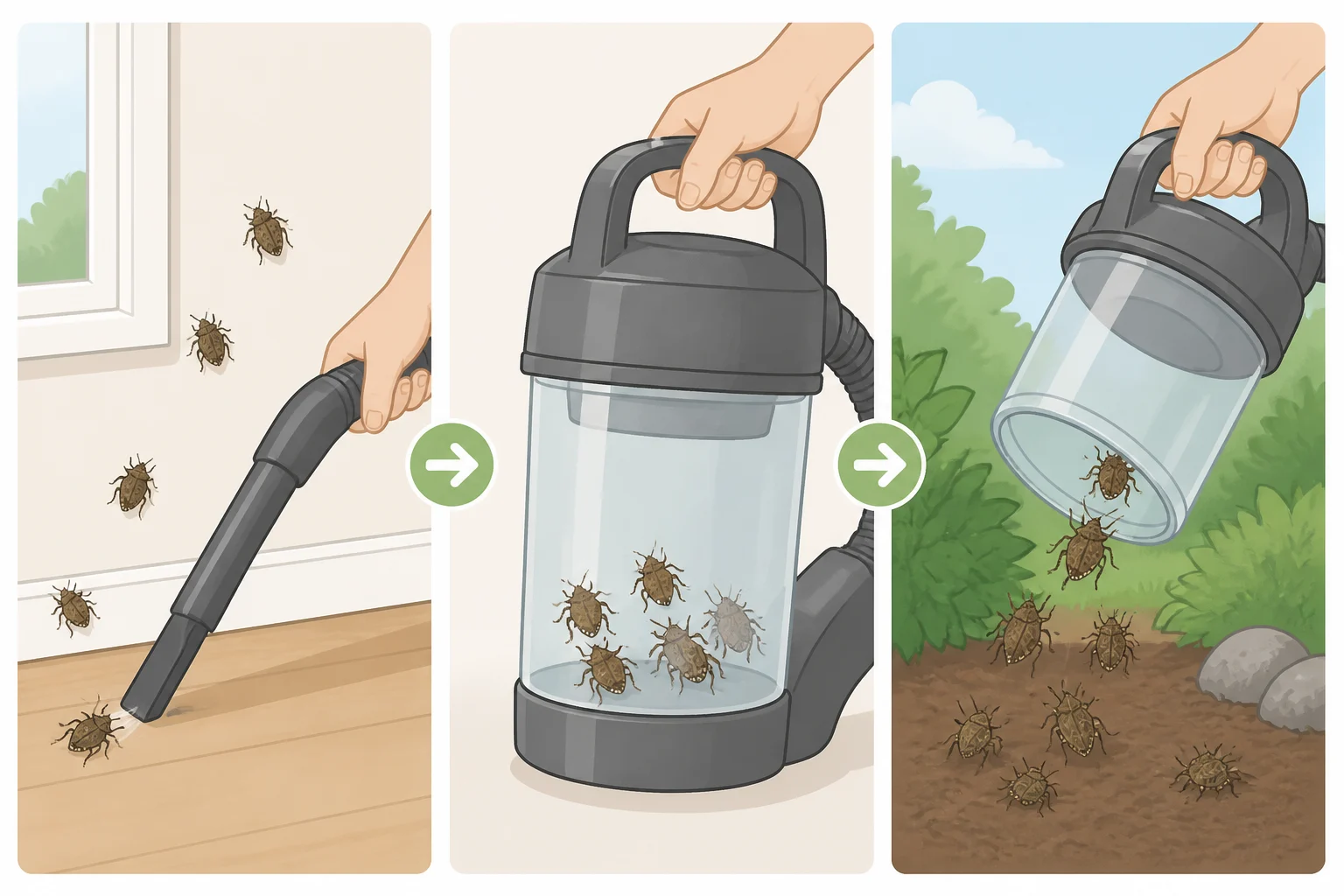
Sealing stops future arrivals, but it won't do anything about the bugs already indoors. For those, the goal is removal without making the smell problem worse.
Vacuum instead of crushing. A shop vacuum or standard household vacuum picks up live and dead bugs cleanly. Crushing releases their defensive odor and, for a small share of people, can cause skin irritation on contact (Penn State Extension). Afterward, empty the canister into an outdoor trash receptacle, since the vacuum itself can hold onto the smell for a while (University of Maryland Extension).
Skip the indoor fogger. Aerosol foggers kill bugs that have gathered on ceilings and walls, but they won't stop more from emerging out of cracks once the room airs out. It kills visible bugs but does not stop others from emerging (U.S. EPA; Penn State Extension).
Leave crack-and-crevice sprays and wall-void dust treatments alone. Penn State doesn't recommend spraying directly into cracks, since it won't stop bugs from continuing to emerge (Penn State Extension). Dust treatments inside wall voids can kill large numbers of bugs, but the carcasses can then attract carpet beetles, which go on to damage wool and stored dry goods elsewhere in the house (Penn State Extension).
A soapy-water trap can help, modestly. A light positioned over a pan of soapy water will draw bugs in overnight, but the EPA is direct about its limits: it's not enough on its own to control a real infestation, just a small supplement to sealing (U.S. EPA).
Bring in a professional for exterior treatment if sealing alone isn't cutting it. A licensed pest control operator can apply exterior insecticide in fall, timed just before bugs start to congregate, for some minor relief (Penn State Extension). Set expectations accordingly: because sunlight breaks the material down, it may not keep killing insects much beyond several days to a week (Penn State Extension).
What to do this week
In much of the United States, late September falls within the window when adult stink bugs are actively hunting for overwintering shelter, though the exact timing shifts with local weather and location (NC State Extension; Penn State Extension). A short, practical schedule:
- Today: Walk the exterior of the house and note where bugs are clustering on siding, trim, or around the chimney. That's where the sealing work starts.
- Before the next warm fall day: Work through the zones above in order, doors and windows first, then foundation, crawlspace, chimney, and the interior backup layer.
- If bugs keep appearing indoors: Vacuum them up rather than crushing them, and consider a professional for exterior treatment if a full seal isn't realistic this season.
Overwintered adults stay largely dormant once settled in, then leave their shelters in spring and are seldom seen indoors again until late summer (NC State Extension). The checklist above is worth revisiting before that late-summer and fall activity picks up again.