How to Declutter Your Kitchen: 20 Things to Toss First
Kitchen clutter isn't just an eyesore. It's measurably stressful. A survey of 1,000 U.S. homeowners found that 58% call kitchen clutter a major source of daily stress, while 55% say an organized kitchen actually helps them relax (Psychreg, June 2025). Learning how to declutter your kitchen starts with figuring out where that clutter actually piles up, then working through it zone by zone instead of attacking the whole room at once and losing steam by dinnertime.
The same survey, run by Eagle Woodworking, points to the worst offenders. Appliances and gadgets top the list at 77%, followed by spices and condiments (33%), utensils (32%), and dishes and cookware (27%) (Psychreg, June 2025). Psychologist Dr. Sarah Jane Khalid, quoted in that report, explains why this matters beyond appearances: visual disorder taxes the brain's cognitive resources, and the resulting clutter can chip away at focus, memory, and sleep, even raising levels of the stress hormone cortisol (Psychreg, June 2025).
This guide works through a 20-item kitchen declutter checklist organized by where the mess actually lives: countertops and appliances first, then drawers and cabinets, then the pantry, fridge, and freezer. Each item comes with a plain keep-or-toss rule, because "just declutter" is advice nobody can act on. None of this is about owning less for its own sake. It's about making the kitchen easier to cook in.
How to declutter your kitchen: start with countertops and appliances
Video of the Day
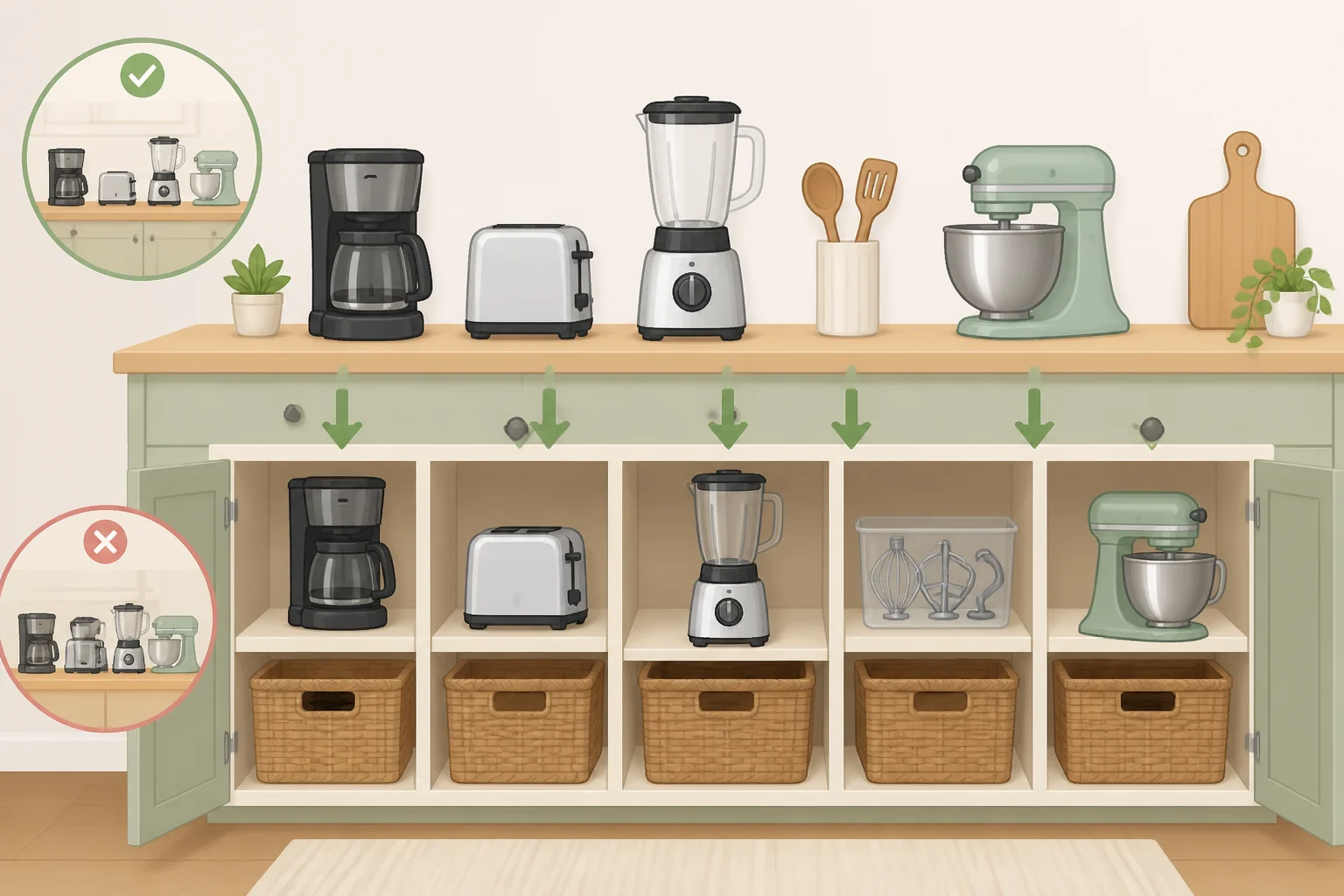
Start on the counter. It's both the category homeowners name most often and the surface you look at every time you walk into the room. Consumer Reports recommends giving every gadget you use often a fixed spot on the counter and a home directly above or below it in a cabinet, so it disappears when you're done with it. Anything you use less often can move out of your direct line of sight entirely, the way a coffee maker tucked into a nook beside the fridge stops registering as visual noise (Consumer Reports, updated 2023).
The stakes here are bigger than tidiness. Americans throw away more than 2 million small appliances a year, a figure that has doubled since 2000 and quadrupled since 1990, and only 5.6% of that volume gets recycled (Consumer Reports, 2023). Among people whose small appliance broke down in the past five years, 97% never got it repaired; cost was the most commonly cited reason among those who skipped repair (Consumer Reports, 2023).
Before anything broken goes in the trash, it's worth a quick check. A manufacturer's website or the original owner's manual can often point toward replacement parts for things like a carafe or a grill plate, and exterior pieces like a cracked handle or dial can sometimes be 3D printed at a university, a UPS store, or a local maker space (Consumer Reports, 2023). RepairClinic's library of repair videos is worth a look too, once a replacement part is in hand (Consumer Reports, 2023).
Work through the counter and the cabinets around it with one rule in mind: keep it if you used it in the past year, or if it does a job no other tool in the kitchen can do. Everything else goes on the list.
- Duplicate small appliances (a second toaster, a backup blender)
- Broken appliances sitting unused and unrepaired
- Single-purpose gadgets that handle one job a knife could do (avocado slicers, egg separators)
- Oversized appliances that rarely get used
- Countertop items that would be better stored in a cabinet
- Novelty gadgets bought once and forgotten
- Orphaned cords and chargers with no matching device
Video of the Day
Kitchen declutter checklist: drawers, cabinets, and utensils
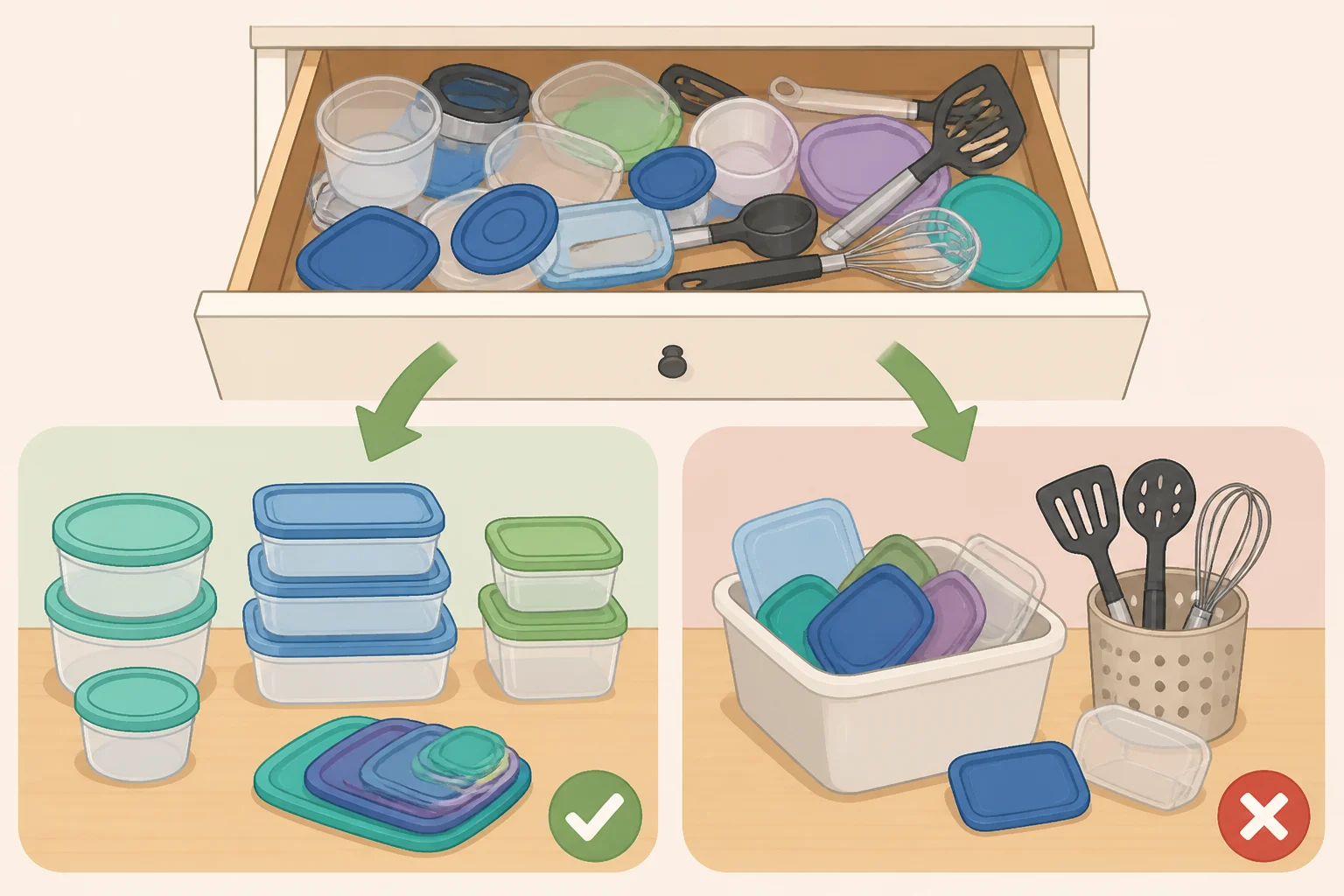
Once the counter is under control, move to what's underneath it. Utensils (32%) and dishes and cookware (27%) trail spices as the next most-cited clutter zones, and they're the natural next stop simply because they're what's spilling out of the drawers below (Psychreg, June 2025).
Professional organizer Jeffrey Phillip makes a point worth carrying into every drawer in the kitchen: building a habit, like assigning a fixed place for each item, tends to work better than buying another storage product (Consumer Reports, updated 2023). A drawer organizer helps, but only after the drawer has been sorted down to what actually belongs there.
If containers have taken over a drawer, the fastest fix is matching every container to a lid on the spot, then donating or recycling whatever doesn't pair up. Skip the instinct to keep unmatched pieces "just in case." A dull knife is worth handling differently than most items on this list: try a sharpening service or a home sharpening kit first, since a dull blade is usually a maintenance problem rather than a clutter problem, and only retire it if sharpening genuinely can't save it.
- Mismatched plastic containers and orphaned lids
- Duplicate utensils, like extra spatulas, whisks, or tongs
- Accumulated take-out cutlery and napkins
- Novelty bakeware that comes out once a year, if that
- Chipped or cracked dishes and mugs
- Knives that no longer hold an edge after a real attempt at sharpening
What to get rid of when decluttering a kitchen: pantry, fridge, and freezer
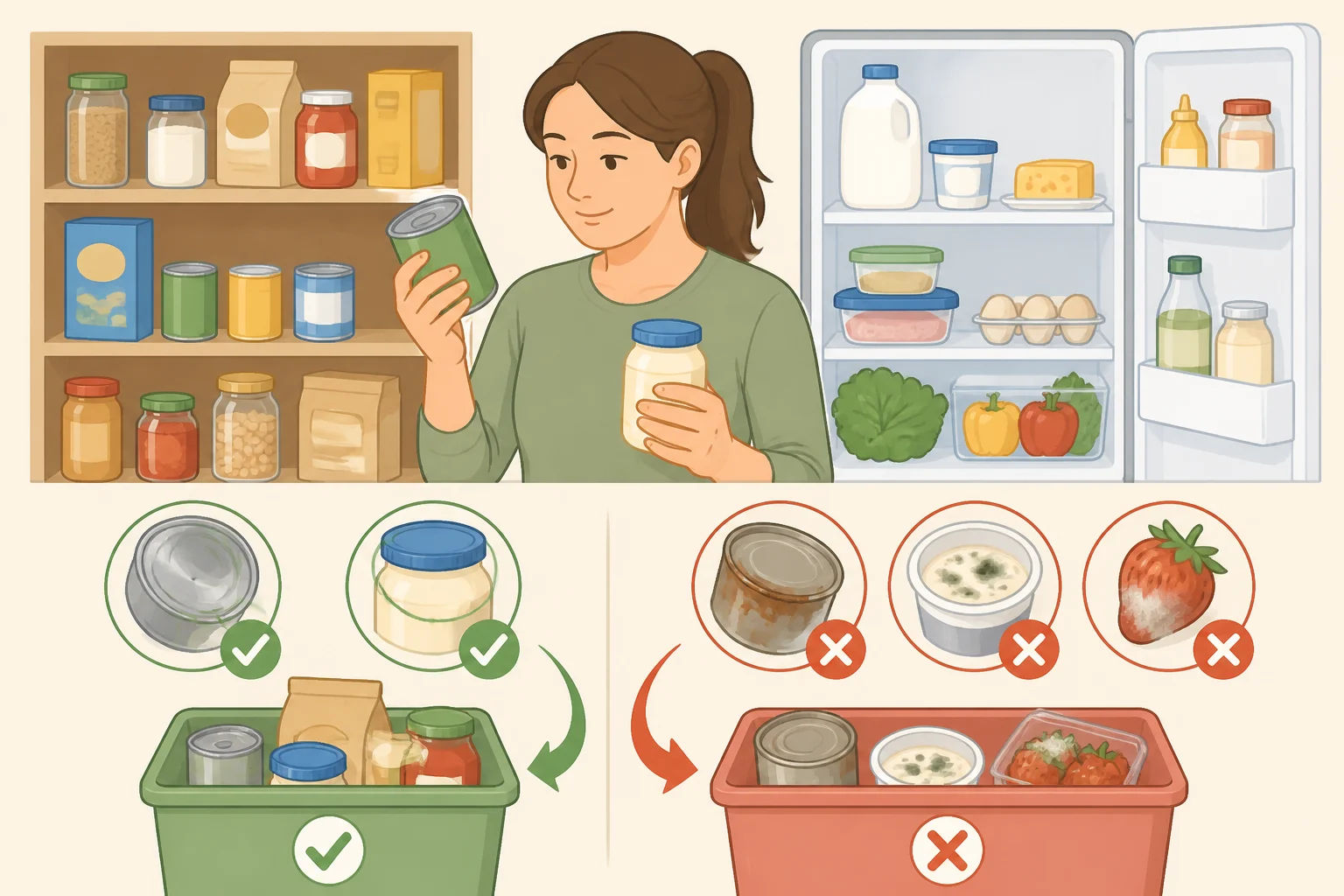
Food storage areas aren't just clutter zones. They're where money quietly leaks out. The EPA estimates that a third of all food in the United States goes uneaten, and that the average family of four spends almost $3,000 a year on food that never gets eaten (U.S. EPA, page last updated earlier this year, estimate based on 2019 data). Consumer Reports cites a more conservative figure, around $1,500 a year, drawn from the same EPA data. The gap between the two is a reminder that these estimates vary by source and methodology, not that one is right and the other wrong (Consumer Reports, 2023).
Not everything in this zone is a safety issue, and it's worth separating the two. Ground spices can lose their potency after roughly four years on the shelf, but that's a flavor problem, not a spoilage one; Consumer Reports suggests writing a "best by" date on the jar bottom when you first open it so you're not guessing later (Consumer Reports, updated 2023). The same logic applies to fridge-door condiments: check the label, the storage instructions, and any obvious sign of spoilage before tossing something just because it's been sitting there a while.
Date labels themselves deserve some skepticism. With the exception of infant formula, sell-by and best-by dates aren't federally required and don't function as a safety cutoff. Food past its use-by date may still be fine to eat if it's been handled properly and shows no off smell, flavor, or texture (Consumer Reports, 2023). That said, when you're shopping, picking the item with the latest available date and rotating older stock to the front still helps things last longer once they get home (USU Extension, 2023).
- Spices that have lost their aroma or flavor
- Old or duplicated condiments in the fridge door, checked before discarding
- Duplicate opened pantry staples
- Unlabeled or freezer-burned mystery items
- Leftovers that have gone too long without a date on them
- Stale bread or dry goods
- Bulk-buy items unlikely to get used before they spoil
One habit does more work than any container purchase here: label leftovers with contents and a date, then freeze anything that hasn't been eaten within three or four days. It keeps food both safer and more visible, instead of vanishing into the back of the fridge (Consumer Reports, 2023; U.S. EPA).
How to organize a cluttered kitchen after decluttering
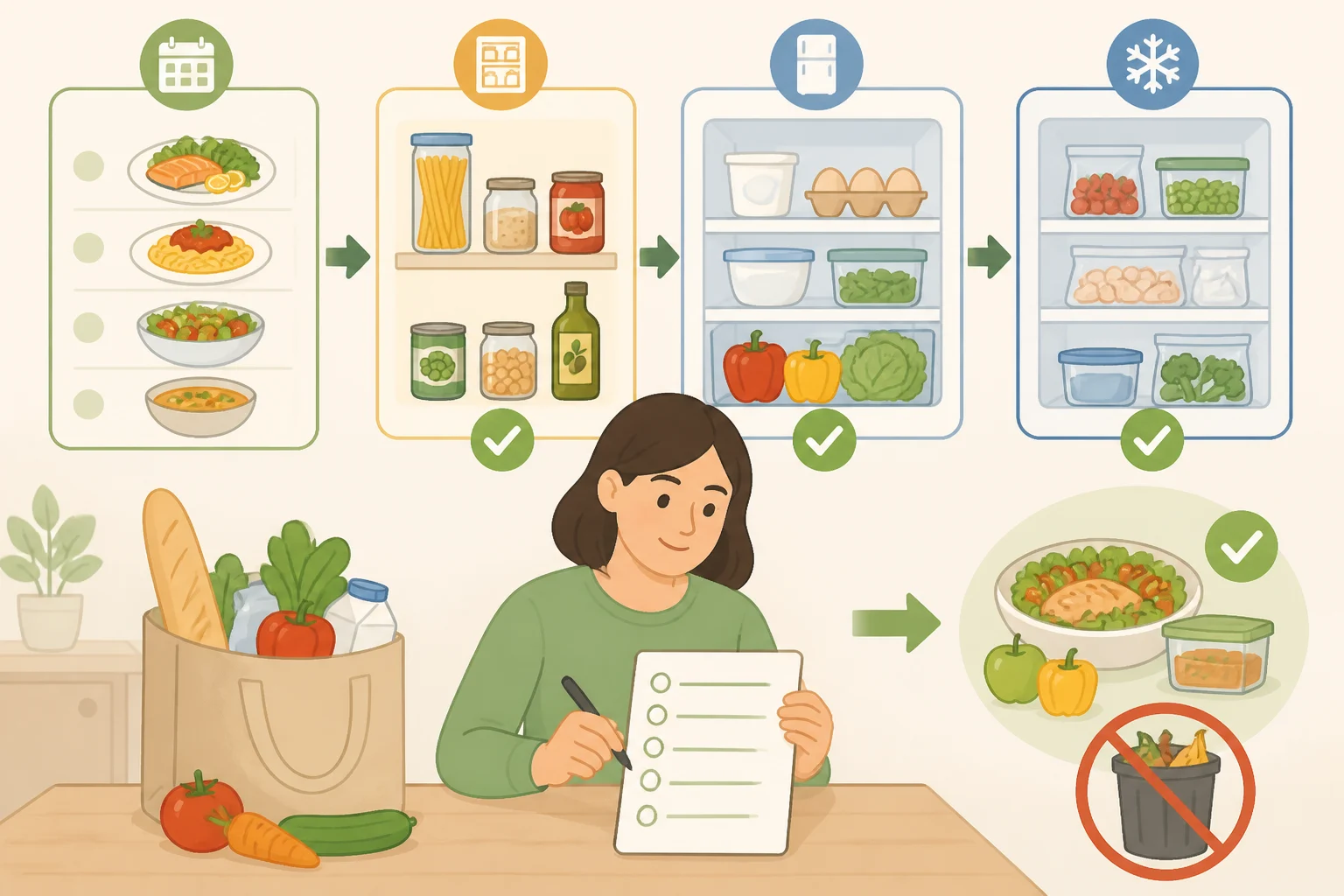
A declutter is a reset, not a cure. Utah State University Extension points to overbuying at the grocery store as a major driver of food waste, and recommends building a shopping list around an actual meal plan and sticking to it, rather than shopping on instinct (USU Extension, 2023). The EPA backs this up with a simple habit: check the fridge, freezer, and pantry before heading to the store, and note the quantity needed per meal so you're not buying three bunches of cilantro for a recipe that calls for two tablespoons (U.S. EPA).
Bulk deals deserve a second look too. Buying in large quantities only saves money if the food actually gets used before it spoils; otherwise the "savings" just become waste with a delay on it (U.S. EPA).
For anything leaving the house after this process, there's a right order of operations. Donate or resell appliances that still work. For anything broken, check manufacturer or third-party repair before writing it off entirely. And don't take an appliance apart yourself to sort it into recycling bins; that risks hazards from sharp edges and materials for both you and the people handling recycling downstream, so it's worth checking local appliance-recycling options instead of the household bin (Consumer Reports, 2023).
The habit that actually keeps a kitchen from filling back up is the one Jeffrey Phillip described earlier: give every item you keep a single, fixed place. It's a cheaper fix than any bin or basket, and it's the difference between a kitchen that stays organized and one that needs re-decluttering every few months (Consumer Reports, updated 2023).
Where to go from here
The order matters less than the follow-through. Start with appliances and gadgets, since they're the category homeowners flag most often. Move to drawers and cabinets next. Finish with the pantry, fridge, and freezer, where clutter and food waste overlap most directly and where the EPA's numbers suggest real money is on the table (U.S. EPA).
None of this holds without the habits behind it. A once-a-year pass through appliances and pantry, paired with a standing rule to check what's already on hand before shopping, is what keeps a kitchen declutter from becoming something you have to do all over again next spring.