Fall gardening tips that matter more than your frost date
Most fall gardening tips start with the first frost date, as if that single number governs everything from here to winter. It doesn't. According to University of Minnesota Extension, crop growth slows dramatically once daylight drops below 10 hours a day, which lands around November 1 in Minnesota. That's a light problem, not a temperature problem, and it changes how you should think about fall vegetable garden care.
Frost dates themselves are also shakier guideposts than most gardeners assume. In Wilmington, North Carolina, the growing season is lengthening by roughly 1.2 days per decade, according to Timothy Armstrong, meteorologist and climate program leader for the local National Weather Service branch, per N.C. Cooperative Extension. Armstrong also notes that Wilmington and nearby Castle Hayne, despite sitting close together, differ by almost two weeks in their average first fall freeze. If two nearby towns can't agree on when winter starts, a single calendar date was never going to be a precise planning tool.
This piece covers three fall gardening tips built around that uncertainty instead of ignoring it: timing plantings by daylight and maturity math, treating cool, damp fall mornings as disease season, and rethinking what garden cleanup should actually accomplish. Together they form a fall garden checklist you can adapt to your own region, whether you're gardening in Minneapolis or on the North Carolina coast.
Fall gardening tips for planting by daylight
Video of the Day
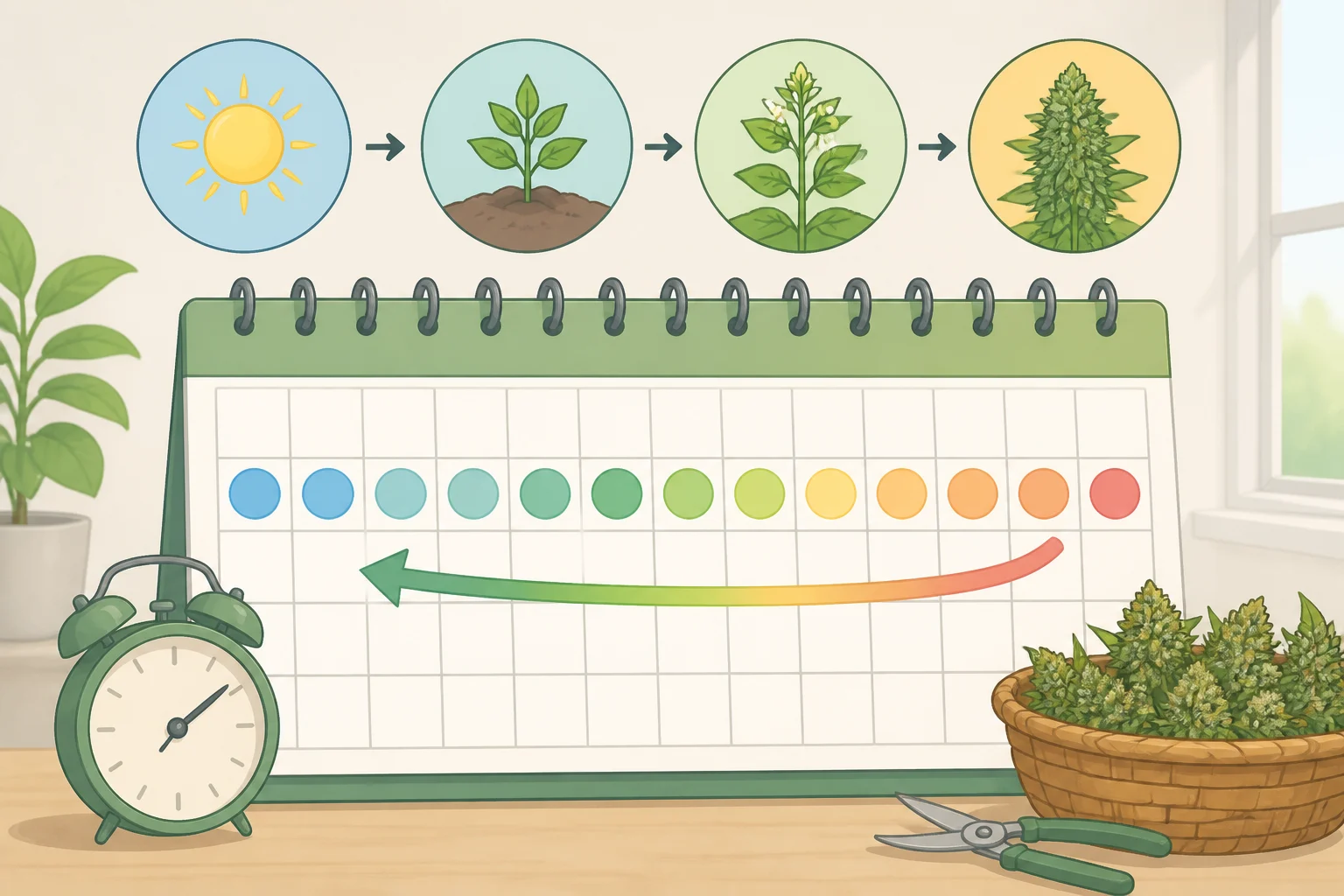
Fall planting is a countdown, and the clock isn't temperature, it's light. Once your local daylight window shrinks past the point where photosynthesis can keep pace with plant demand, growth stalls almost regardless of how mild the weather stays. That makes the smart way to plan a fall vegetable garden a matter of working backward from your last usable daylight date, not from an average frost date that may not even hold in your own county.
Here's a three-step method that works no matter where you garden. First, find your crop's days to maturity, printed right on the seed packet. Second, decide whether you're harvesting baby leaves or full-size heads, since that swings maturity time considerably. Third, count backward from the point where your local day length drops below roughly 10 hours, using sunrise-sunset data for your area or your local Cooperative Extension office's fall planting guidance. University of Minnesota Extension points to the Johnny's winter growing charts as one of the better resources for working through this math.
For beginners, leafy brassicas and spinach are the most forgiving fall crops. They mature in five to nine weeks, with baby-leaf harvests on the fast end and full-leaf harvests closer to nine weeks, per the same Minnesota Extension guidance. In Minnesota, with a November 1 daylight cutoff, that puts the last planting date for full-leaf spinach and tatsoi around August 30 and the last date for baby-leaf greens and brassicas around September 20.
Worth flagging directly: those specific dates are already close behind or just ahead. August 30 passed roughly two and a half weeks ago, and September 20 is only days away as of this writing. That's not an invitation to procrastinate, it's a demonstration of the method. Minnesota gardeners reading this in mid-September have a narrow baby-leaf window left and should act now for fall greens; gardeners elsewhere need to run the same backward-counting exercise with their own region's daylight data, because a coastal North Carolina garden and a Minneapolis garden are not on the same clock.
Push a planting past that cutoff anyway, and don't expect a fall harvest. Crops seeded that late will largely go dormant through winter and resume growing for a February or March harvest instead, according to University of Minnesota Extension. That's not a failure, just a different outcome, and one worth planning for on purpose if an early spring crop is the goal.
Gardeners in cooler, more exposed regions have another lever: row covers and cloches. Oregon State University Extension notes that cloches, clear plastic covers that shield plants from wind and rain while trapping warmth, can extend the growing season into fall and sometimes winter. For gardeners close to the ocean, the same source says cloches may be essential for keeping tender crops like tomatoes and peppers producing at all. Essential in exposed coastal settings, useful but not mandatory everywhere else, that's a hedge worth preserving.
This is the first way fall gardening breaks from convention. Plant by maturity math and local daylight, and treat your average frost date as one input layered on top, not the deadline itself.
Video of the Day
Fall garden disease prevention for cool, damp weather
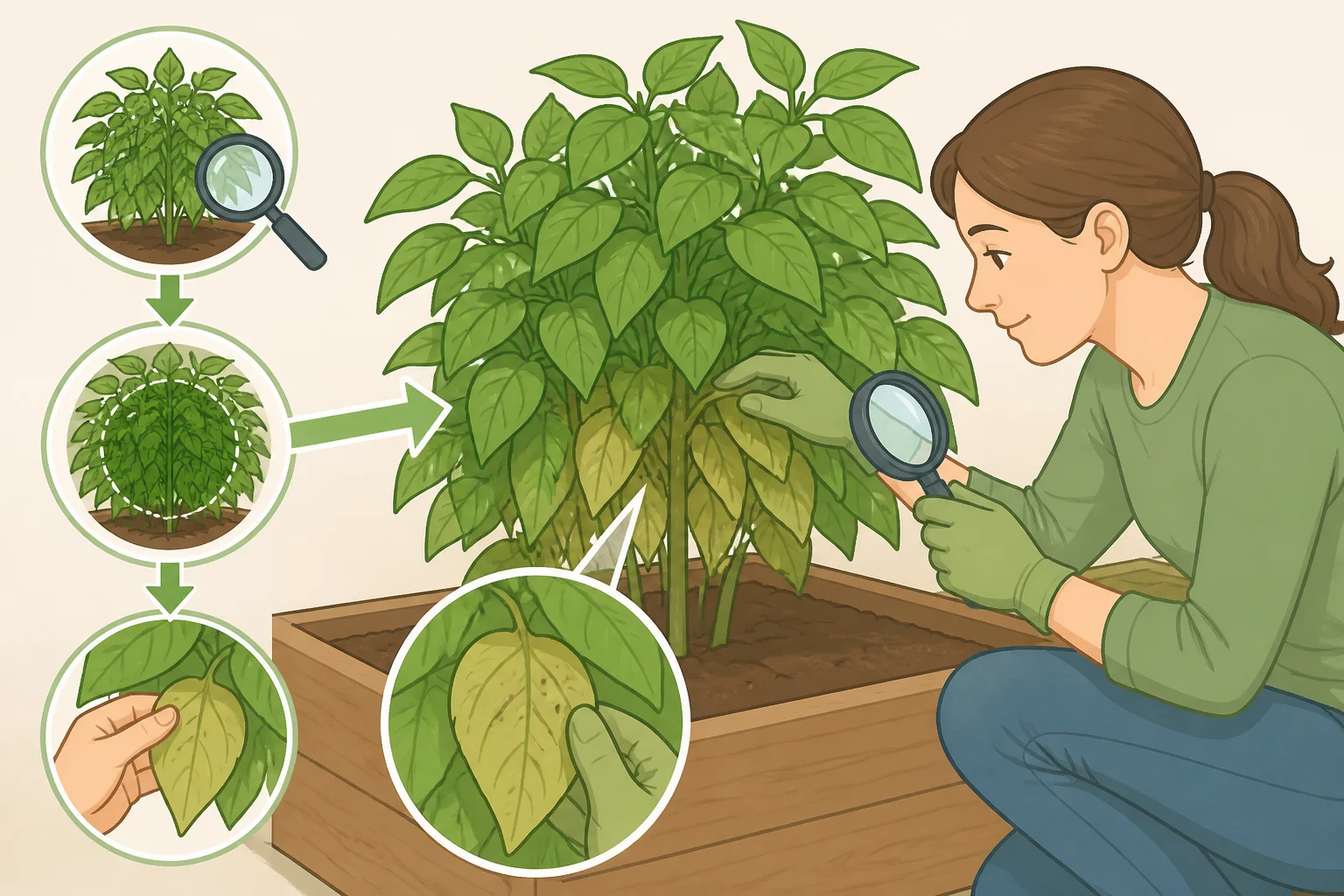
Cooler fall mornings bring heavier dew, and that moisture is exactly what fungal diseases need to establish and what bacterial diseases need to spread, according to University of Minnesota Extension. This is where a lot of end-of-season garden maintenance goes wrong: gardeners either ignore the shift entirely or start scrubbing the garden indiscriminately once problems show up.
The better approach starts with a habit, not a reaction. Scout your plants weekly, and when you do, check the oldest leaves and the densest parts of the canopy first, since that's where disease problems typically get their start, per the same Minnesota source. Catching leaf spot on lower, older foliage before it climbs the plant buys real time.
There's also a sequencing trick that matters more than most people realize. Work the garden only when foliage is dry, tend the healthiest plants first, and save any diseased sections for last, because gardeners themselves can carry disease between plants on hands, tools, and clothing. It's a small change in order of operations that costs nothing and meaningfully slows whatever's already loose in the bed.
Once harvest wraps up for a crop, don't let the residue linger. Removing spent plants or destroying diseased material lowers the pathogen load left behind, which makes strategies like crop rotation more effective the following year, according to Minnesota Extension. This isn't a blanket rule to strip every bed the moment picking stops; it applies specifically to areas that are diseased or finished producing.
That principle holds beyond the Upper Midwest. Oregon State University Extension lists keeping gardens free of weeds, diseased plant material, and pest-sheltering debris as a core prevention habit for coastal Pacific Northwest growers, a different climate running the same basic math: moisture plus leftover pathogens equals more disease next season.
One caveat before the next section: this is guidance about diseased material specifically. Not every leaf on the ground is a threat, and treating all fall garden debris the same way is where a lot of well-meaning cleanup advice goes wrong.
End-of-season garden cleanup: what to remove and what to leave
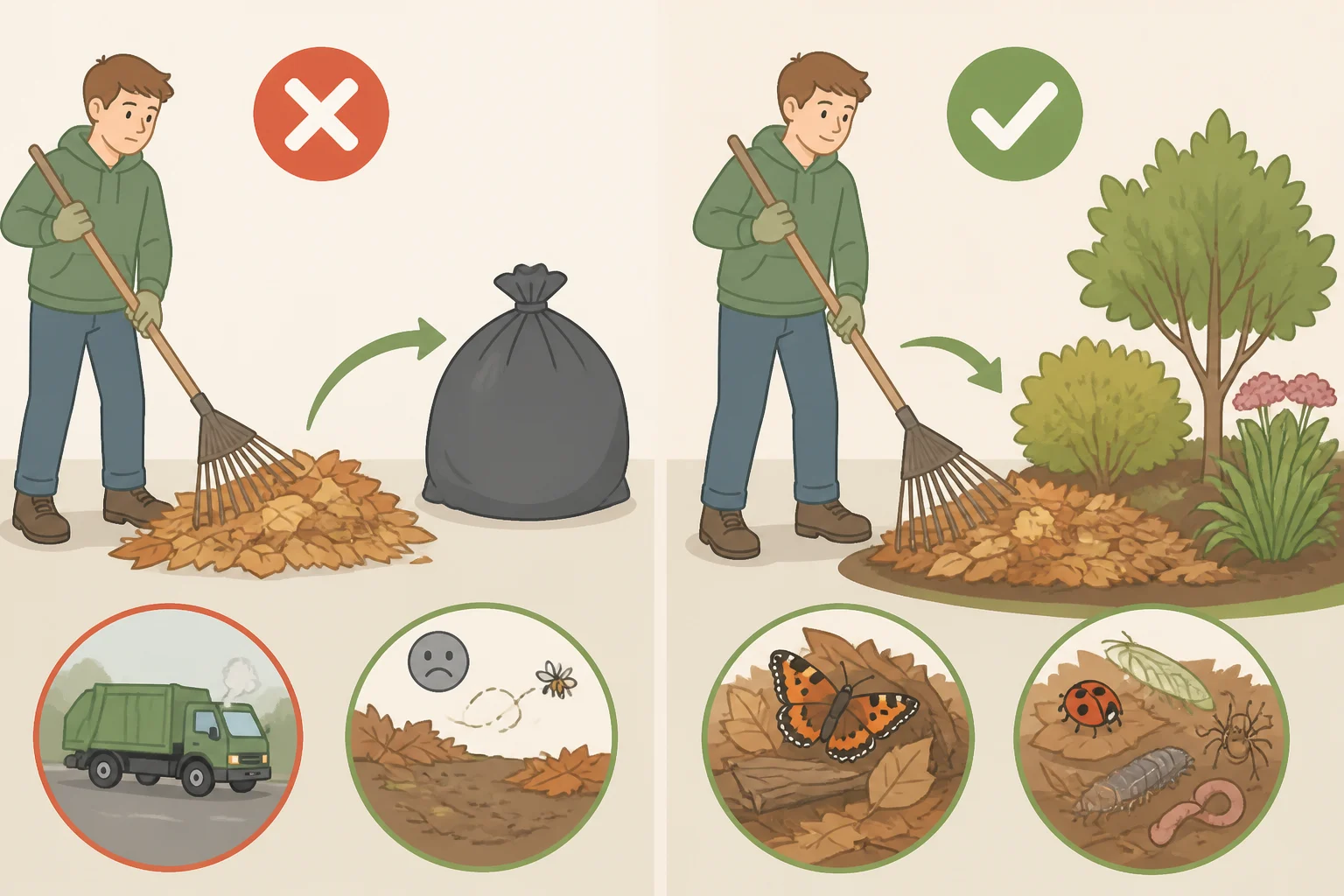
The instinct to clear every leaf and stem before winter feels responsible. It can actually work against the garden. Leaf litter shelters overwintering insects, spiders, and caterpillars while enriching soil and holding moisture, according to both Penn State Extension Master Gardener and University of Georgia Extension.
The scale of that habitat loss is bigger than most gardeners expect. Penn State Extension cites a University of Maryland study reporting that leafless garden plots had 45% fewer moths and butterflies and 67% fewer spiders than plots left with leaf cover intact. That's not a trivial dip in biodiversity, it's a substantial reduction tied directly to a single autumn chore most people do out of habit.
The fix isn't inaction, it's redirection. Rake leaves into garden beds, under shrubs, around tree bases, or into out-of-the-way piles instead of bagging them for removal, a practice both Penn State and University of Georgia Extension recommend. This keeps lawns from being smothered by a thick leaf layer while still preserving habitat everywhere else on the property. Whole leaves matter too: shredding with a mower destroys the same eggs, caterpillars, and cocoons you're trying to protect, so a rake or blower does more good than a mulching pass.
The same logic extends to perennials. Consider leaving most flower stalks standing through winter rather than cutting them back in fall, since native pollinators overwinter in hollow stems and seed heads double as a food source for birds, per Penn State Extension. That guidance isn't universal, though. The same source flags peonies, irises, and lilies as exceptions that should still be cut back to a height of three to five inches, with the foliage removed, since those particular plants don't offer the same overwintering benefit and can carry their own disease risks into spring.
Here's the distinction that ties this section back to the last one, and it's the most useful thing in this whole checklist: healthy leaf litter and intact ornamental stems can stay. Diseased vegetable foliage and infected crop residue should not. One is habitat. The other is a pathogen reservoir waiting for next spring. Treat them the same, in either direction, and the sorting was pointless.
The decision rule to carry into next season
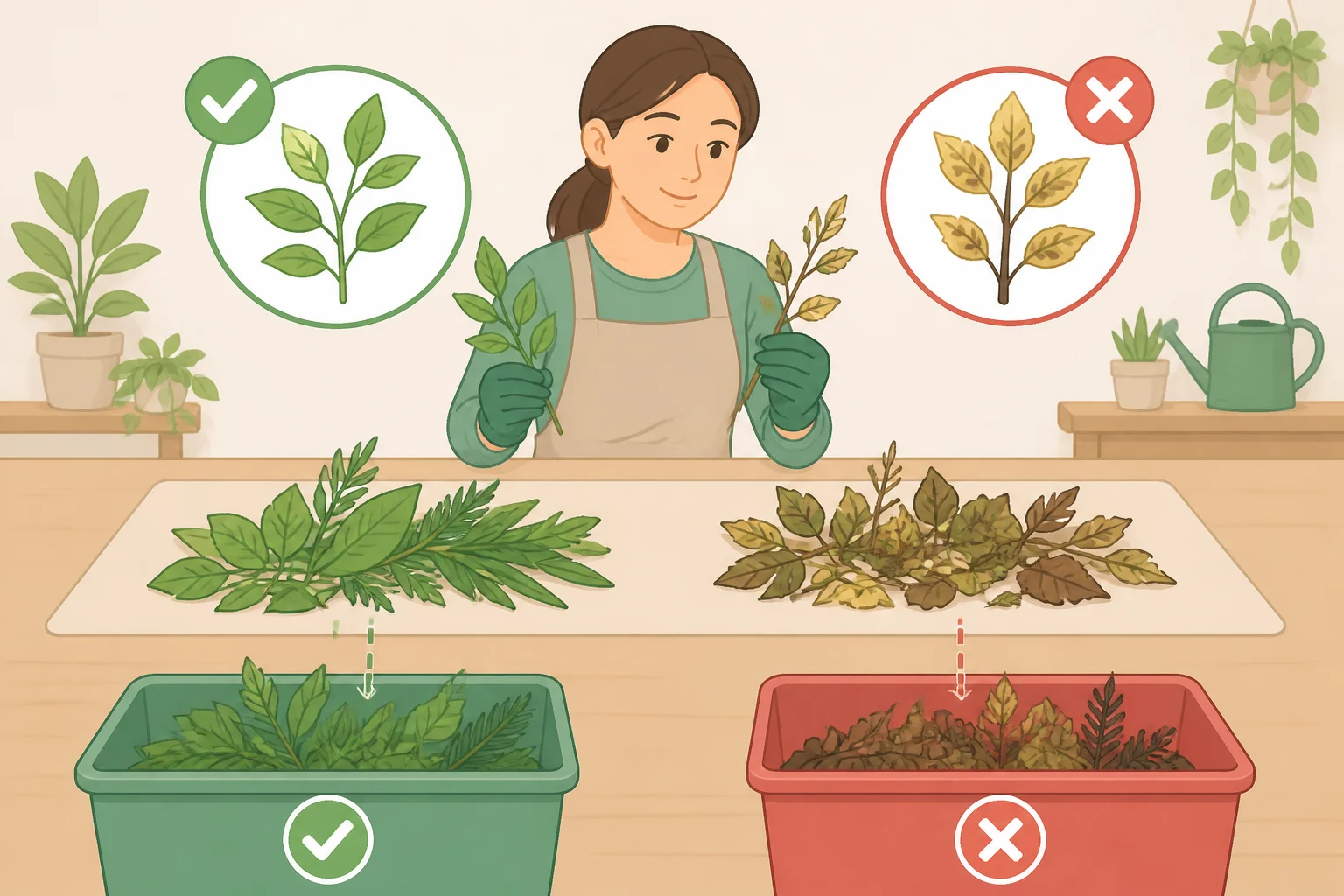
Effective fall garden care isn't about doing more chores or fewer, uniformly. It's triage. Plant fast-maturing crops against a daylight deadline rather than a frost date. Remove whatever carries disease. Leave whatever provides habitat.
The payoff for sorting the garden this way shows up next year, not this one. Removing diseased residue now lowers the pathogen load a new crop rotation has to fight against. Leaving healthy leaf litter and standing stems in place supports the insects, spiders, and other overwintering wildlife that make next year's garden more resilient before a single seed goes in the ground. None of it demands more labor than the conventional version of fall cleanup. It just asks you to sort the pile correctly instead of clearing it wholesale.