Quick and easy back-to-school meal ideas: dinner to lunch
The back-to-school scramble isn't really two separate problems, one for dinner and one for lunch. It's that most families treat them that way, cooking tonight's meal and then scrambling to solve tomorrow's lunch in a groggy 7 a.m. panic. Building tomorrow's lunch into tonight's dinner is one of the more useful quick and easy back-to-school meal ideas for any household running short on both time and patience.
USDA has made the case directly: cooking extra meat and poultry specifically for next-day lunches is "a great time saver," though the agency attaches a real condition to that claim. The savings only hold if the leftovers get handled and stored correctly afterward, because perishable food sitting between 40 and 140°F, what USDA calls the "Danger Zone," can double its bacteria count in as little as 20 minutes (USDA). Skip that step, and a time-saving dinner turns into a lunchbox problem instead.
This guide walks through the system in three parts: pick a lunch-transport method based on what tomorrow's schedule can realistically support, cook one of four dinners built to yield a deliberate next-day lunch, and pack that lunch the same safe way every morning.
Pick your lunch track before you plan dinner
Video of the Day
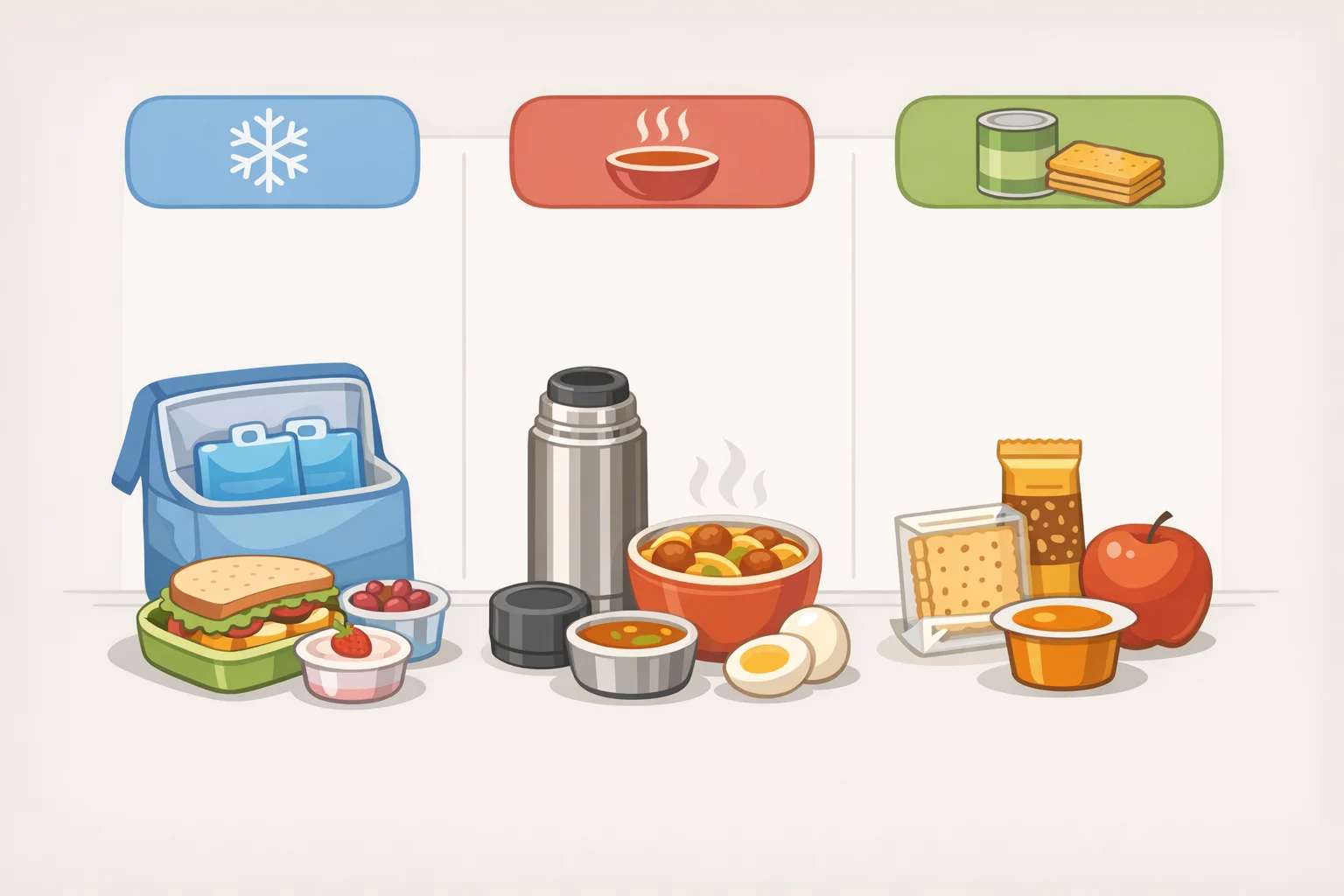
The right dinner-to-lunch formula depends on one practical question: what can tomorrow's lunch actually survive until noon? Answering that before deciding what's for dinner keeps you from building a lunch the school day can't support, whether that means a thermos nobody remembers to preheat or a cold pasta salad riding in a paper sack. USDA guidance sorts the easy back-to-school lunch ideas that actually hold up into three tracks.
The cold track uses an insulated lunchbox with two cold sources, one above the food and one below, such as gel packs, frozen water bottles or frozen juice boxes, to keep perishables at 40°F or below (USDA). The hot track works the opposite way: preheat an insulated container by filling it with boiling water, letting it sit a few minutes, then emptying it and adding the hot food, a method USDA says keeps soup, chili or stew at 140°F or above until lunchtime, per the same USDA guidance.
Then there's the no-reliable-storage track, for mornings when a cold pack or a thermos just isn't happening. USDA's own list of non-perishable options sidesteps the temperature problem entirely: whole fruit, hard cheese, bread and crackers, and jerky can all sit past lunchtime without refrigeration, and unopened shelf-stable meat or fish pouches belong on that list too (USDA).
Once that track is picked, the dinner formulas below stop being generic recipes and start being specific decisions.
Video of the Day
Quick back-to-school dinner ideas that become tomorrow's lunch
Each formula below follows the same shape: what you cook, the step you take that night, and the lunch it becomes the next day. Turning four dinners into easy school lunch and dinner recipes doesn't require five different meals, just a habit built around whatever's already on the stove. The nighttime step is the safety step, the part that gives tomorrow's leftovers a safe starting point.
The shared rule across all four: as soon as dinner is served, portion the lunch-bound amount into a shallow container so it cools quickly, seal it, and refrigerate. Handled that way, leftovers stay safe for three to four days, or indefinitely if frozen (USDA).
Formula 1: lentil-and-kale penne to cold pasta lunch (cold track). The Academy of Nutrition and Dietetics' one-skillet Savory Penne with Lentils and Kale takes five minutes of prep and 27 minutes to cook, serves six, and delivers 9 grams of protein and 7 grams of fiber per serving (EatRight). Reserve two lunch-bound servings straight out of the skillet, before anyone starts serving themselves, and spoon them into a shallow container to cool. Pasta holds up fine cold overnight, so there's nothing to separate: seal it, refrigerate, and pack it the next morning in an insulated bag with two cold sources. For a kid who won't eat pasta plain, rubber-band a fork to the lid so it doesn't disappear in a backpack, and pack a small container of grated parmesan separately.
Formula 2: soup, chili or stew to hot thermos lunch (hot track). This is one of the more efficient quick family meals for busy school nights, since the same pot doubles as tomorrow's lunch with almost no extra work. Ladle out the lunch portion before adding toppings like sour cream, cheese or crushed tortilla chips, since those hold up better added fresh at lunchtime than reheated in the pot. In the morning, reheat that portion until steaming hot, then pour it into a container that's already been preheated with boiling water, emptied and sealed (USDA). A wide-mouth thermos beats a narrow one for younger kids, who tend to struggle getting a spoon into anything skinnier than a soup can.
Formula 3: roast or pan-cooked meat to sandwich or wrap lunch (cold track). Cook meat or poultry to a verified safe internal temperature using a food thermometer, never by judging color or texture, since that's the only reliable test (USDA).
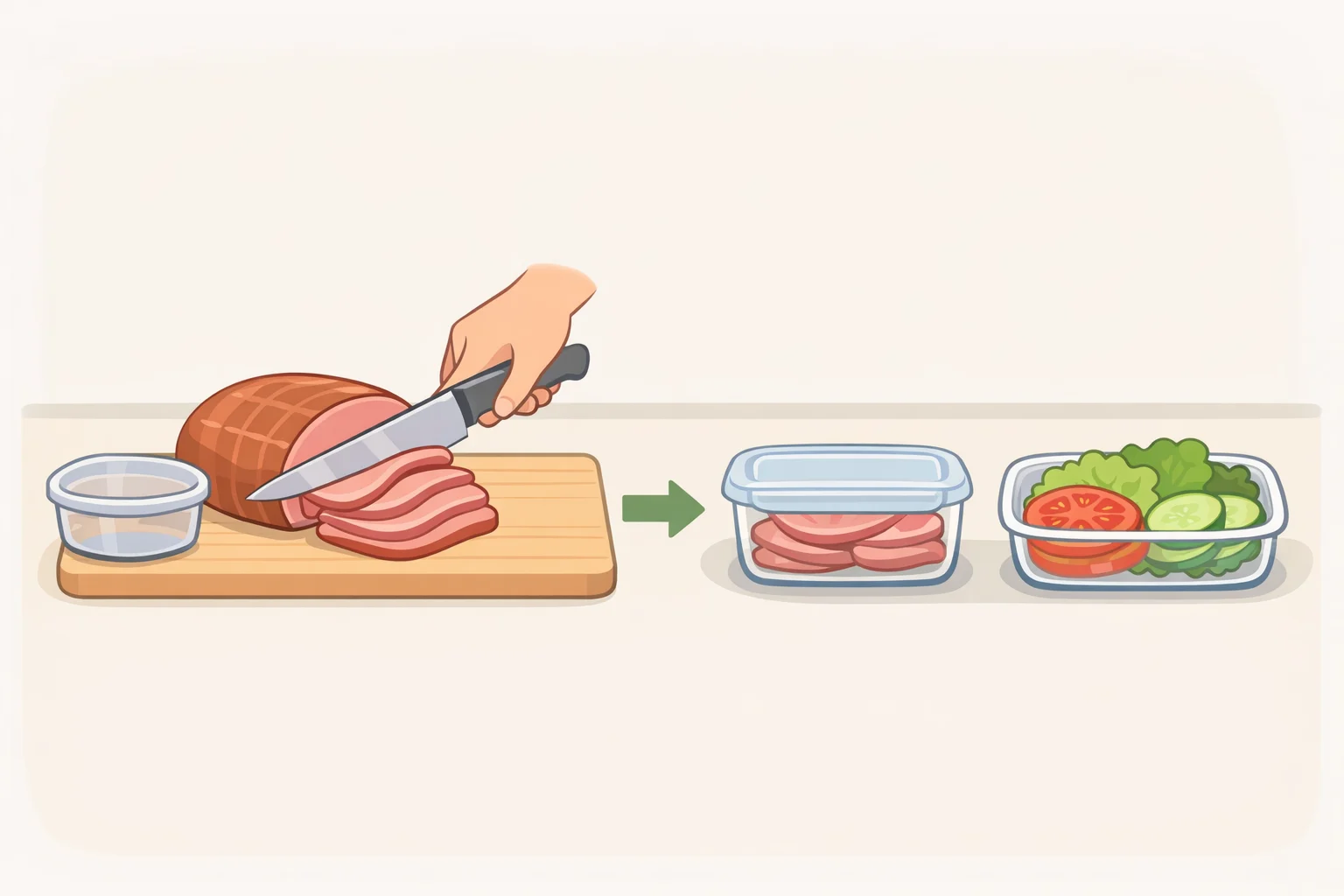
Slice off a lunch portion before the meat gets carved down to odd-shaped pieces at the table, then refrigerate it that night in a shallow container. Keep bread, lettuce and condiments separate from the meat until morning, since a sandwich assembled the night before turns soggy by lunchtime. Rolling the filling into a wrap and slicing it into pinwheels makes it easier for younger kids to eat without wrestling a whole sandwich, and it packs flatter next to the two cold sources the cold track calls for.
Formula 4: bean-and-rice bowl (either track). This one isn't drawn from USDA guidance, just a practical template: half a cup of rice or another cooked grain, half a cup of beans, a vegetable (roasted, sautéed or raw), and a sauce. Portion the lunch bowl before adding the sauce, since dressing added the night before turns rice gummy by morning; pack a small separate container of sauce instead. From there the bowl can go either direction: reheat it until steaming hot and pack it in a preheated container for the hot track, following the same method as Formula 2, or add a cold vinaigrette and pack it in an insulated bag with two cold sources for the cold track. A divided container earns its keep here more than in any other formula, since beans, rice and toppings turn into a single beige mass if they're not kept apart until lunchtime.
One rule cuts across all four formulas, especially the ones built around raw meat. USDA calls for a separate cutting board for raw meat and for the vegetables or bread going into tomorrow's lunch, or, if only one board is available, washing it in hot soapy water, sanitizing, rinsing and drying it thoroughly between uses (USDA). Skip that step, and the cold-track plan for Formula 3 is compromised before the sandwich is even made.
The packing checklist that keeps any of these lunches safe
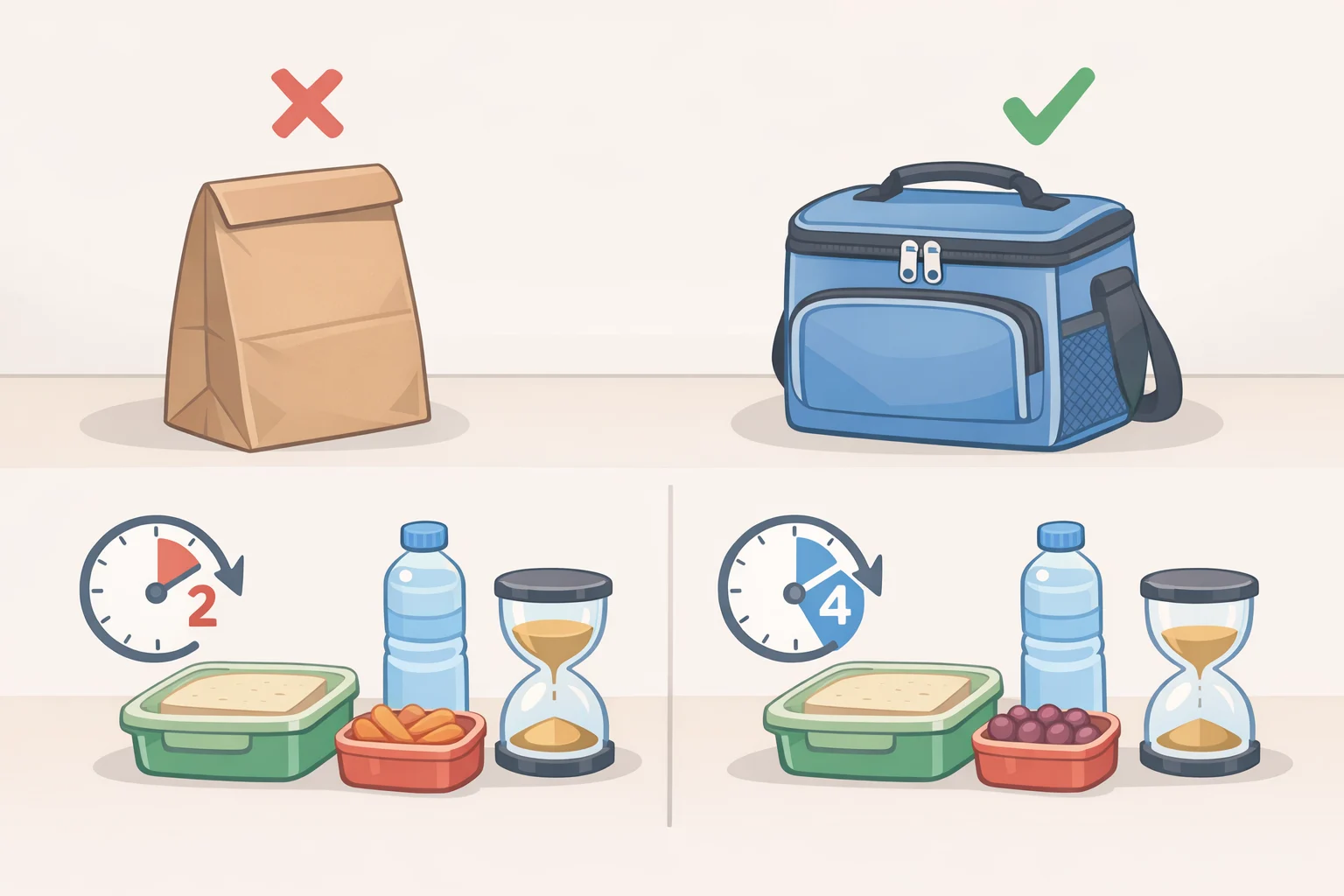
The formula only holds up if the next morning's packing follows the same routine every time, regardless of which dinner it started as. Three things matter here, and none of them are optional extras.
- Skip the paper bag. It doesn't hold cold air, and it weakens further as ice packs thaw inside it, unlike an insulated bag or container (USDA).
- Know the clock. Perishable lunch food becomes unsafe after two hours in the Danger Zone, or after just one hour once outdoor temperatures hit 90°F, a threshold still worth watching during early-fall pickup lines (USDA).
- Reset the lunchbox daily. Wash it out each day to clear crumbs and bacteria before the next round goes in (USDA).
This is the fixed part of the system. It makes every formula above, and the fallback below, actually work rather than just sound reasonable on paper.
When there are no leftovers: a DIY component lunch
Some nights there's no dinner worth repurposing. A build-your-own lunch plate covers the same convenience need as a packaged kit, and building healthy back-to-school meals for kids this way doesn't mean leaning on one every day.
Consumer Reports tested 12 popular lunch and snack kits for lead and pulled sodium figures from their nutrition labels in 2024, finding a range of 460 to 740 milligrams per single serving, which dietitian Amy Keating called "a significant amount of sodium for such a small amount of food" (Consumer Reports). Kraft Heinz announced in November 2024 that it was pulling Lunchables meal kits from the National School Lunch Program over weak demand, and the company has said it's reformulating its retail kits, including cutting sodium in its crackers by 26% and adding a version with fresh fruit, according to the same Consumer Reports reporting.
A homemade component lunch skips the guesswork about what's inside: one shelf-stable carbohydrate, one protein, one fruit or vegetable, and an optional treat. Crackers or bread cover the carb, a hard cheese or a shelf-stable meat or fish pouch covers the protein, and whole fruit or raw vegetable sticks round it out.
That pairing splits cleanly into two piles. The genuinely shelf-stable pile covers whole fruit, hard cheeses such as cheddar or parmesan, crackers and jerky, all of which USDA lists as options that don't need refrigeration (USDA). Softer cheeses, sliced deli meat, hummus and anything opened or freshly prepared belong in the refrigerated pile instead, and they need the same insulated bag and two cold sources as any other perishable lunch. Treat that second pile like a cold-track lunch, not a no-storage one, and this fallback works just as well as any of the four formulas above, no stove required.
Test it before you trust it
This week, that's the whole system: pick a track based on what tomorrow's storage situation allows, reserve a lunch portion the moment dinner hits the table, and run the packing method through one real test before trusting it for a full week.
To check the setup, measure the food itself at lunchtime with a clean, calibrated food thermometer, following the thermometer and container manufacturer's instructions. If a cold lunch reads above 40°F or a hot lunch reads below 140°F, switch equipment or choose a different track instead of hoping the numbers work out on their own.