Japanese Napolitan spaghetti recipe: ketchup pasta guide
Despite its name, spaghetti Napolitan has no real connection to Naples. The dish, noodles and smoked sausage bathed in a sweet, tangy ketchup sauce, developed entirely in Japan, according to Serious Eats. This Japanese Napolitan spaghetti recipe covers the technique that makes it work: reduce the ketchup the way a cook would reduce tomato paste, loosen it with starchy pasta water, then finish the noodles directly in the sauce so it clings to every strand instead of pooling at the bottom of the bowl.
A chef named Shigetada Irie reportedly invented the dish in 1945 at Yokohama's Hotel New Grand, where a version is still served today, Serious Eats reported last year. The recipe itself moves fast, about 15 minutes start to finish, serving two to three people, per Serious Eats.
This guide skips the history lesson beyond that and gets to specifics: exact quantities, a step-by-step method, and a troubleshooting section for when the sauce comes out too tight or too watery.
What is Japanese ketchup pasta?
Video of the Day
Napolitan didn't start out as a ketchup dish. Irie's original 1945 version at Hotel New Grand used canned tomato purée as its base, along with garlic, bacon, canned mushrooms, and chopped vegetables like bell peppers, quite different from the ketchup-forward pasta eaten across Japan today, Serious Eats notes. Exactly when or how the shift to ketchup happened isn't documented in that account. What's clear is only that the switch happened, and that the ketchup version is the one that stuck (Serious Eats).
The technique in this guide treats ketchup less like a condiment and more like tomato paste, a concentrated base that gets cooked down before it becomes a sauce (Serious Eats). Driving off some of the ketchup's water content concentrates its sugars, turning a thin, sweet condiment into something closer to a glaze that grips pasta instead of sliding off it. Loosening that concentrate back out with starchy pasta water, rather than tap water, keeps it from tightening into a greasy clump once it hits a hot noodle.
In practice, that means sautéing the sausage, aromatics, and vegetables first, then adding the ketchup, soy sauce, and Worcestershire sauce, and cooking the mixture until it visibly darkens (Serious Eats). That darkening is the whole trick. Skip it, and the dish turns into wet spaghetti with ketchup poured on top rather than a sauce that behaves like one.
Video of the Day
Japanese Napolitan spaghetti recipe: ingredients
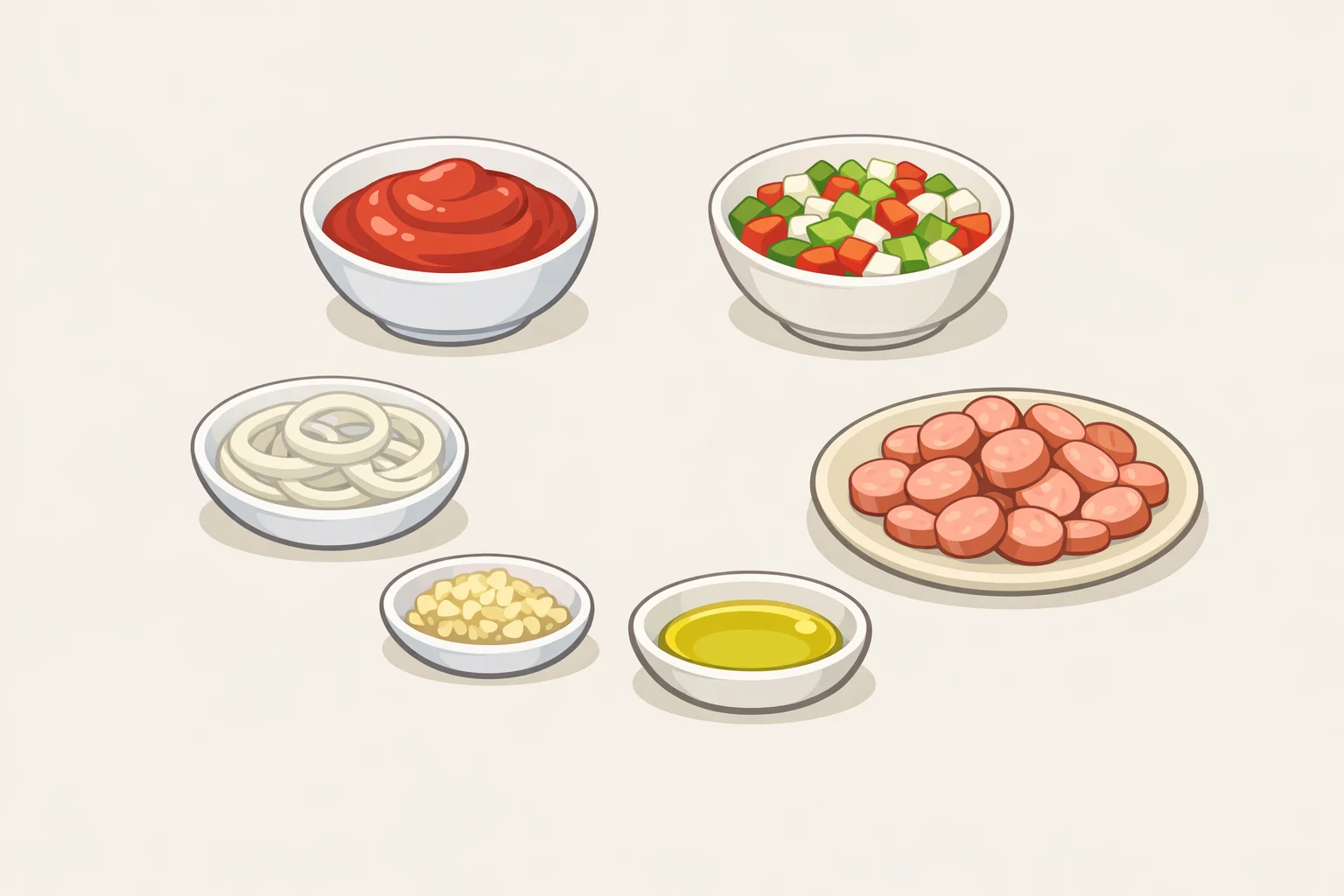
Here's what the recipe calls for, along with the gear: a large cast iron, carbon steel, or nonstick skillet, or a Dutch oven, plus a separate pot for boiling pasta and a set of tongs (Serious Eats).
Pasta and fat
- ½ pound (8 ounces) dried spaghetti
- 2 tablespoons extra-virgin olive oil
Protein and aromatics
- 5 mini Japanese smoked sausages (about 3½ ounces), thinly sliced at an angle
- ½ medium white or yellow onion, thinly sliced
- 4 cloves garlic, minced
Vegetables and sauce base
- ½ large green bell pepper, thinly sliced
- 1 cup sliced white button or baby portobello mushrooms
- ⅔ cup ketchup
- 2 teaspoons soy sauce
- 1 teaspoon Worcestershire sauce
- 1 tablespoon unsalted butter
- ¼ teaspoon freshly ground black pepper
To serve (all optional)
- Fried eggs
- Grated Parmesan, preferably Kraft
- Chopped fresh parsley
- Hot sauce, preferably Tabasco
No Japanese smoked sausages on hand? American mini smoked sausages like Lit'l Smokies work, as do two regular hot dogs or extra-thick-cut bacon (Serious Eats).
Measure out ½ cup of the pasta cooking water before draining the noodles. It's easy to forget once the pot's going and dinner is coming together fast, so handle it before the colander comes out. There's no good substitute once that water's gone down the drain (Serious Eats).
Per serving, this ketchup spaghetti with sausage runs about 432 calories, with 24 grams of fat, 47 grams of carbohydrates, and 11 grams of protein, according to Serious Eats nutrition data.
How to make Napolitan pasta step by step
-
Boil the spaghetti. In a large pot of salted boiling water, cook the pasta until just shy of al dente, about two minutes less than the package directs. Reserve ½ cup of the cooking water, then drain the rest in a colander (Serious Eats).
-
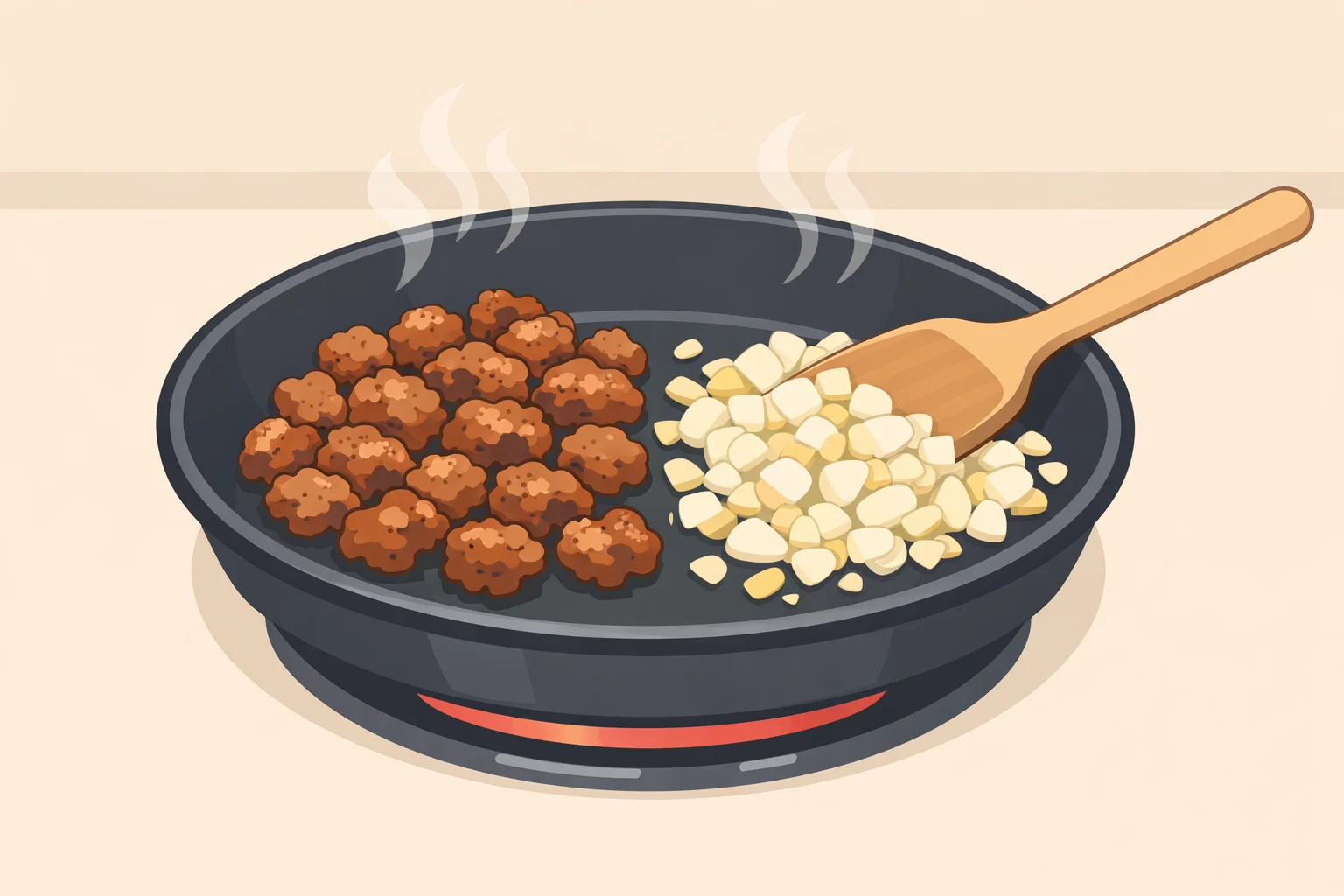
Brown the sausage. While the pasta cooks, heat the olive oil in the skillet over medium-high until it shimmers. Add the sliced sausage and cook, stirring occasionally, until mostly browned on all sides, about two minutes (Serious Eats). The edges should deepen to reddish-brown, with a thin layer of rendered fat showing in the pan.
-
Soften the aromatics. Add the onion and garlic, drop the heat to medium, and cook, stirring constantly, until tender and fragrant, about two minutes (Serious Eats). The onion should go soft and translucent rather than caramelized; the garlic just needs to lose its raw edge.
-
Build and reduce the sauce. Add the bell pepper, mushrooms, ketchup, soy sauce, and Worcestershire sauce. Cook, stirring frequently, until the ketchup thickens and darkens slightly, about three minutes (Serious Eats). Watch for the color to move from bright red-orange toward a deeper, brick-like tone. That shift is what separates a properly reduced Napolitan sauce from a thin, watery one.
-
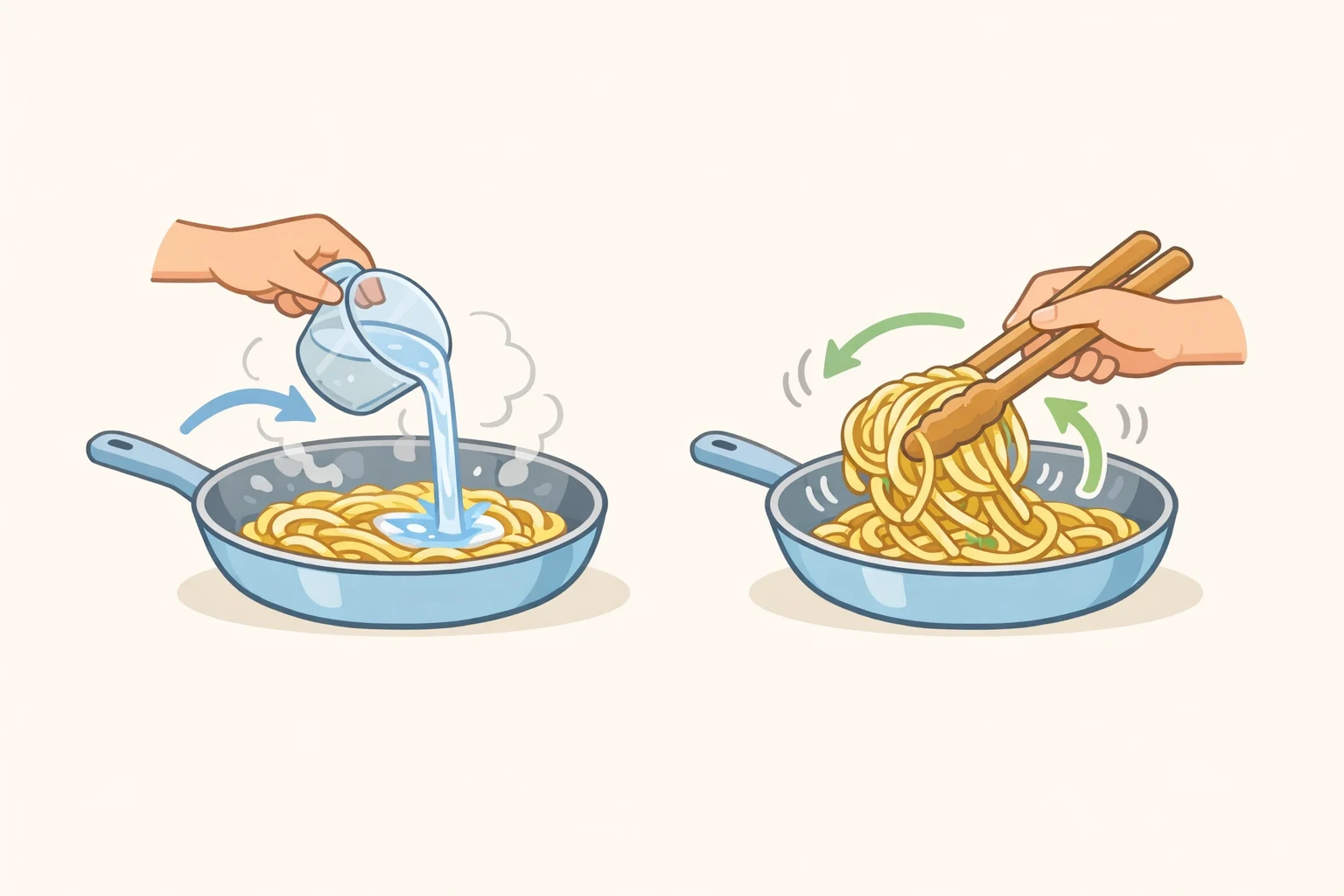
Loosen and finish. Stir in the reserved pasta water, butter, and black pepper. Using tongs, transfer the drained spaghetti directly into the simmering sauce (Serious Eats).
-
Toss to coat. Cook, stirring constantly, until the pasta is al dente and the sauce has thickened enough to wrap around each noodle instead of pooling underneath it, two to three minutes. Pull it off the heat once it gets there (Serious Eats).
Cooking the pasta short of done and finishing it in the sauce, rather than draining it fully and pouring sauce over the top, is what keeps every strand glazed rather than sauced only on the surface, without overcooking the noodles (Serious Eats).
Troubleshooting the sauce
Most Napolitan problems show up in the last two minutes, right after the pasta hits the pan.
The ketchup won't darken. If, after three minutes over the same heat, the color still hasn't shifted much, give it another minute before adding any liquid. That extra minute is a judgment call based on how the pan is behaving, not a fixed step in the recipe.
The sauce looks tight once the pasta goes in. Add a splash more of the reserved pasta water. Starch from that water is what lets the sauce stretch around the noodles instead of clumping into a paste (Serious Eats).
The sauce is still thin after a few minutes of tossing. Keep it over medium heat a little longer, stirring the whole time, until it thickens enough to coat the noodles rather than pool underneath them. Patience matters more than heat here; cranking the burner just risks scorching the sausage before the sauce catches up.
The sausage or aromatics start to burn. Lower the heat right away. The recipe already calls for dropping from medium-high to medium once the onion and garlic go in, but on some stovetops that's still not low enough (Serious Eats).
Serving Napolitan, traditional and adapted
However it's plated, Serious Eats notes that shelf-stable grated Parmesan, preferably Kraft, and a bottle of Tabasco are served alongside the dish.
Presentation varies more than the toppings do. In Japan, Napolitan turns up topped with a lacy, crisp-edged fried egg, wrapped in a just-set omelet, or served sizzling on an iron plate straight from the stove (Serious Eats). None of these change the sauce itself; they're different ways to finish the same plate.
For the fried-egg version, cook the egg in a separate pan while the pasta finishes in the sauce, then slide it on top right before serving so the yolk is still runny when it lands on the noodles.
Swapping in extra-thick-cut bacon for the Japanese smoked sausage changes the timing slightly. Bacon takes longer to render and crisp than a pre-cooked sausage does, so judge it by color and texture in the pan rather than holding it to the two-minute mark in step 2.
Once the base technique feels automatic, that's the real payoff: reduce, loosen with starchy water, finish in the pan. None of that logic is unique to ketchup. It's the same move behind most good quick pan sauces, which makes Napolitan less a novelty recipe and more a transferable skill worth carrying into other dishes once the sauce stops feeling like a mystery.