How to Keep Sheets From Balling Up in the Washer: A Loading Guide
Opening the washer to find sheets twisted into a tight knot, with a sock or pillowcase trapped somewhere in the folds, is a laundry-day annoyance most people know well (Good Housekeeping, published yesterday). Learning how to keep sheets from balling up in the washer mostly comes down to changing how the sheets go into the machine before reaching for a special product or cycle. The basic problem is size: sheets are larger than almost everything else in a typical load, which gives them more room to wrap around themselves or around smaller items as the drum spins (Good Housekeeping, published yesterday).
The tangling isn't just cosmetic. Bundled tightly enough, sheets can keep water and detergent from reaching every part of the fabric, and the whole load can take longer to dry (Good Housekeeping, published yesterday). This guide walks through the loading technique that helps stop sheets from balling up in the washer, what to keep out of the same load, and what to try if the basics don't fully solve it.
Why sheets ball up in the washer
Video of the Day
Some twisting during a wash cycle is normal. It becomes a problem once that twisting tightens into one dense knot, and sheets are more prone to this than almost anything else in a load simply because of their size (Good Housekeeping, published yesterday).
Once a sheet balls up tightly, water and detergent may not reach every fold evenly, and dirt, body oils, and detergent residue can get trapped inside layers of fabric (Good Housekeeping, published yesterday). A dense bundle also dries unevenly, since warm air can't move through it the way it can through loose fabric, which can mean longer dry times and more wrinkling (Good Housekeeping, published yesterday).
Smaller items make things worse. A sock or pillowcase caught inside a twisted sheet can remain trapped through the whole cycle and may not wash or dry thoroughly (Good Housekeeping, published yesterday). None of this calls for a special detergent or a different cycle. It calls for loading the sheets differently in the first place.
Video of the Day
How to keep sheets from balling up in the washer
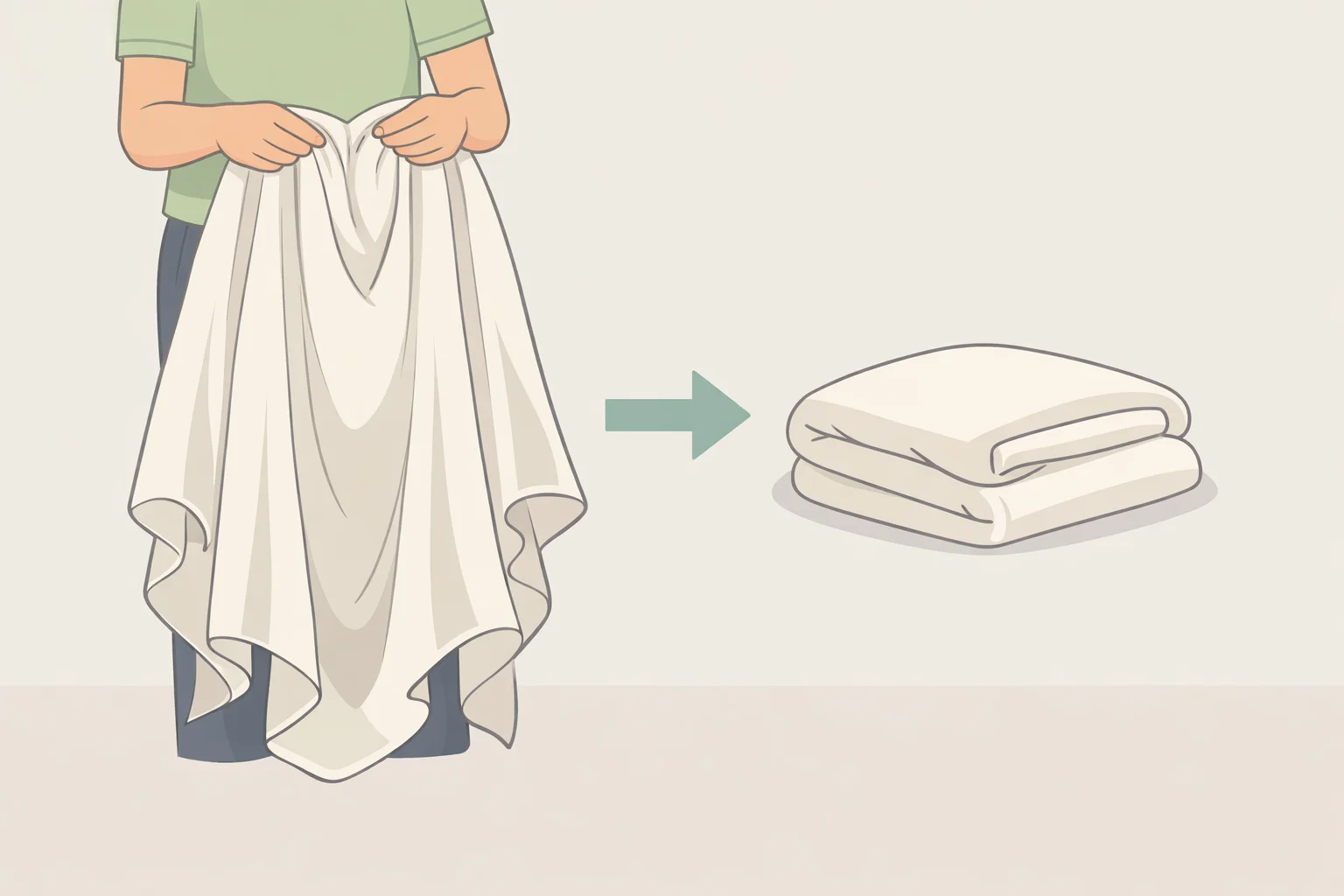
The core method is the same regardless of washer type, and it works best as a fixed routine rather than something improvised load by load (Good Housekeeping, published yesterday):
- Gather each sheet by the center and let the four corners hang free.
- Bring the corners up to the center to form a loose, quarter-folded bundle rather than a tight one.
- In a front-load washer, add each sheet individually, one at a time, so it has room to unfurl as it tumbles.
- In a top-load washer, whether it uses an agitator or an impeller, spread sheets loosely around that central mechanism instead of dropping them in as one pile.
- Stop before the drum is packed tightly. The sheets and whatever else is washing with them need enough space that they aren't compressed against each other.
Good Housekeeping's testers say this loading sequence can dramatically cut down on tangling, even if it doesn't eliminate it in every single load (Good Housekeeping, published yesterday). Overloading works against every step above: a crowded drum makes it more likely that large items twist together into one mass, simply because there's nowhere for the fabric to go except around itself or a neighboring item (Good Housekeeping, published yesterday; Consumer Reports, last year).
Keep sheets separate from towels, clothes, and heavy bedding
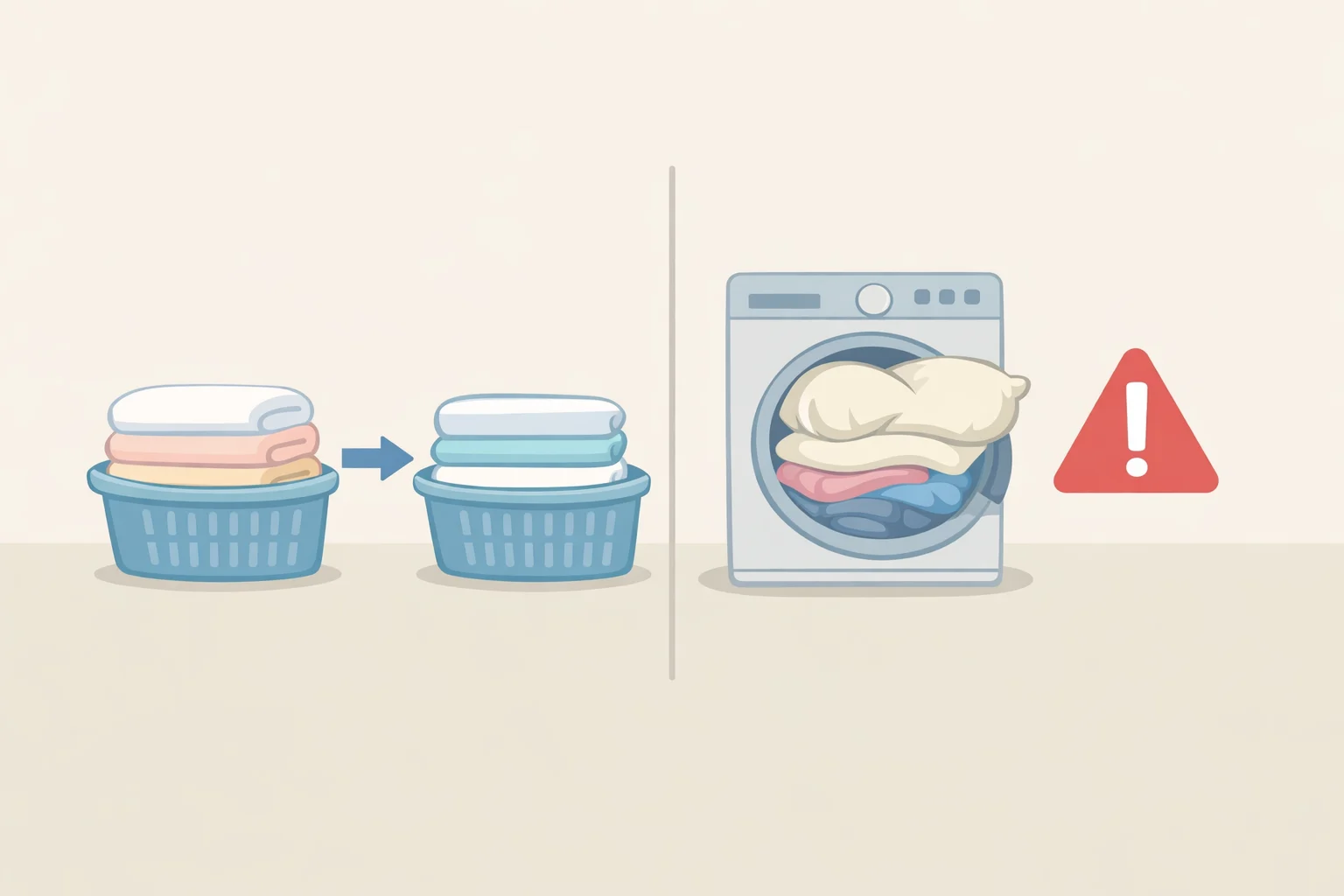
Bedding does best washed apart from towels and clothes. Smaller items tend to get pulled inside the twisting fabric during the cycle, which leaves both the trapped item and the sheet washed and dried less thoroughly than they would be on their own (Good Housekeeping, published yesterday).
Weight mismatches cause a different kind of trouble. Consumer Reports specifically warns against mixing heavy pillows with light sheets in the same load, since pillows absorb a lot of water and end up far heavier than the sheets around them (Consumer Reports, last year). That mismatch can throw the load off balance and trigger the machine to flash an error message demanding a rebalance mid-cycle (Consumer Reports, last year). Balancing the load from the start, rather than sorting it out after an error, produces a better spin and less wear on both the laundry and the machine (Consumer Reports, last year). It's worth watching for other similarly mismatched pairings, not just pillows and sheets, though that's the specific example Consumer Reports flags.
Shake out sheets before they go in the dryer
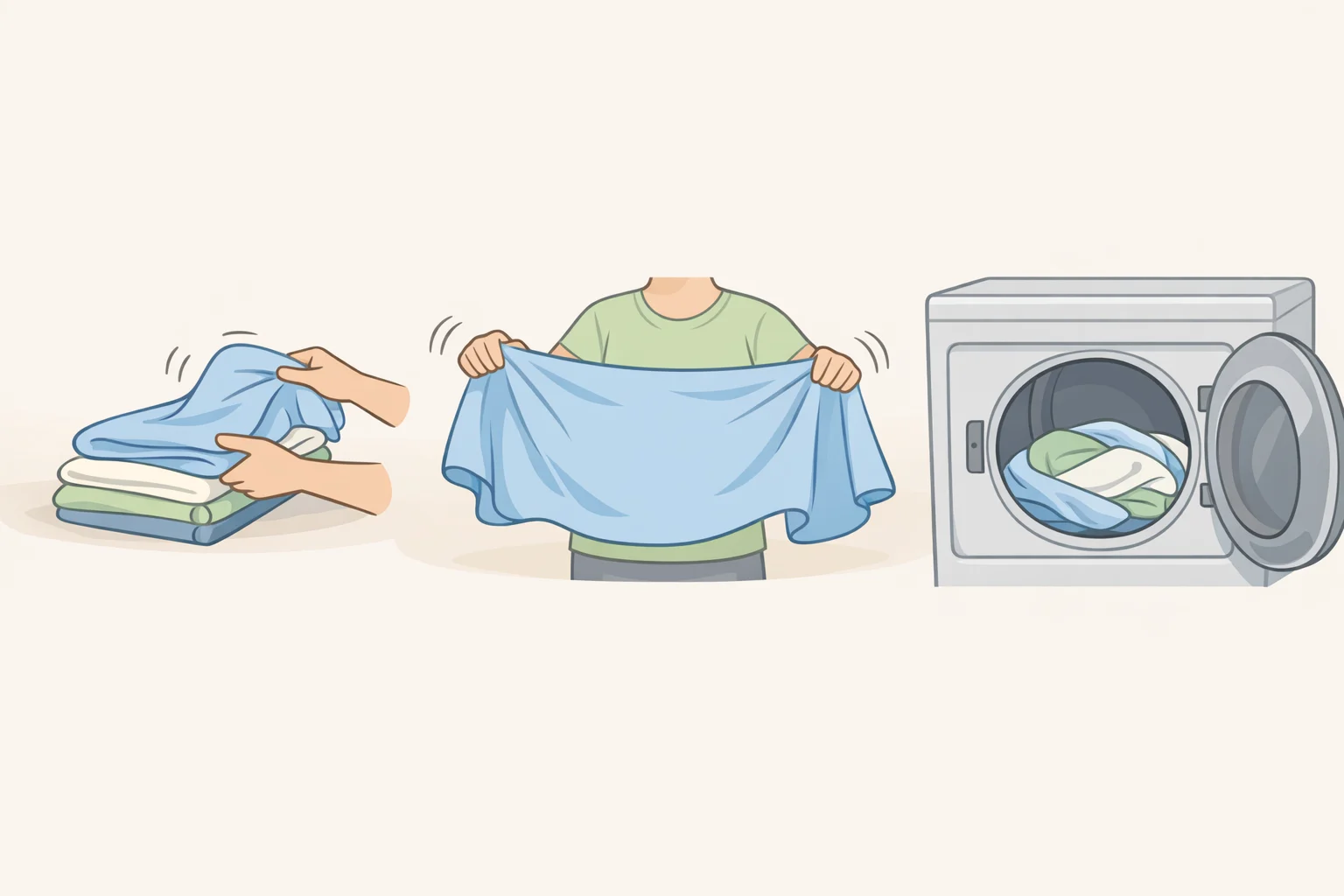
Even a load that comes out of the washer looking untangled is worth a few seconds of attention before it hits the dryer. Separate and shake out each sheet individually to loosen any twists, redistribute the fabric, and free any pillowcase that got wrapped inside during the spin cycle (Good Housekeeping, published yesterday). This step helps sheets dry more evenly and reduces wrinkling, even on loads that already look fine (Good Housekeeping, published yesterday).
After shaking each sheet loose, gather it again using the same center-and-corners method used for loading the washer, then set it in the dryer with room to move (Good Housekeeping, published yesterday). Overstuffing the dryer causes the same problem as overstuffing the washer: without space to tumble, warm air can't circulate through the load, and drying slows down for the same reason washing does in a crowded drum (Good Housekeeping, published yesterday; Consumer Reports, last year).
When loading technique isn't enough: cycles, settings, and tools
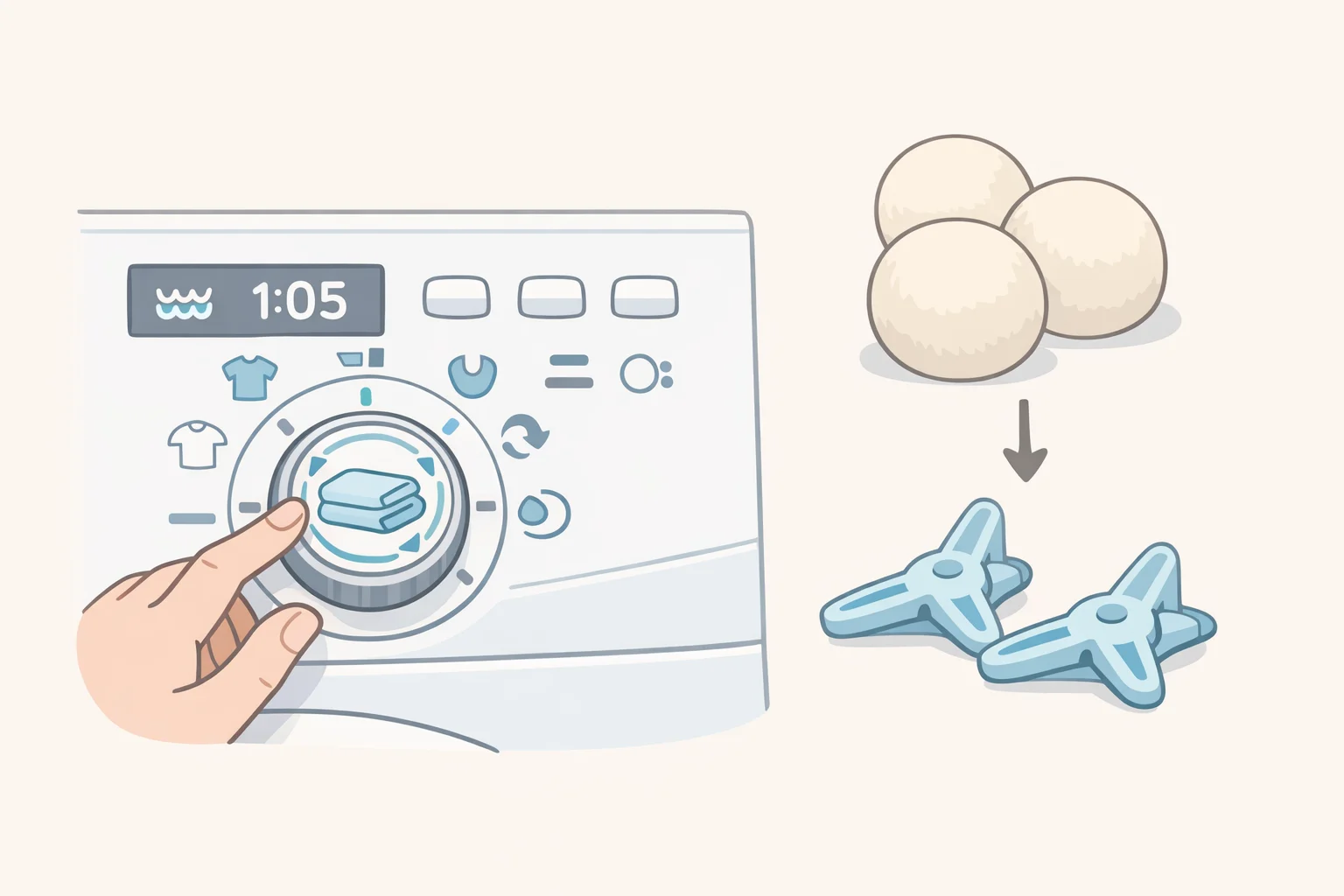
Some washing machines include a cycle built specifically for bedding, or an anti-tangle setting meant to reduce bunching during the wash. It's worth checking the owner's manual, since not every machine has one, but on the machines that do, it's designed to solve exactly this problem (Good Housekeeping, published yesterday).
Good Housekeeping says wool dryer balls are a low-effort addition worth trying, too. Tossed in alongside the sheets, they help keep fabric separated as it tumbles, which improves airflow and promotes faster, more even drying (Good Housekeeping, published yesterday).
For sheets that keep tangling no matter how carefully they're loaded, there's a more targeted option: a clip-on product called the Wad-Free Bed Sheet Detangler, which attaches to the corners of flat and fitted sheets to help keep them from twisting around themselves through both the wash and dry cycles (Good Housekeeping, published yesterday). A Good Housekeeping Institute tester who evaluates washing machines year-round says the clips have virtually eliminated tangling in personal use, calling the product one of the few laundry gadgets used every time bedding gets washed (Good Housekeeping, published yesterday). That's one tester's experience with the product, not a controlled lab result, so treat it as a data point rather than a guarantee.
If sheets still twist into a ball in the washer
If the knot keeps coming back after adjusting how sheets are loaded, it helps to check the likely causes in order rather than jumping straight to an accessory.
- Check for overloading first. If the drum is packed, pull something out. Sheets need enough room to shift during agitation, and a crowded washer makes tangling more likely (Good Housekeeping, published yesterday; Consumer Reports, last year).
- Reload using the center-gather method. Pull everything back out, form each sheet into a loose quarter-fold, and reload individually in a front-loader or loosely around the agitator or impeller in a top-loader (Good Housekeeping, published yesterday).
- Watch for a rebalancing error. A machine that flashes an error and asks for the load to be rebalanced may be reacting to a weight mismatch, such as a heavy pillow washed alongside light sheets; separating those items and restarting addresses that specific cause (Consumer Reports, last year).
- Check the manual for a dedicated cycle if tangling persists after the load itself looks correct (Good Housekeeping, published yesterday).
- Treat an accessory as optional, not a first move. Wool dryer balls or a clip-on detangler are worth adding once loading technique and load balance have already been ruled out, not before.
Most of the fix lives in steps one and two. The rest of the checklist exists for the loads that need a little more troubleshooting, not as a replacement for getting the basics right from the start.