Greek yogurt macaroni salad: how to avoid a dry dressing
Swapping Greek yogurt for mayonnaise in macaroni salad is a straightforward substitution: measure the yogurt, skip the jar of mayo. The harder problem shows up afterward, once the pasta has had time to sit in that dressing. A Greek yogurt macaroni salad can look perfectly dressed the moment it's tossed and dry out by the next morning, which is exactly the stretch of time a cookout or make-ahead lunch tends to demand of it. That's the part of the process that actually needs a plan.
The swap itself is well documented. Taste With Purpose treats plain Greek yogurt as a direct, same-volume replacement for mayo, one cup for one cup. Snacking in Sneakers explains why that works: Greek yogurt is thicker and higher in protein than regular yogurt, which gives it real body as a dressing base rather than just a lighter flavor.
Three independently developed recipes lean the same direction, more yogurt than mayo, but land on different exact ratios. Taste With Purpose uses a full cup of yogurt with no mayo at all. Snacking in Sneakers mixes ¾ cup yogurt with ¼ cup light mayo. Jess Loves Cooking uses a full cup of yogurt plus just 2 tablespoons of regular mayo. The range runs from yogurt-forward to something closer to a mayo-based salad, and it's worth knowing which end you're aiming for before measuring anything out.
What follows is one exact base recipe, a labeled adjustment for readers who want a flavor closer to classic macaroni salad, and the specific technique that keeps the dressing from drying out whether the salad gets eaten today or tomorrow.
What changes when you swap yogurt for mayo
Video of the Day
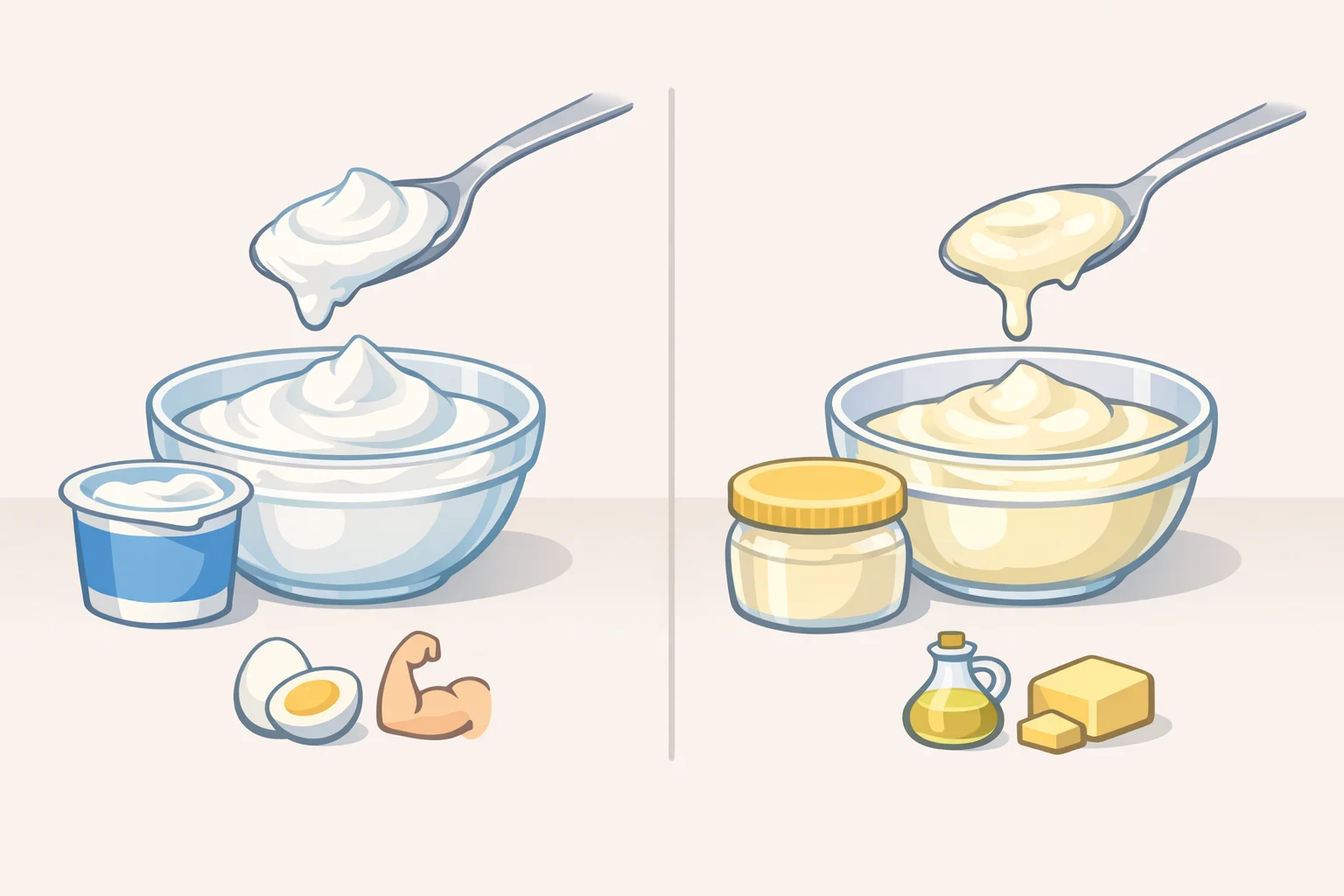
Fat content shapes the result more than the swap itself does. Taste With Purpose's base recipe calls for nonfat yogurt but notes full-fat works too. Jess Loves Cooking's version reaches specifically for 5%-fat Greek yogurt, crediting it with a velvety texture that avoids the heavy, greasy mouthfeel a mayo-forward dressing can leave behind. Greek yogurt works as a mayo substitute in macaroni salad either way, but the fat percentage determines how close the texture lands to the original.
Flavor shifts too. Taste With Purpose calls apple cider vinegar the secret of its dressing, and Jess Loves Cooking credits the same vinegar with the bright, punchy quality that "makes this salad sing." Both developers describe their dressings as tangy rather than mellow, since both lean into the vinegar instead of dialing it back.
If that tang is more than you want, a small amount of mayo folded back in softens it without erasing the yogurt's body. Jess Loves Cooking keeps yogurt as the dressing's backbone and adds just 2 tablespoons of mayo to round off the edge, calling it "teamwork, not replacement." That's the basis for the adjustment in the next section: a legitimate variation, not an upgrade everyone needs.
Nutrition numbers vary by exact formula and don't transfer between recipes. Snacking in Sneakers' version, built on nonfat yogurt and light mayo, comes in at 209 calories and 7 grams of protein per one-cup serving, a figure specific to that formula rather than the full-fat version below.
Video of the Day
The recipe: one base, one adaptation
The ingredient list below comes from Taste With Purpose, the vegetable-prep step from Jess Loves Cooking, and the pasta-cooking principle from America's Test Kitchen. That combination makes this an adaptation, not a recipe reproduced exactly from one source. No single source tested this exact mix of ingredients and technique.
A quick note before starting: Taste With Purpose's version serves 6 and lists a 20-minute total time covering prep and cooking. That total doesn't account for the extra cooling and draining time built into the adapted method below, so plan for closer to 35 to 40 minutes.
- 8 oz elbow macaroni
- ½ cup celery, diced
- ½ cup carrots, diced
- ¼ cup bell pepper, diced
- ¼ cup sweet onion, chopped
- 1 cup plain Greek yogurt (nonfat or full-fat)
- 1 tablespoon apple cider vinegar
- 2 tablespoons sweet relish
- 1 tablespoon sugar
- 1 teaspoon yellow mustard
- ¼ teaspoon each sea salt and black pepper, to taste
- ¼ cup fresh parsley, stirred in at the end
For a flavor closer to a classic mayo-based salad, replace 2 tablespoons of the yogurt with 2 tablespoons of mayonnaise, matching the ratio Jess Loves Cooking uses to soften the tang without losing the yogurt's body. Since the base recipe's 1 cup of yogurt equals 16 tablespoons, that leaves 14 tablespoons of yogurt plus 2 tablespoons of mayo, not a full cup of yogurt with mayo added on top. It's a stated adjustment to the base recipe, not a separately tested formula.
The technique below leans on America's Test Kitchen's testing of a comparable problem, pasta that keeps absorbing dressing after it's already been tossed, plus a couple of practical prep habits from the recipe developers cited above. None of them tested this exact yogurt-based dressing.
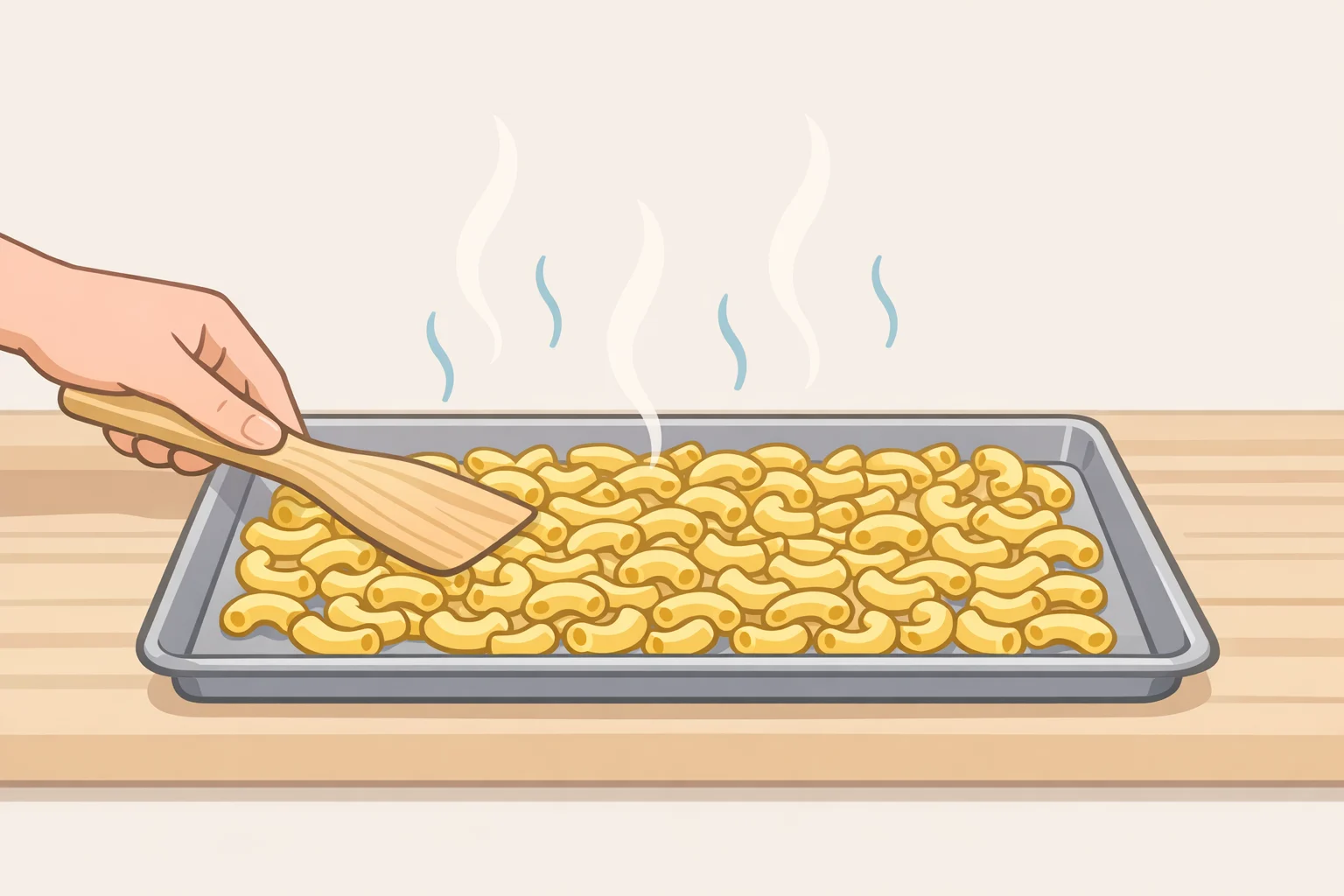
- Cook the macaroni until very soft, a stage or two past standard al dente. Very soft pasta absorbs less dressing as it cools, a finding from America's Test Kitchen's testing on a comparable buttermilk-based macaroni salad.
- Drain the macaroni thoroughly, then let it cool to room temperature before it goes anywhere near the dressing. Jess Loves Cooking calls trapped water in the noodles the top culprit behind a soupy salad, and dressing warm pasta risks thinning a dairy-based dressing before it's had a chance to set.
- Dice the vegetables small and evenly. Toss the onion and bell pepper with a pinch of salt, let them drain in a colander for about 10 minutes as Jess Loves Cooking's recipe recommends, then pat everything dry with a paper towel. Taste With Purpose notes bell pepper holds a lot of moisture, so it's worth being thorough here.
- Whisk the dressing: yogurt (plus mayo, if using the adjustment), vinegar, relish, sugar, mustard, salt, and pepper until smooth.
- Toss the pasta and vegetables with the dressing, then fold in the parsley last.
How to keep Greek yogurt macaroni salad creamy overnight
The reason this salad needs a plan at all: the pasta keeps absorbing dressing as it sits, according to Taste With Purpose. A salad that looks perfectly dressed the moment it's mixed can look dry by the next morning, not because anything went wrong, just because the starch keeps drinking.
Jess Loves Cooking's recipe notes the salad tastes even better after chilling for at least 30 minutes, since the rest gives the flavors time to meld and lets the pasta absorb the dressing more evenly. That's a baseline worth doing whether the salad gets eaten within the hour or the next day.
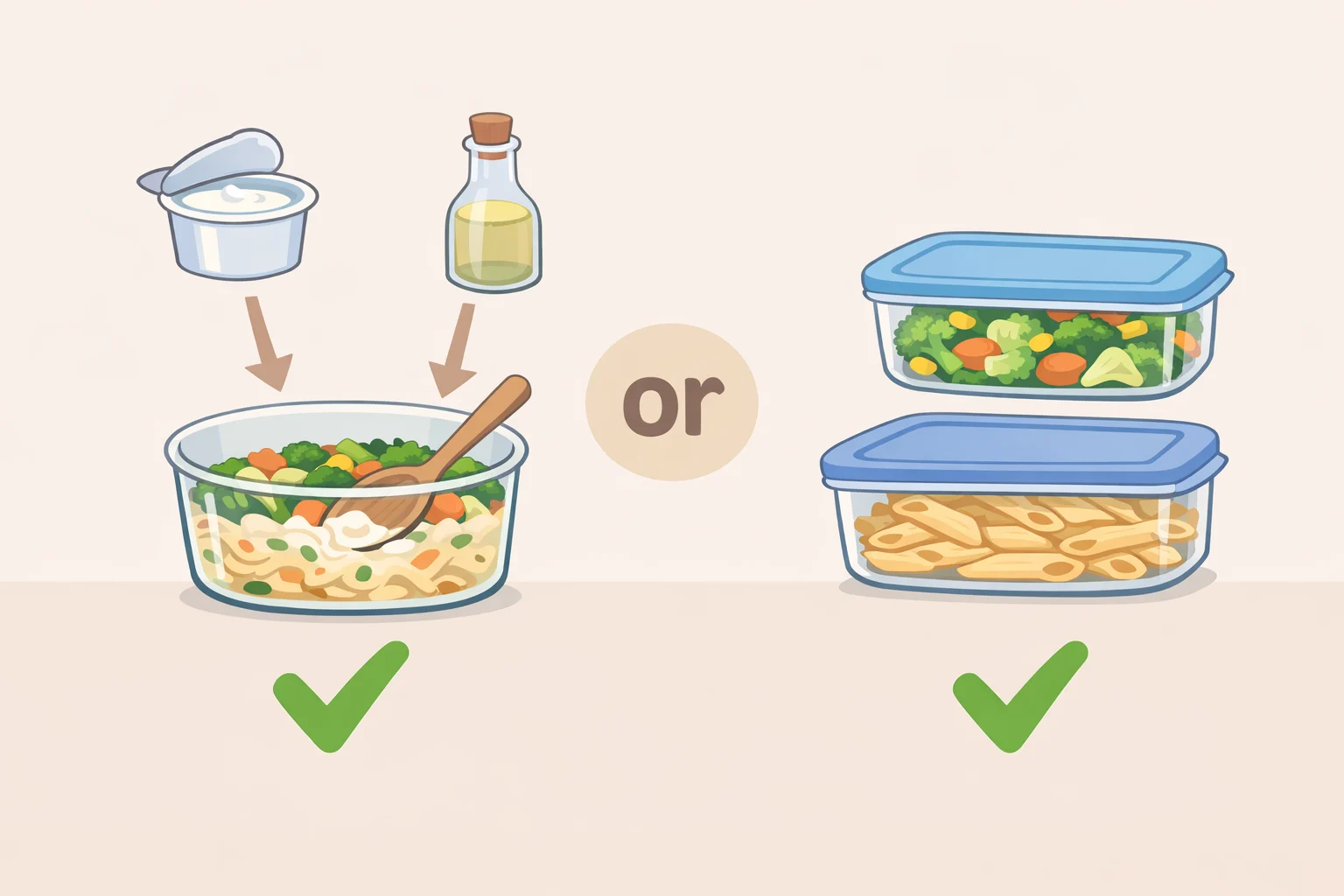
Making it a day ahead opens up two workable paths. The simpler one: dress the salad fully and refrigerate it for up to 24 hours, per Taste With Purpose. Right before serving, stir in 2 to 3 tablespoons of extra Greek yogurt and a small splash of apple cider vinegar, the fix that source recommends for a salad that's dried out overnight.
The second path takes more effort but is intended to preserve a fresher texture: store the dressed pasta and vegetables separately from the dressing, and don't combine them until shortly before serving. Snacking in Sneakers uses this method specifically to keep the pasta from over-absorbing dressing overnight. That source's own guidance puts both components at up to 4 days refrigerated this way, though that timeline reflects Snacking in Sneakers' recipe rather than independent testing of this adapted version.
The two fixes solve the same problem from different ends. Stirring in more yogurt and vinegar corrects for over-absorption after the fact. Keeping components apart avoids it happening in the first place. The first is faster; the second means washing an extra container.
Troubleshooting, storage, and one substitution
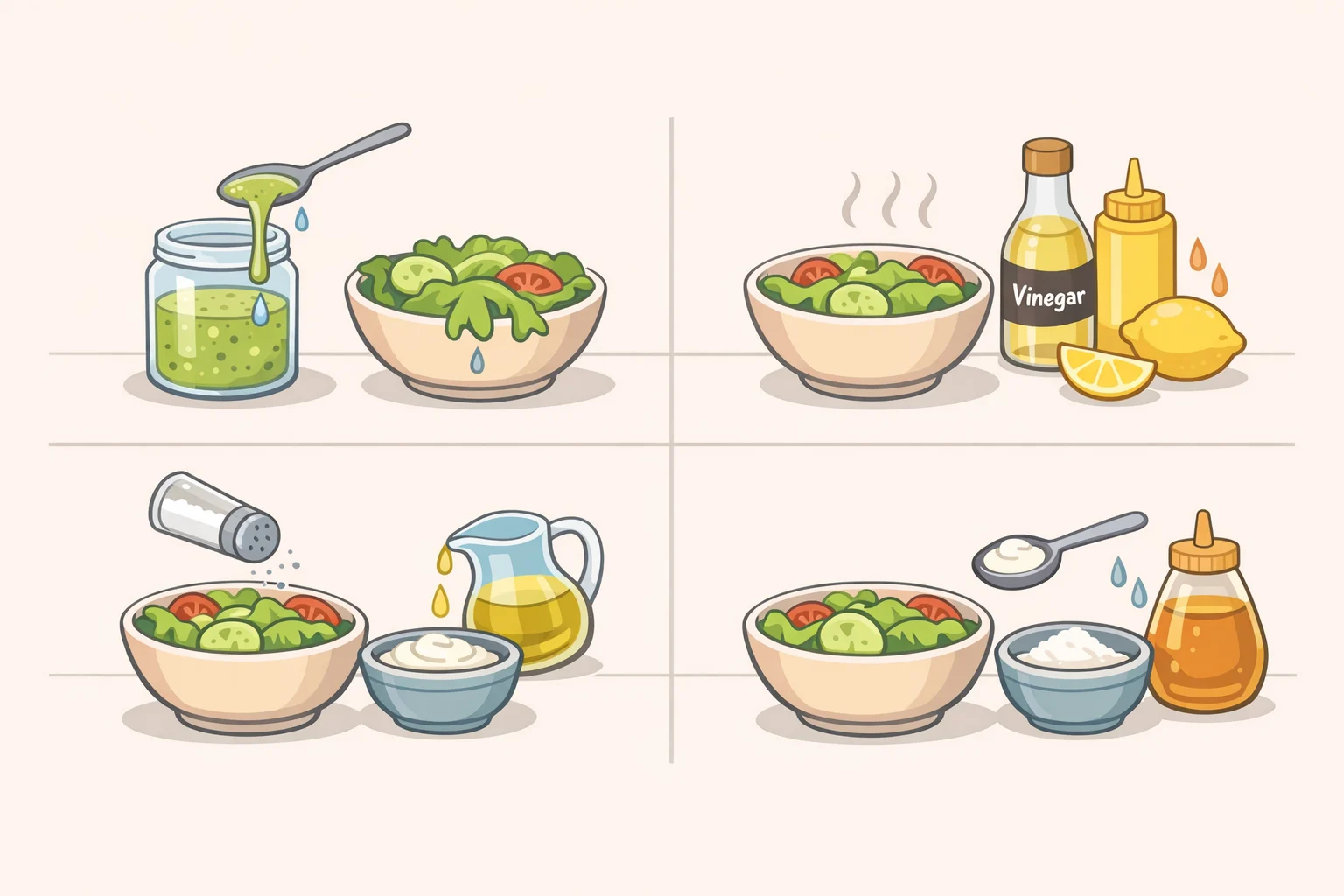
If the salad turns watery, the vegetables likely released moisture during storage. Dice them smaller and pat them drier next time; bell pepper in particular can release a lot of moisture, per Taste With Purpose.
If the dressing tastes too tangy, stir in an extra ½ teaspoon of sugar, taste, and adjust from there rather than adding more all at once, per Taste With Purpose.
For storage, Taste With Purpose lists up to 4 days refrigerated in an airtight container, and Jess Loves Cooking gives a similar window of 3 to 4 days before the salad turns soggy. Neither source recommends freezing: the yogurt can separate and turn grainy once thawed.
For serving outdoors, Jess Loves Cooking's recipe developer suggests keeping the salad out no longer than two hours and nesting the serving bowl in ice if it's going to sit on a table for a while.
For a gluten-free version, swap in gluten-free elbow pasta. Taste With Purpose notes no other changes are needed.
If there's only one call to make here, it's this: for a same-day cookout, dress the salad fully, chill it for at least 30 minutes, and skip the overnight fixes entirely. For anything made a day ahead, the simpler path, refrigerating the dressed salad and stirring in extra yogurt and vinegar before serving, works fine for most kitchens. Save the separate-storage method for a potluck or picnic where the salad might sit out for hours before anyone digs in. The same logic, soft starch, dry vegetables, a reserved fix for the next day, applies just as well to potato salad or any other cold, dairy-dressed side that tends to dry out by day two.