Iced coffee lemonade recipe: a Mazagran-inspired summer drink
Coffee and lemonade look like they should cancel each other out. One is bitter and roasted, the other sweet and puckering. Mixed over ice, though, they don't fight; the combination settles into something brighter than either drink manages alone. This iced coffee lemonade recipe walks through two ways to build the drink, a quick fix for a batch that tastes off, and the older tradition the pairing borrows from.
A The Kitchn writer who tried the combination two months ago called it the brightest iced coffee she'd had, lightly sweet with a citrusy background note and more refreshing than a regular iced coffee, this from someone who describes herself as a longtime iced coffee drinker. That's a personal impression, not a lab result. But the pairing itself isn't new: The Kitchn notes that people have been adding lemonade to coffee for almost 200 years, with a historical precedent in Mazagran, a cold, sweetened coffee drink that traces back to 1840s Algeria.
The fastest way in is equal parts ready-to-drink iced coffee (or cold brew) and lemonade poured over ice, no fancy ratio required. That's Method A below. For more control over strength and sweetness, Method B builds the drink from espresso or cold-brew concentrate, fresh lemon juice, and sugar. Both are covered in detail further down, along with what to do if the first glass needs adjusting.
Cold brew lemonade: choosing your coffee base
Video of the Day
The two build methods below rely on two categories of coffee: ready-to-drink iced coffee or cold brew for the quick version, and espresso or cold-brew concentrate for the from-scratch version. Use ready-to-drink coffee as packaged, and follow the dilution instructions on a concentrate label before treating it as a substitute for anything else, per The Kitchn.
For either method, unsweetened coffee gives more control. Lemonade already carries its own sugar, and Method B adds sugar separately, so starting from an unsweetened base means the final sweetness comes from ingredients you're actually measuring, not from a sweetener already mixed into the coffee.
Cold brew has a clear edge if bitterness clashing with citrus worries you. A 2022 peer-reviewed sensory study comparing hot and cold brewing methods found cold brew registered as noticeably fruitier and lower in bitterness and astringency than hot-brewed coffee (Foods/MDPI, 2022). That's a measured finding, not a guess, and it makes cold brew a sensible starting point for a citrus-forward drink. It doesn't prove that coffee and lemon balance each other chemically; the study never tested coffee mixed with lemonade. It just means cold brew starts from a lower bitterness baseline in general, a profile that tends to be easier to pair with lemon.
Hot-brewed iced coffee still works. It may lean more toward the roasted, smoky notes the same study associates with hot brewing, which is worth knowing before deciding how much sugar to add (Foods/MDPI, 2022).
Video of the Day
Iced coffee lemonade recipe: two ways to make it
There are two distinct ways to build this drink, and they aren't an easy version and a fancy version of the same formula, according to The Kitchn. They land at different strengths and dilution levels depending on the products used, so pick based on what's already in the fridge and how much control matters.
Method A: the quick build

This is the fastest way to make iced coffee with lemonade, using ingredients most people already have on hand.
- 1 cup ice
- 4 ounces ready-to-drink iced coffee or cold brew
- 4 ounces lemonade, store-bought or homemade
Steps:
- Fill a tall 16-ounce glass with the ice.
- Pour in the coffee and lemonade in equal parts; the exact ounces will shift depending on the glass and how much ice went in first, per The Kitchn.
- Stir and serve.
Because both ingredients are ready-to-drink rather than concentrated, this build tastes less concentrated than Method B, assuming Method B uses actual espresso or cold-brew concentrate rather than a pre-diluted iced coffee.
Method B: the from-scratch build
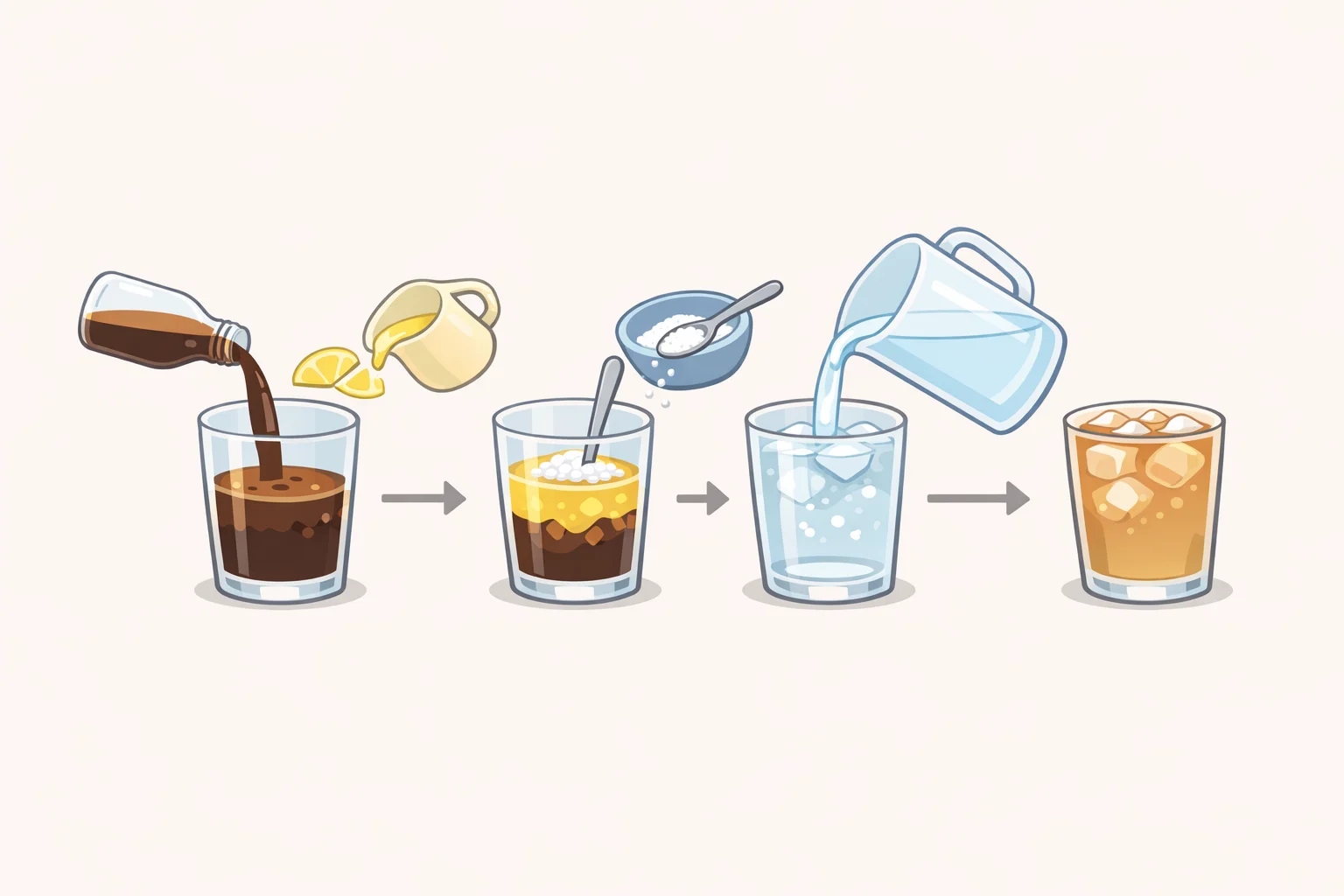
This version takes a few more steps but gives more control over the final strength. It makes one 16-ounce glass, per The Kitchn.
- 2 to 3 tablespoons espresso or cold-brew concentrate
- 2 to 3 tablespoons fresh lemon juice
- 1 to 2 tablespoons sugar or simple syrup
- Cold water, to top off
- Ice
Steps:
- Fill a tall glass halfway with ice.
- Combine the espresso or concentrate and lemon juice directly in the glass. The exact ratio depends on how strong the coffee flavor should read; 2 to 3 tablespoons of each is a workable starting point in a 16-ounce glass, per The Kitchn.
- Add the sugar or simple syrup and stir briefly before adding water. Granulated sugar dissolves faster into this small, concentrated mixture than it will once a full glass of cold liquid sits on top of it.
- Top with cold water until the glass is nearly full, then stir well (The Kitchn). Add a lemon slice if a garnish feels warranted.
Because this method sets the coffee-to-water ratio directly instead of relying on a pre-mixed drink, it leaves more room to adjust strength, sweetness, and acidity independently.
A few rules apply to either method. Skip the creamer: The Kitchn recommends serving this drink without dairy. A small pinch of salt can punch up the overall flavor in either version, per the same source. And in Method B, fresh lemon juice is worth the extra squeezing. A recipe developer at Flypresso argues that bottled lemon juice is pasteurized and tastes flatter by comparison, lacking the volatile aromatic compounds that lift a freshly squeezed version. That's one developer's side-by-side impression rather than a controlled test, but it lines up with how citrus oils generally behave once pasteurized out of a bottled product.
Lemonade and fresh lemon juice aren't interchangeable between these two methods. Lemonade typically carries its own sugar and water, which is why Method A needs no separate sweetener. Fresh lemon juice in Method B supplies acidity without any of the added sugar found in lemonade, which is why that version needs sugar or simple syrup stirred in on purpose.
Fixing a batch that tastes off
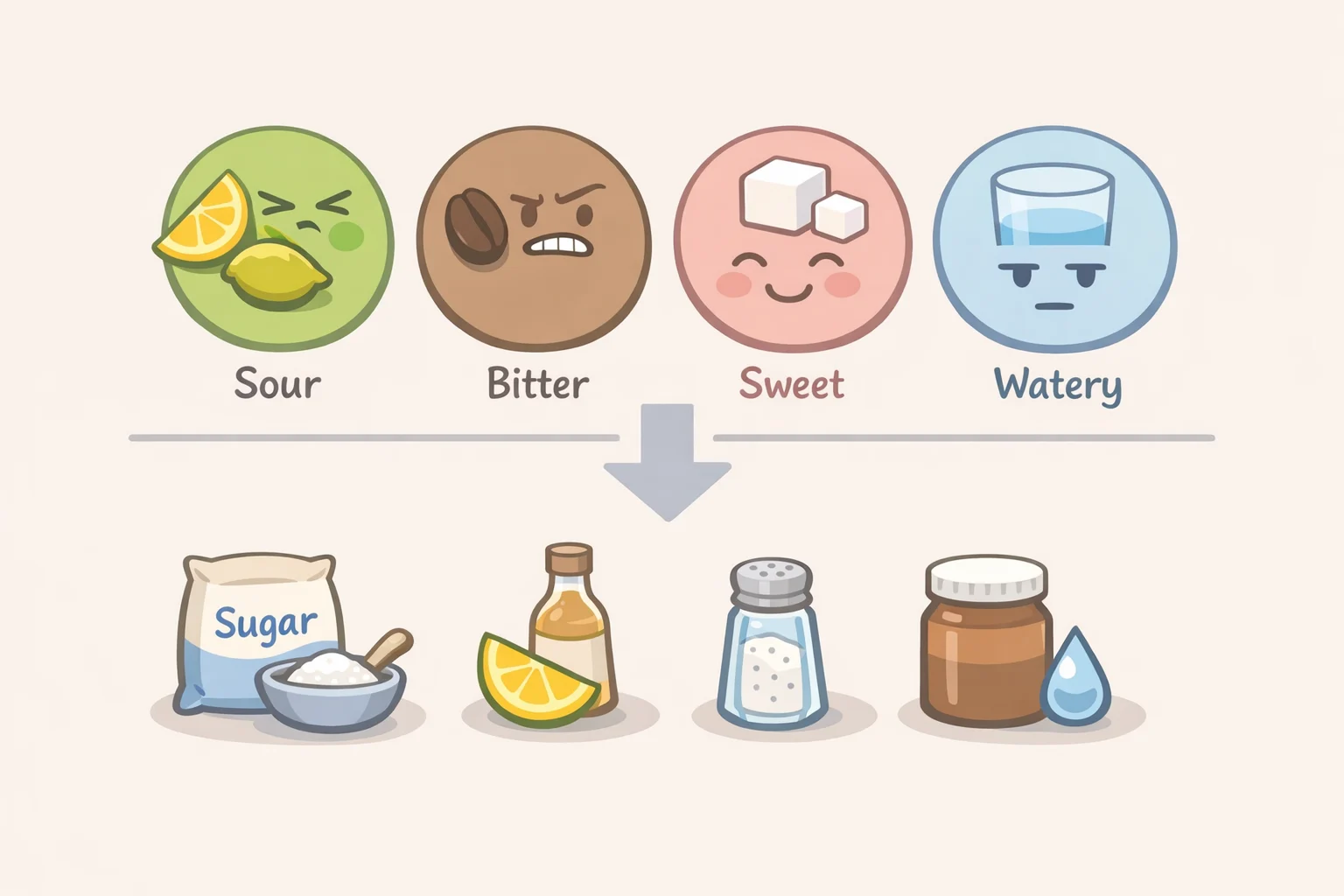
Lemonade brands and coffee bases vary from bottle to bottle, so taste before serving and adjust one ingredient at a time rather than guessing at a full rebuild.
- Too sour: Add sugar or simple syrup a little at a time, tasting as it dissolves, or switch to a sweeter lemonade brand next time.
- Too bitter: Swap in cold brew for hot-brewed coffee next time. The 2022 sensory study found cold brew reads as less bitter and astringent, though it didn't test the drink combined with lemonade specifically (Foods/MDPI, 2022).
- Too sweet or flat: Add more fresh lemon juice, or a splash of plain cold brew, to bring back acidity and roast character.
- Too diluted or watery: Rebuild using Method B with concentrate or espresso instead of pre-diluted iced coffee, and go lighter on the ice. Less ice also means the drink warms faster, so treat that as a trade-off rather than a free fix.
Adjustments like these are normal on a first attempt. Neither lemonade nor coffee comes standardized enough to guarantee the same result glass to glass.
The Mazagran coffee recipe behind iced coffee lemonade
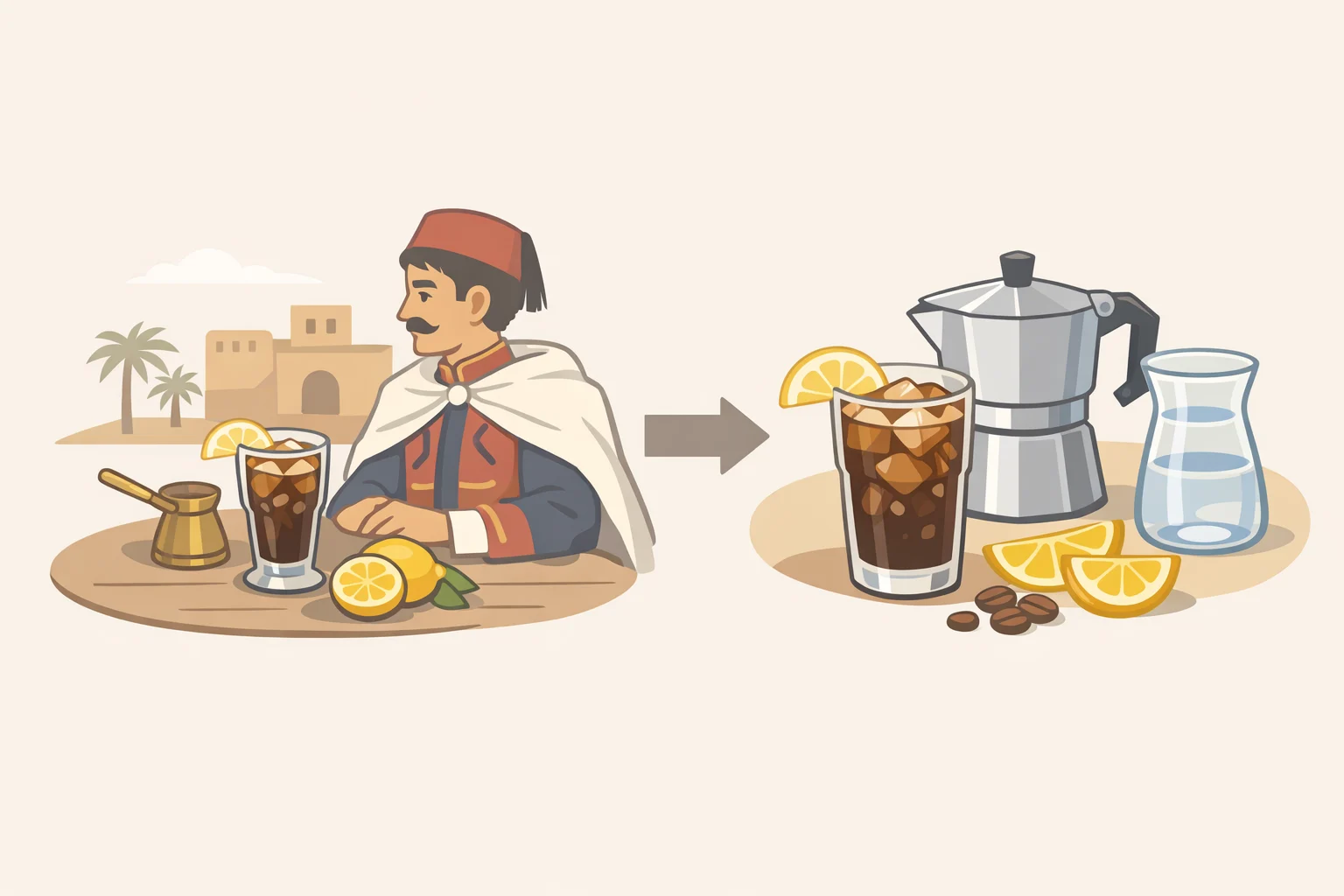
The coffee-and-citrus combination has history behind it, even though Flypresso's own recipe write-up credits its recent visibility to social media, calling it one of the more recreated drinks online since 2022, an assertion from that source rather than independently tracked data. The Kitchn traces the drink's name to Mazagran, a cold, sweetened coffee that originated in Algeria, with its creation commonly credited to French troops defending the Mazagran fort in 1840, a detail Wikipedia also records. Wikipedia calls it "the original iced coffee," a label that reads more like a nod to its age than a claim about one single fixed recipe.
The earliest versions reportedly cut strong coffee with plain water rather than lemonade. As the drink spread to other European countries, sweetened lemon juice replaced the water, creating a citrus-spiked version of the original, per The Kitchn.
From there, Mazagran splintered into regional variations that make clear there was never one correct formula. Portuguese versions may include espresso, lemon, mint, and rum. Austrian versions are served with an ice cube and may include rum or maraschino. Catalan and Valencian versions skip lemon juice entirely, dropping a lemon peel into iced coffee instead, in a drink sometimes called "café del temps," or weather's coffee (all per Wikipedia).
Given how much that regional variation moves the recipe around, it's more accurate to call today's iced coffee lemonade a modern drink in the same family as Mazagran than a direct revival of one historical original.
Where to take it from here
Method A is the fastest option when both ingredients are already in the fridge. Method B takes a few extra minutes but sets the coffee-to-water ratio directly, which matters once taste preferences get specific. Cold brew remains the more forgiving base either way, since sensory testing shows it as fruitier and less bitter than hot-brewed coffee, though whether coffee and lemon belong together at all is still a matter of taste rather than settled science (Foods/MDPI, 2022).
For a first glass, cold brew and equal parts lemonade in Method A is the simplest place to start. Once that ratio feels right, Method B and its regional variants, lemon peel instead of juice, a splash of mint, are worth trying next.