Korean barbecue chicken recipe: how to make dak bulgogi
Dak bulgogi translates to "fire meat," and the name describes exactly what happens in the pan: high heat, a fast sear, and caramelized edges that beef bulgogi's fame tends to overshadow (Chili Pepper Madness, 4 months ago). Say "bulgogi" and most people picture thin-sliced beef sizzling on a grill. This Korean barbecue chicken recipe runs on the same logic, using chicken thighs as the recommended cut, though thin-sliced breast works too, and it's built for a weeknight rather than a special occasion (Chili Pepper Madness, 4 months ago).
Chili Pepper Madness pitches its version as an easy Korean BBQ chicken recipe, listing 10 minutes of prep, a 30-minute marinade, and 10 minutes at the stove (Chili Pepper Madness, 4 months ago). Korean Bapsang runs a similar playbook: chicken cut small, a short marinade, and a hot skillet finish that takes about two minutes per side (Korean Bapsang, 1 year ago). The two sources land on the same core method even where their exact ratios and cook times diverge.
This guide teaches that shared method rather than handing over one locked recipe card. It covers cutting chicken for surface area, building a marinade you can push spicy or pull back mild, marinating long enough for it to matter, and searing correctly so the result is real caramelization instead of steamed chicken sitting in sauce. It closes with swaps for a broiler, air fryer, or grill, a note on how dak bulgogi differs from its saucier cousin dakgalbi, and a genuinely different chicken recipe with real measurements for anyone who wants exact numbers instead of a framework.
Recipe at a glance
Video of the Day
- Yield: 4 servings, built around 2 pounds of boneless, skinless chicken thighs, with thin-sliced chicken breast as the source's own alternative (Chili Pepper Madness, 4 months ago).
- Time: 10 minutes of listed prep, a 30-minute marinating minimum, and 10 minutes of cook time, for about 50 minutes total before any extra time for working through batches (Chili Pepper Madness, 4 months ago).
- Equipment: a large skillet or cast-iron pan. An instant-read thermometer isn't listed as required, but it's worth having on the counter.
- Nutrition: 421 calories per serving, by the source's own calculation (Chili Pepper Madness, 4 months ago).
Video of the Day
Korean chicken marinade: spicy or mild
The marinade starts from a shared base: soy sauce, garlic, ginger, sesame oil, grated onion, scallions, mirin, and a sweetener like brown sugar or honey, with rice vinegar as an optional addition (Chili Pepper Madness, 4 months ago). Heat level gets set by two more ingredients stacked on top of that base.
For a spicier batch, stir in the full amount of gochujang the recipe calls for, along with gochugaru. That's what pushes this gochujang Korean chicken toward "the spicier side" (Chili Pepper Madness, 4 months ago). Chicken bulgogi isn't always built this way; many versions lean sweet and savory with little heat at all (Chili Pepper Madness, 4 months ago). For a milder batch, cut back how much gochujang goes in and skip the gochugaru entirely, the source's own fix for a gentler version (Chili Pepper Madness, 4 months ago).
One honest note: this article does not reproduce a fixed set of marinade measurements, because the recipe it draws from doesn't publish exact tablespoon ratios for that ingredient list. Coat two pounds of chicken generously enough that marinade clings to every piece, lean the mix spicy or mild as above, and adjust the ratio next time based on how it tasted this time. Readers who want an actual measured ingredient list should skip ahead to the soy-garlic option near the end of this guide.
Step 1: Cut the chicken for surface area
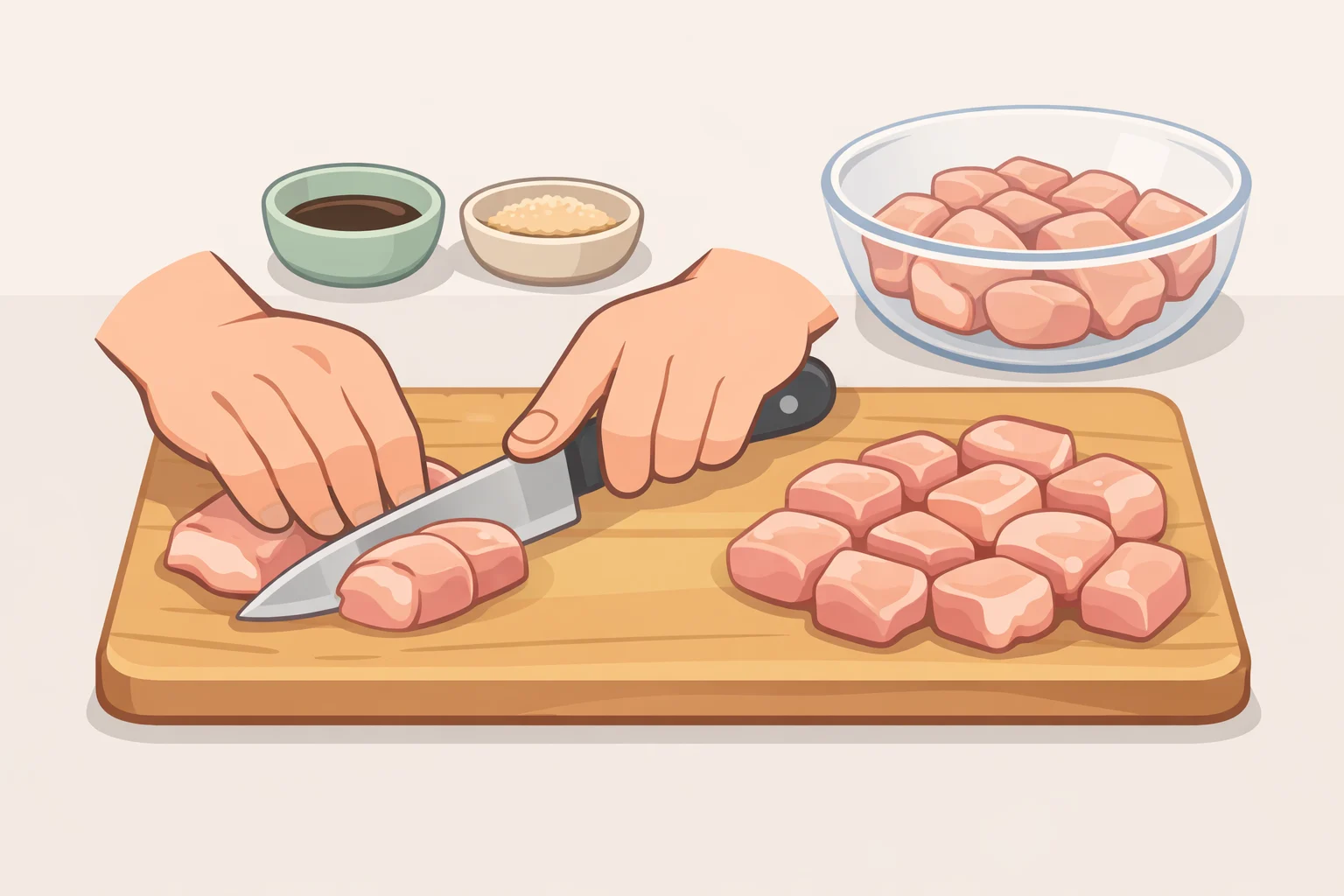
Cut chicken into small pieces, roughly 2 inches long and 1 inch wide. That's Korean Bapsang's specific guidance for this dish, and it's the cut this guide uses as the default (Korean Bapsang, 1 year ago). The logic here isn't complicated: cutting smaller means more surface area for marinade to cling to, and pieces that size cook through fast once they hit the pan.
If cutting board work isn't your thing, pound or flatten whole thighs to an even thickness instead, a technique Chili Pepper Madness lists as its own option (Chili Pepper Madness, 4 months ago). Either cut works. Step 4 covers which timing applies to each.
Step 2: Build the marinade
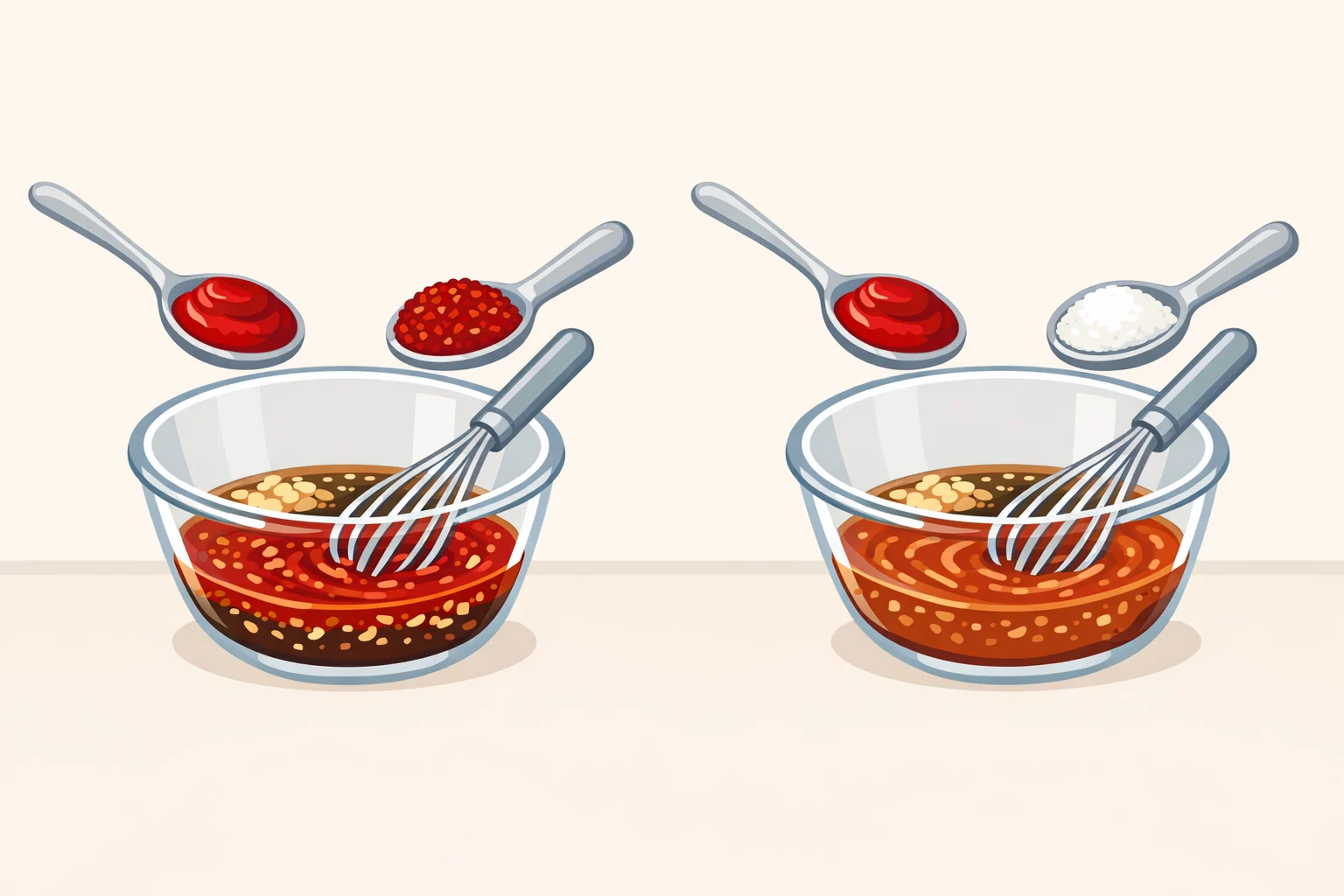
Whisk together the shared base, then stir in gochujang and gochugaru for the spicy path, or the pulled-back gochujang for the mild one (Chili Pepper Madness, 4 months ago). Mix until the sugar fully dissolves before the chicken goes in, exactly what Korean Bapsang instructs (Korean Bapsang, 1 year ago).
Toss the cut chicken until every piece is coated, then cover the bowl (Chili Pepper Madness, 4 months ago). At this stage, getting marinade into contact with every surface matters more than hitting an exact ratio.
Step 3: Marinate at least 30 minutes
Refrigerate for a minimum of 30 minutes. That's the floor both Chili Pepper Madness and Korean Bapsang settle on for chicken cut small (Chili Pepper Madness, 4 months ago; Korean Bapsang, 1 year ago). Beyond that floor, Chili Pepper Madness rates four hours as better and an overnight soak as great, its own top recommendation (Chili Pepper Madness, 4 months ago).
Asian pear complicates that math. Its enzymes tenderize the chicken, but too much contact time can turn the texture soft and slightly mushy (Chili Pepper Madness, 4 months ago). Cap pear at four hours total, or add it only in the last hour of an overnight marinade, and don't exceed 12 hours total with pear in the mix (Chili Pepper Madness, 4 months ago). The marinade itself can be mixed a few days ahead and refrigerated separately, with pear added right before the chicken goes in (Chili Pepper Madness, 4 months ago).
Step 4: Sear in batches over medium-high heat
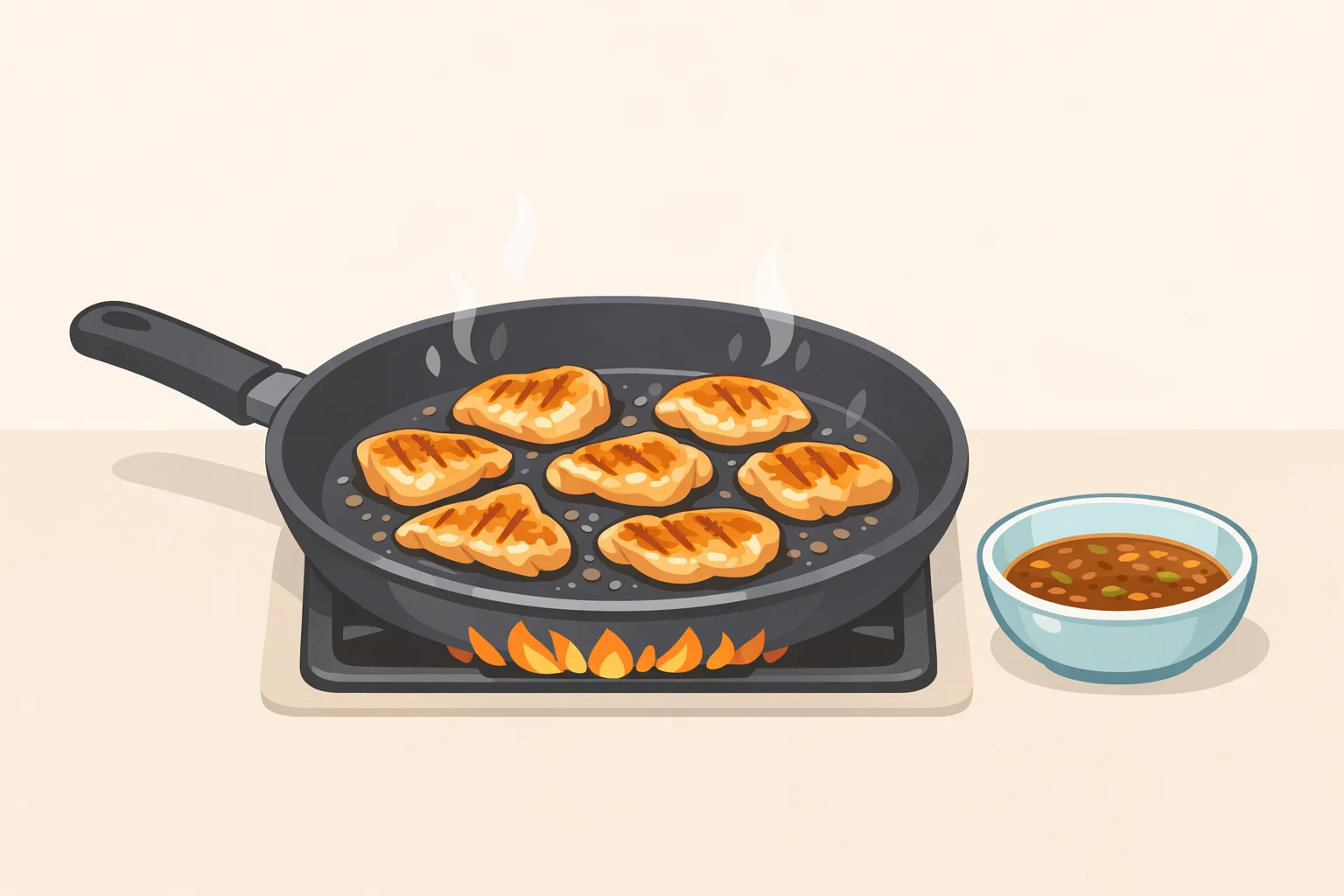
Heat a large skillet or cast-iron pan over medium-high heat with about a tablespoon of neutral oil (Chili Pepper Madness, 4 months ago). Lift each piece from the marinade and let the excess drain briefly before it touches the oil. Wet pieces steam instead of sear, which is why Korean Bapsang has cooks reserve the marinade rather than pouring it straight into the pan (Korean Bapsang, 1 year ago).
Decide now what happens to that reserved marinade: discard it, or set it aside to simmer into a sauce later. It has touched raw chicken, so it never gets used again without being cooked first.
Don't crowd the pan; crowding causes steaming instead of searing (Chili Pepper Madness, 4 months ago). Arrange pieces in a single layer with room between them, and work through the chicken in batches.
Which timing to use depends on which version you're following. Korean Bapsang's small, 2-inch pieces run about 2 minutes per side (Korean Bapsang, 1 year ago), while Chili Pepper Madness's full recipe calls for 4 to 5 minutes per side (Chili Pepper Madness, 4 months ago). Treat both numbers as a starting point, and finish by temperature: 165°F internal, checked with a thermometer (Chili Pepper Madness, 4 months ago).
This marinade's sugar content means it caramelizes fast, so medium-high heat, not the highest setting on the stove, is what works here (Chili Pepper Madness, 4 months ago). Push past that, or let a batch sit too long, and the sugars scorch instead of glazing.
Step 5: Serve and store
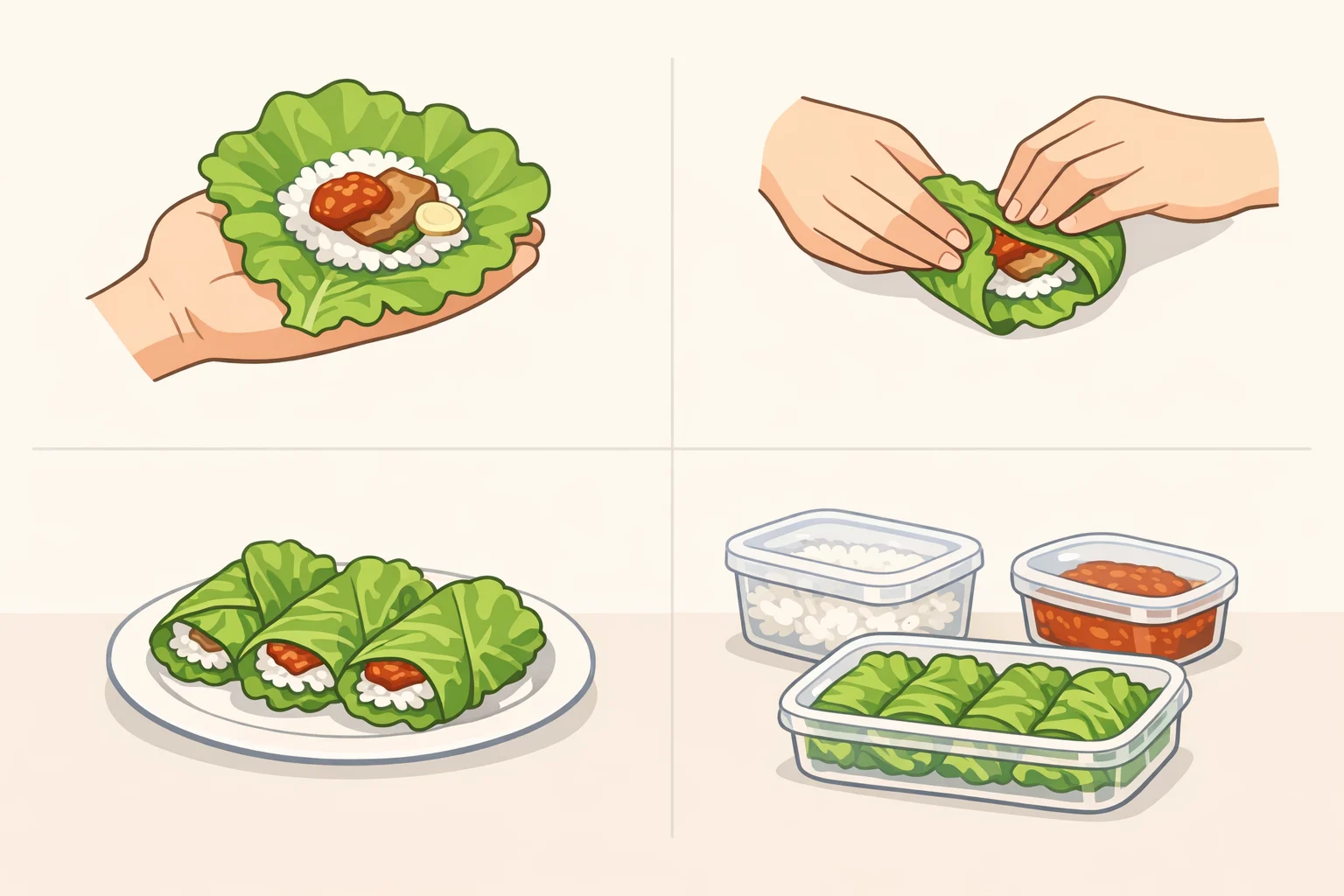
Serve it hot, straight out of the pan, over steamed rice. Or go the lettuce-wrap route: a spoonful of rice, a piece of chicken, and a dab of ssamjang, folded into a lettuce leaf and eaten in one bite. Repeat until the plate's empty.
If you reserved marinade for a sauce, simmer it for 3 to 5 minutes, stirring often, until it thickens slightly (Chili Pepper Madness, 4 months ago).
Refrigerate leftovers in an airtight container for up to 4 days, or freeze for up to 3 months (Chili Pepper Madness, 4 months ago).
Substitutions worth knowing
Skipping gochugaru mainly reduces the heat and removes its flavor contribution to the marinade; nothing else about the method needs adjusting (Chili Pepper Madness, 4 months ago). Rice vinegar shows up as an optional ingredient alongside mirin in the same recipe, though it isn't presented as a direct swap for it; treat the two as separate notes rather than interchangeable ones (Chili Pepper Madness, 4 months ago).
Asian pear is optional too. The source describes its enzymes as tenderizing the chicken (Chili Pepper Madness, 4 months ago); skip it if none is on hand. If you do use it, respect the timing caps from Step 3.
FAQ: no skillet, grilling, and dakgalbi
No skillet? Broil chicken 4 to 6 inches from the heat for 6 to 8 minutes per side, or air fry at 400°F for 10 to 12 minutes, flipping halfway (Chili Pepper Madness, 4 months ago). Both methods assume the evenly cut pieces from Step 1, arranged in a single layer. Check with a thermometer for 165°F rather than going by time alone.
Can I grill the chicken? Yes, but treat it as its own timeline rather than the stovetop steps above. For a Korean grilled chicken recipe version, cut the pieces larger and marinate longer than the 30-minute stovetop minimum; Korean Bapsang doesn't publish exact grill times, so watch for caramelized edges and confirm doneness with a thermometer (Korean Bapsang, 1 year ago).
How does this differ from dakgalbi? Dak bulgogi is marinated chicken cooked hot and fast for a caramelized glaze. Dakgalbi is a saucier, vegetable-heavy stir-fry, closer to a simmered dish than a quick sear (Chili Pepper Madness, 4 months ago). They're related by name but built around different cooking formats and sauce structures, so don't expect one to substitute for the other.
A different soy-garlic chicken option
If exact measurements matter more than flexibility, Chopsticks and Flour's soy-garlic "galbi chicken," adapted from actor Ryu Soo Young's televised dish, is a genuinely complete, measured recipe, just not dak bulgogi itself (Chopsticks and Flour, 8 months ago). For 2.2 pounds of chicken wings and drumsticks, it calls for 2 green onion stalks, 15 garlic cloves, an optional inch of ginger, a quarter teaspoon of salt, a half cup of rice cake, a tablespoon of sugar, 3 tablespoons of soy sauce, a tablespoon of oyster sauce, and 3 tablespoons of corn syrup, reduced from an original 6 (Chopsticks and Flour, 8 months ago).
The technique differs from the sear this guide teaches. Chicken cooks skin-down in its own rendered fat rather than in added oil: three minutes over high heat, a flip, then covered cooking over medium heat for about 15 minutes total before rice cake, garlic, and scallion go in, with the sauce ingredients stirred through in the final few minutes (Chopsticks and Flour, 8 months ago). Treat it as its own recipe, worth making on its own terms rather than as a variation on the steps above.
What actually makes this work
Keep the pan uncrowded and finish by thermometer instead of the clock, and the caramelized edges take care of themselves (Chili Pepper Madness, 4 months ago; Korean Bapsang, 1 year ago). Once that sear is dialed in, dakgalbi is a logical next dish: the same Korean chicken flavors, but simmered with vegetables in a sauce instead of seared plain (Chili Pepper Madness, 4 months ago).