How to Make Old-Fashioned Pickles: Safe Brine, Crisp Results
This guide walks through how to make old-fashioned pickles from scratch using the quick-process method the kind that snap cleanly, taste sharply of dill and vinegar, and can hold their texture through months of shelf storage. "Quick-process" means vinegar-acidified, not fermented. You're not making a traditional crock dill here; you're making a safe, tested fresh-pack pickle that delivers old-fashioned results through careful technique.
Crispness depends on several factors working together: variety, freshness, preparation technique, ingredients, and processing method, according to Iowa State University Extension (updated last month). The steps below address each one in sequence. Miss one, and no fix downstream will recover it.
What "quick-process" means, and how it differs from other methods:
- Quick-process (fresh-pack): Cucumbers packed raw or briefly brined, covered with hot vinegar brine, and processed in a water-bath canner. This is what this guide teaches.
- Fermented (crock dill): Cucumbers submerged in salt brine for three weeks or longer, relying on lactic acid from bacterial fermentation. Salt ratios are non-negotiable here reducing sodium in a fermented recipe is unsafe. Different prep rules apply.
- Refrigerator pickles: Unprocessed, vinegar-brined cucumbers stored cold. Iowa State University Extension recently updated its guidance to recommend against this method pending further research, citing evidence that Listeria monocytogenes can survive in them Iowa State University Extension. This guide uses processed methods instead.
Before you start, gather:
- True pickling cucumbers (not slicing or salad varieties), as fresh as possible
- Canning or pickling salt table salt is safe to use but may cloud brine and darken pickles; flake salt is not suitable; sea salt and Himalayan pink salt are not recommended unless a recipe specifies them
- White distilled or cider vinegar at 5% acidity (the percentage is printed on the label)
- A tested recipe from the USDA, National Center for Home Food Preservation, or a university extension service
- Standard canning jars, lids, and rings in good condition
- A boiling-water or atmospheric steam canner
- A candy or jelly thermometer (required for low-temperature pasteurization)
Key facts to anchor the steps below:
- Crispness depends on protecting the cucumber's natural pectin; it degrades from microbial activity, excess heat, and rough handling and once lost, cannot be recovered Iowa State University Extension
- Cucumbers have a natural pH of 5.12 to 5.78, far too high to prevent botulism on their own; vinegar must bring the finished product below pH 4.6 Clemson Extension (2023)
- Quick-process pickles use acetic acid from vinegar rather than fermentation for preservation Ohio State University Extension (published earlier this year)
Step 1: Choose the best cucumbers for pickling old-fashioned dill pickles
Video of the Day
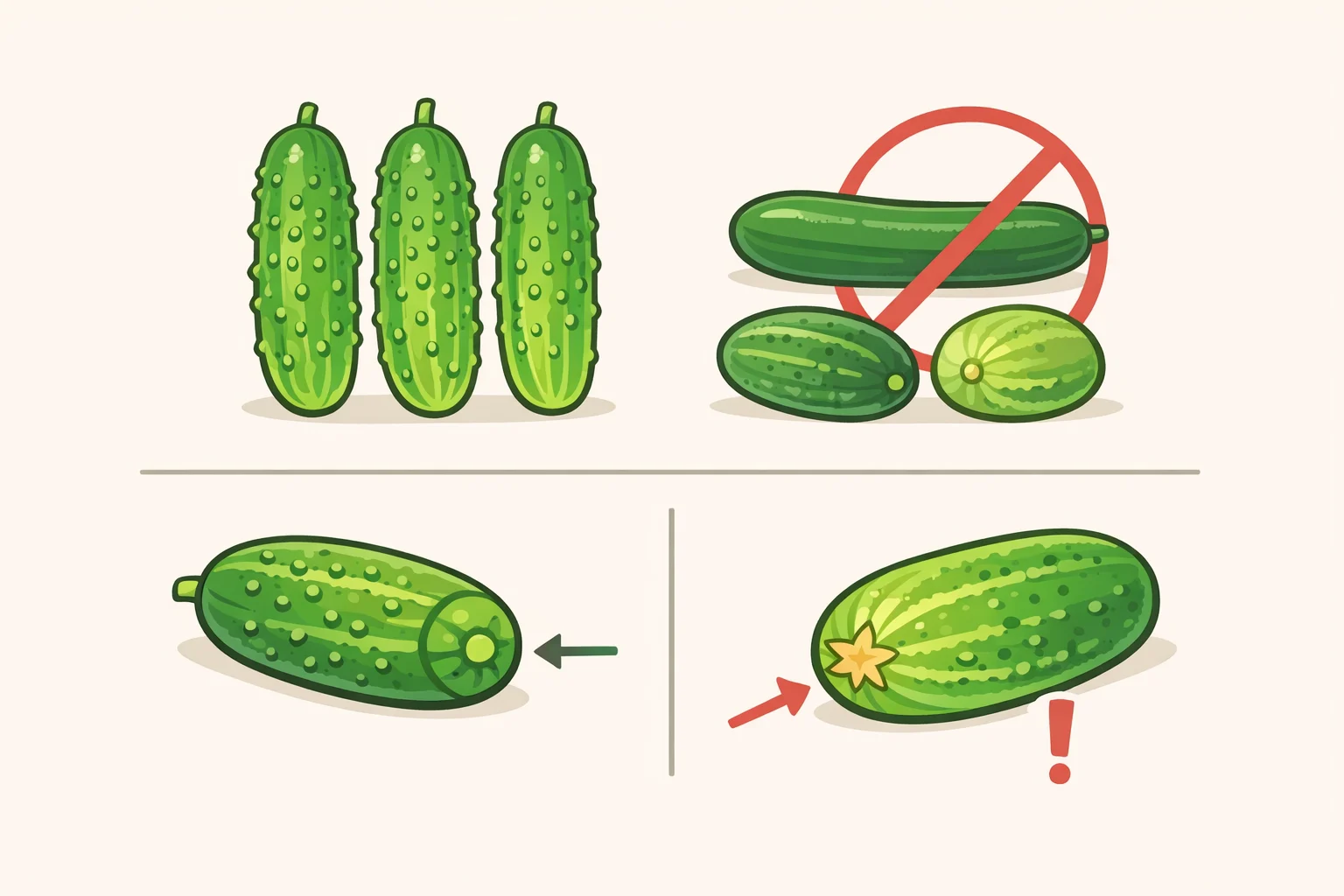
The variety you buy and how you handle it before prep decides more about the final texture than anything you'll do with brine. Get this wrong and nothing in the remaining steps will fix it.
Buy true pickling cucumbers. Look for slim, dark green cucumbers with prickly bumps and a diameter under two inches. These varieties have thin skins and small seed cavities that allow brine to penetrate evenly. Slicing or salad cucumbers are too large, too seedy, and too thick-skinned not designed for pickling, and the results reflect that Iowa State University Extension. Commercially waxed cucumbers should not be used for whole pickles; brine cannot penetrate the coating Oregon State University Extension (April 2024).
Note: the burpless cucumber warning applies specifically to fermented pickles, where their skin enzymes accelerate softening during fermentation. Slicing cucumbers are a poor choice for quick-process work regardless.
Pickle as soon as possible after harvest. Cucumbers deteriorate fast, especially at room temperature. Ohio State and Oregon State recommend pickling within 24 hours of harvest; Iowa State's ideal is within two hours of picking Ohio State University Extension; Iowa State University Extension. Treat the 24-hour window as the outer limit, not the target.
Do not use cucumbers showing any mold. Processing kills microorganisms but does not remove the off-flavor mold produces Ohio State University Extension.
Soak in an ice bath for two to four hours if you're not pickling immediately. This slows cellular breakdown and helps protect whatever crispness remains it won't recover firmness already lost Iowa State University Extension.
Common mistake: Many grocery-store cucumbers are slicing varieties. If the bin or label doesn't say "pickling cucumbers," ask before buying or find a farm stand or farmers market where pickling varieties are common in season.
Video of the Day
Step 2: Prep the cucumbers the steps that protect texture
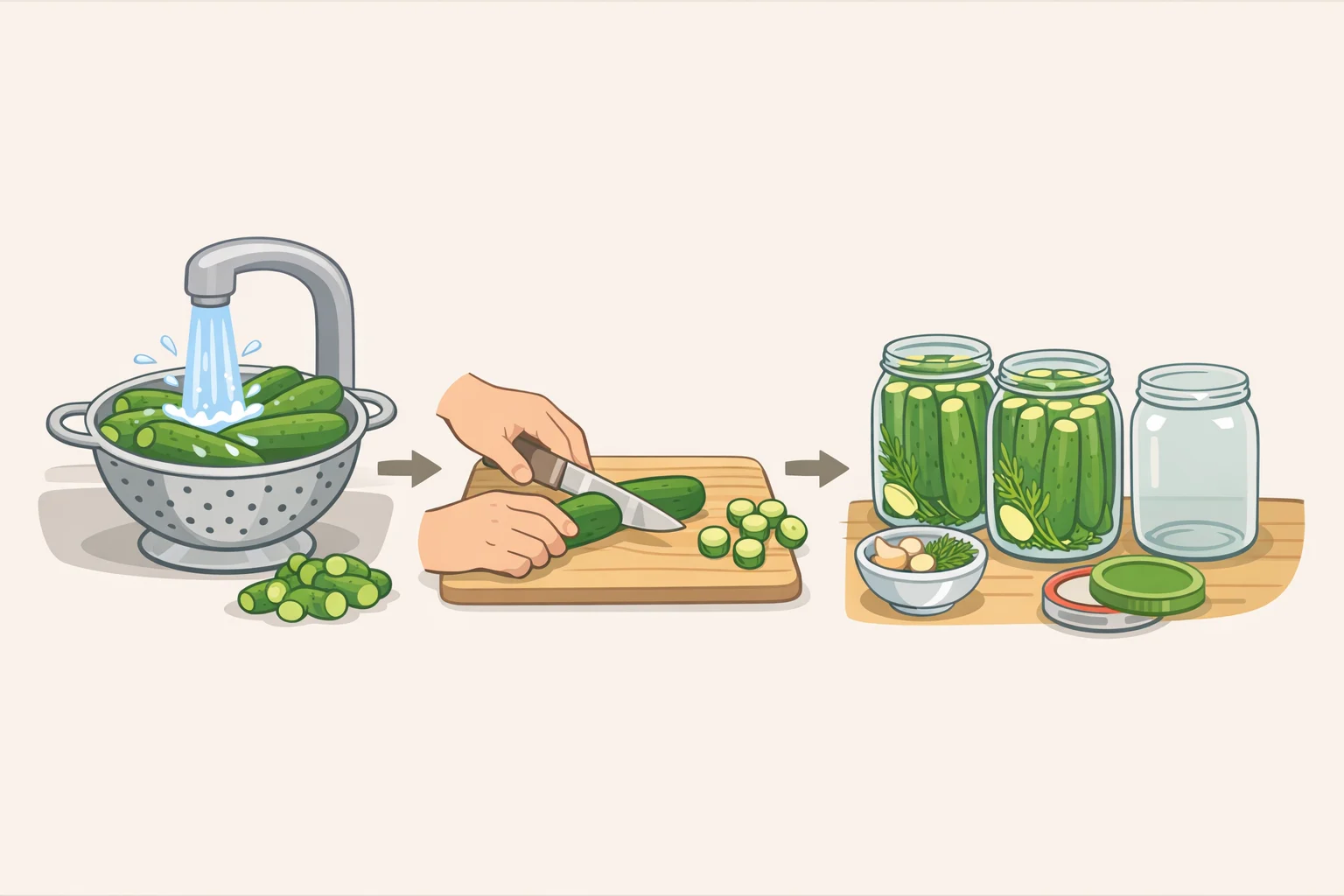
Careful prep here is the highest-return work in this entire process. It takes maybe 15 minutes and directly determines whether the jar stays crisp.
1. Wash cucumbers thoroughly, especially around the stem end. Soil trapped near the stem harbors bacteria that cause softening Ohio State University Extension. Rinse under running water and scrub lightly.
2. Trim at least 1/16 inch from the blossom end. Not the stem end the blossom end. It's the small, slightly sunken tip opposite the stem; look for a faint circular scar where the flower once attached. That end contains natural enzymes that break down pectin and turn pickles soft. A thin slice removes them. Both Iowa State and Oregon State confirm that this step makes grape leaves in the jar unnecessary the leaves work by inhibiting the same enzymes through tannins, but once you've removed the source, the leaves add nothing Iowa State University Extension; Oregon State University Extension.
3. Optional: Add a calcium chloride product (Pickle Crisp® or Xtra Crunch®) directly to filled jars per label directions. Calcium chloride doesn't lower brine acidity and poses no food safety risk unlike lime (calcium hydroxide), which has been linked to botulism when residue isn't thoroughly rinsed out, and unlike alum, which the FDA no longer recommends for quick-process pickles and which has little measurable effect on them anyway Iowa State University Extension. Add it to jars before sealing, not to the brine itself.
What each prep step protects:
| Action | What it preserves |
|---|---|
| Ice bath | Slows pectin degradation before processing |
| Blossom-end trim | Removes softening enzymes at their source |
| Calcium chloride (optional) | Adds structural firmness without acidity risk |
Step 3: Build a safe brine ratios, ingredients, and what cannot be changed
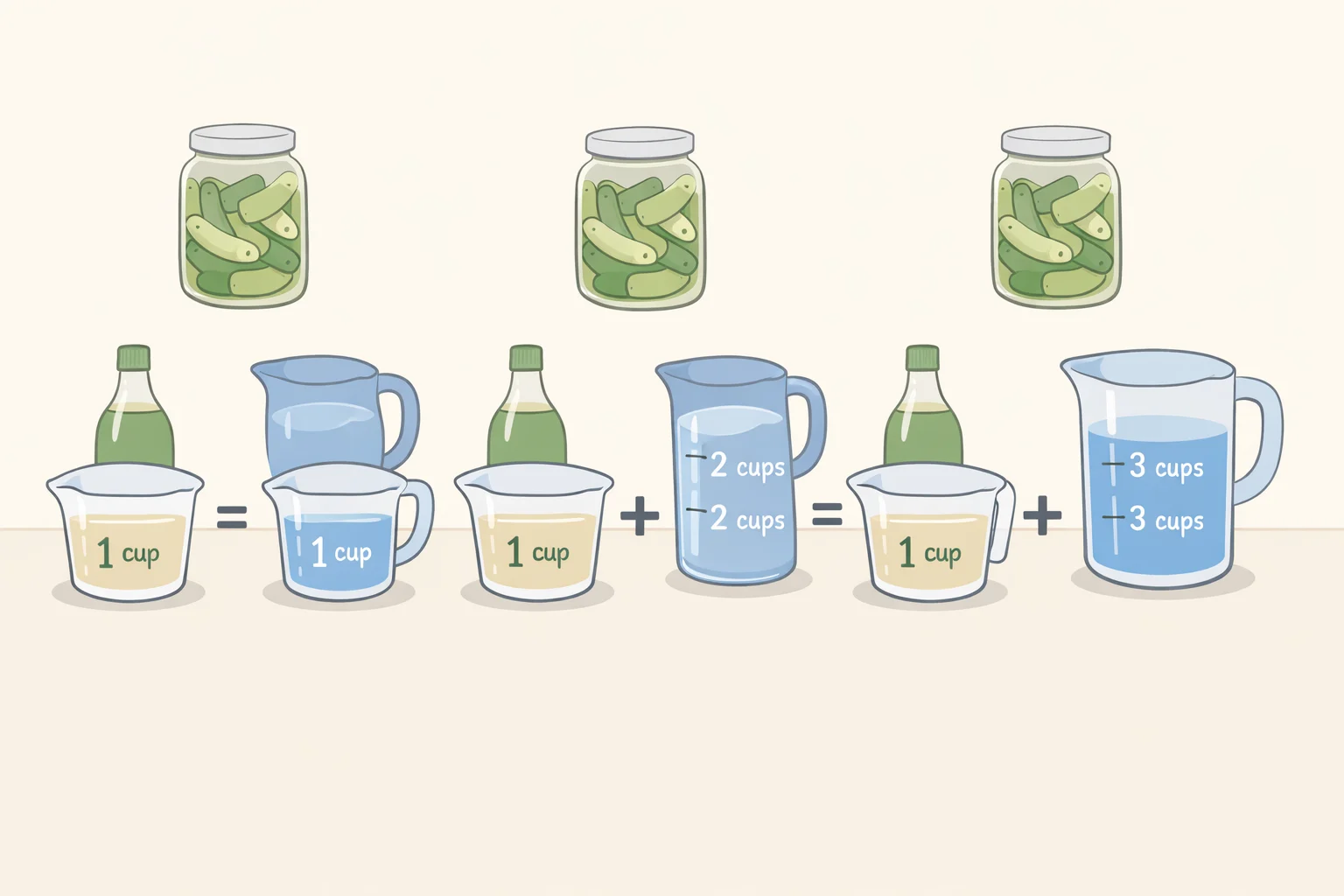
This is where old family pickle recipes most often go wrong. A brine that tastes right and looks right can still support Clostridium botulinum growth if the vinegar-to-water ratio is too low.
Start with a tested recipe. The USDA Complete Guide to Home Canning, the National Center for Home Food Preservation, and university extension services publish research-verified recipes with tested acid ratios. Oregon State specifies that safe quick-pickle recipes should contain at least a 1:1 ratio of 5% vinegar to other liquids Oregon State University Extension (December 2024). Clemson explicitly flags an old family-style recipe with a 1:4 vinegar-to-water ratio as unsafe Clemson Extension (2023).
A reference recipe to visualize the structure (Quick Fresh-Pack Dill Pickles, from the Ohio State/USDA source yields 7 to 9 pints):
- 8 pounds of 3–5 inch pickling cucumbers
- 1½ quarts 5% vinegar
- 2 quarts water
- ¼ cup sugar
- 1¼ cups canning or pickling salt (used across brine and brine soak)
- 14 heads fresh dill (or 4¼ tablespoons dill seed), whole mustard seed, and mixed pickling spice
This ratio roughly 3 parts vinegar to 4 parts water is what tested safety looks like in a real recipe, per Clemson Extension. A recipe calling for 1 part vinegar to 4 parts water is in different territory entirely.
On individual ingredients:
-
Vinegar: White distilled or cider vinegar at 5% acidity. The percentage is printed on the label. Do not use homemade vinegar (unknown acidity) or wine and specialty vinegars unless a tested recipe specifically calls for them. White vinegar keeps pickles lighter-colored; cider vinegar adds a milder flavor but may darken the product Oregon State University Extension.
-
Salt: Canning or pickling salt is the right choice. Table salt iodized or non-iodized may be used safely, but the anti-caking agents can cloud brine and the iodine may darken pickles Ohio State University Extension. Flake salt varies in density and measures inconsistently by volume. Sea salt, Himalayan pink salt, and kosher salt contain minerals that may cause discoloration or off-flavors and aren't recommended unless a recipe specifies them Oregon State University Extension.
-
Spices: Use whole spices, not ground. Powdered spices cloud the brine and can darken cucumbers. Fresh dill harvested just as the flowers begin to open delivers best flavor; dill seed works as a substitute, though it may not have as good flavor three heads equals approximately one tablespoon of seed. Last year's spice supply will have lost much of its flavor Oregon State University Extension.
Do not alter vinegar, water, or food proportions. If the finished pickles taste too sour, add more sugar to the brine not more water. Diluting the vinegar undermines the acid concentration that keeps the product safe Ohio State University Extension.
Step 4: Process the jars and store correctly
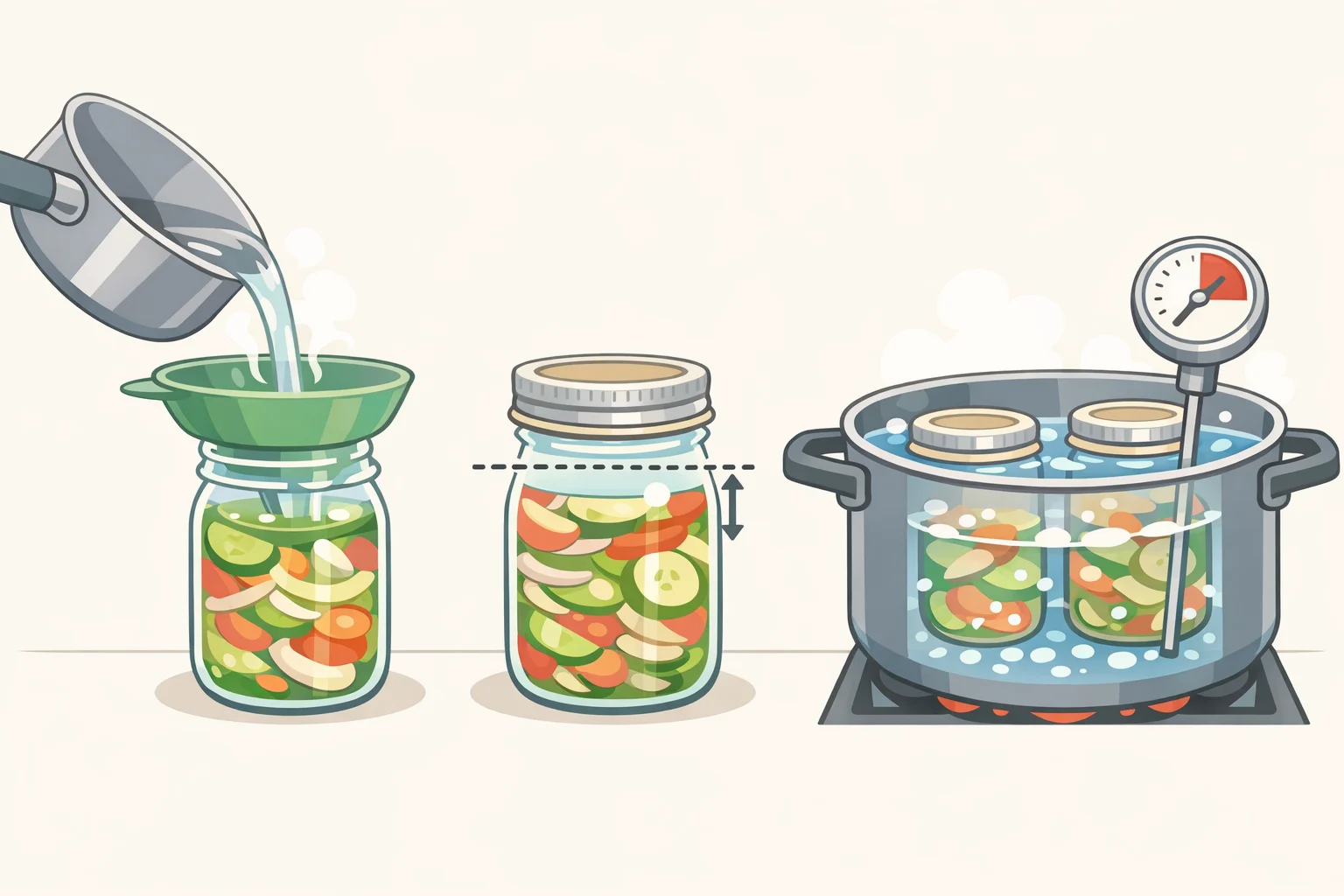
Processing locks in safety and determines whether the texture you've worked to protect survives shelf storage. Two methods are available; choose based on your equipment and recipe.
Standard boiling-water bath: Pack room-temperature cucumbers into hot jars. Pour brine heated to 165–180°F over cucumbers, leaving ½-inch headspace. Remove air bubbles, wipe rims, apply lids and rings. Process pints for 10 minutes, quarts for 15 minutes, at a full rolling boil Clemson Extension. Note that processing times vary by recipe; always follow the times given in the specific tested recipe you're using, not a general rule.
Low-temperature pasteurization (better texture, more monitoring): Fill the canner halfway with warm water (120–140°F). Lower jars in, add hot water to 1 inch above jars, and bring the water to 180–185°F. Hold that temperature for exactly 30 minutes using a candy or jelly thermometer to monitor continuously Iowa State University Extension. Do not let the water exceed 185°F; pectin breakdown begins above that point and will soften the pickles. This method cannot be used with reduced-sodium or reduced-sugar recipes.
After processing: Let jars cool undisturbed for 12–24 hours, then check seals. Remove bands before storage moisture trapped under rings can corrode lids over time, particularly in high-acid, high-salt products like pickles Oregon State University Extension. Store in a cool, dark, dry location. Temperature swings can break down texture; warm storage can cause renewed fermentation activity and may cause jars to break Oregon State University Extension.
Wait four to five weeks before opening. Quick-process pickles eaten immediately taste raw and sharp. Flavor improves significantly after several weeks in the jar Ohio State University Extension.
Troubleshooting: why homemade old-fashioned pickles go soft
Most texture failures trace back to a short list of causes. Here's how to diagnose a disappointing jar and prevent it next time.
| Problem | Likely cause | Fix for next batch |
|---|---|---|
| Soft pickles overall | Old cucumbers; blossom end left on; slicing variety used | Pickle within 24 hours; trim blossom end; use true pickling cucumbers |
| Soft after processing | Water temperature exceeded 185°F during low-temp pasteurization | Monitor thermometer throughout; don't let temp spike |
| Cloudy brine | Table salt used; hard water; normal fermentation residue in fermented pickles | Switch to pickling salt; use soft or boiled water |
| Off-color (dark pickles) | Iodized salt; cider vinegar; powdered spices; old spice stock | Use white vinegar for lighter color; use whole fresh spices; use pickling salt |
| Pickles taste flat | Last year's spice stock; dill seed used instead of fresh heads | Use spices from the current season; harvest fresh dill at first flower opening |
| Jar didn't seal | Rim not wiped clean; lid defect; brine temperature too low when filled | Wipe rims carefully; inspect lids; fill with hot brine |
After opening: Keep remaining pickles submerged in their brine and store in the refrigerator. Exposure to air above the brine line degrades both texture and flavor Oregon State University Extension.
What a properly made jar looks like: Cucumbers turn from bright green to olive-green or yellow-green through the pickling process Oregon State University Extension. The flesh will be uniformly translucent. Slight brine haze after standing is normal. Bubbling, white film, or any off smell are signs of spoilage; discard without tasting Clemson Extension (2023).
Where to go from here: pick your path
The recipe selection comes first; the processing method follows from that. Find a tested dill recipe at the National Center for Home Food Preservation, through the USDA Complete Guide to Home Canning, or from a university extension service. Then decide how you want to process.
Three forks worth considering:
-
Maximum crunch: Choose a tested recipe that specifically allows low-temperature pasteurization. The tighter temperature control preserves more pectin than a full boil. You need a thermometer and 30 minutes of attention, but the texture difference is real.
-
Lowest complexity: A standard boiling-water bath recipe is fully reliable and requires no temperature monitoring. The pickles will be slightly softer than the low-temp method but still far better than anything that started as a slicing cucumber.
-
Lower sodium or sugar: Salt and sugar can be reduced in quick-process recipes without compromising safety, but only by starting with a recipe specifically developed for that purpose Oregon State University Extension (December 2024). Cutting those ingredients from a standard recipe is not safe. Fermented pickles are a different matter entirely: sodium concentration in fermented recipes cannot be adjusted.
Whichever path you choose, allow four to five weeks after processing before the first jar Ohio State University Extension. The waiting is the hardest part.