Elote-Style Corn Recipe: Boil, Spread, and Serve in 20 Minutes
What you're building and why it works
Elote comes down to a single technical requirement: the corn needs a clean, moist surface so the spread sticks. That's it. Everything else follows from that.
Boiling or steaming gives you that surface. Grilling doesn't, because the char dries the kernels unevenly and the mayonnaise-based coating beads up and slides off instead of holding. One short paragraph on the grill question, and then we're done with it.
By the end of this guide you'll have four ears of elote-style corn on the table in under 20 minutes: sweet corn coated in a creamy, smoky, tangy spread, finished with crumbled cotija, chili powder, and fresh lime. The steps below are in service of that result.
Video of the Day
Video of the Day
What you need before you start
Ingredients (serves 4):
- 4 ears of fresh corn, husks removed
- ½ cup full-fat mayonnaise
- ½ cup Mexican crema or sour cream
- 1 cup cotija cheese, finely crumbled (feta works as a substitute; rinse it first)
- 1 to 2 teaspoons chili powder or Tajín
- ½ teaspoon smoked paprika
- ½ teaspoon garlic powder
- Zest and juice of 1 lime
- Salt to taste
- Fresh cilantro, torn (optional)
Equipment: Large pot, mixing bowl, spatula, shallow dish wide enough to roll a full ear, wire rack or sheet pan
On corn quality: Buy the freshest ears available, from a farm stand if you can. Grocery store corn has often been in transit for days, and the difference shows up as flat, starchy kernels. Look for tightly wrapped bright green husks and plump kernels all the way to the tip. Cook it the same day you buy it. This preparation builds on whatever flavor the corn already has; it doesn't rescue a mediocre ear.
On cotija: A dry, crumbly, aged Mexican cheese. It stays firm and granular when you crumble it, which means it forms a crust on the spread rather than dissolving into it. If you substitute feta, rinse it under cold water first to pull back some of the brine, otherwise the salt level can quickly become aggressive. Parmesan is a functional substitute, but it shifts the flavor enough that the dish stops tasting like elote.
Step 1: Cook the corn
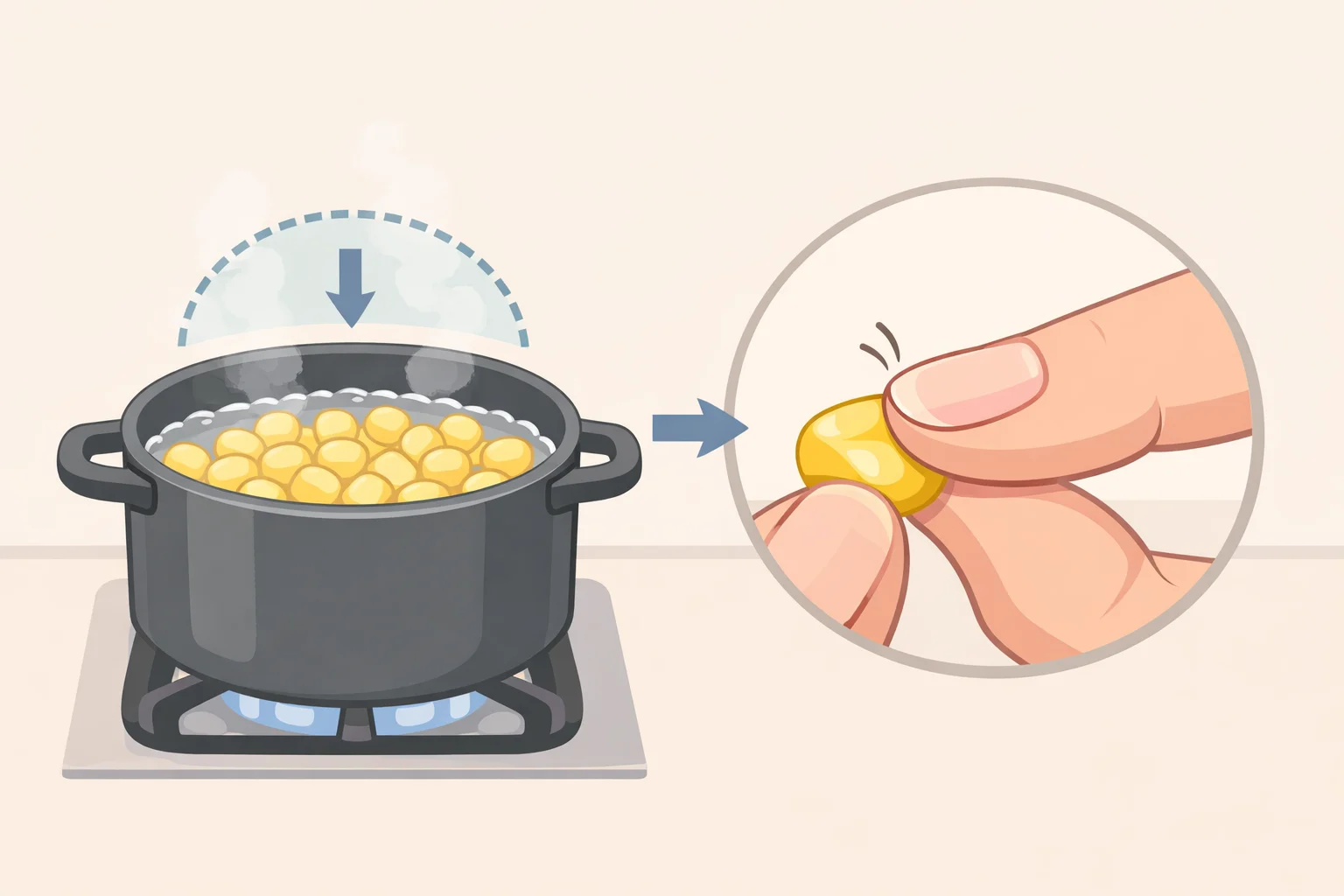
Boiling is the default and the one you should start with. Fill a large pot with enough water to fully submerge all four ears. Leave out the salt at this stage; seasoning happens in the spread, and salting the water doesn't add enough at the kernel level to be worth it. Bring the water to a rolling boil, add the corn, and cook for 5 to 7 minutes.
Check doneness at 5 minutes. Press a kernel with your fingernail: it should give easily and release a small amount of milky liquid. Firm and snappy means it needs another minute. Mushy means it's gone past the window; pull at 5 minutes next time.
Steaming works well if you have a steamer insert. Because the corn isn't submerged, it tends to hold its flavor a bit better. The gap isn't dramatic, but it's noticeable. Skip steaming if you don't have the equipment and don't overthink it.
After cooking: Transfer the ears to a wire rack or sheet pan and leave them for about 2 minutes. You're not cooling them down; you want them hot when the spread goes on. You're just letting the surface moisture dry off. Touch the surface before you start spreading: it should feel hot, not slick or wet.
Step 2: Build the spread
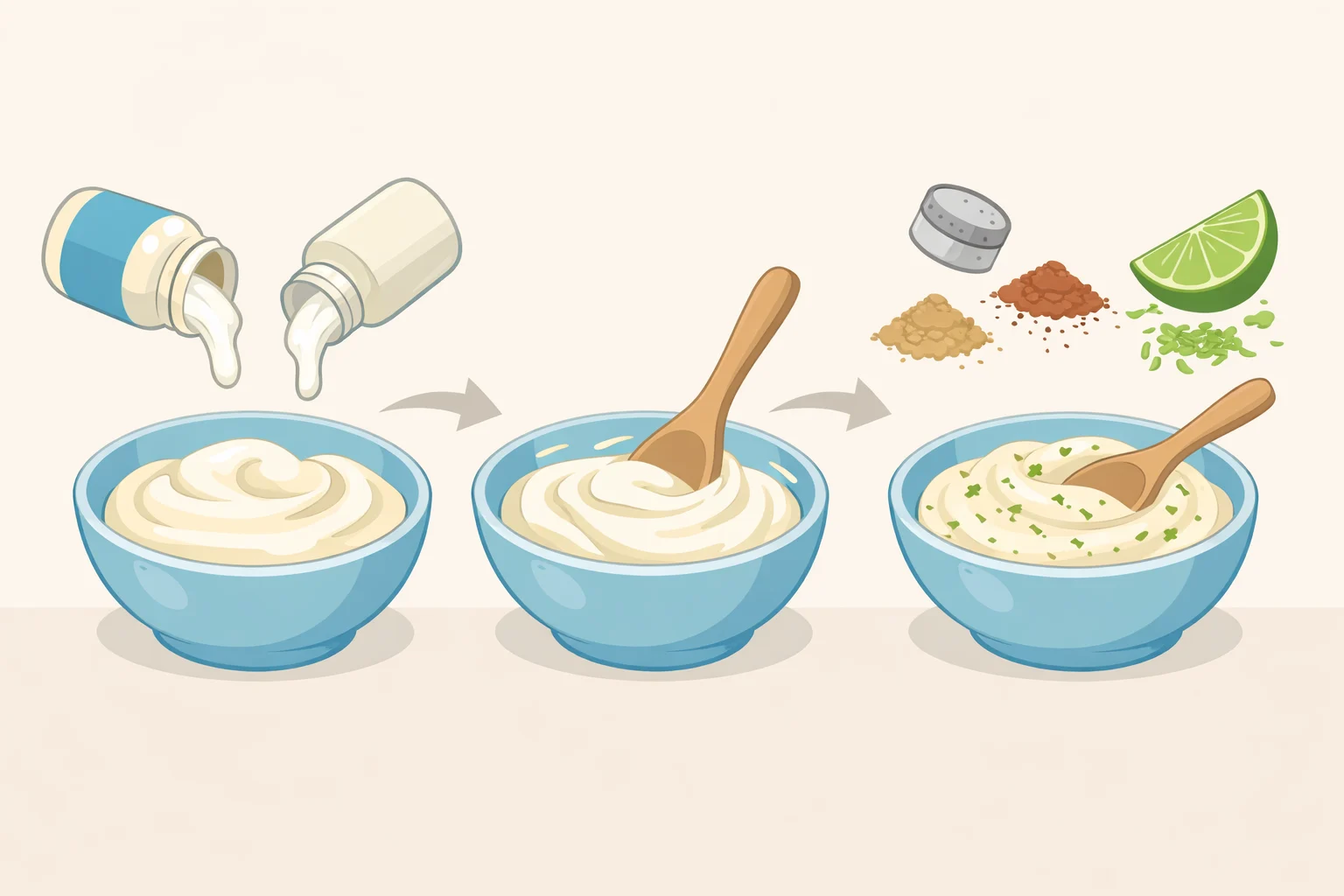
Combine the mayonnaise and crema in a mixing bowl and stir until smooth. These two ingredients do different jobs. The mayonnaise gives the spread its richness and sticking power. The crema adds tang and loosens the texture. Equal parts is the right starting point.
Add the garlic powder, smoked paprika, and chili powder or Tajín. Stir and taste. At this point the spread should be savory, smoky, and rich. If it tastes flat, add a pinch of salt. Stir in the lime zest now; it lifts the flavor without adding any liquid.
Add the lime juice last, and go slowly. Juice loosens the mixture fast. Start with half the lime, stir, and check. You're aiming for the texture of thick Greek yogurt: scoopable but spreadable, not pourable. Once it's too thin, thickening it back up is slow work.
If something goes wrong:
- Too thin: Add mayonnaise a tablespoon at a time. Cheese won't fix this.
- Too thick: Add crema in small amounts, not more juice.
- Tastes flat: Reach for more zest before you reach for salt. Zest does more for brightness here than juice does, and it won't thin the mix.
Keep the crumbled cotija in a wide, shallow dish, large enough to roll a full ear without losing cheese over the sides.
Step 3: Apply and finish
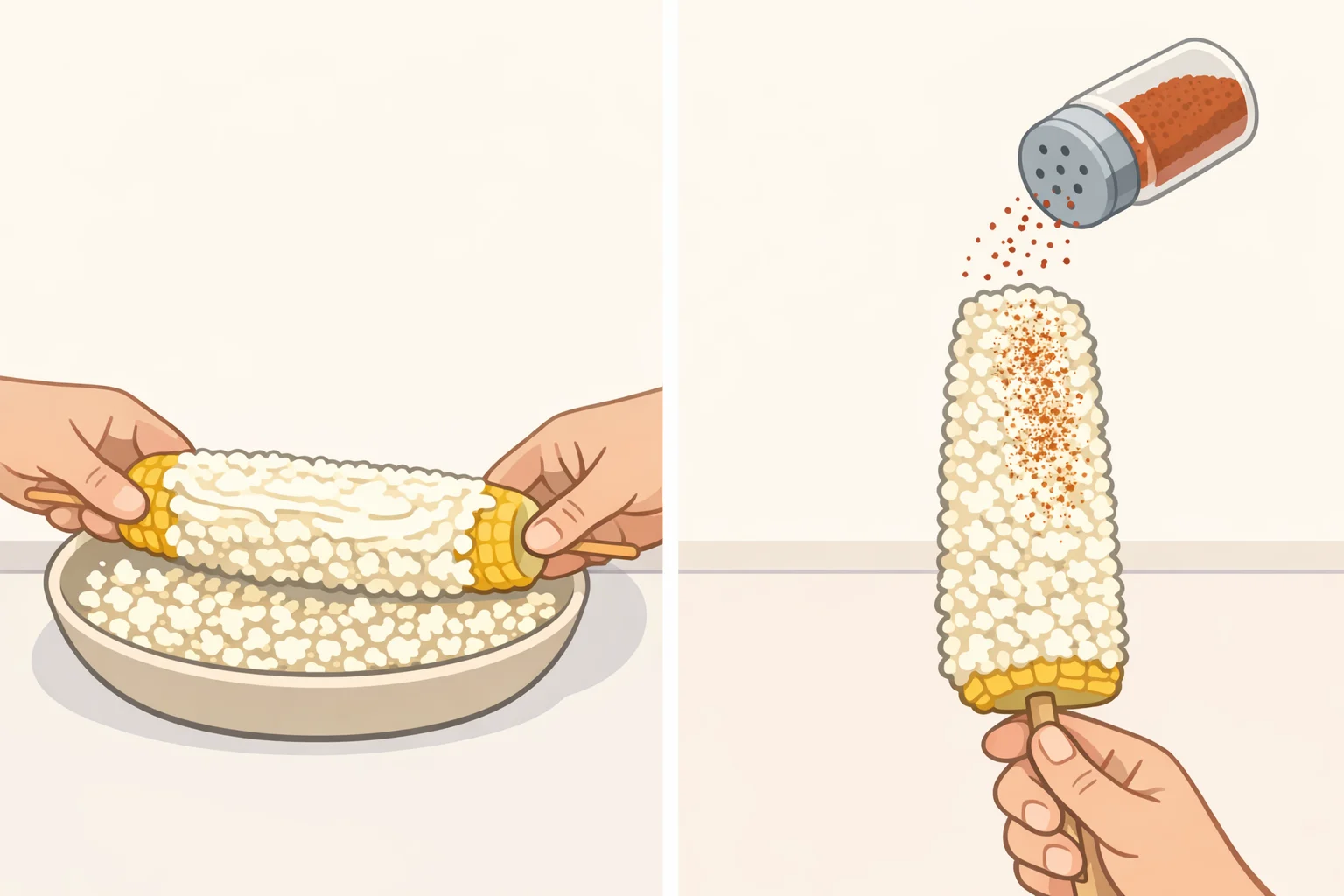
Work fast. The corn needs to be hot when the spread goes on; that's what makes everything stick.
-
Hold the ear by the stem. If you trimmed the stem flush, use a folded paper towel. It's hot, and once the spread is on, it's slippery.
-
Coat the whole ear with the spread. Use a spatula or large spoon and rotate as you go. The ends are easy to miss; be deliberate about them. Go thick rather than thin. A sparse coat dries out fast and doesn't carry enough flavor.
-
Roll the coated ear in cotija immediately, pressing gently so the cheese embeds into the surface. Rotate the full ear. If a section won't hold the cheese, press lightly with your fingers to help it catch.
-
Dust with chili powder or Tajín, a light pass over the cheese layer.
-
Squeeze lime juice over the whole ear right before serving. The acid cuts through the richness of the spread and sharpens the other flavors. Do it last so it doesn't run off during assembly.
-
Scatter torn cilantro if you're using it.
When things go sideways:
- Spread clumps instead of coating: The corn cooled too much before assembly. A short burst in the microwave will bring it back up to temperature.
- Cheese falls off: Either the surface was still wet before spreading, or the corn had cooled. Press more firmly when rolling.
- Kernels are mushy: Start checking at 5 minutes next time and use the fingernail test before adding any more time.
Serve immediately. The spread is best while the corn is still warm.
Variations once you have the base down
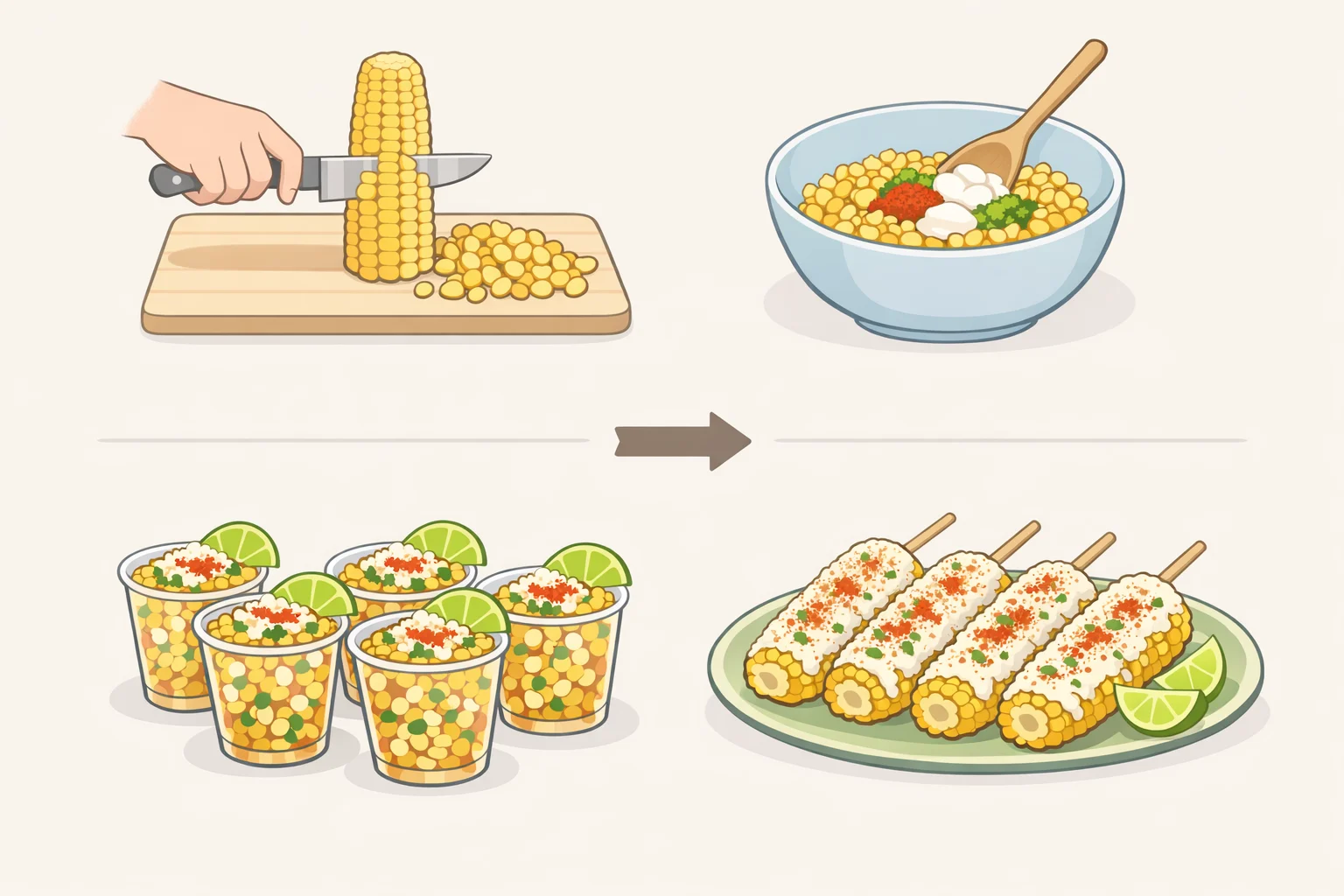
The spread is a template. Once you've made it once, adjustments take seconds.
- Spicier: Add a teaspoon of Valentina or Cholula to the spread and swap some chili powder for cayenne.
- Smokier: Replace the chili powder with chipotle powder. The flavor pulls toward barbecue rather than street food, and it's worth trying.
- Herb-forward: Fold finely minced fresh jalapeño and extra cilantro directly into the spread, not just as garnish.
If you're feeding a crowd, skip coating individual ears and make esquites instead: slice the kernels off the cooked ears, toss them with the spread in a bowl, and serve in cups. It's richer tasting than it sounds, easier to eat standing up, and far more practical than racing to coat a dozen ears before they cool.
A note on scaling up
For a crowd, esquites is the move. Make the spread ahead of time, cook the corn in batches, and assemble to order. The spread keeps in the refrigerator for a couple of days and doubles as a dip for tortilla chips or a sauce for roasted vegetables. That's the next logical use once you've made the corn.