How to grill hot dogs: temperature, timing, and doneness
By the time a grilled hot dog looks done, it may have already split, dried out, or been pulled too early. This guide walks through a three-part method for how to grill hot dogs correctly: a controlled 350–375°F grill, timed 90-second rotations, and a thermometer check that takes about 10 seconds. It covers every decision from thawing to serving, and it works the same way across gas, charcoal, and pellet grills.
The instinct to judge by color, char, and sizzle sound is nearly universal. Roughly 72% of home grillers assess doneness by visual cues alone, per Alibaba LifeTips (early 2026). The problem: meat can change color at 140–155°F, well below the 160°F threshold for ground meat products. Color is not a reliable doneness indicator, according to USDA guidance reinforced across multiple cookout advisories. A beautifully browned hot dog may not be cooked through.
One clarification before starting: most packaged hot dogs sold in grocery stores are already fully cooked during manufacturing. Hitting 160°F on the grill is still the right target for texture and food safety confidence. A thermometer check takes ten seconds and removes all ambiguity.
What you'll need: A grill, an instant-read thermometer (thermocouple types register faster, but any standard model works), and a kitchen timer. If your grill's built-in temperature gauge is unreliable, and many are, a simple infrared surface thermometer solves that problem without much expense.
What temperature to grill hot dogs, and how long to cook them
Video of the Day
The short answer: medium heat, 350–375°F, rotating every 90 seconds, for 8–12 minutes total. Pull each hot dog the moment a thermometer reads 160°F at the center.
Those numbers aren't interchangeable. Temperature determines whether the casing holds; rotation timing determines whether browning is even; the thermometer reading is the only doneness signal worth trusting. The rest of this guide explains why each variable matters and how to execute all three without guesswork.
Video of the Day
Step 1: prep two things that affect the entire cook
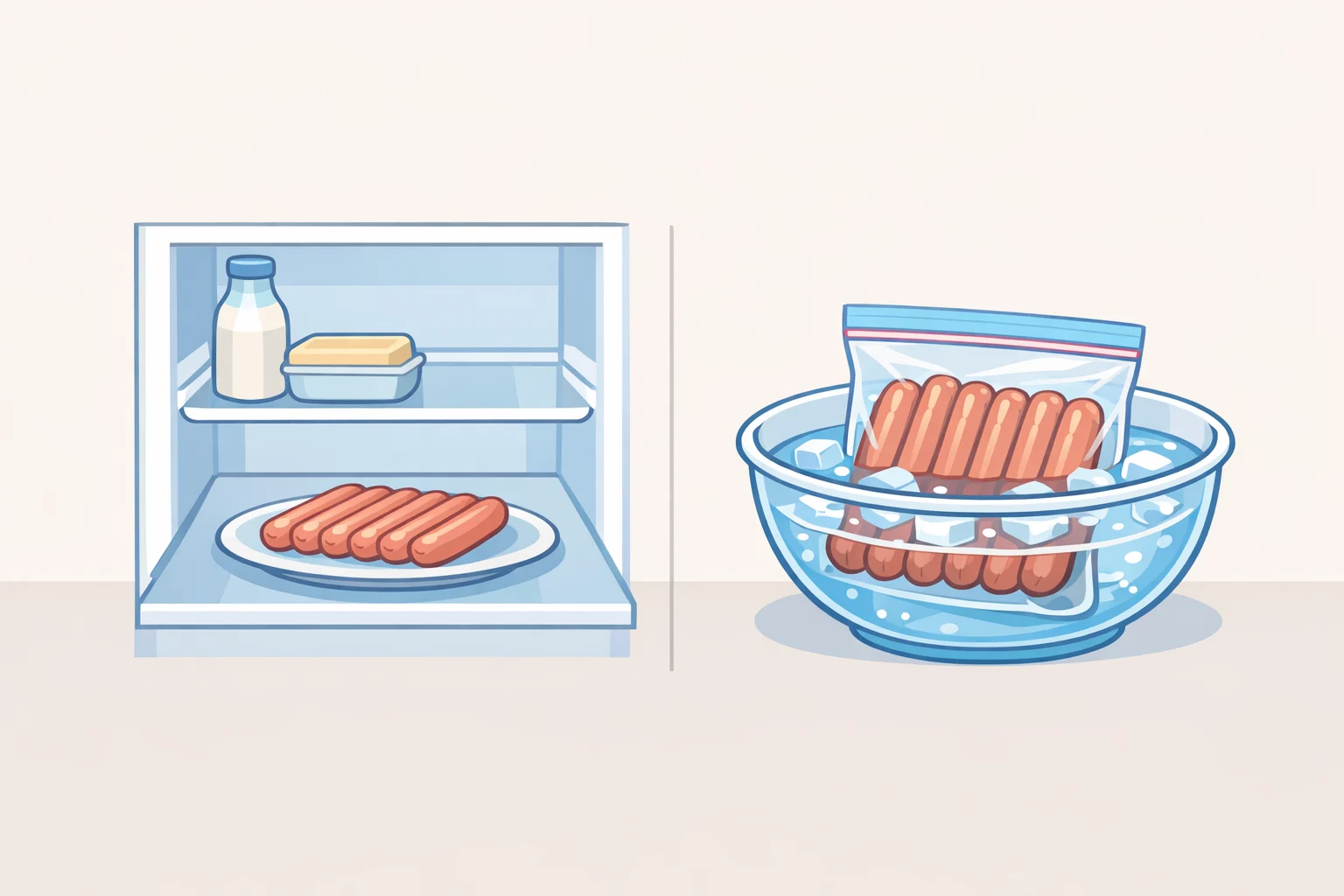
Thaw completely before grilling. Frozen hot dogs should never go directly onto a grill. When the exterior heats faster than the frozen interior can follow, the casing splits or chars before the center reaches temperature. Thaw overnight in the refrigerator, or in a sealed bag submerged in cold water at 40°F or below for up to 30 minutes, consistent with USDA thawing guidance (last summer). Cook immediately after using the cold-water method.
Storing hot dogs unfrozen at 34–38°F is the better long-term choice. Freezing disrupts the internal protein structure and can lead to noticeably more moisture loss during grilling, according to Alibaba LifeTips (early 2026).
Preheat the grill to 350–375°F. This is the range where surface browning develops properly and casing pressure stays manageable. Above 400°F, steam inside the casing builds rapidly; Alibaba LifeTips (early 2026) describes a sharp internal pressure increase within the first 45 seconds at high heat, which is why hot-flame grilling so reliably ends with burst casings. Below 350°F, the cook drags and the Maillard browning reaction stalls. If your grill's dial reads "medium" but you're not certain how accurate that is, verify with an infrared thermometer pointed at the grate surface.
A light pat-dry with a paper towel helps the surface brown faster. An optional pinch of kosher salt applied 15 minutes before grilling is sufficient seasoning for most people. Neither step is mandatory.
Gotcha: skip the fork holes. Poking holes before grilling is a persistent folk remedy for preventing splits. It does the opposite. Each hole creates a weak point where steam can escape uncontrollably, according to Alibaba LifeTips (early 2026). Leave the casing intact.
Step 2: the grill method rotation, timing, and the temperature check
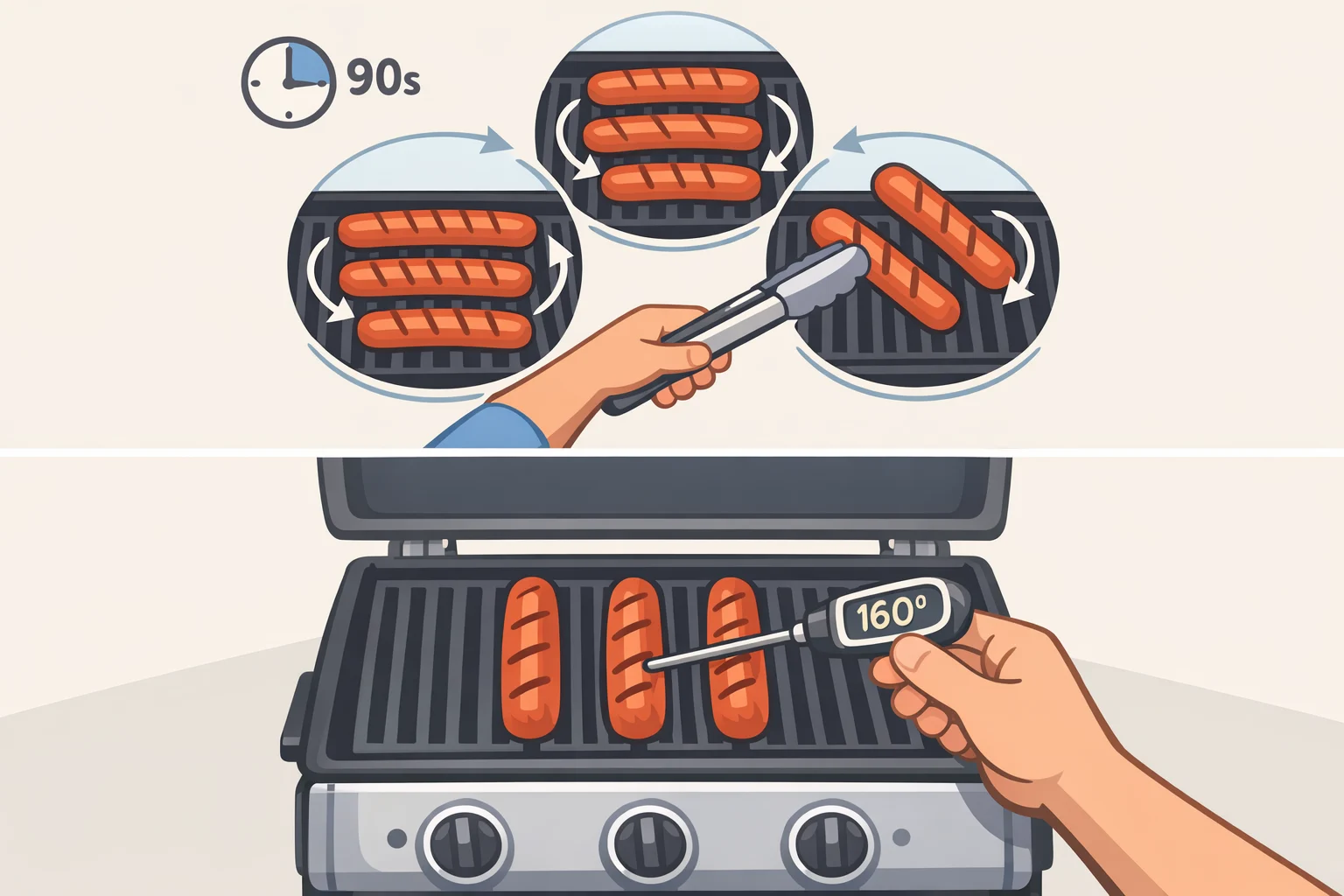
Place hot dogs perpendicular to the flame direction and start a 90-second timer.
Rotate 90° every 90 seconds for 8–12 minutes total. The interval isn't a rough suggestion; it's the specific timing that makes the method work. At around 360°F, 90 seconds allows the exposed surface to reach a stable temperature before rotating, producing even browning without scorching. A comparison of 216 sausages found that rotating every 90 seconds resulted in 92% fewer casing splits than rotating every two minutes, according to Alibaba LifeTips (early 2026). Set the timer and stick to it.
Use the rotation marks to pace the cook: each 90-second turn corresponds to one quadrant of the hot dog's surface. Four rotations covers the full circumference; the remaining time finishes the cook-through. Start checking the thermometer around the 8-minute mark.
The 10-second check. Insert the probe lengthwise into the thickest part of the hot dog, running parallel to the long axis, entering from one end, stopping at the center. Not angled down from the top, and not near the ends where the reading will be artificially low. You're looking for 160°F, which aligns with USDA temperature targets for ground meat products (last summer). Rotate the probe 90° to confirm a consistent reading. Pull each hot dog the moment it hits 160°F; carryover cooking will add another 3–5°F after it comes off the heat, per Alibaba LifeTips (early 2026). Don't wait for the number to climb.
If you don't have a thermocouple thermometer, a standard instant-read works it just takes a few seconds longer to stabilize. Insert it the same way. The only adjustment is patience: hold the probe still until the number settles.
Gotcha: hot dogs lose heat fast. A grilled hot dog can drop from 160°F to around 90°F in roughly four minutes sitting on a plate at room temperature, according to Alibaba LifeTips (early 2026). Serve within 20 minutes. If you're cooking for a crowd and timing is uncertain, hold finished dogs on a warmed tray covered loosely with foil, not sealed, which traps steam and softens the casing.
Optional: pre-poaching. Grilling expert Nathan Gerard told Food Republic (last summer) that keeping hot dogs in water held at 160–180°F for five to seven minutes before grilling reduces splitting risk and shortens grill time to about one to two minutes. Worth considering when cooking large batches. The tradeoff: an extra step, and some flavor compounds can leach into the poaching water. If you go this route, the grill phase is purely for finishing color, char, and smoky flavor not cooking through.
When results are off: a quick troubleshooting guide
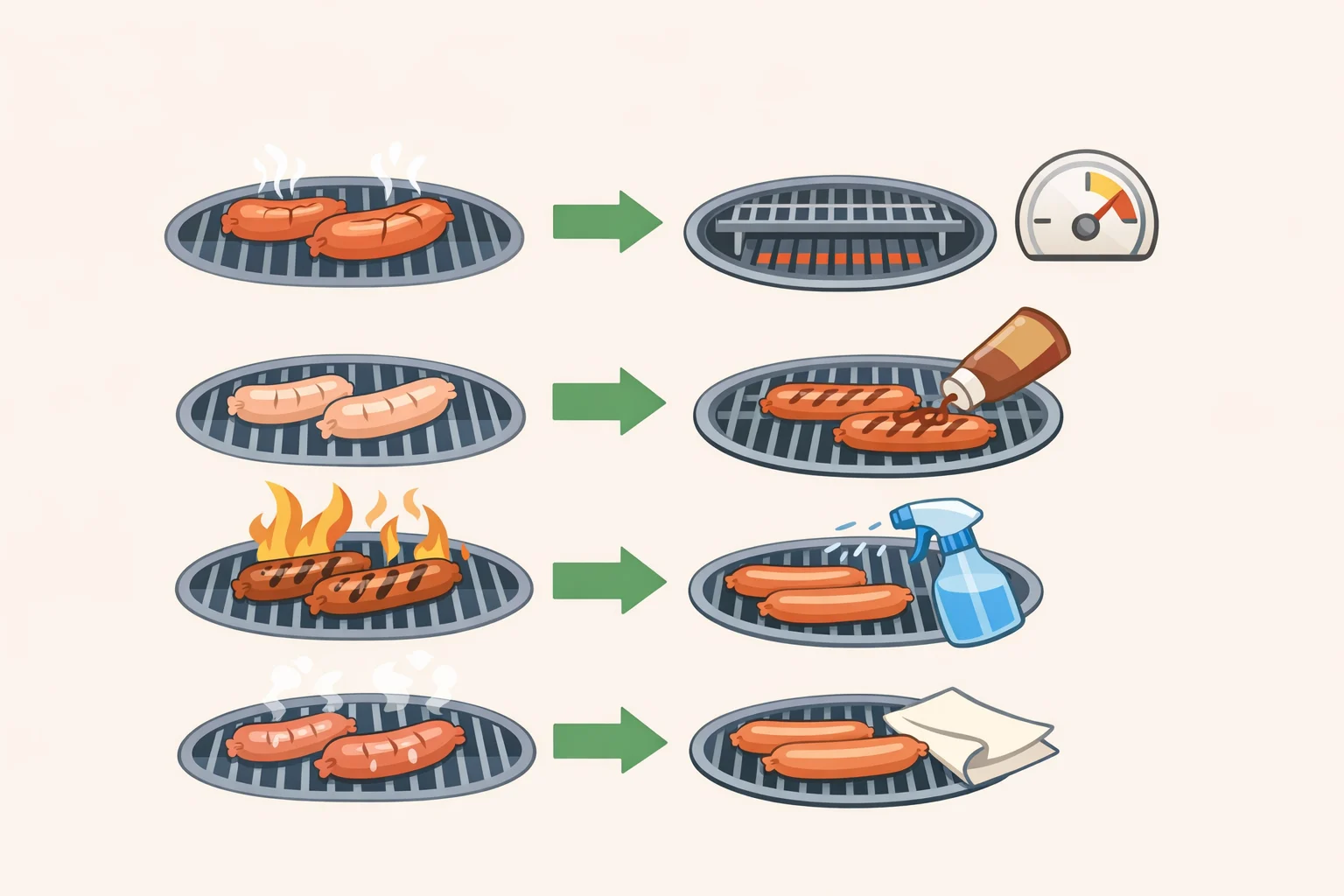
Even with the right method, grills vary. If something's going wrong, the problem usually points back to one of three variables.
Casing splitting before the 8-minute mark. The grill is running hotter than the dial suggests. Verify the grate surface temperature with an infrared thermometer. If it's above 400°F, you're in the pressure-buildup zone. Let the grill cool toward 360°F before the next batch.
Pale dogs after 10 minutes. Either the grill is below range, or the surface was too wet when the hot dogs went on. Pat them drier next time and confirm the grate is actually at 350°F, not just the air temperature above it. A dial reading and a grate reading are often 30–50°F apart.
Uneven browning across the surface. Usually a rotation timing problem. If one side is darker than the rest, the rotations aren't happening on schedule or the grate has a hot spot. Rotate by the timer, not by eye, and shift dogs slightly along the grate if one zone is running visibly hotter.
Consistent undercooking across batches. Check the thermometer itself. Thermocouple probes can drift out of calibration. Verify against an ice-water slurry, which should read 32°F. If it's off by more than a degree or two, recalibrate or replace it before the next cookout.
Serving, storing, and three hacks to stop using
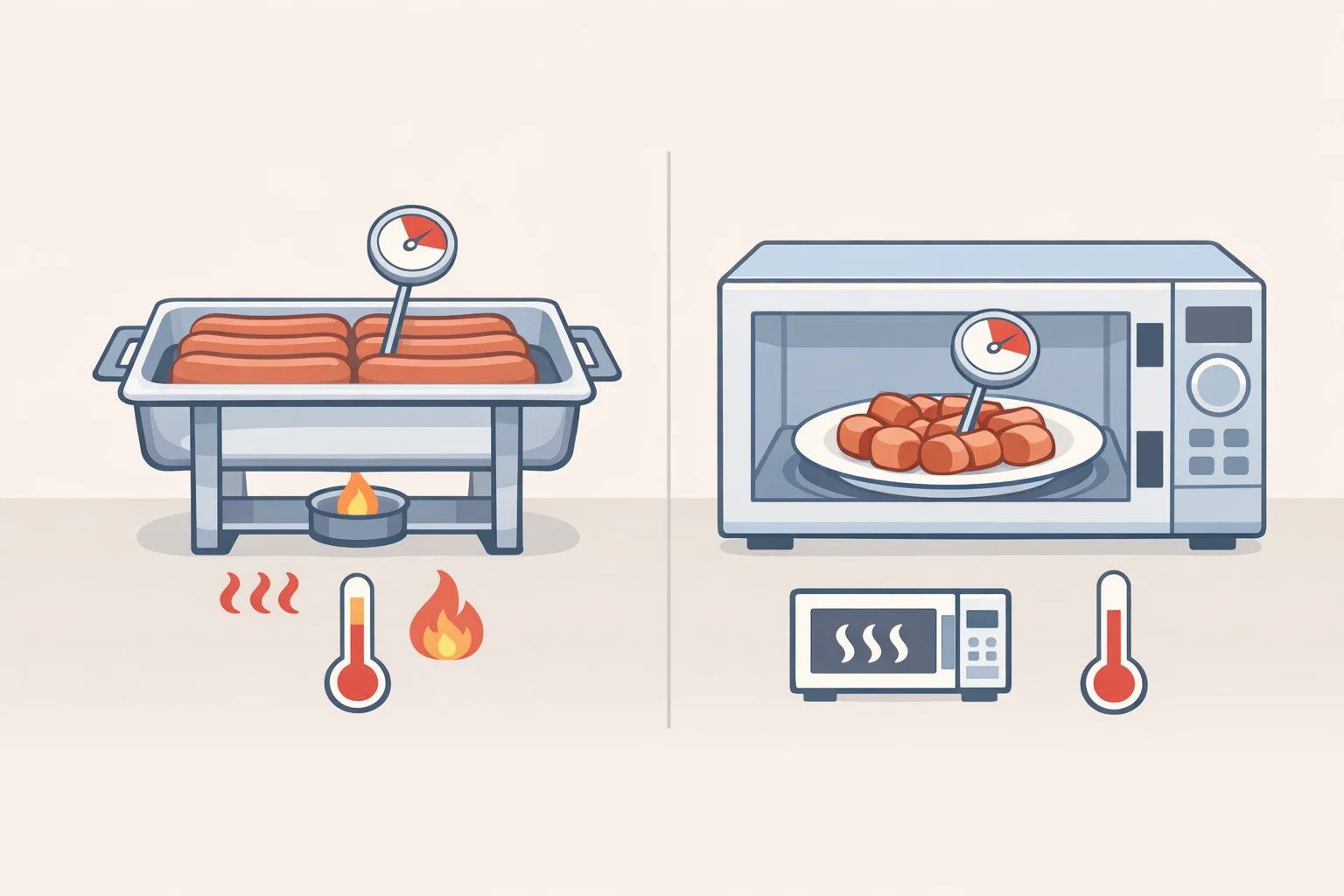
Serving and storage. Once hot dogs are off the grill, the window is short. Keep hot foods at or above 140°F; anything sitting out longer than two hours, or one hour when ambient temperature is above 90°F, should be refrigerated, per USDA food safety guidelines (last summer). Leftovers reheat well at 165°F internally; use reduced microwave power in 30-second increments rather than a single long burst to avoid rubbery texture from uneven heating.
Three hacks to stop using:
- Poking holes. Covered above. Makes splitting worse, not better.
- Grilling from frozen. The casing can burst or char before the center reaches safe temperature. Always thaw first. The USDA advises treating frozen pre-cooked products as raw and cooking them thoroughly (last summer).
- High heat for speed. This method takes 8–12 minutes. That's not long. Blasting hot dogs over high flame to get there in five produces uneven cooking and split casings, not efficiency. Alibaba LifeTips (early 2026) estimates the medium-heat method reduces total grill time by up to 30% compared to low-and-slow or high-flame approaches, because the cook progresses evenly rather than requiring mid-session correction.
One style upgrade worth trying. Allrecipes (last year) covers spiral-cutting: thread a hot dog on a skewer and make a continuous spiral cut before grilling. It expands surface area for more browning, makes the hot dog cook slightly faster, and gives toppings more grip. It's a presentation and flavor upgrade, not a technique change. The temperature target and rotation interval stay the same.
What to check if results vary batch to batch
The method here 350–375°F grill, 90-second timed rotations, thermometer pulled at 160°F produces consistent browning, intact casings, and a reliable doneness signal. The one variable it can't control is how accurately your grill holds temperature. A grill running 30°F hotter than its dial suggests changes every timing assumption in this guide.
If something's still off after working through the troubleshooting steps above, grate temperature calibration is the most useful diagnostic. Verify it before the next cookout. Cross-contamination, hand washing, and keeping other foods out of the danger zone all matter on the same day you're grilling dogs the USDA's broader cookout guidance covers all of it. The thermometer handles the hot dogs. Everything else is the context around it.