Do Canned Vegetables Go Bad? Store-Bought vs. Home-Canned
That can of corn buried behind the soup with a "Best By" date from two years ago is almost certainly fine. The jar of home-canned green beans someone gave you at the holidays is a different question entirely, and one worth taking seriously. So do canned vegetables go bad? Yes, eventually, but for store-bought cans, the variable that actually determines safety is physical condition, not the date on the label. If you're wondering whether canned vegetables are safe to eat after the expiration date, the answer depends entirely on whether they're store-bought or home-canned.
Here's the quick version:
- Store-bought, low-acid cans (corn, green beans, peas): safe for 2 to 5 years in an intact, properly stored can, per Clemson's Home & Garden Information Center
- Store-bought, high-acid cans (tomatoes, pickled vegetables): best quality within 12 to 18 months, per UGA's College of Family and Consumer Sciences
- Home-canned vegetables: use within one year for best quality, but whether the jar is safe has nothing to do with how long it's been on the shelf
Every date label on a store-bought can is a quality signal, not a safety deadline. The only food in the U.S. legally required to carry a true expiration date is infant formula, according to UGA FACS. Everything else, including every can of vegetables in your pantry, is labeled voluntarily, and those labels describe peak quality rather than the point at which a product becomes unsafe.
That distinction has real consequences. USDA figures, cited by UGA FACS, put U.S. food waste at 30 to 40 percent of the food supply, and date labels can lead people to throw away perfectly good food out of caution. Both FSIS and FDA recommend voluntary use of "Best if Used By" language, a phrase that signals quality decline while making clear the product may still be consumed, per FSIS. That phrasing doesn't appear on every can yet, but it's the standard regulators are pushing the industry toward.
What follows covers how to read shelf life for commercially canned vegetables, which physical conditions actually create risk, and why home-canned vegetables operate under a completely different, and more serious, set of rules.
Store-bought cans: what the date means and when to actually worry
Video of the Day
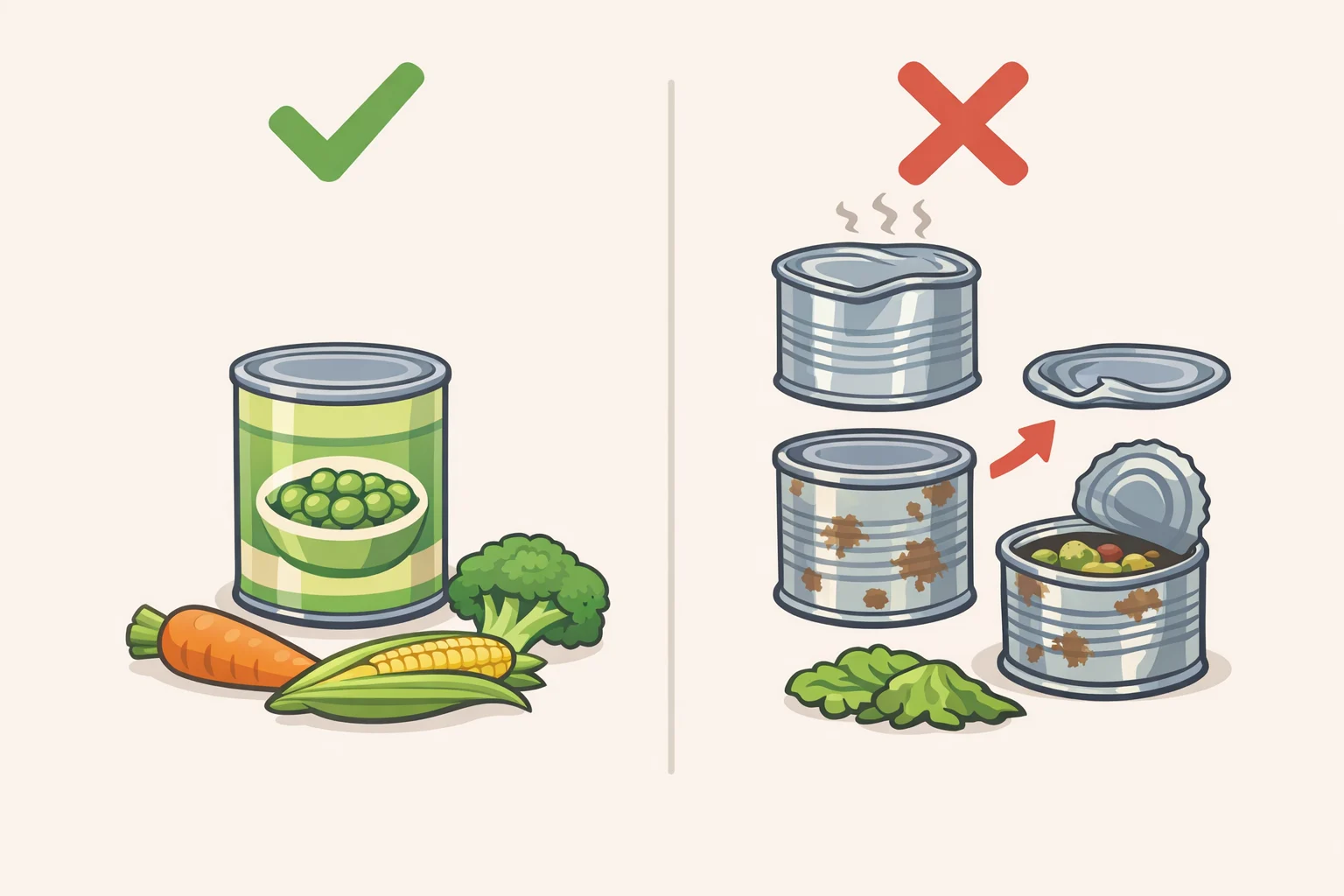
Acid content is the primary driver of shelf life for commercial cans, more than anything printed on the label. High-acid products, such as canned tomatoes and pickled vegetables, hold their best quality for 12 to 18 months. Low-acid vegetables like corn, green beans, and peas can remain safe and usable for two to five years in an intact, undamaged can stored in a cool, dry place, per Clemson HGIC. For peak flavor and texture, Clemson recommends using commercial cans within two years. Quality degrades well before safety does, as long as the can is physically sound.
Think of the date on a can of corn the way you'd think of the "best enjoyed by" note on a bottle of olive oil. It marks peak experience, not a safety deadline. As food safety researchers at UGA FACS note, canned goods buried in a pantry may still be perfectly fine past the printed date. You might just notice changes in flavor or color over time.
The conditions that create real risk for commercial cans aren't age-related: they're physical. A bulging lid is the most serious warning sign and can indicate bacterial activity inside the can. Dented cans are a concern too, particularly when the dent involves a seam or the rim, where the sterile seal can be compromised, per UGA FACS. A minor surface dent on the body of the can, away from any seam, is generally cosmetic. A dent that bends or creases a seam is not. Leaking cans should also be discarded without opening.
For commercial cans that are physically intact, sensory evaluation at the moment of opening is a reasonable guide. Off odor, mold, foam, or spurting liquid all warrant disposal, per CSU Extension. This sensory rule applies to commercially produced cans only. It does not carry over to home-canned vegetables, and that distinction matters more than most people expect.
Once opened, canned vegetables become perishable immediately. Transfer leftovers to a covered container and refrigerate; most canned vegetables stay safe for up to three days after opening, per Clemson HGIC.
Video of the Day
How to tell if canned vegetables are spoiled
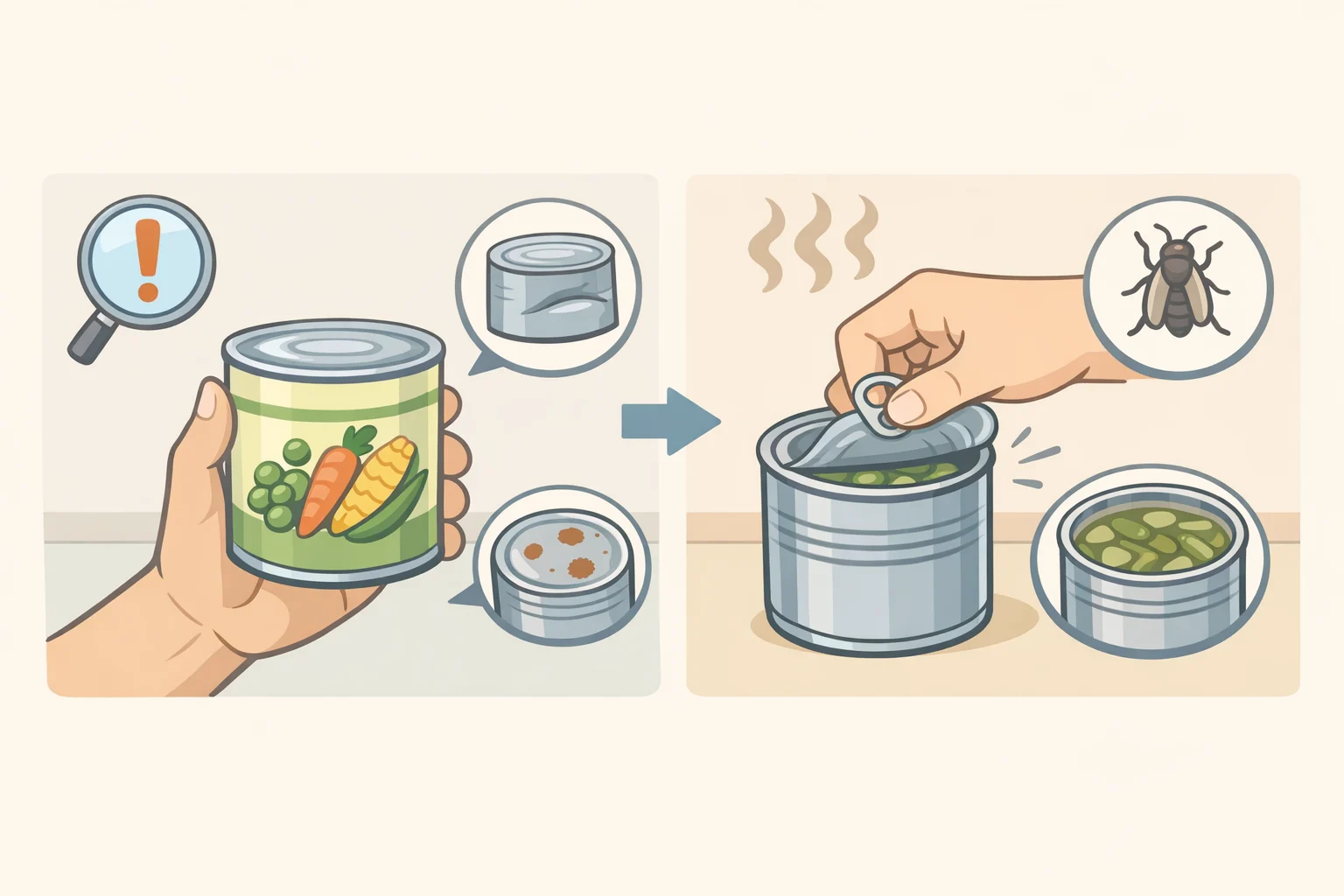
The inspection process is two steps: check the container before you open it, then use your senses once you do.
If it's store-bought, check the can first:
- Intact can, date passed, stored cool and dry: likely safe; evaluate on opening
- Bulging lid, dent at a seam or rim, or leaking: discard without opening
- Off smell, foam, mold, or spurting liquid on opening: discard
- Opened leftovers: covered container, refrigerate, use within 3 days
Store-bought canned vegetables that have passed their date but show none of those physical warning signs are often still perfectly edible. The quality, particularly flavor and color, may have declined, per Clemson HGIC. That's a reason to manage your pantry rotation. It's not a reason to throw the can away unexamined.
If it's home-canned, check the process first (more on this below):
- Unknown or water-bath processing: treat as unsafe regardless of appearance
- Bulging lid, spurting liquid, foam, or off odor: dispose safely without tasting
Home-canned vegetables: why the rules are completely different
Home-canned vegetables should be used within one year for best quality, per Clemson HGIC. But that shelf life number is almost beside the point. A jar processed incorrectly is potentially dangerous at any age. A jar processed correctly is safe within that window. The clock matters far less than what happened before the jar was sealed.
Improperly home-canned foods are the most common cause of botulism outbreaks in the United States, and low-acid vegetables, including green beans, corn, beets, spinach, and asparagus, are the most frequent culprit, according to CSU Extension. Clostridium botulinum, the organism responsible, thrives in low-acid, low-oxygen, moist environments. That describes the inside of a sealed jar almost exactly.
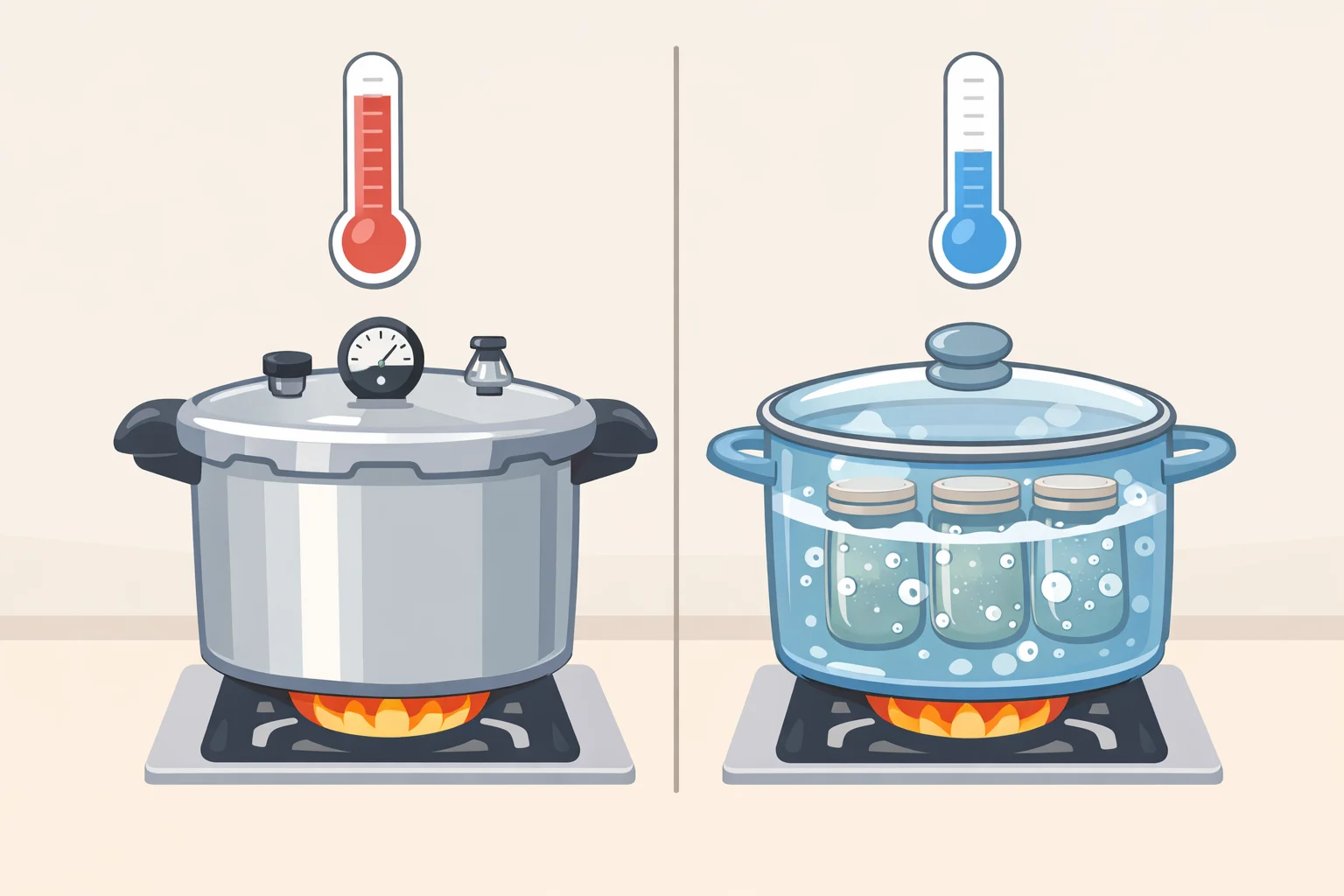
Destroying botulism spores requires sustained heat of 240°F, achievable only with a pressure canner. A boiling water bath reaches 212°F, which is not sufficient. Using a water bath to process low-acid vegetables is explicitly unsafe, per CSU Extension. Think of pressure canning the way you'd think of pasteurization: the right temperature for the right duration isn't a stylistic preference. It's what makes the process work at all.
Here's what makes this especially serious: low-acid home-canned vegetables can harbor botulism toxin without any visible sign of a problem. No bulging lid. No off odor. No change in color or texture. Sensory evaluation, the reliable fallback for commercial cans, cannot reliably rule out botulism here, per CSU Extension. Symptoms of foodborne botulism usually appear within 12 to 36 hours of consuming contaminated food, and unless treatment is initiated promptly at the onset of symptoms, death may result within three to seven days, per CSU Extension. All forms of botulism are classified as medical emergencies.
The practical rule for home-canned jars comes down to three scenarios:
-
You canned it yourself using a tested recipe and a pressure canner at the correct pressure for your altitude. The jar is trustworthy within one year. As an added precaution, boil low-acid home-canned vegetables for 10 minutes before serving, adding one minute per 1,000 feet above sea level, per CSU Extension.
-
The jar was processed in a boiling water bath. Do not eat the contents. Dispose of them safely by boiling the contents for 30 minutes first, so any toxin present cannot harm people, pets, or wildlife, per CSU Extension.
-
Someone gave you the jar and you can't confirm how it was processed. Treat it as unsafe. That's not excessive caution. When contamination is invisible and the consequences are severe, it's the only defensible position. A home-canned jar of uncertain origin is not pantry-stable food.
Decision reference, home-canned jars:
- Pressure canned with tested recipe at correct altitude pressure, within one year: boil 10 minutes before serving (add 1 minute per 1,000 feet elevation)
- Processed in a boiling water bath: do not eat; dispose safely by boiling contents 30 minutes first
- Jar failed to seal: treat as perishable; reprocess within 24 hours with a new lid, or discard
- Unknown processing method: treat as unsafe; dispose safely
- Any jar with bulging lid, spurting liquid, foam, or off odor: dispose safely without tasting
One mental model for both tracks
Two categories. Two completely different safety logics. Conflating them is where real mistakes happen.
For commercial cans: check the container, then trust your senses. An intact, undamaged can stored in a cool, dry place is likely safe, up to five years for low-acid vegetables and 12 to 18 months for high-acid ones, per UGA FACS and Clemson HGIC. The date tells you about quality. The can's condition tells you about safety.
For home-canned low-acid vegetables: verify the process, not the appearance. Because botulism contamination leaves no visible or smell-based trace, per CSU Extension, "it looks and smells fine" carries no weight as a safety check. The only question that matters is whether the jar was pressure canned correctly using a tested recipe.
For anyone who wants to go deeper, the USDA's National Center for Home Food Preservation publishes tested canning recipes and pressure guidelines organized by vegetable type and altitude. The USDA FoodKeeper app covers storage timelines across a wide range of products and is worth keeping on hand.