Does rosé need to stay cold once chilled: sealed vs. open
The bottle of rosé sitting on your counter right now is not an emergency. Food scientist Don Schaffner confirmed to The Kitchn this week that moving a chilled bottle back to room temperature carries no food safety risk whatsoever. Rosé is not a perishable in the way milk or raw chicken is.
So does rosé need to stay cold once chilled? Not for safety reasons. But if you care how it tastes, the answer splits into two distinct cases depending on whether the bottle is sealed or open. A single trip from fridge to counter is unlikely to cause meaningful damage. Repeated temperature cycling across multiple days is a different matter. And once the cork comes out, a faster, stricter clock takes over entirely.
For a sealed bottle, can chilled wine go back to room temperature?
Video of the Day
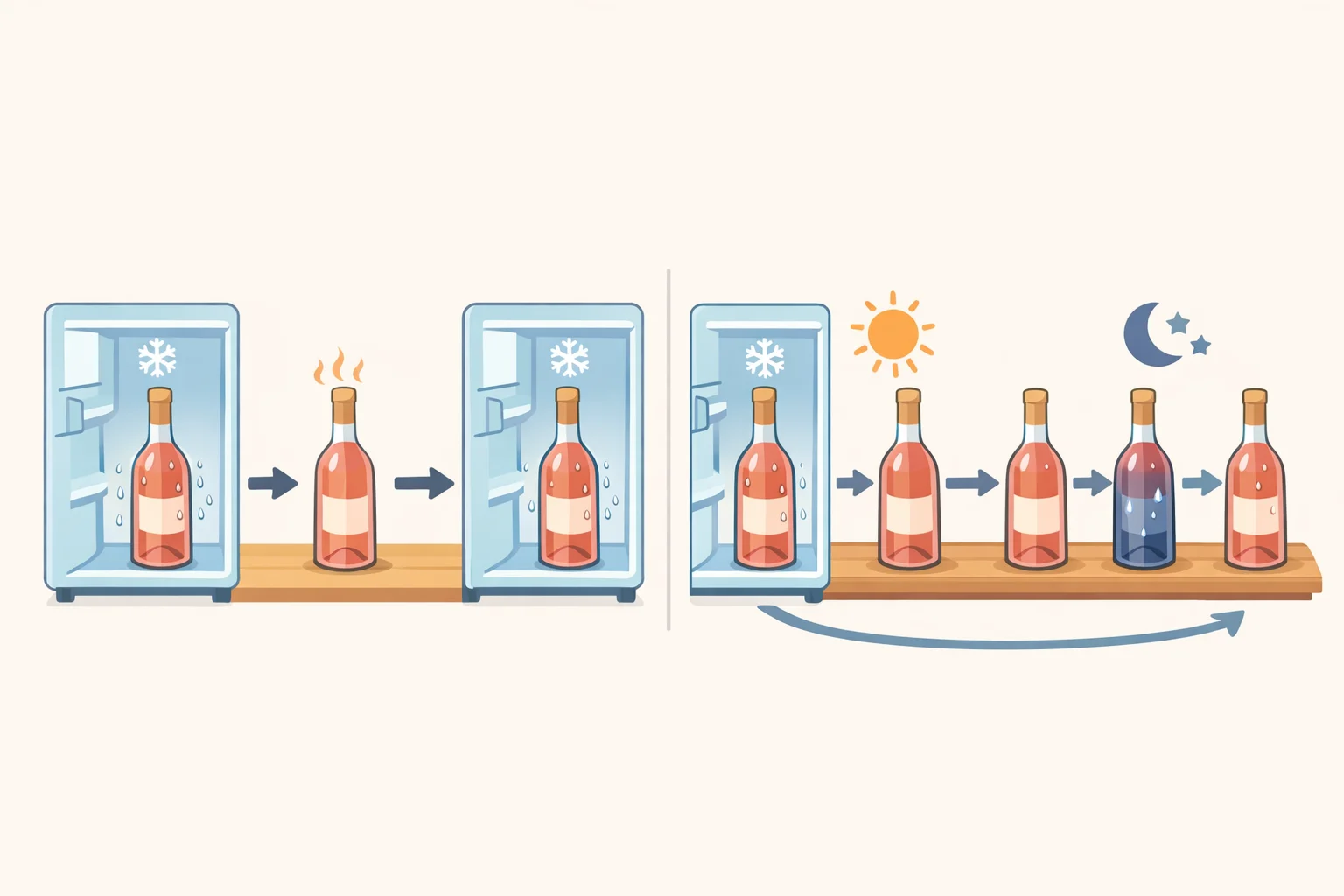
Start with what the research actually says, because it's more reassuring than most wine folklore suggests.
A peer-reviewed study on refrigerated wine storage found that small temperature deviations from ordinary fridge use door openings, brief fluctuations were negligible in terms of measurable wine change. The study examined the kind of minor, repeated swings that happen when a refrigerator is opened several times a day. Those registered as essentially harmless.
What the same study identified as genuinely damaging was a different pattern: low-interval temperature fluctuations sustained over time. When a bottle cycled repeatedly between warmer and cooler temperatures across days of storage, specific aging reactions accelerated. The two culprits are ester hydrolysis and monoterpene degradation, the processes that strip rosé of its fresh fruit and floral character. The mechanism follows the Arrhenius equation: reaction rates increase exponentially as temperature rises, so each cycle compounds the previous one rather than simply adding to it.
That said, the study tested small fluctuations within refrigerated cabinet storage, not a full counter warm-up and back. The finding that brief deviations are negligible, combined with Schaffner's no-safety-risk guidance, supports the practical inference that a single round trip to the counter is unlikely to matter. That's a reasonable conclusion from the evidence, not a measured threshold the research explicitly tested. A bottle that made one trip this week is in a meaningfully different position than one making the same trip every other day.
The principle The Kitchn reported this week is straightforward: leave wine wherever it started until you're ready to serve it. If it came from the fridge, keep it there. If it's been stored at a stable room temperature, leave it there. Consistency is what you're protecting, not any particular number on a thermometer.
How to store rosé after chilling: serving temperature is a separate question
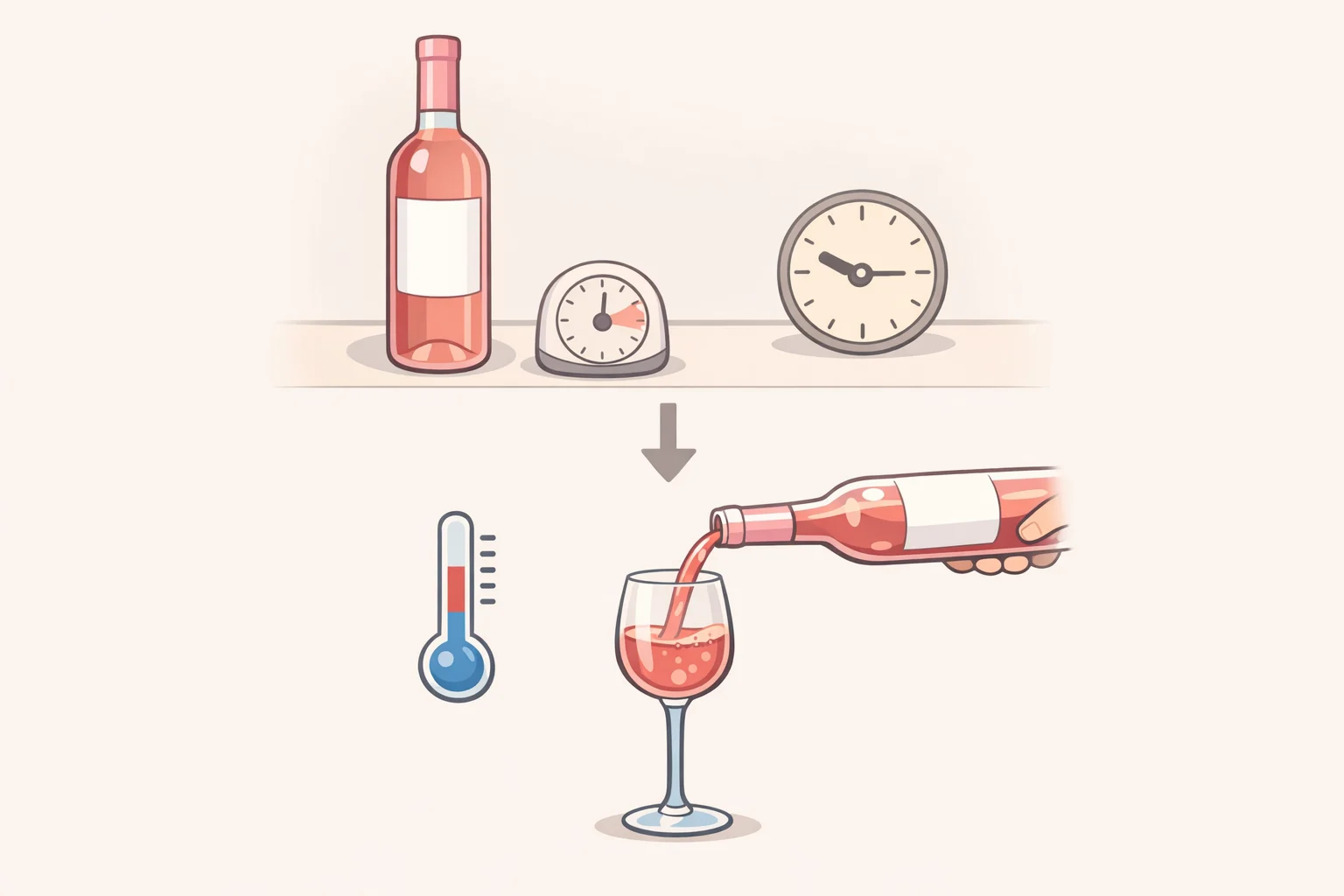
There's a practical distinction worth drawing here. Storage temperature and serving temperature are not the same thing, and treating them as interchangeable creates unnecessary anxiety.
Rosé is best poured around 8 to 12°C (46 to 54°F), per Rosehill Wine Cellars. Served too warm, it goes flat and soft, losing the crispness that makes it worth drinking. Pulled straight from a very cold fridge, it can actually be a touch too cold; ten or fifteen minutes on the counter before pouring is entirely reasonable. That short rest is not the same as leaving the bottle out for two hours before guests arrive, at which point the issue shifts from serving temperature to serving an already-warm wine.
Think of it this way: two different decisions are in play. The first is how you store the bottle before it's opened. The second is how cold it is when it hits the glass. Both matter, but they're governed by different considerations.
For anyone holding bottles over weeks rather than days, a separate factor enters the picture. A storage study found that the most detrimental conditions for rosé quality over a multi-month period were higher temperature combined with clear glass bottles under fluorescent light. Changes in aromatics, color, and phenolic composition were detectable at three months and more pronounced at six. Dark and cool storage outperforms bright and merely cold when you're thinking in terms of weeks. For the typical weekend scenario, this matters less, but if you're holding a case through summer, it's worth keeping in mind.
Video of the Day
Should rosé stay refrigerated after opening?
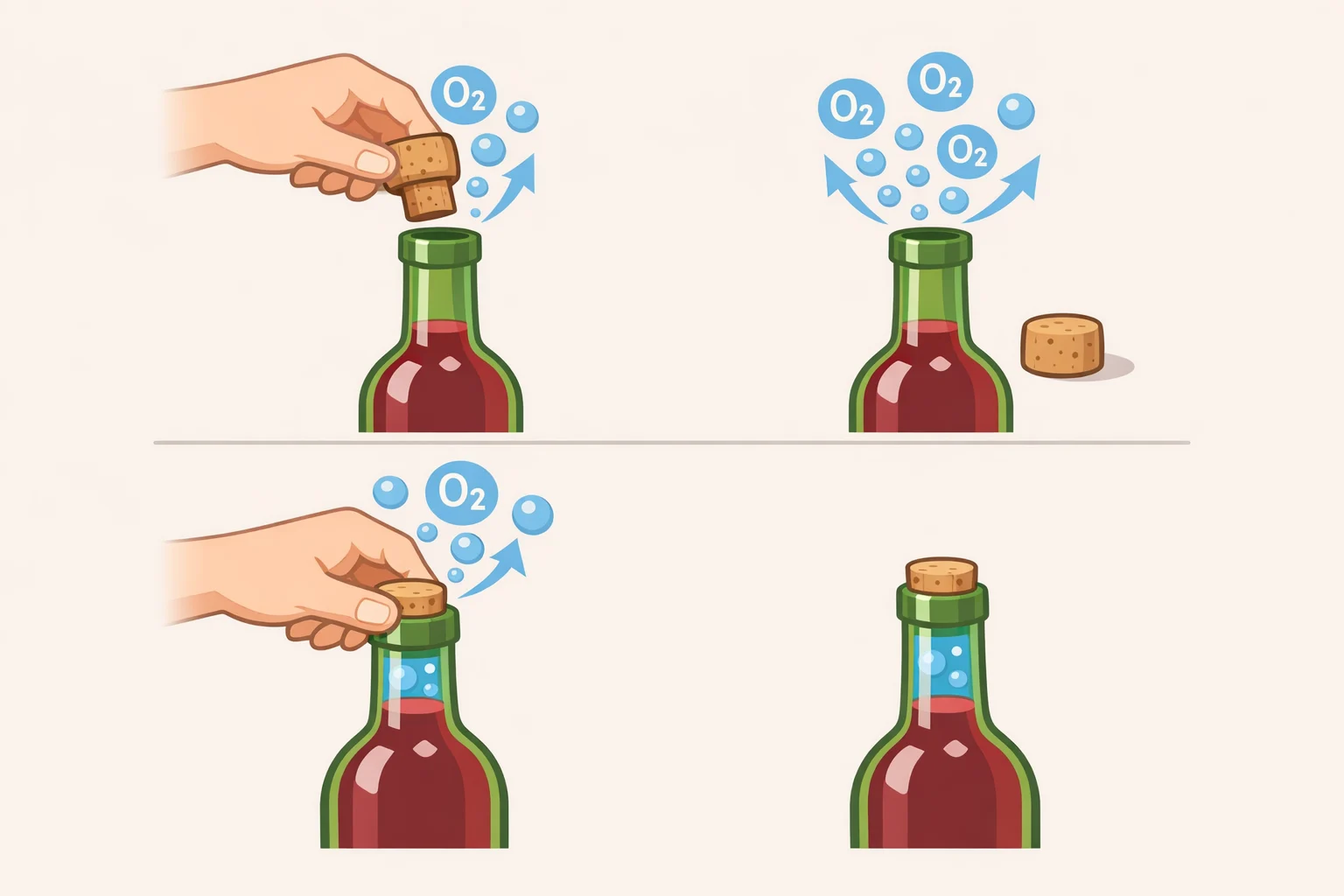
Yes, firmly. An opened bottle is operating under a different set of constraints than a sealed one, and the margin for error is narrower.
Oxidation is now the primary threat. Shelf life after opening depends on alcohol level, tannins, and acidity, with higher levels of each helping to slow degradation, according to Food & Wine. For low-alcohol whites and rosés specifically, that window runs to about two to three days. Rosé tends to have less tannic protection than fuller-bodied reds, which is part of why it fades faster once oxygen enters the picture.
Refrigeration slows that degradation without stopping it, the same way cold air slows a cut apple from browning without preventing it entirely. Each time the bottle is uncorked, a fresh dose of oxygen enters on top of whatever was already inside. "The more times you open the wine, the more oxygen you are letting in," as Food & Wine reported earlier this year. The two-to-three day window runs from the moment the cork first came out; it doesn't reset between pours.
The guidance from Food & Wine is plain: seal it, chill it, and get to it within a few days. Re-cork immediately after pouring, put it back in the fridge, and don't let it sit out while dinner conversation drifts.
Reading the signs
Fresh rosé smells like fruit you'd want to eat, per Food & Wine. When it's gone off, the aroma shifts to something bruised, muted, or faintly vinegary. On the palate, wine past its prime loses flavor intensity and lands "thin and empty" rather than crisp. Trust your nose before the first pour if the bottle has been open for a few days. If it smells wrong, it is wrong.
It's also worth understanding what you're actually smelling for, because "oxidized" can mean different things at different stages. Early oxidation tends to mute fruit aromas and flatten the wine's brightness without making it smell outright bad. Later-stage oxidation is what produces that vinegary quality. By the time a wine smells like vinegar, it's well past salvageable. The earlier, flatter stage is a judgment call, drinkable for some purposes, not ideal.
Common scenarios for an opened bottle
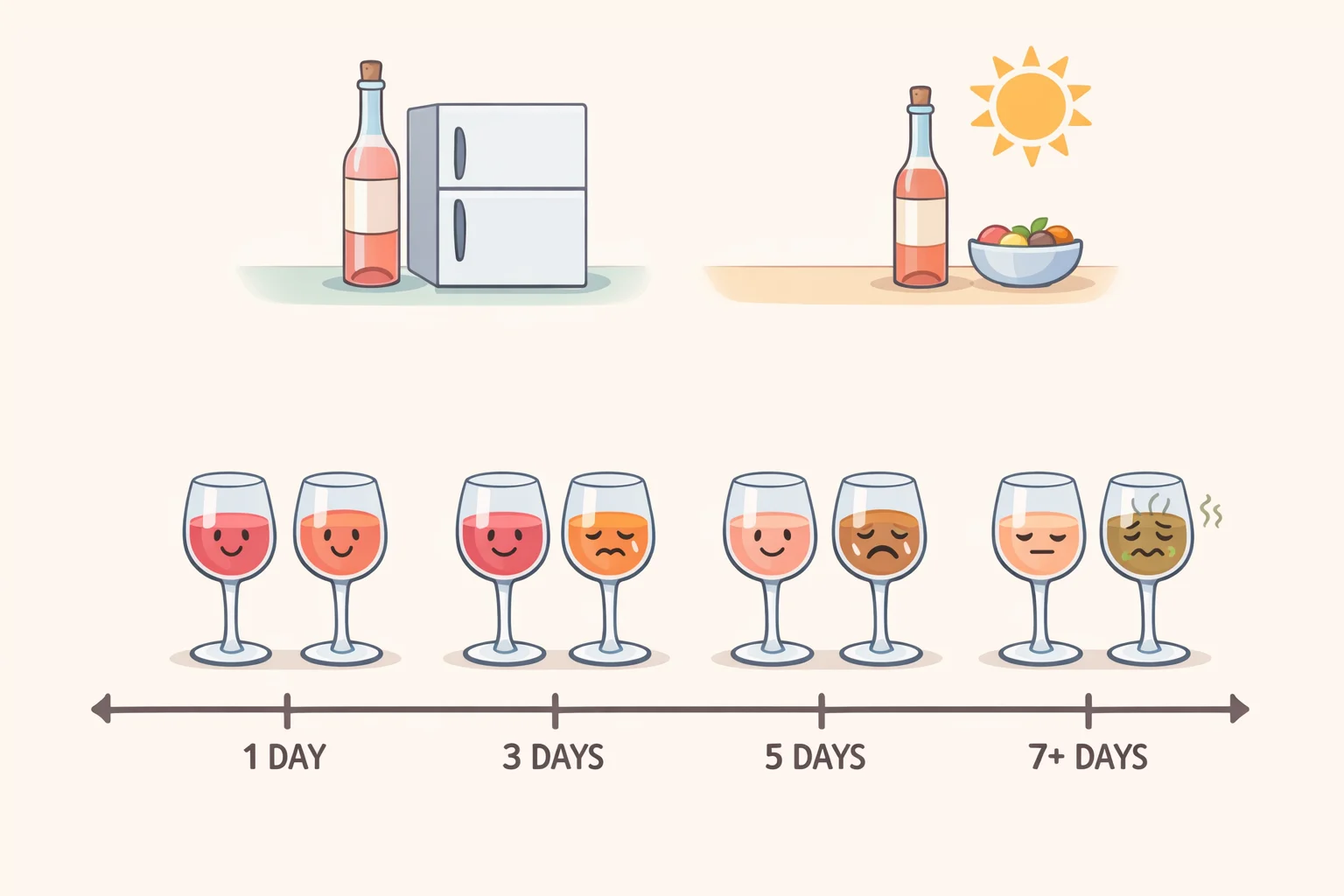
- Re-corked and refrigerated the same night: Your best outcome. One to two more days as a practical target, with the full two-to-three day window as the outer limit.
- Left out overnight, uncorked: Room temperature plus sustained oxygen exposure does real damage. Smell it carefully before serving; don't assume it's fine because it looks fine.
- Opened repeatedly over several days: Each uncorking adds oxygen on top of the last. The two-to-three day clock doesn't reset between pours, and a bottle opened four times over four days has had considerably more air contact than one opened once.
- Sitting in a clear bottle under bright kitchen light: The storage study found that combination, higher temperature, clear glass, fluorescent light, to be the most detrimental set of conditions for rosé quality over months. A half-finished bottle parked on a sunny counter is collecting both heat and light damage simultaneously. Move it to the fridge.
What the Arrhenius equation has to do with your wine rack
This might seem like an unnecessary detour into chemistry, but it's actually the cleanest explanation for why consistent storage matters more than any single temperature event.
The Arrhenius equation, which the refrigerated storage study used to explain its findings, describes the relationship between temperature and the rate of chemical reactions. As temperature rises, reaction rates increase exponentially, not proportionally. A wine that spends an hour at 25°C (77°F) doesn't age at twice the rate it would at 12°C (54°F); it ages considerably faster than that, because the relationship is exponential, not linear.
The practical implication is that small, repeated temperature swings accumulate damage faster than intuition suggests. A bottle that goes fridge-to-counter-to-fridge three times in a week has experienced more cumulative aging pressure than one that sat in a slightly warm room at a stable temperature. The second bottle held a consistent temperature; the first kept triggering accelerated reaction rates each time it warmed.
This is also why wine cellars and dedicated wine fridges earn their keep. The goal isn't just cool storage, it's stable cool storage. A regular kitchen refrigerator works fine for short-term chilling, but its temperature fluctuates more than a dedicated wine fridge, and the vibration from the compressor adds another minor stressor the study noted as worth monitoring. For a bottle you're finishing this weekend, none of that rises to the level of concern. For a case you're holding for months, the difference becomes measurable.
The two questions that actually settle it
Safety is not the question. Schaffner's guidance via The Kitchn this week is unambiguous: no temperature handling of wine poses a food safety risk.
Everything else comes down to two variables. First: how many times has a sealed bottle cycled between warm and cold? Once is fine; repeatedly across multiple days is where quality slips. Second: how many days have passed since an opened bottle was first uncorked? Past three days, you're drinking on borrowed time.
If it's unopened, leave it where it started. If it's open, recork it, refrigerate it, and drink it within a few days. As Schaffner put it, quoted by The Kitchn: "life's too short to drink bad wine." The fridge isn't protecting you from a health hazard. It's protecting the reason you bought the bottle.