Storage items that are a waste of money: declutter first
The pattern is familiar enough to be a cliché. Cluttered home, trip to the store, cart full of matching bins and pantry decanters and decorative baskets. Everything gets organized. The clutter comes back. The bins get blamed. But the bins weren't the problem. Buying them before doing anything else was, and that single sequencing error is responsible for most storage items that are a waste of money.
Two professional organizers make this case in detail, and their guidance converges on the same diagnosis. Cathy Orr, co-founder of The Uncluttered Life, calls buying bins before decluttering "one of the biggest culprits of chaos" in the home (The Spruce, earlier this year). Professional organizer Sarah puts it as a design principle: organizing is not about buying more stuff, but about choosing the right tools that make daily life easier to maintain, and you cannot identify the right tools until you know what you're keeping (Life Simplified with Sarah, earlier this year).
The argument here is not that storage products are worthless. It's that the products most often labeled a waste share the same predictable pattern: purchased before decluttering, chosen for looks over function, too specific or too small to hold up under real use, or deployed to postpone a decision rather than complete one. The fix is a better sequence, not a better bin.
Why storage bins are a waste of money when you buy them too early
Video of the Day
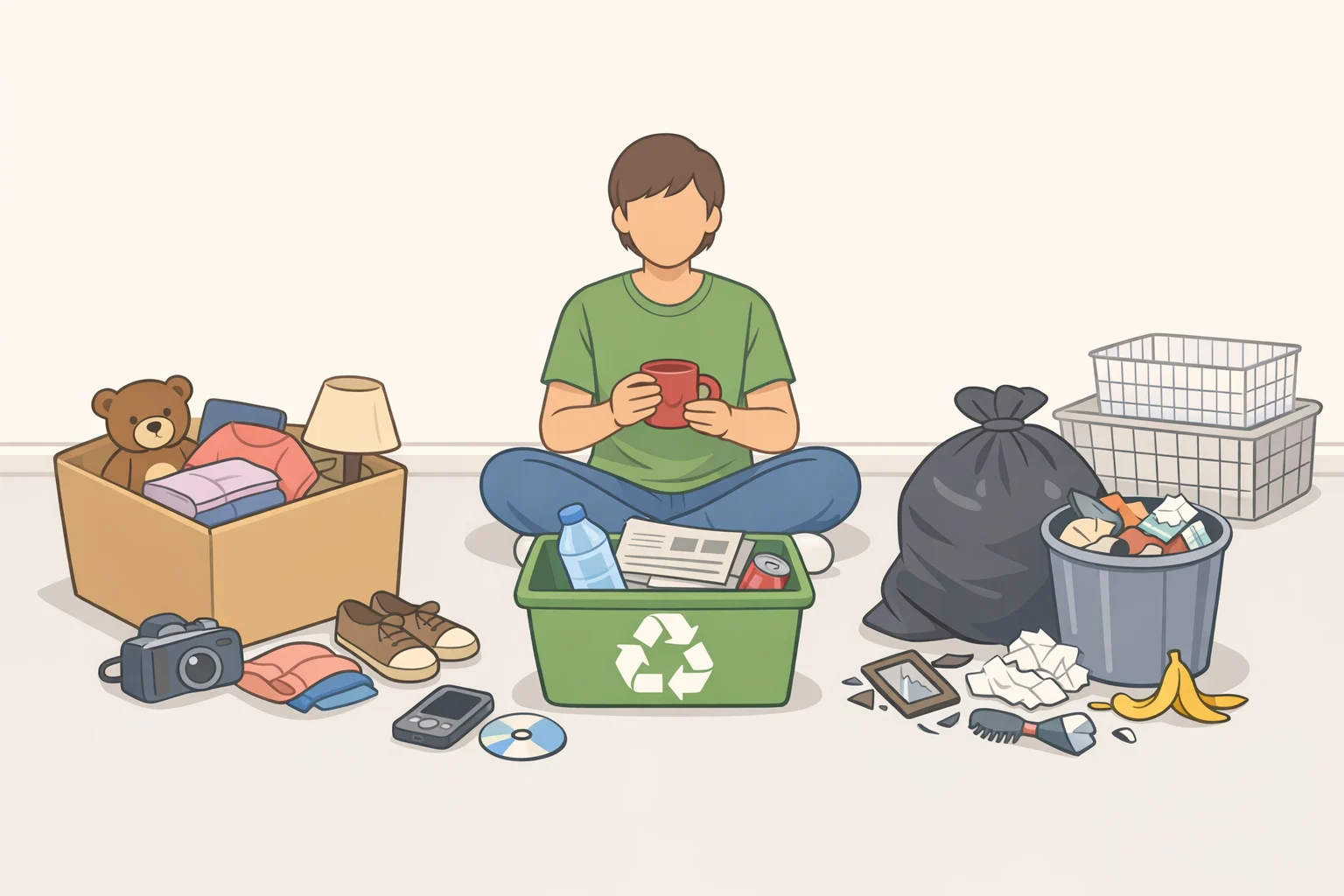
The reason organizing purchases so often go wrong comes down to one principle Orr states plainly: "Decluttering gives you the biggest bang for your buck. Then, organize" (The Spruce).
Sarah's client guidance makes that rule concrete. Sort and edit your belongings before buying a single product. Buying a matching container set first is one of the specific mistakes she names, because you cannot know the size you need, how many you need, or where they'll fit until you know what's staying (Life Simplified with Sarah). Buy the bins first and you're designing a system around a number you haven't calculated yet.
There's a maintenance dimension here that most organizing content skips past. Sarah is direct about it: the goal is not a perfect-looking system, it's a system that can be kept up under real conditions, by everyone in the household, without special effort (Life Simplified with Sarah). Products that demand perfection to function, elaborate folding methods, micro-labeled categories, tiny decorative bins, fail the moment life gets busy. Which is most of the time.
Orr also offers a concrete starting point for the declutter step itself. Donations go straight into a bag and into the car. Recycling goes out the door. Trash goes to the bin immediately. Her specific trick: use a dark bag for donations so you can't dig through it and second-guess what went in (The Spruce). That kind of friction removal is what turns "declutter first" from a vague instruction into something you can actually do on a Saturday morning.
Video of the Day
Three ways organizing products go wrong
Taken together, the two sources point to three recognizable ways that storage purchases waste money. A flat list of offenders is less useful than understanding the failure mode, because the failure mode tells you what to do differently.
Organizing products that hide excess rather than solve it
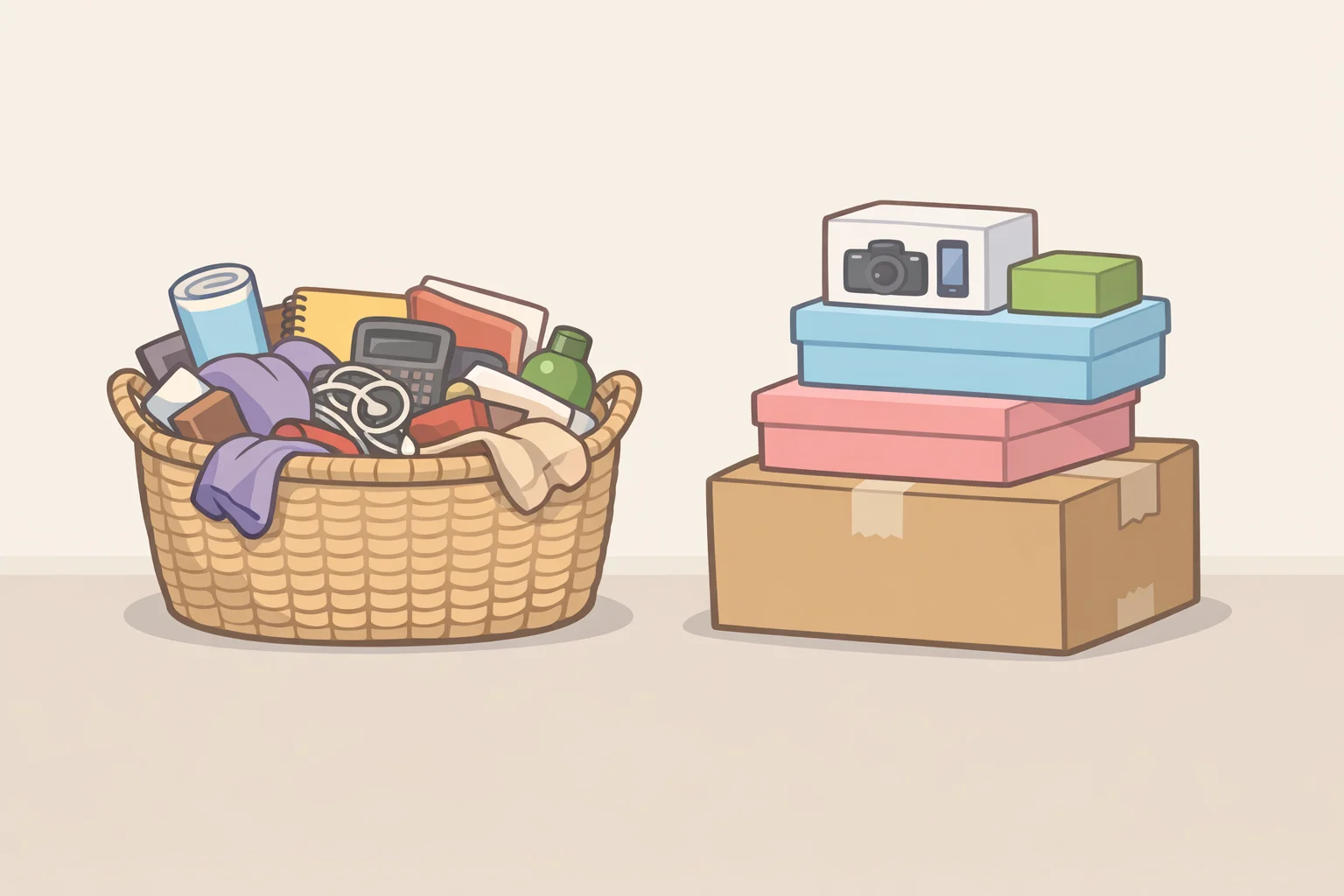
Bins and baskets feel like progress. What they actually do, according to Orr, is give clutter somewhere to live. They're bulky, heavy, take up space, and make it easier to hold onto things that should have been discarded (The Spruce). The basket near the stairs is the same problem in a different form. Orr is unambiguous: using a basket to collect stray items is just delaying the decision about where those items actually belong. "If you're going to address a type of clutter, complete the project by putting things where they should go."
Saved product boxes belong in the same category. Shoeboxes, appliance boxes, anything kept on the grounds of "just in case." They take up closet space, create confusion about contents, and according to Orr, are worth keeping only if a warranty return or resale is a genuine near-term possibility (The Spruce). Most of them aren't.
When pull-out bins do make sense, after decluttering, Sarah recommends choosing them for pantries, linen closets, and kids' spaces after measuring the shelf and confirming the line can be restocked. One-season retail finds that vanish from store shelves are a specific trap she names: a system you can't expand will eventually break (Life Simplified with Sarah). That's the practical difference between a useful bin and a wasted one.
Organizing products that optimize for looks over function
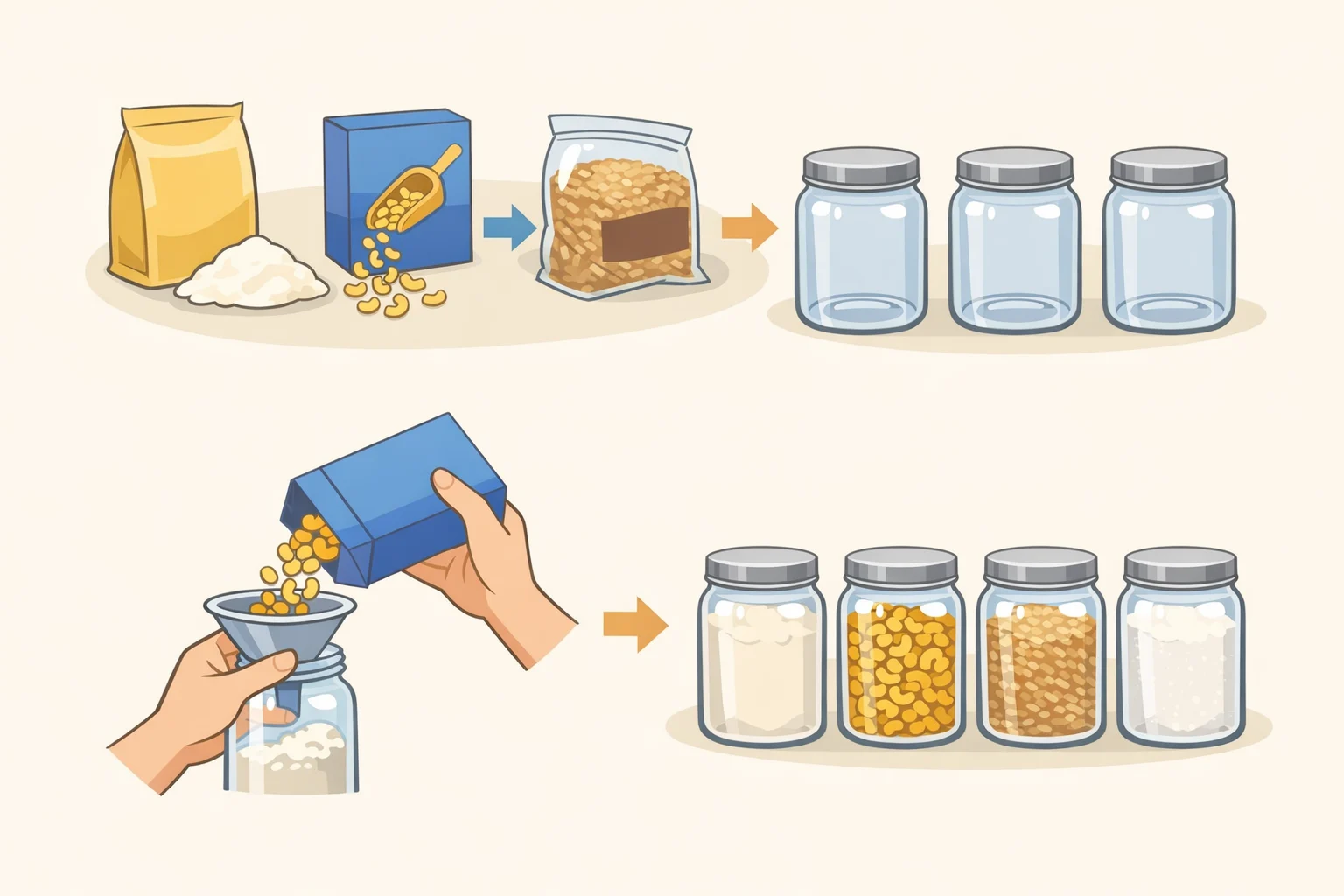
Pantry decanters, the matching glass or acrylic jars for dry goods, have become a fixture of organized-home content online. Orr's skepticism is practical rather than aesthetic. The containers often take up more shelf space than the original packaging, and decanting removes information you actually need. Once flour, sugar, salt, and oats are in identical jars, you lose cooking instructions, expiration dates, and the ability to tell the contents apart at a glance (The Spruce). If original packaging is resealable, stackable, and labeled, the guidance is simple: keep it.
Decanting does make sense in specific cases, namely for items with awkward original packaging that can't stand or stack, or for ingredients used so frequently that the box is already gone. The problem is buying an entire matching set before determining which items actually need it.
Tiny decorative bins run into the same issue. They photograph well but run out of capacity within days of real use, after which they overflow or get ignored because the effort of maintaining them isn't worth the visual payoff (Life Simplified with Sarah).
Lazy Susans solve the visibility problem that decanters claim to solve, without requiring you to transfer anything or lose label information. A quick spin surfaces everything at the back of a cabinet. Sarah uses them in refrigerators, bathroom cabinets, and under sinks (Life Simplified with Sarah). For drawers, adjustable dividers create structure without locking in fixed compartments, so the system can adapt as contents change. The common mistake with both, as Sarah notes, is not measuring the space before buying.
Organizing products too rigid to survive real life
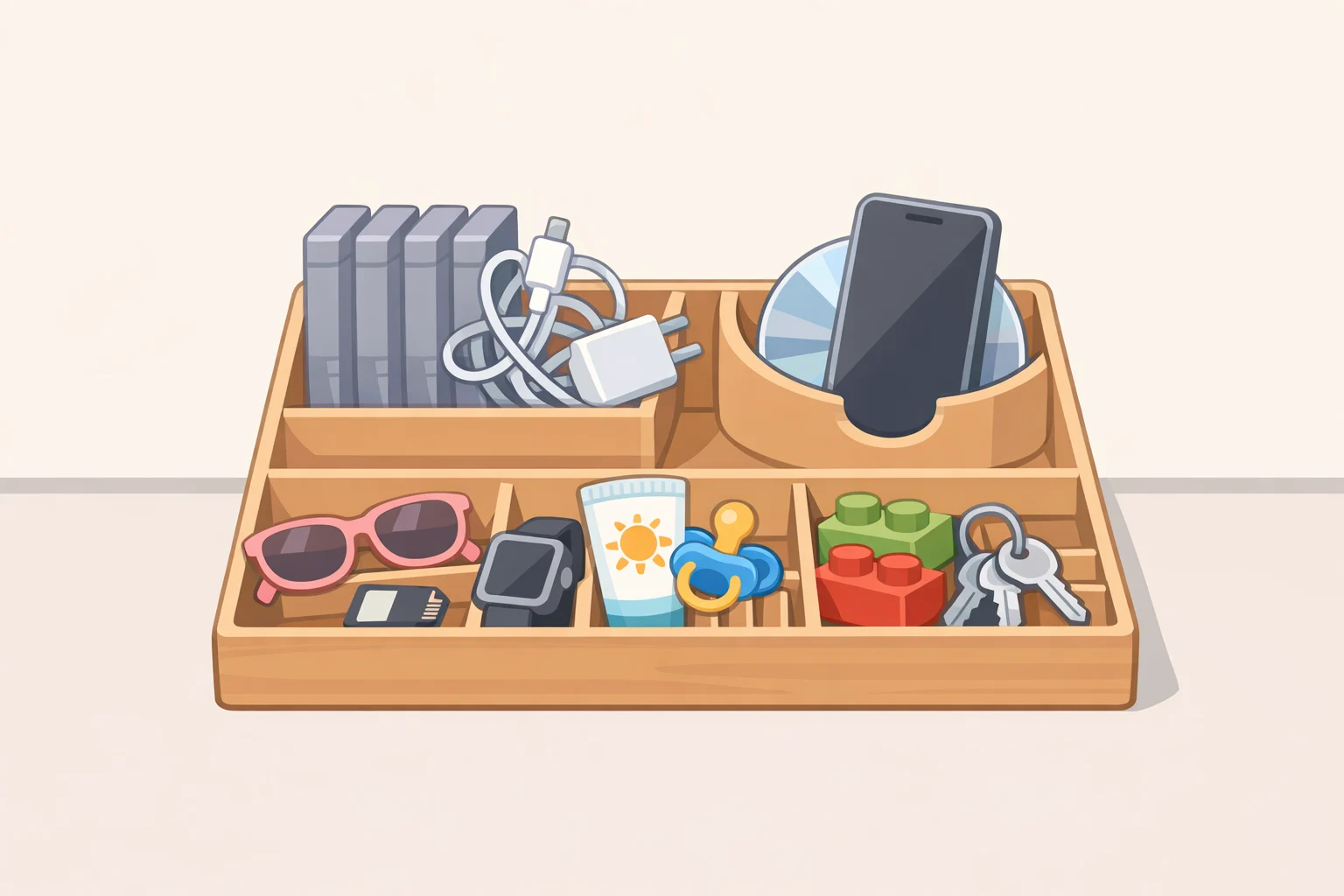
Highly specific single-use organizers, a rack built for one pot lid size, a compartment designed for one category of cosmetic, create fragility by design. The moment needs shift, the product stops working and gets abandoned (Life Simplified with Sarah). Over-labeled systems run into the same wall. Orr recommends broad categories instead: "Snacks," "Tools," "Office Supplies." Categories wide enough to stay accurate as contents evolve, because as she puts it, "not everything needs to be color-coded" (The Spruce).
Complicated folding systems that require precision every time complete this group. Sarah names them explicitly as products she avoids with clients: any method that demands perfection will fail regularly in households with children, changing schedules, or anyone other than the person who set it up (Life Simplified with Sarah).
The implicit test both organizers apply: can anyone in the household use this system correctly without being shown how? If not, the product is too rigid for a real home.
What to ask before buying anything
Across both sources, a pre-purchase checklist emerges. Sarah frames it as questions she applies on every client project: Does this category get used daily or occasionally? Will this container actually make it easier to put the item away? Can everyone in the household maintain it independently? Am I solving a real problem, or copying a photo online (Life Simplified with Sarah)?
That last question carries more weight than it appears to. Orr puts the same point directly: "You live in your home. It will never look like those on Instagram that are staged for photography." Real homes contain mail, backpacks, snacks, and shoes. A system designed around a staged pantry shoot will fail on contact with Tuesday (The Spruce).
The sequence that holds up across both sources: declutter using donate-recycle-discard, measure the actual space before purchasing anything, choose flexible and restockable products in broad enough categories to stay accurate over time, and label last, after the system is established. Sarah's framing is worth keeping: a beautiful system that's hard to maintain will always fall apart faster than a plain one that fits real life (Life Simplified with Sarah).
Storage products are worth buying. Just not yet, and not for the wrong reasons.