Cold Sesame Noodles Recipe: 3 Techniques for a Glossy Bowl
This guide walks you through making ma jiang liang mian (麻酱凉面), the classic cold sesame noodles recipe, so the noodles stay separate, the sauce clings instead of clumps, and the cucumbers add crunch without slowly watering everything down. The full process runs about 25 minutes, most of it passive.
The dish is a warm-weather staple across China, as Woks of Love notes. The gap between the heavy, sticky version most home kitchens produce and a properly glossy bowl comes down to three technique levers: how you handle the noodles after cooking, how you build and judge the sauce consistency, and how you control the water that garnishes release. None of it is difficult. All of it is specific.
What you'll need: A colander, a whisk, and a large mixing bowl. No special equipment. The formula throughout this guide is calibrated for 450g (1 lb) of dried noodles, four servings. For the fastest default path, use Chinese egg noodles if you can get them, dried spaghetti or linguine if not. Use Chinese sesame paste if available, tahini if necessary. The ingredients change the flavor profile; the handling matters more.
Lever 1: Cook and handle the noodles
Video of the Day
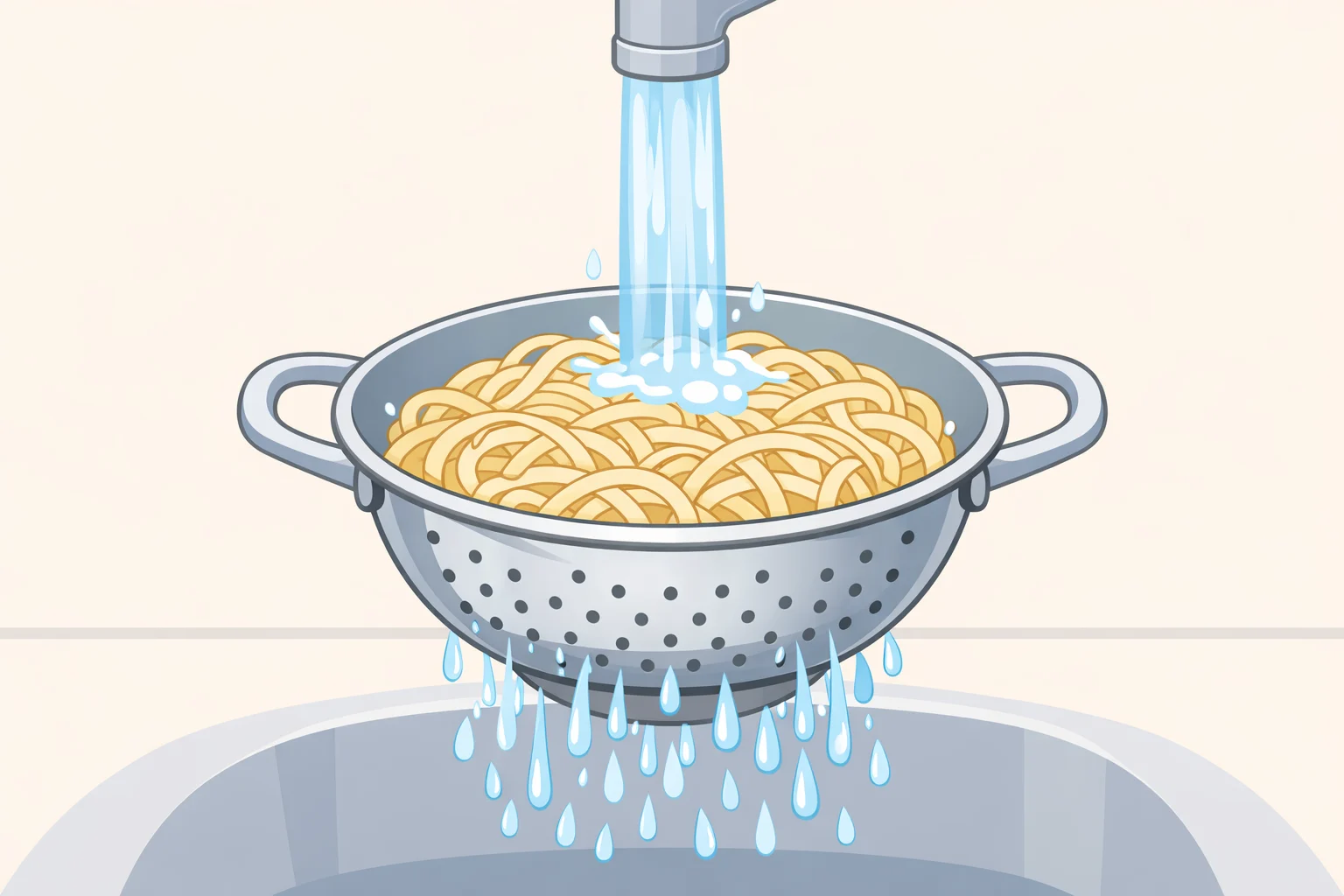
1. Cook noodles to firm al dente. Stop one to two minutes before the package says they're done. Cold noodles continue softening as they absorb sauce. Starting from soft means finishing with mush, as EatHealthy365 explains. Cook in well-salted water throughout.
2. Drain immediately and rinse under cold running water. Use your hands to toss the strands as water runs over them. Keep going until the noodles feel completely cool and no longer slick. Surface starch left on the noodles will thicken the sauce into a gluey coating instead of a glossy one. The rinse is not optional, per Simply Yummy Eats.
3. Drain thoroughly, then toss with one teaspoon of toasted sesame oil per 450g of noodles. The oil coats each strand and prevents clumping while you finish the rest of the prep. Rinsed but un-oiled noodles will mat together within a few minutes, according to EatHealthy365.
⚠ Gotcha: Do not add sauce while the noodles are still warm. Hot noodles absorb sauce fast, making the whole dish dry before it reaches the table. The sauce can also break, EatHealthy365 warns.
Noodle options, ranked: Chinese egg noodles are the traditional choice: alkaline, springy, excellent sauce adhesion. Fresh ramen is another good option. Dried spaghetti or linguine are reliable pantry substitutes with good chew and hold, EatHealthy365 confirms. Soba releases a lot of surface starch, so rinse it longer.
Video of the Day
Lever 2: Build the sesame noodle sauce to the right consistency
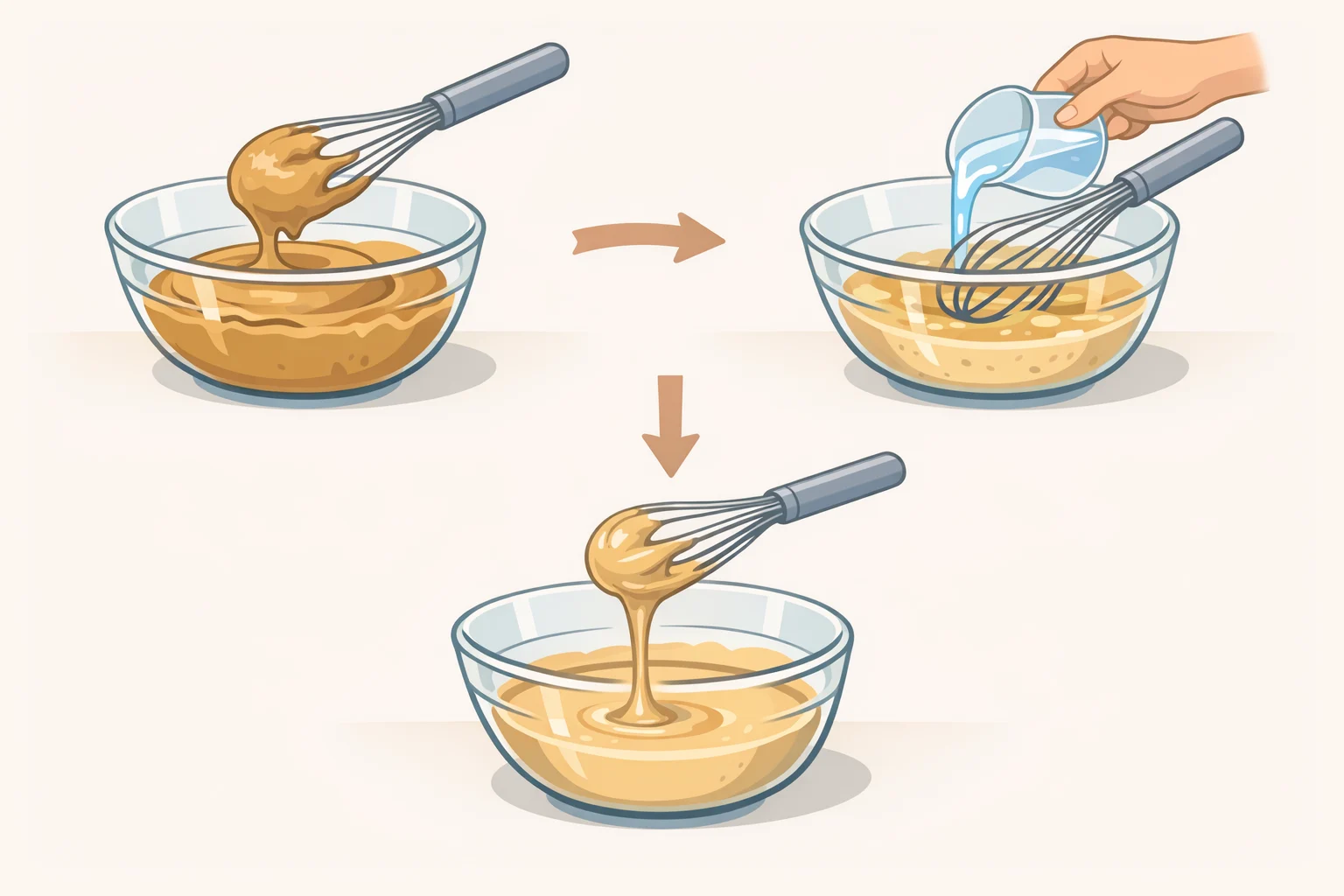
The sauce is mixed raw. No cooking. The process takes about 90 seconds. The challenge is reading the texture correctly: too thick and it grabs in clumps; too thin and it slides right off the noodles, Simply Yummy Eats notes.
Master formula (4 servings):
- 3–4 tablespoons Chinese sesame paste or tahini
- 1.5 tablespoons soy sauce (or tamari)
- 1 tablespoon Chinkiang black vinegar
- 1 teaspoon toasted sesame oil
- 1 small garlic clove, finely grated
- ½ teaspoon sugar
- Cold or warm water to thin (roughly 4–6 tablespoons, added gradually)
- Optional: 1–2 teaspoons chili oil, or ½ teaspoon Sichuan pepper oil for ma la heat
4. Whisk the paste with all seasonings except water until a rough paste forms. The mixture will seize and look extremely thick. That's normal. Keep going, EatHealthy365 confirms.
5. Add water one tablespoon at a time, whisking continuously after each addition. The paste will loosen and smooth out. Both cold and warm water work; the key is gradual addition, not temperature, Kvalifood reports.
6. Stop when the sauce falls off the whisk in a slow, steady ribbon aim slightly thinner than looks right. Target consistency is pourable heavy cream or runny honey. Sesame-based sauces tighten the moment they hit noodles and keep tightening as the bowl sits. If it looks perfect before tossing, it will be too stiff once distributed, both Kvalifood and Simply Yummy Eats note.
7. Taste before tossing. The sauce should hit four notes: nutty, salty, sour, and faintly sweet. Flat? Add a few more drops of vinegar. Harsh? A small pinch of sugar softens it. This is the moment to fix balance; it's much harder once the noodles are dressed, per Kvalifood.
On key ingredients: Chinese sesame paste (芝麻酱, zhi ma jiang) is made from heavily toasted seeds darker, nuttier, and more intense than tahini, which is typically raw or lightly toasted, Woks of Love explains. Tahini is a workable substitute, milder but not a failure. Natural peanut butter shifts the sauce toward sweeter and rounder; if you use it, keep the sesame oil in the recipe, Simply Yummy Eats advises. Chinkiang black vinegar has a malty, slightly sweet complexity that rice vinegar approximates but doesn't match EatHealthy365 calls its flavor essential.
Timing note: While the sauce rests and the cucumbers drain (next step), the noodles should be finishing their cool-down and oil toss. These three steps run in parallel, not in sequence.
Lever 3: How to make cold sesame noodles with cucumber that stay crisp
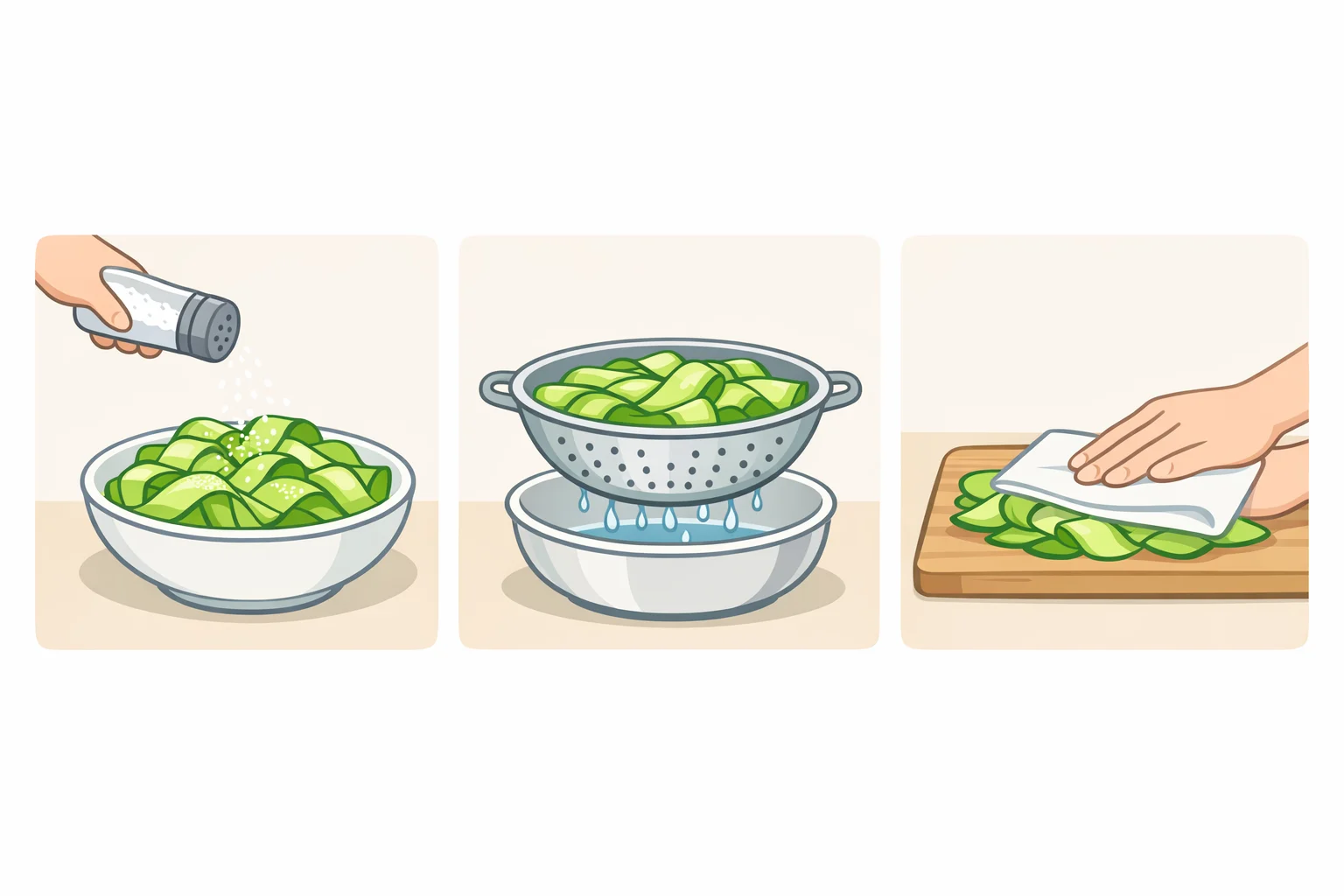
Cucumber is the classic pairing: cold, crisp, a direct contrast to the rich sauce. It also holds a lot of water. Left untreated, that water slowly dilutes the sauce in the bowl, Simply Yummy Eats points out. What you want is crunch without a flood of water.
8. Cut the cucumber into ribbons or thin strips, salt lightly, and let sit for 10 minutes. Run a vegetable peeler lengthwise down the cucumber for ribbons, stopping at the seeded core. The salt draws moisture out before it can reach the sauce.
9. Pat the cucumber completely dry before adding it to the bowl. Skip this and the sauce will water down as the bowl sits, even within the first ten minutes of serving, per Simply Yummy Eats.
10. Toss cooled noodles with about two-thirds of the sauce first, then fold in the cucumber gently. Coat every strand before anything else enters the bowl. Fold, don't stir. The ribbons should stay visible and intact, EatHealthy365 recommends.
11. Add all garnishes at the last possible moment. Scallions, crushed roasted peanuts, sesame seeds, cilantro, and cold sesame noodles with chili crisp finish all go on right before serving added early, they lose texture and the chili crisp loses its gloss. Drizzle the remaining sauce over the top.
Cucumber alternatives: Snap peas, shredded napa cabbage, or blanched bean sprouts all provide the cold, crunchy counterpoint the dish needs, Simply Yummy Eats confirms. Apply the same salting step to any high-moisture option.
Final assembly: how to make cold sesame noodles start to finish
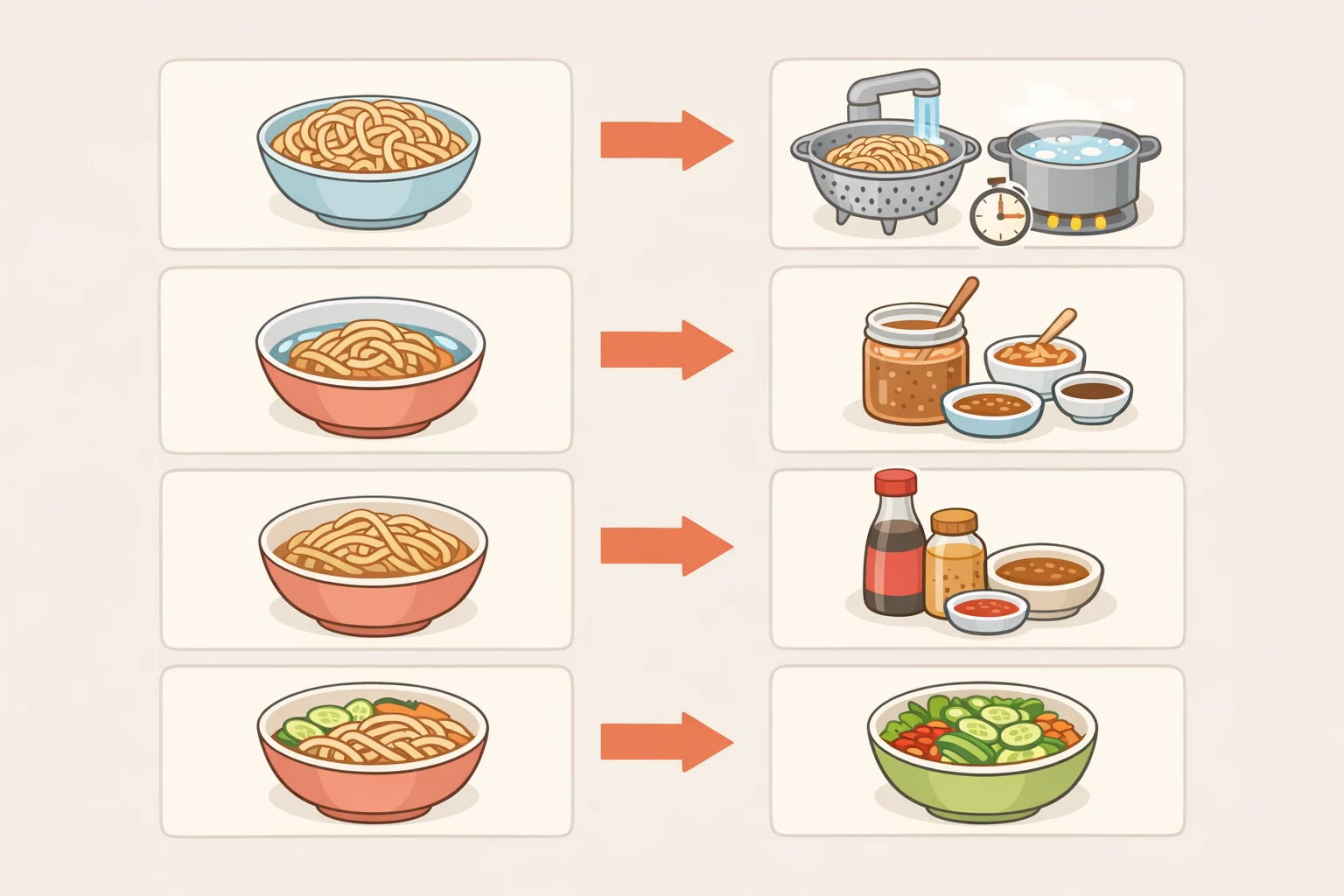
Here's the full sequence in one place:
- Salt cucumber, set aside to drain.
- Cook noodles in well-salted water, pulling them one to two minutes early.
- Drain and rinse under cold running water until completely cool and no longer slick.
- Drain thoroughly, toss with one teaspoon sesame oil, set aside.
- Whisk sesame paste with soy sauce, vinegar, sesame oil, garlic, and sugar. Add water one tablespoon at a time until the sauce runs like pourable cream.
- Taste and adjust. Fix balance now, before the noodles go in.
- Pat cucumber dry.
- Toss noodles with two-thirds of the sauce until every strand is coated.
- Fold in cucumber ribbons gently.
- Divide among bowls, drizzle with remaining sauce, and finish with scallions, peanuts, sesame seeds, cilantro, and chili crisp right before serving.
The whole process takes about 25 minutes. Steps 1 through 4 overlap with steps 5 through 7 run them in parallel and the passive time mostly disappears.
Troubleshooting: what went wrong and how to fix it
| Problem | Likely cause | Fix |
|---|---|---|
| Gummy, stuck-together noodles | Insufficient rinse, or sauce added warm | Rinse longer; always sauce cold noodles |
| Sauce clumps or grabs in patches | Sauce too thick when tossed | Loosen with water one tablespoon at a time before tossing |
| Sauce slides off, no coating | Sauce too thin, or noodles still wet | Let noodles drain fully; add slightly less water next time |
| Watery, diluted bowl | Cucumber not salted and dried | Salt and pat dry before folding in |
| Dry bowl after sitting | Sauce absorbed into warm noodles | Cool noodles fully; reserve one-third of sauce to add at table |
| Flat flavor | Sauce not tasted before tossing | Adjust vinegar, salt, and sugar at the sauce stage, not after assembly |
Storage: how to prep this dish ahead
The assembled bowl is best eaten the same day. Cucumbers soften and release moisture as they sit, turning the bowl soggy within two days at most. Woks of Love and Simply Yummy Eats both recommend storing components separately and assembling when ready.
- Sauce: Keeps in a sealed jar for up to 3 days, per Woks of Love. The sauce will thicken considerably in the refrigerator; loosen with a small splash of water and stir before using, Kvalifood confirms.
- Noodles: Cooked, rinsed, and oiled noodles keep in an airtight container for up to 2 days, per EatHealthy365.
- Freezing: Skip it. Cucumber turns watery after thawing and the sauce loses its smooth texture entirely, Simply Yummy Eats notes.
If the bowl has been refrigerated: Let it sit at room temperature for 10 to 15 minutes before eating, then loosen with a small spoonful of water or sesame oil, Simply Yummy Eats advises. The sauce stiffens when cold and needs a few minutes to relax before it coats properly again.