Where Mosquitoes Breed Around Your Home: 9 Spots to Check
The mosquito that bit you last night may have hatched right in your own backyard. That's what Florida health officials warn residents about each season, and it holds true wherever mosquitoes are active. If pressure in your yard picks up noticeably a few days after rain, standing water on your property is likely part of why.
The scale of the problem is smaller than most people picture. UF/IFAS researchers note that any discarded item holding water can become a habitat for immature mosquitoes, down to something as small as a bottle cap. Under ideal conditions, an adult can emerge from an egg in as few as six days, according to Florida health officials. Six days is a short window. Knowing where mosquitoes breed around your home is the difference between staying ahead of the cycle and constantly reacting to it.
This guide covers nine spots homeowners routinely miss. The breeding biology applies broadly across the U.S.; the public-health context draws on Florida sources, where container mosquitoes are especially well-documented. By the end, you'll know exactly where to look, what to do at each spot, and when to dump versus treat versus cover.
What you'll need: Most fixes take a few minutes and something to pour water with. The exception is water you can't drain. For those situations, pick up a Bacillus thuringiensis israelensis (Bti) larvicide tablet before you start. Florida health officials recommend treating standing water that cannot be drained with larvicide containing Bacillus thuringiensis. Follow the product label exactly.
Why targeting water beats chasing adults
Video of the Day
Mosquito larvae and pupae both live in standing water. Controlling mosquitoes at the larval and pupal stage can minimize the need for widespread adulticide applications, according to the CDC. You're cutting the problem off before it flies.
Professional mosquito control programs handle public spaces and large-scale surveillance, but because those programs cannot access all properties, UF/IFAS researchers describe community participation at the household level as essential to controlling container mosquitoes. The yard is the piece only you can manage.
The CDC recommends a once-a-week cadence: empty, scrub, turn over, cover, or throw away any item around the home that holds water. For items that can't be covered or removed, Florida health officials recommend flushing or draining them twice weekly to stay inside that six-day development window.
Video of the Day
How to inspect for common mosquito breeding sites
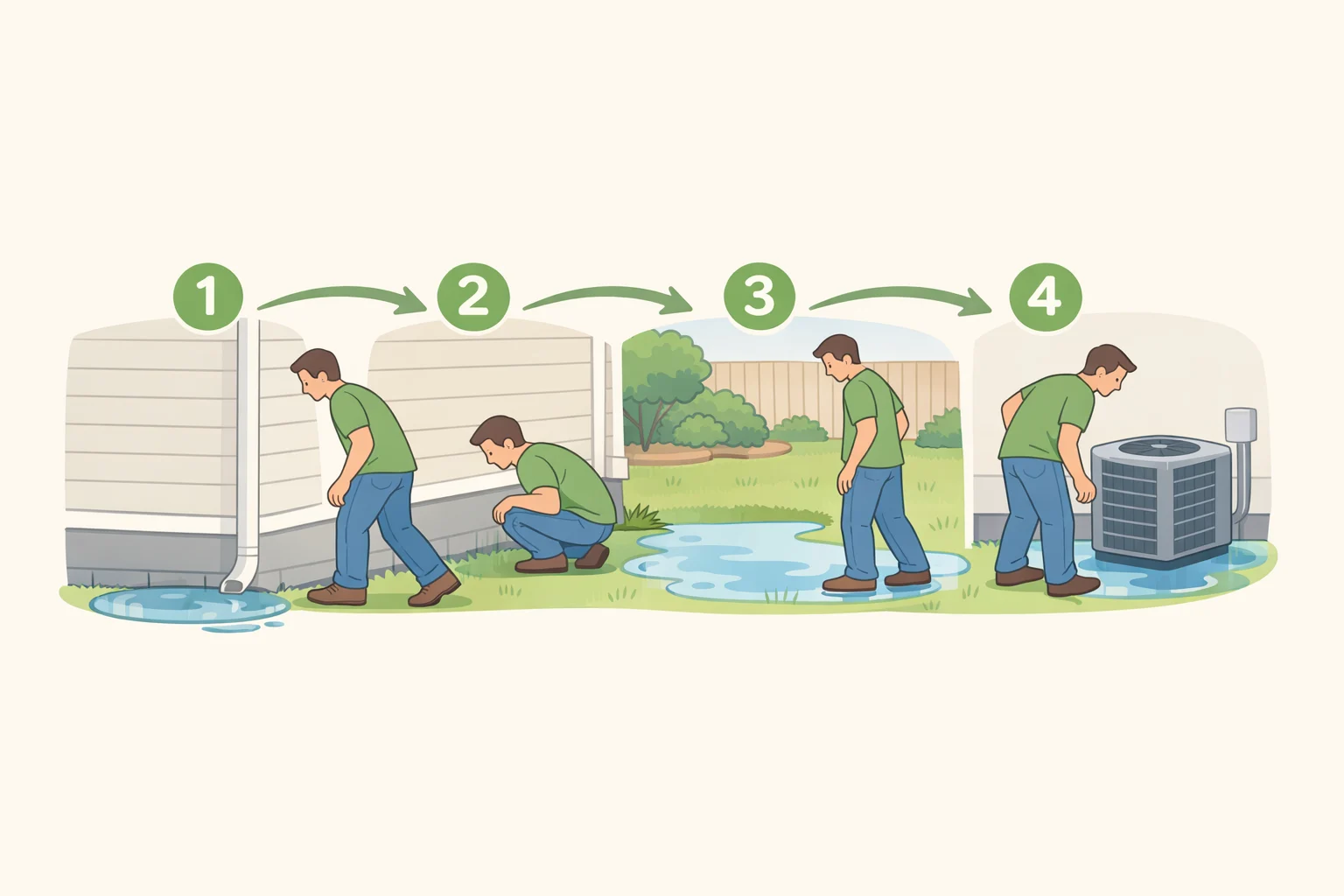
Work through your yard after significant rain in this order: small containers and drip trays first, then intentional water storage, then structural catchments like gutters, then natural cavities. You're looking for anything holding still water.
For each site, the decision comes down to three options. If it can be emptied, dump it and let it dry, scrubbing if there's residue on the sides. If it can't be emptied, treat with Bti larvicide per label instructions. If it can be fitted with a tight-fitting lid or fine screen, do that instead.
Anything in the yard that holds water and can simply be thrown out should be.
Where mosquitoes breed around your home: the full checklist
House fixtures
1. Gutters and downspout joints
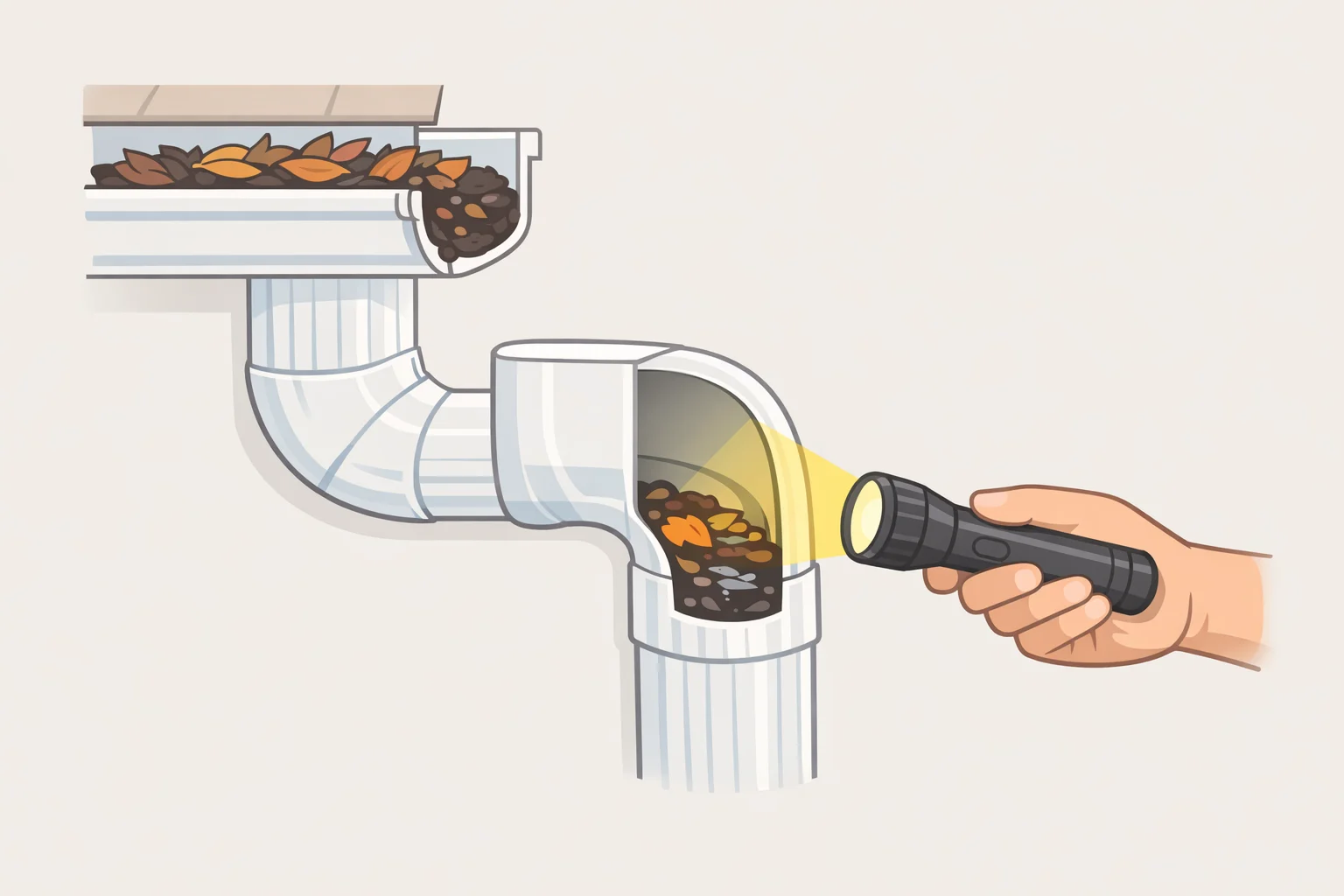
Gutters get cleaned seasonally but rarely get inspected specifically for standing water during mosquito season. Decomposing leaf debris compresses into a mat that holds moisture long after the gutter itself has drained. Downspout joints and elbows, especially where a horizontal run transitions to vertical, are separate collection points that persist even longer.
Clean gutters at the start of warm season and after major storms. Run water through afterward to confirm the whole system drains. Check downspout joints separately; a flashlight makes it faster. If a joint consistently pools, the angle needs adjustment or there's an obstruction causing backflow. Clogged gutters and drains are listed among common mosquito breeding sites by Florida DOH Hendry County, which notes that gutters, flower pots, and birdbaths can all serve as breeding grounds.
2. Pool covers
A covered pool feels sealed. It isn't. Water accumulates on top of the cover, a flat, warm, undisturbed surface. Florida DOH Hendry County is explicit: unused pools need to be maintained with chlorine and circulation, or treated to prevent breeding. The CDC recommends treating standing water that cannot be dumped or drained, including pool covers, with larvicide.
Pump or drain water from the cover surface after any rain. If water regularly pools in a central sag, the cover may need retensioning. Even a well-maintained cover develops low points over time, so check after every rain rather than on a fixed schedule.
Yard gear and storage
3. Children's outdoor toys and wading pools
Toys left after play, buckets, watering cans, sandbox lids flipped concave-side-up, are invisible rain collectors. Wading pools not in daily use are often left filled. Florida DOH Hendry County lists children's wading pools and toys explicitly on its inspection checklist alongside gutters and birdbaths.
Empty and invert or store smaller toys when not in use. For wading pools, the guidance from Florida health officials is specific: empty them at least once a week and store them indoors when not actively in use. Dumping and refilling before each use is better than leaving water to sit between sessions.
4. Discarded tires
Old tires stored in a yard or garage feel like a solved problem, out of the way and not worth worrying about. They're among the most productive mosquito breeding containers around. The curved interior holds water that's warm, shaded, and difficult to inspect or drain completely. The CDC identifies discarded tires as a primary breeding site and notes that local mosquito control programs organize community collection events specifically to address them. UF/IFAS makes the same point: tire disposal events exist because individual follow-through is so often lacking.
Remove and properly dispose of any tires not in active use. Check whether your local mosquito control district organizes collection events; many do precisely because tire disposal requires coordination. One non-obvious pitfall: drilling drainage holes in tires you plan to repurpose as planters reduces but doesn't eliminate breeding risk, since the interior still collects debris and moisture.
5. Boats and stored watercraft
Boats on trailers look closed. Interior compartments, hull depressions, and any space not actively inspected between uses collect and hold rainwater. Florida DOH Hendry County explicitly lists boats and watercraft on its inspection checklist, recommending they be stored covered, upside down, or drained of rainwater weekly.
Store boats covered with a tarp that sheds water rather than pools it, or store them upside down where practical. Inspect and drain all interior compartments weekly during mosquito season. This entry is most relevant to homeowners with larger lots or rural properties; if boats aren't part of your situation, move on.
6. Trash cans and lids
The can gets emptied. The lid doesn't get much thought. Stored separately or resting concave-side-up against a fence, it's a consistent water trap that's easy to walk past because it doesn't look like a container. The CDC recommends covering trash cans and other large containers specifically to keep mosquitoes out.
Store lids positioned to shed water. Keep cans tightly covered between collection days.
Intentional water features
7. Birdbaths
Birdbaths are thought of as wildlife habitat, not standing water mosquito breeding sites. They're both. The same shallow, still water that attracts birds gives mosquitoes what they need to lay eggs. Florida DOH Hendry County includes birdbaths on its standard inspection checklist alongside gutters and rain barrels.
Change the water and scrub the basin at least once a week. Scrubbing matters, since it removes any eggs deposited on the sides before they hatch. If you can add a small solar-powered agitator to keep the surface moving, do it; still, stagnant water is far more hospitable for egg-laying than water with any surface turbulence.
8. Rain barrels and cisterns
Rain barrels are intentionally kept full, and most homeowners think of them purely as water conservation tools. The two uses are compatible, but only with the right setup. Florida health officials are specific: cisterns, rain barrels, and similar containers should be covered tightly with a lid or with 16-mesh screen. That screen specification matters, because a mosquito needs only a small opening to lay eggs, making the inlet screen as important as the lid itself.
If your barrel lacks a proper cover or screen, treat the water with a Bti-based larvicide. The CDC recommends larvicide treatment for standing water that cannot be drained, and Florida county health guidance recommends Bacillus thuringiensis-based larvicide for the same situation. One non-obvious pitfall: overflow outlets and side spigots that drip onto the ground create secondary puddles around the base of the barrel; check that area too.
Natural catchments
9. Tree holes, hollow stumps, and low ground depressions
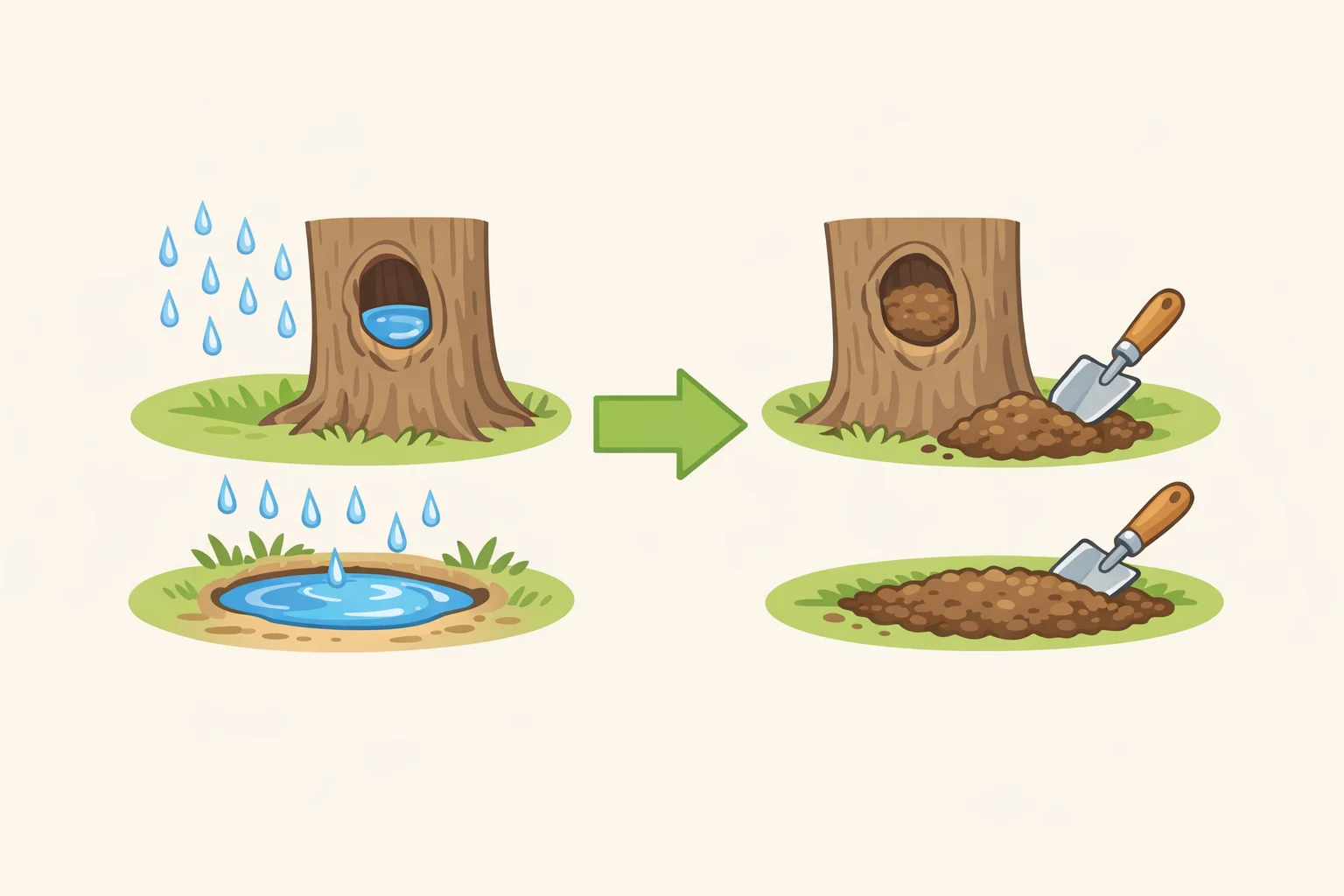
Natural cavities don't appear on most yard-maintenance checklists, but they function exactly the same as a discarded container. UF/IFAS researchers classify natural habitats like tree holes and rock holes alongside artificial containers as immature mosquito habitat. Low spots in the lawn that pool after rain are easy to walk past without registering them as a problem.
Fill tree rot holes and hollow stumps with sand or expandable foam. Remove dead stumps if practical. For persistent low spots, Florida DOH Hendry County specifically recommends leveling or filling ground depressions near the home so water can run off rather than collect. If you're in a warmer climate and have bromeliads or other water-holding ornamental plants, inspect those too; UF/IFAS lists bromeliads alongside tree holes and rock holes as natural container habitats.
What to do if the sweep doesn't solve it
Walk the yard after any significant rain, hitting small containers first, then intentional water storage, then gutters and structural catchments, then natural cavities. The CDC's guidance is once a week: empty, scrub, turn over, cover, or throw away anything that holds water. Done consistently, this routine breaks the breeding cycle before adults emerge.
If that doesn't move the needle, contact your local mosquito control district. Mosquito control efforts and capabilities vary across the country, as the CDC notes, but local programs can typically tell you what species are active in your area, whether public-space treatment is scheduled, and whether there's a source nearby that you can't see or access. Professional surveillance and your yard sweep work together. The former covers public spaces; the latter is the piece no program can do for you.