Mussels in Basil Cream Sauce From Broth in 30 Minutes
Mussels in basil cream sauce is one of those dishes that sounds like it requires skill, time, and a classical French education. It requires about 30 minutes, most of which is prep. The actual cooking happens in two quick bursts, and if you play it right, the sauce builds itself from the liquid the mussels produce while steaming.
That's the move most home cooks miss. The briny, wine-scented liquor left in the pot after steaming is already halfway to a sauce. Strain it, reduce it with cream, finish with fresh basil, and you have something that tastes like considerably more effort than it was. This guide walks through the full process: selecting live mussels, steaming them without overcooking, and building the cream sauce from the broth including the one thing most recipes skip: how not to oversalt it.
Food & Wine calls mussels one of the easiest seafoods to prepare inexpensive, easy to find, and quick-cooking. Farmed mussels, which account for 94% of all commercial mussel production globally according to the Monterey Bay Aquarium, are rated green by Seafood Watch and need almost no prep beyond a rinse and debeard.
What you'll need before starting:
- 400–500 g live mussels per person (main course portion)
- A large pot with a tight-fitting lid
- Dry white wine, shallots, garlic
- Heavy cream and fresh basil
- A fine-mesh strainer
Yield: 2 servings as a main, 4 as a starter Total time: ~30 minutes
Step 1: How to select, store, and clean fresh mussels safely
Video of the Day
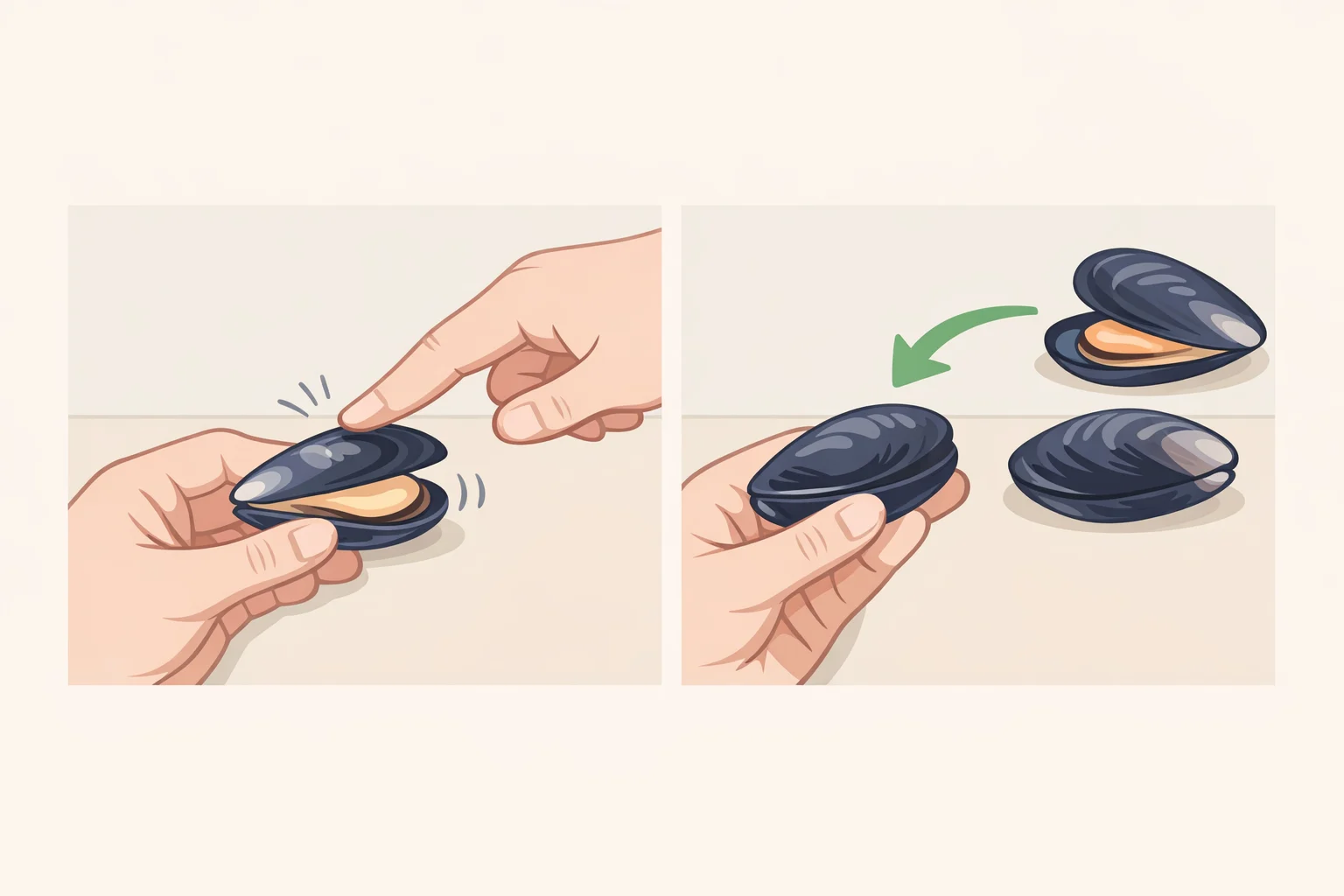
Before anything touches a pan, get the mussels right. Most recipes compress this to one line. That's where things actually go wrong.
Buying: Look for tightly closed shells, or shells that snap shut when tapped. Any mussel that stays open at the fish counter is dead and should not go in your bag. Because mussels are filter feeders, they accumulate whatever is in the surrounding water including norovirus, hepatitis A, and marine biotoxins which is why sourcing matters. KitchenNmbrs recommends using only mussels from certified origins with proper testing zone designation. Buy from a fishmonger or supermarket with high turnover, and check the harvest date if it's printed on the packaging.
Storing: Live mussels need to breathe. Keep them in the refrigerator in a bowl loosely covered with a damp cloth not sealed in a bag, not submerged in water. The ideal temperature is between 5°C and 8°C, and they'll hold for 2–3 days from the packaging date with proper storage, per KitchenNmbrs. Cook them as close to purchase as possible.
Cleaning: Rinse under cold running water just before cooking. Pull off any byssal threads the stringy "beard" anchoring each mussel to its rope by gripping and tugging firmly toward the hinge end. Don't debeard them hours in advance: removing the beard damages the mussel and accelerates deterioration, per KitchenNmbrs. Farmed mussels need nothing more than that rinse. Wild mussels may carry more grit and benefit from a brief soak in salted water first, per Food & Wine.
The pre-cook check: Tap any mussel that appears partially open after cleaning. If it doesn't close, throw it out it's not alive, and heat won't change that. FoodSafety.gov is explicit: discard any shellfish with cracked shells or that won't close when tapped.
Video of the Day
Step 2: How to steam mussels without overcooking them
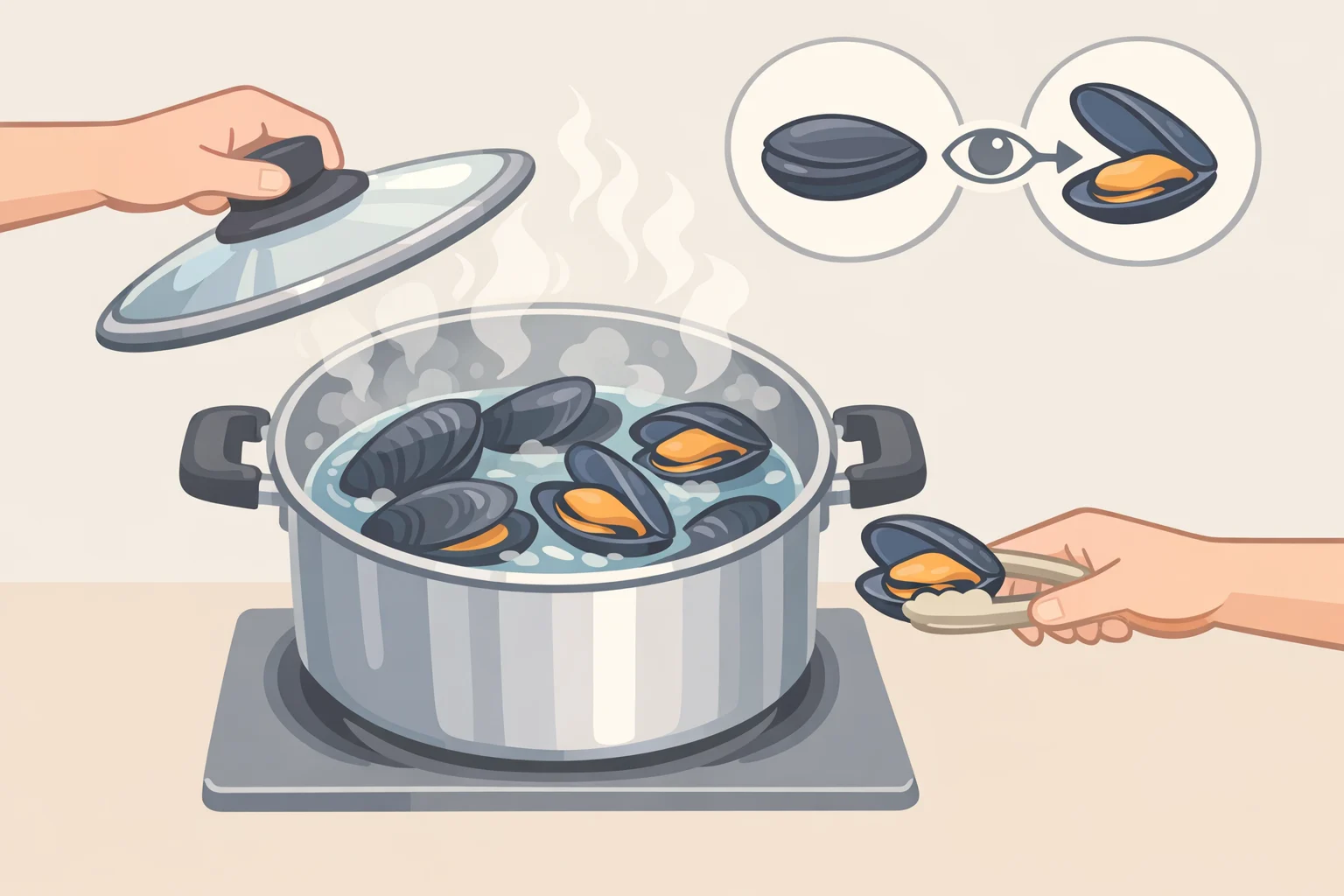
Overcooking is the main way this dish fails. A rubbery, shrunken mussel is a direct result of too much heat for too long, and there's no fixing it once it happens. KitchenNmbrs puts it plainly: cooking time is extremely short, and overcooking results in tough, rubbery mussels. The window between perfect and overdone is narrow easy to hit if you watch the shells rather than the clock.
Step 2a: Build your steaming base. In a large pot over medium-high heat, soften two finely chopped shallots and two minced garlic cloves in a tablespoon of butter or olive oil about 2 minutes, until translucent. Add half a cup of dry white wine (Sauvignon Blanc works well, or any unoaked white). Let it bubble for 30 seconds to knock off the raw alcohol edge.
Step 2b: Add the mussels and cover. Tip the cleaned mussels into the pot and put the lid on. Raise the heat to high. The goal is steam, not a simmer. KitchenNmbrs puts the stovetop window at 3–5 minutes over high heat with the lid on; the Monterey Bay Aquarium notes that fresh in-shell mussels typically open within 5–6 minutes. The shells opening is your cue. Check at 3 minutes if most have opened, they're done.
Step 2c: Remove the mussels immediately. Lift the opened mussels out with a slotted spoon or tongs into a bowl. Any that haven't opened after 5–6 minutes get discarded FoodSafety.gov is clear that shells which don't open during cooking should be thrown out. Set the rest aside, loosely covered.
What you're left with is a pot of concentrated, slightly briny, wine-and-shallot liquid. Don't pour it out. That's the foundation of your basil cream sauce.
Step 3: Building the white wine basil cream sauce from the steaming broth
The cooking liquor carries the flavor of the mussels, the wine, and the aromatics all at once. Strain it, reduce it, fold in cream and basil, and you have a sauce that's already seasoned. You may need no added salt at all this is the part most easy mussels recipes forget to mention.
Step 3a: Strain the broth. Pour the remaining pot liquid through a fine-mesh strainer into a smaller saucepan, leaving any grit or shell fragments behind. KitchenNmbrs recommends passing the cooking liquor through a fine sieve to produce a clean, rich mussel broth.
Step 3b: Reduce the liquid. Bring the strained broth to a boil over medium-high heat and let it reduce by about half this concentrates the flavor and eliminates excess water before the cream goes in. Budget roughly 3–4 minutes, though it depends on how much liquid your mussels released. The broth will smell intensely savory; that's exactly what you want.
Step 3c: Add the cream. Pour in 100–150 ml of heavy cream (double cream in the UK) and stir to combine. Reduce the heat to medium and let the sauce cook for another 2–3 minutes until it coats the back of a spoon. Taste before adding any salt. Mussel liquor carries significant natural sodium, and over-salting is the most common mistake at this stage.
Step 3d: Finish with basil. Turn the heat to low. Add a generous handful of fresh basil leaves torn or cut into thin ribbons. Don't cook the basil hard: it goes in off the boil or just at the edge of a simmer to preserve its color and brightness. A squeeze of lemon sharpens the sauce and keeps it from sitting too heavy on the palate.
Step 3e: Return the mussels. Add the mussels back to the pan and toss gently to coat them in the sauce. This isn't a second cooking; it's just warming through. Thirty seconds to one minute, maximum.
What to serve with creamy basil mussels
Crusty bread is the default, and it earns its place: the sauce is good enough that you want something to drag through it. Thick slices of sourdough or a baguette, toasted or plain, both work. For a more substantial plate, serve over pasta white wine-steamed mussels and their broth pair naturally with spaghetti, and the full dish comes together in around 30 minutes, per Food & Wine. Steamed rice also works, particularly when you want the sauce to carry the meal.
Portion planning: 400–500 g of shell-on mussels per person for a main course, or 200–250 g per person as a starter, per KitchenNmbrs. The edible meat runs to about 25–30% of total shell-on weight, so the raw numbers can look alarming until you account for that.
There's genuine substance under the cream. A single 85 g serving of steamed blue mussels delivers 20 g of protein and 850% of the daily recommended value of vitamin B12, along with 33% of the daily value of iron and 28% of zinc, according to the Monterey Bay Aquarium. The cream adds richness; the mussels themselves are lean.
One more thing worth knowing: mussels are best eaten between September and April. KitchenNmbrs notes that summer mussels (June through August) are leaner due to the spawning season, which affects both flavor and texture. The dish is possible year-round, but the results are noticeably better in cooler months. Worth flagging given the current date: mid-July puts you squarely in the lean window, so manage expectations or wait a few weeks.
On reheating: Don't. Mussels cooked and then reheated turn rubbery. If cooking for a group and getting ahead of service, build the sauce base and reduce the strained broth in advance then steam the mussels, finish the sauce, and combine everything just before serving. KitchenNmbrs advises consuming cooked mussels immediately or refrigerating for no more than 24 hours, but the case for eating them fresh is compelling enough that planning around it is worth the minor inconvenience.
What to cook next
The broth-first technique used here isn't exclusive to basil and cream. Swap basil for tarragon and you have something closer to a classic French beurre blanc style. If the sauce reduces more loosely than expected, serve the mussels over spaghetti rather than with bread the pasta absorbs the extra liquid and the dish holds together better. The same method scales directly to clams, which release a similarly briny, wine-scented liquor under steam and respond well to cream in the same proportions.
Farmed mussels remain the low-effort, low-guilt starting point: rated green for sustainability by Seafood Watch, requiring minimal prep, and accounting for 94% of commercial mussel production globally, per the Monterey Bay Aquarium. The hardest part of this recipe is buying them on time and keeping them cold until you cook.