California Bans Sell By Food Labels, But Research Shows Dates Drive Waste
California became the first state to ban consumer-facing "sell by" dates on packaged food when AB 660 took effect July 1. The California food labeling law cuts more than 50 competing date-label phrases down to two: "BEST if Used By" for quality, and "Use By" for safety, per the California Assembly press release. The reform addresses a documented source of confusion. Whether it changes behavior is a separate question, and the available research is not encouraging.
An Ohio State University eye-tracking study found that half of participants decided to throw away milk based purely on the number stamped on the carton, without ever looking at the phrase in front of it. Participants' eyes landed on the date 44% faster than on the wording, and swapping "sell by" for "best if used by" had no significant effect on discard decisions. "As soon as we changed the printed date, that was a huge mover," said study lead Brian Roe. "The phrase is second fiddle," per Ohio State News. The study, published in Waste Management, focused on milk because it accounts for roughly 12% of all food wasted by U.S. consumers.
The stakes behind this packaging debate are larger than they might appear. Confusion over date labels accounts for an estimated 20% of household food waste in the U.S., per the FDA. A typical family of four loses at least $1,500 worth of uneaten food each year. The EPA estimated that in 2019, 66 million tons of food was wasted across retail, food service, and residential settings, with about 60% sent to landfills, making food the single largest category of material in municipal waste, per the same FDA announcement.
Best by vs. sell by dates: what California's food labeling law changed
Video of the Day
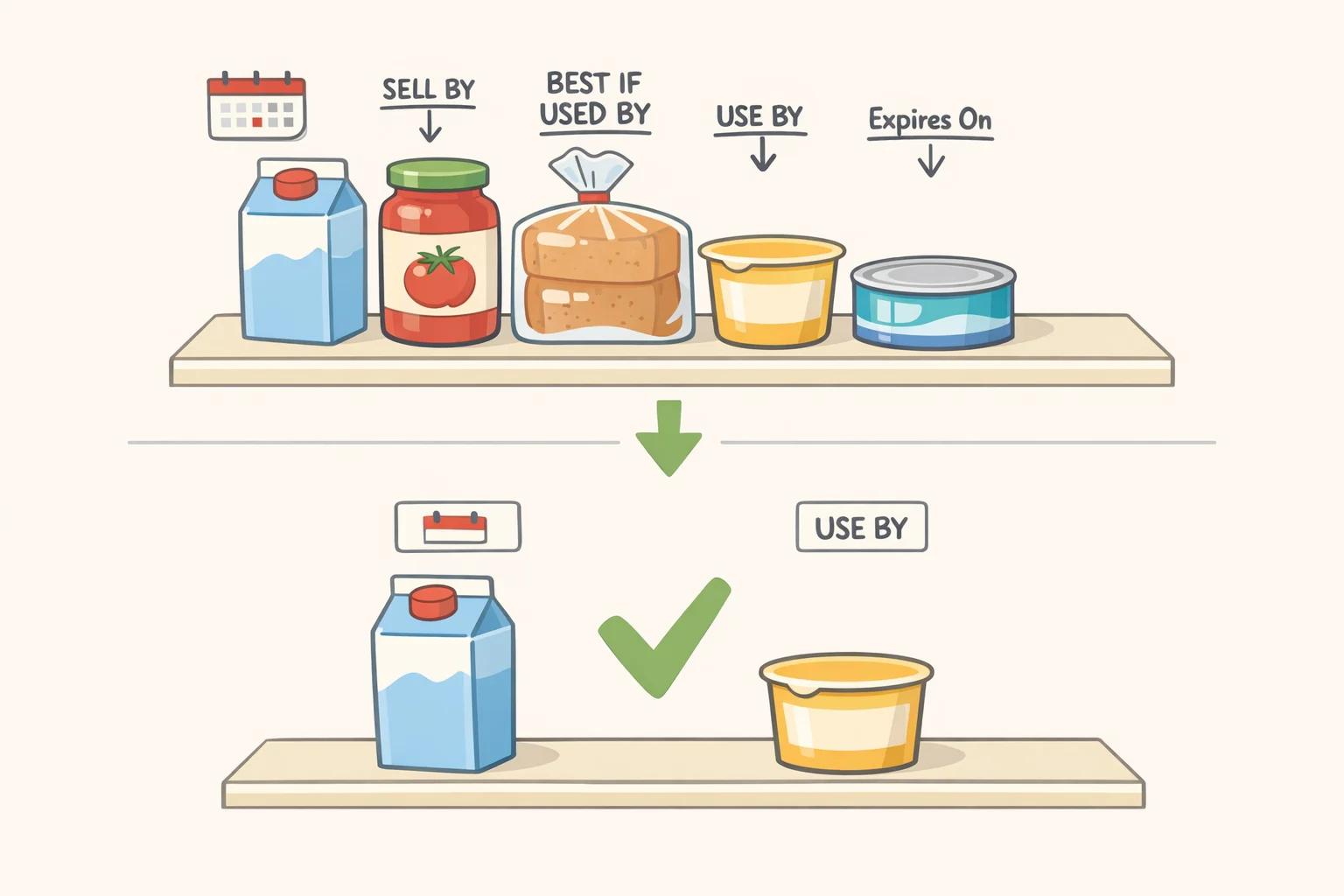
The "sell by" phrase was never meant for shoppers. It tells retailers how long to display a product before rotating stock food typically remains safe to eat for several days to weeks after that date if stored properly, according to UGA Extension food safety specialist Carla Schwan. Putting a stock-rotation code on consumer-facing packaging, where it reads like a safety deadline, was the specific problem AB 660 was written to fix.
Before the law took effect, California grocery shelves carried more than 50 different date-label variations, per the California Assembly press release. The FDA and USDA have recommended "Best if Used By" to manufacturers on a voluntary basis specifically because Johns Hopkins Center for a Livable Future research found consumers most consistently read it as a quality indicator but current federal rules still permit any phrase as long as it isn't outright false or misleading, per the FDA. AB 660 makes compliance mandatory. In 2016, California had directed the state to promote voluntary adoption of the same two phrases under AB 954, but voluntary adoption left the proliferation of competing labels intact, per the California Assembly press release.
One wrinkle the new law doesn't fully resolve: California's system designates "Use By" as a safety marker, but consumers have historically encountered that phrase as a quality indicator the manufacturer's estimate of peak freshness, with a reasonable grace period for properly stored items, Schwan noted. Getting shoppers to read "Use By" as a hard safety signal, rather than another quality estimate they've been conditioned to discount, is a communication problem the law alone cannot solve.
Video of the Day
What date labels actually mean
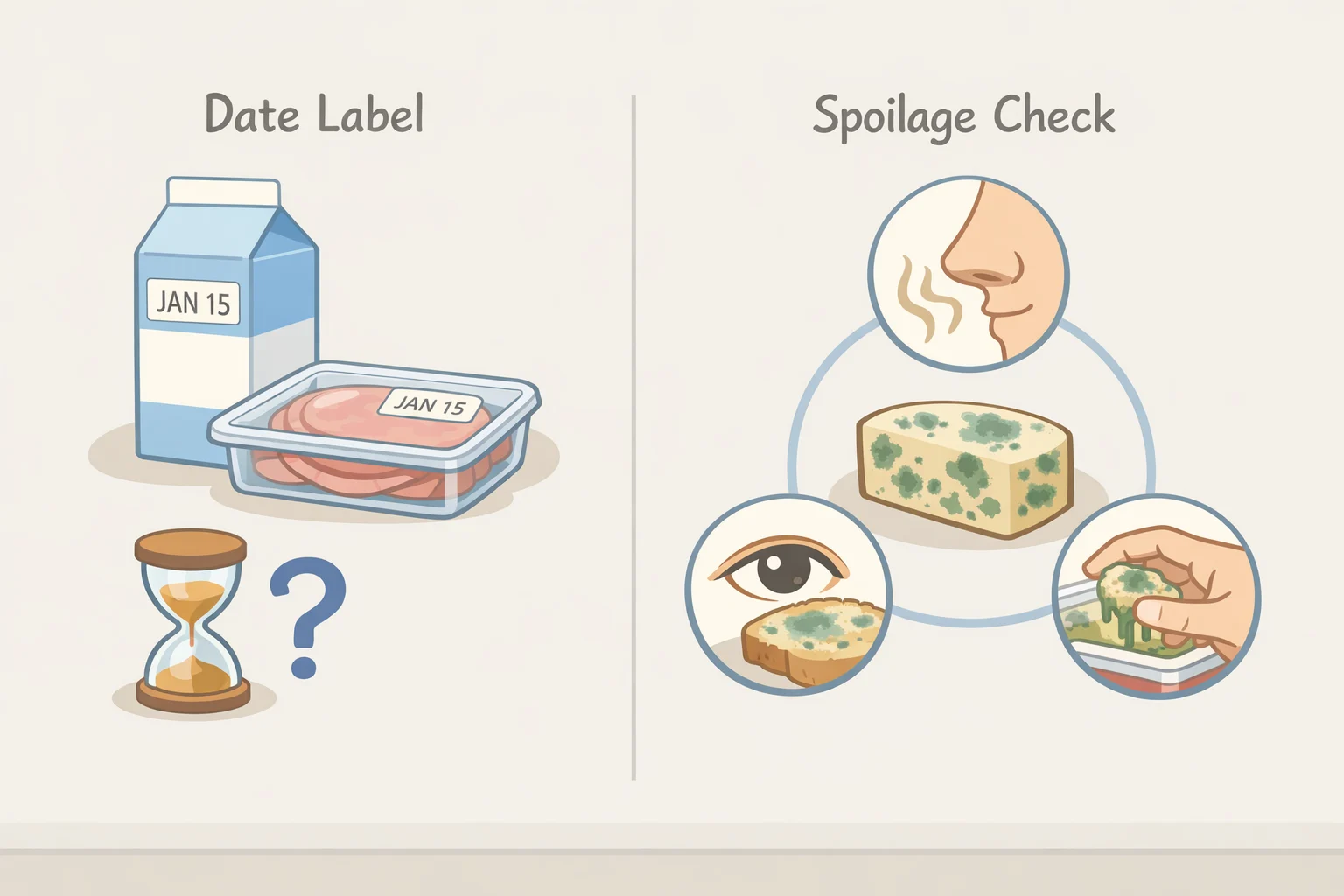
With the exception of infant formula the only food legally required to carry a true expiration date in the U.S. nearly every other date label refers to peak freshness rather than a safety cutoff, Schwan explained. "That doesn't mean if you eat it a day or two later, you'll get sick you might just notice changes in texture, taste or freshness," she said.
Specific benchmarks from UGA Extension: pasteurized milk stored at or below 40°F stays safe three to seven days past its "sell by" date; eggs remain safe three to five weeks after purchase; low-acid canned goods like beans and corn can last up to five years with proper storage; high-acid canned goods like tomatoes hold for 12 to 18 months. All per Schwan's guidance.
Storage conditions are a stronger safety predictor than any printed date, Schwan said. The real signals are sensory: off smells, slimy textures, visible mold, bulging or dented cans. For raw meat and poultry, pathogens don't always announce themselves through smell or appearance that's where printed dates carry more weight. For most other packaged foods, a passed quality date is a weaker signal than what your nose tells you.
Why the reform matters and where the evidence cuts against it
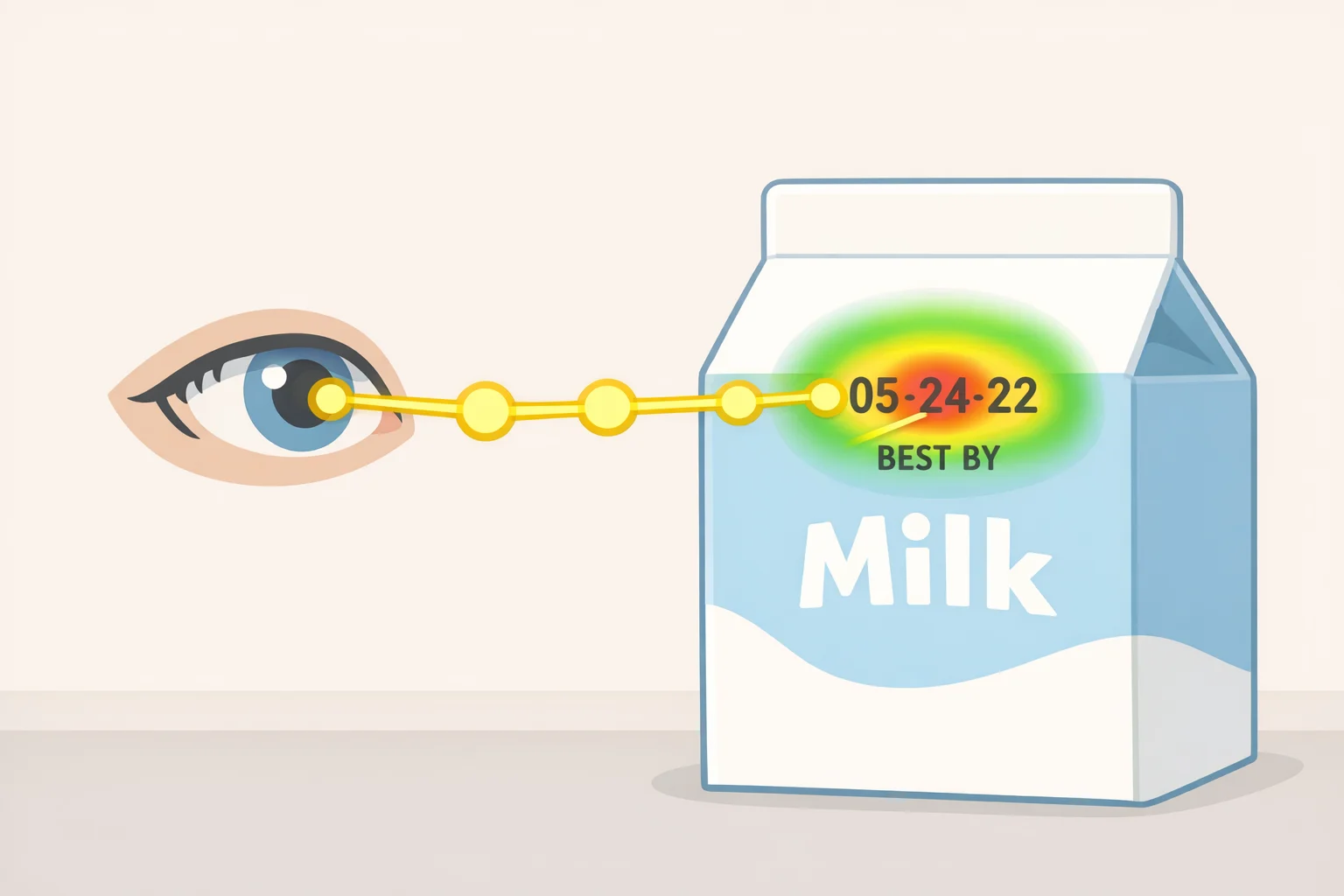
The Ohio State finding is worth sitting with. When participants intended to discard milk, the phrase on the label made no difference. What moved behavior was the number itself changing the date dramatically shifted discard rates; changing "sell by" to "best if used by" did not. The study's scope is worth noting: it focused on milk, not the full range of packaged goods AB 660 covers, and whether the same dynamic holds for canned goods or dry staples isn't established by that research. But for the product category that drives a significant share of consumer food waste, the evidence doesn't point toward wording reform as a primary behavioral lever.
Removing "sell by" from consumer packaging still corrects a genuine problem. A stock-rotation code dressed up as a consumer-facing date was a documented source of confusion, per the California Assembly press release. Whether that confusion was the main driver of discard decisions or whether the number carries that weight regardless of what surrounds it is the question AB 660 cannot answer alone.
California's environmental math gives the reform more than symbolic weight. Californians discard roughly 6 million tons of food annually, and decomposing food in landfills accounts for 41% of the state's point-source methane emissions, a gas 84 times more potent than carbon dioxide as a warming driver over a 20-year period, per the California Assembly press release. A packaging rule looks different against that number.
The federal gap

The FDA and USDA launched a joint Request for Information on date labeling in late 2024, collecting industry data and consumer research, per the FDA announcement. The comment period closed March 5, 2025. Current federal rules still allow manufacturers to use phrases other than "Best if Used By" as long as they aren't misleading, per the same FDA announcement, and no mandatory federal labeling standard has emerged from the process. The national goal of cutting food waste 50% by 2030 sits less than four years away with no federal label requirement on the books.
What California has done is move from a 2016 voluntary framework to a mandatory one that removes a specific source of consumer confusion from every store shelf in the state. Whether manufacturers respond by standardizing packaging nationally to avoid printing two versions for different markets or whether other states follow California's lead will determine how far this reform travels. Neither outcome is guaranteed.
The unanswered question is the one the Ohio State research poses directly: if consumers fixate on the number first and the phrase second, does standardizing the phrase actually change how much food gets thrown away? California's new labels make the system cleaner and more honest. What the research suggests is that honesty and behavior don't always move together. "If it looks fine, smells fine and tastes fine, it's probably fine," Schwan said and that rule applies regardless of what's printed on the package.