How to make spaghetti sauce more flavorful: fish sauce method
For a standard 24- to 25-ounce jar of spaghetti sauce, start with 1 teaspoon of fish sauce stirred in as the sauce heats. Simmer three minutes, then taste. Add a second teaspoon only if the sauce still tastes flat. That's the core of it. Everything else in this guide builds on that foundation.
One caveat before going further: fish sauce can't rescue a bad base. Serious Eats is direct on this point the best way to make a jarred sauce taste homemade is to start with a quality product, and Rao's is their benchmark. From a decent starting point, the techniques here deliver real improvement. From something watery and over-sweet, no amount of fish sauce helps.
Why fish sauce makes spaghetti sauce taste better
Video of the Day
Fish sauce is packed with glutamates, the organic compounds that make food taste deeply savory and umami-rich. Serious Eats calls it a secret ingredient in several of their best Italian preparations, including slow-cooked Italian-American tomato sauce and Bolognese. A small amount pushes a sauce toward noticeably more complex, more satisfying territory.
The aroma deserves a word. Fish sauce doesn't smell great straight from the bottle. But Serious Eats lists it alongside anchovy fillets and miso as umami additions that increase complexity and savoriness in tomato sauce without leaving an obvious trace in the finished dish. Give it enough heat and simmering time and the pungency cooks off.
Video of the Day
What to add to spaghetti sauce for more flavor: getting the quantities right
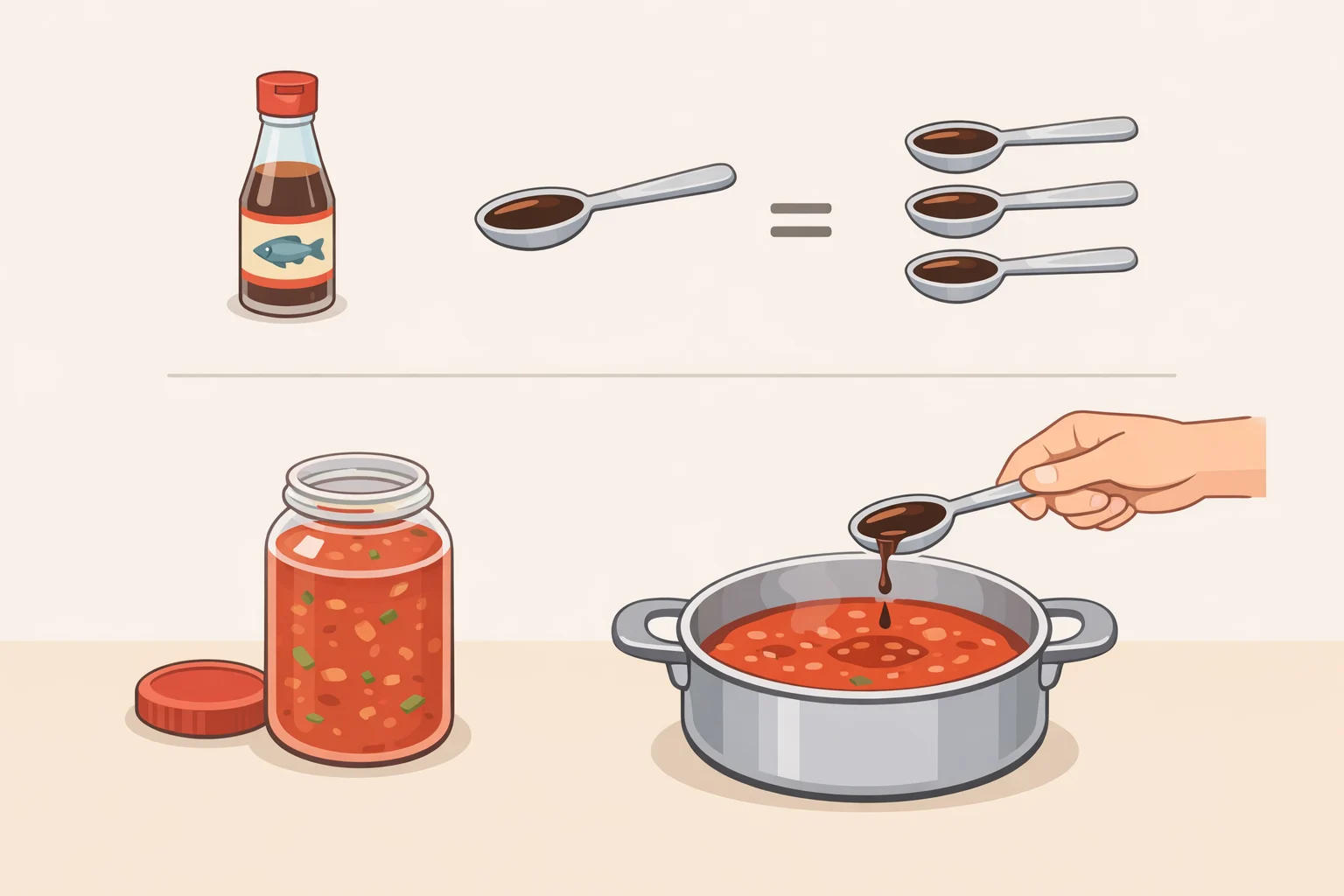
The 2-tablespoon figure that circulates in some fish sauce guidance is real, but it describes a large meat sauce, not a standard jar. Use that amount in a 24-ounce jar and you'll oversalt and overwhelm everything.
For a standard 24- to 25-ounce jar (serves 4): Start with 1 teaspoon. Stir it in as the sauce heats and simmer at least three minutes before tasting. If the sauce still tastes thin or one-dimensional, add a second teaspoon and give it another few minutes. Stop there. The goal is a sauce that tastes more complete, not one that tastes like anything specific was added.
For a large meat sauce (a pound or more of ground beef or sausage, a full can of crushed tomatoes): Tablespoon-level additions are appropriate at this scale. Serious Eats' recipe development uses fish sauce alongside beef, Italian sausage, and tomato paste to build a concentrated base that can hold up to rich dairy elements. The fish sauce quantity scales with the batch size.
Serious Eats consistently frames this as a small-quantity ingredient "a few drops" is the language in their pantry guide. One teaspoon per jar, tablespoons for a large batch: that range reflects what the sources actually support.
Timing matters. Add fish sauce early, not at the end. Stirring it in before the sauce simmers gives the heat time to mellow the aroma and let the glutamates integrate. Added off the heat at the finish, it can leave a sharper, more noticeable edge.
A note on salt: Fish sauce is salty. If the jar is already well-seasoned, hold any additional salt until after the fish sauce has had a few minutes to simmer in. Taste first. Brand variation also matters some widely available fish sauces are significantly saltier and more aggressive than others. Working with an unfamiliar brand? Start at half and adjust upward.
The full method: one pan, start to finish
Fish sauce does more as part of a sequence than dropped into a sauce that's already heating. Each step takes under two minutes. The whole process adds roughly five minutes to a weeknight dinner.
1. Heat oil or butter first. Two tablespoons of olive oil, or one tablespoon each of butter and olive oil. Medium heat. Serious Eats recommends building a fresh aromatic base even when the jar already contains garlic and onion aromatics cooked in fat create a flavor layer the sauce then absorbs in a way that jarred aromatics can't replicate.
2. Add garlic, onion, or both and cook until softened. Two to three minutes. They should smell sweet and look lightly golden, not brown. A finely minced mix of onion, celery, and carrot the Italian battuto goes further if you have the ingredients; Serious Eats identifies it as a reliable way to build more flavor and texture into the base. Sautéed mushrooms are another option from the same source, adding their own hit of umami alongside the fish sauce.
3. Push tomato paste into the center of the pan. One to two tablespoons. Stir it into the fat and cook for 60 to 90 seconds until it shifts from bright red to a darker brick color. It should smell slightly caramel-sweet, not raw and sharp. Serious Eats describes heavily reduced tomato paste as a quick way to make a sauce taste like it's been simmering for hours the concentrated paste carries a tomato depth that no amount of jarred sauce replicates on its own.
4. Add a splash of dry red wine and let it reduce. Two to three tablespoons, simmered until the raw alcohol smell has cooked off about two minutes. Optional, but worth it if there's a bottle already open. Serious Eats flags the risk directly: add the sauce before the alcohol has cooked off and a sharp, boozy note will carry through to the finish.
5. Add the jarred sauce and the fish sauce together. Pour in the sauce and stir in 1 teaspoon of fish sauce at the same time. Simmer on medium-low for at least five minutes. Taste. A second teaspoon goes in only if the sauce still tastes flat.
6. Add fresh herbs in the last two minutes. Basil and parsley lose their brightness when they simmer too long; Serious Eats recommends adding delicate herbs toward the end of cooking, or off the heat entirely, for a cleaner, brighter flavor. Rosemary and sage hold up to more heat but can turn piney if overdone use them sparingly and taste as you go. On the dried herb front, oregano handles heat far better than dried basil, which loses almost all of its flavor once dried, per the same source.
7. Finish with a small amount of acid off the heat. A squeeze of lemon juice or a splash of red wine vinegar, stirred in before serving. Serious Eats recommends this specifically for jarred sauces, which tend toward sweetness the acid balances that and sharpens the tomato character. Think of it as the step that makes everything else snap into focus.
Correcting course: what to do when it goes wrong
If it tastes slightly briny or marine: Too much fish sauce. Stir in a small amount of red wine vinegar or lemon juice and simmer two more minutes. Acid cuts through that sharpness and pulls the tomato flavor back to the front. For a minor excess, it works reliably; a major overage may need more intervention more tomato paste, more simmering time, or both.
If it still tastes flat after adding fish sauce: The issue is the base, not the seasoning. Fish sauce amplifies savory depth that's already present; it can't create it from nothing. The fix is more tomato paste, caramelized in fat if possible, stirred in and given a few minutes to integrate. For the next batch, don't skip step 3.
If it tastes too sweet: Common in lower-quality jarred sauces. Serious Eats points to acidity as the solution a small amount of red wine vinegar or lemon juice at the end cuts through excess sweetness and sharpens the tomato character. Fish sauce alone won't solve this, and adding more of it will make things worse.
How to improve spaghetti sauce flavor when fish sauce isn't the right tool
Fish sauce delivers the most noticeable improvement on jars that taste flat, thin, or lacking in savory depth. It's less transformative in sauces that are already well-seasoned.
The underlying logic applies equally to anchovy fillets melted in oil at the start of cooking, or a spoonful of miso stirred into warm fat before adding the jarred sauce. Serious Eats treats these as interchangeable options all three work through the same glutamate mechanism. The practical difference is timing: anchovies go in at the beginning of the cook, melting into the oil and becoming part of the base; fish sauce and miso go in with the sauce. If you want umami built into the fat layer rather than added after, anchovies are the better call.
For a meatier result, Serious Eats notes that even two ounces of browned Italian sausage adds considerable richness to a jarred base. That's the minimum effective amount, and it changes the character of the dish more than any seasoning adjustment will. At that point the fish sauce quantity scales up accordingly a teaspoon per jar becomes a tablespoon or more per large pot and the aromatic base in steps 1 and 2 carries even more weight.
The choice between fish sauce, anchovies, and miso mostly comes down to what's already in the pantry and when you want to build the flavor. Any of the three gets the job done.