Do Mosquito Repellent Plants Work? What Experts Say
Walk into any garden center this summer and you'll find citronella grass, lavender, and basil positioned near the checkout with quiet promises of a mosquito-free patio. The pitch is intuitive: these plants smell strong, mosquitoes are annoying, therefore the plants repel mosquitoes. The problem is that mosquito repellent plants don't actually work that way and experts from multiple university extension programs are unambiguous about it.
Iowa State University Extension puts it plainly: a plant just sitting on the patio has no effect on mosquitoes in the area. NC State Extension says there is "little scientific evidence" that so-called repellent plants reduce mosquito activity in the landscape. UF/IFAS Extension lists "mosquito plants" explicitly among products that are not effective for reducing mosquitoes.
That's the verdict. What follows is the explanation why plants with genuine repellent chemistry still fail as passive garden borders, where plant-derived compounds do have real value, and what methods actually reduce mosquito populations.
Why mosquito repellent plants don't work when they just sit there
Video of the Day
The claim that certain plants repel mosquitoes isn't invented from nothing. Citronella grass genuinely produces citronella oil, the same compound used in repellent candles and sprays. Eucalyptus, mint, basil, lavender, and marigolds all contain oils that have demonstrated mosquito-deterrent properties in laboratory conditions. The chemistry is real. The delivery mechanism of passive planting is not.
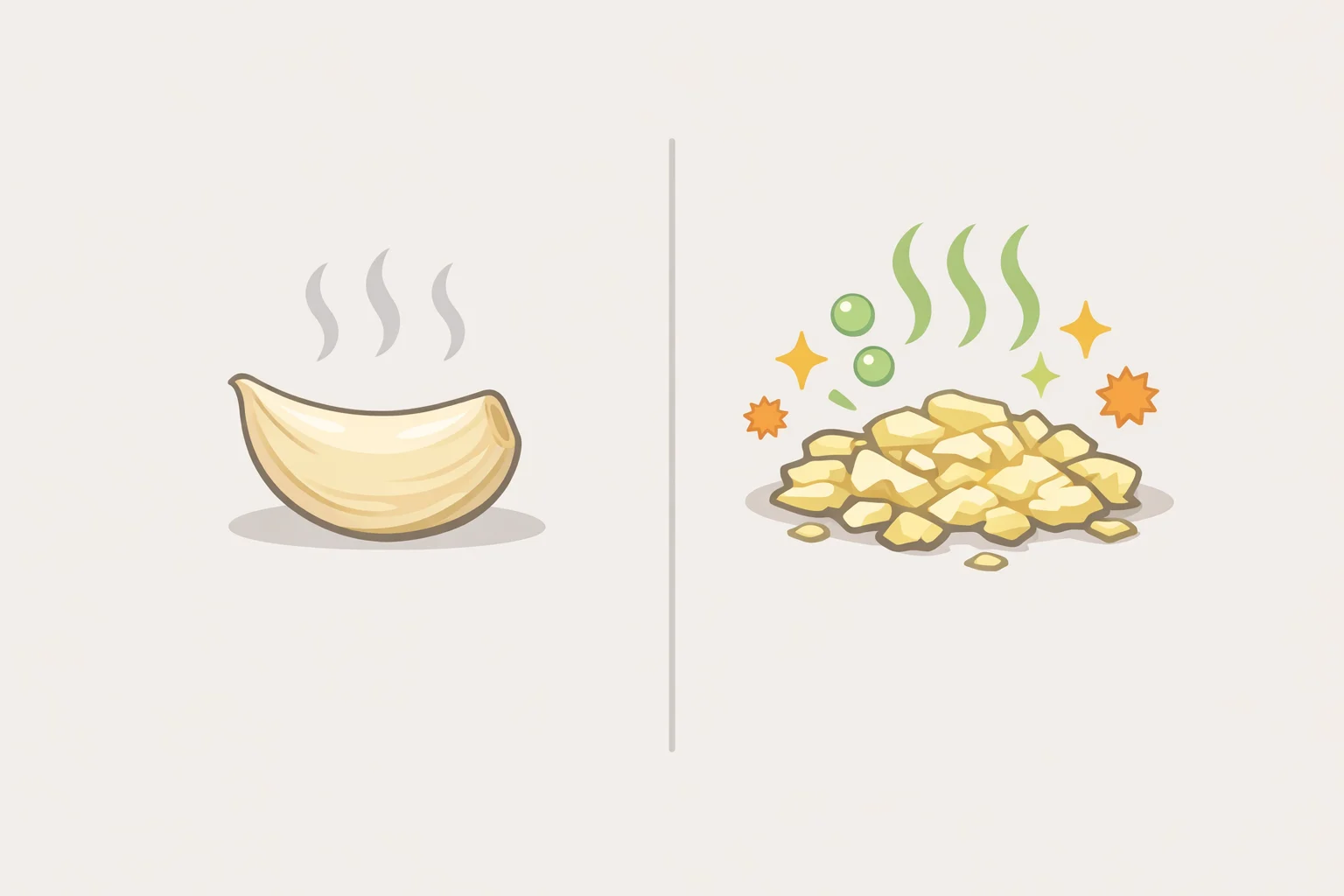
Think of it like a garlic clove sitting on a kitchen counter. The allicin is in there, locked inside the cells. You don't smell it across the room because nothing has ruptured those cells to release it. Crush the clove, and the compound floods out. The same principle applies to these plants. Their oils stay sequestered until the plant tissue is physically damaged, Iowa State Extension explains. No damage, no meaningful release.
Even crushing the leaves doesn't solve it entirely. Iowa State notes that a pile of damaged leaves left sitting on a table isn't terribly effective either, since the oils dissipate quickly rather than creating any kind of protective zone. Liah Continentino, an environmental horticulture agent with UF/IFAS Extension Monroe County, frames the core problem this way: these plants contain oils that can deter mosquitoes, "but unless you're extracting their oils and applying them like a spray, they're not doing much just sitting in your garden."
The garden center display conflates having a repellent compound with delivering that compound somewhere useful. Those are entirely different things.
Video of the Day
Where plant-derived repellents actually fit

Plant chemistry isn't worthless it's just not what the retail display implies. The distinction is between a living plant and a manufactured product derived from it.
Iowa State Extension notes that crushing leaves and rubbing the oil directly on skin does provide some protection, though only at a fraction of the rate of products developed and used as repellents, such as DEET. This is the meaningful use case for plant chemistry: concentrated, applied directly to skin, not left to drift from a pot on a deck railing.
Citronella and oil of lemon eucalyptus are both legitimate plant-derived repellent ingredients, and both appear in formulated sprays that have been tested for protection time. The numbers tell the story. Testing summarized by UF/IFAS found that a 23.8% DEET product provided about five hours of complete protection; a 20% DEET controlled-release formula provided four hours; a formulated oil of lemon eucalyptus spray provided around two hours. Citronella-based spray products landed between 10 and 20 minutes.
Two hours versus five hours is a meaningful gap if you're spending an evening outdoors. Ten to twenty minutes is barely worth applying. But all of those formulated sprays even the citronella ones are operating in a completely different category from a potted plant. They're concentrated, designed for skin contact, and tested for measurable protection time.
One more thing worth knowing: products marketed as "natural" mosquito solutions are often exempt from EPA registration requirements, which means they may have no evidence of effectiveness at all, NC State Extension warns. "Natural" on a label is a marketing category, not a performance standard.
What actually controls mosquitoes: eliminate breeding sites first
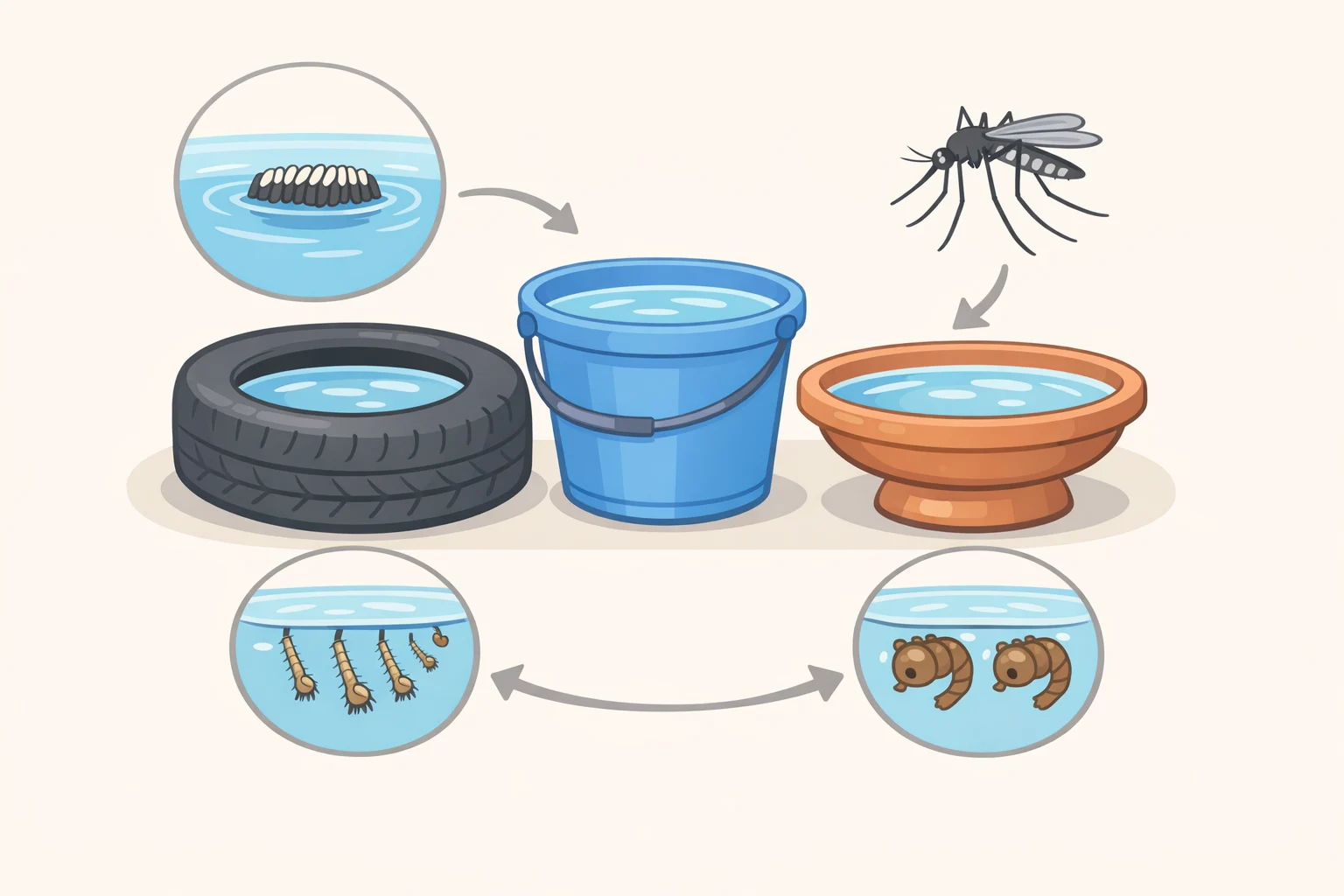
Mosquitoes have a water dependency that makes them unusually vulnerable to a specific kind of intervention. They lay eggs in or near standing water, and the larvae and pupae that follow can only survive in water they can't complete development on dry land. Disrupt the water, and you cut the population off at its source, the CDC explains.
The threshold for a viable breeding site is startlingly low. Jennifer Pelham, director of UF/IFAS Extension Martin County, notes that even the water that collects in a bottle cap is enough, as UF/IFAS reported. Plant saucers, bird baths, pet bowls, bromeliad cups, clogged gutters, upturned lids any of these can sustain larvae through the 10 to 14 days it takes to emerge as a biting adult, per NC State Extension. The life cycle is fast. A missed week matters.
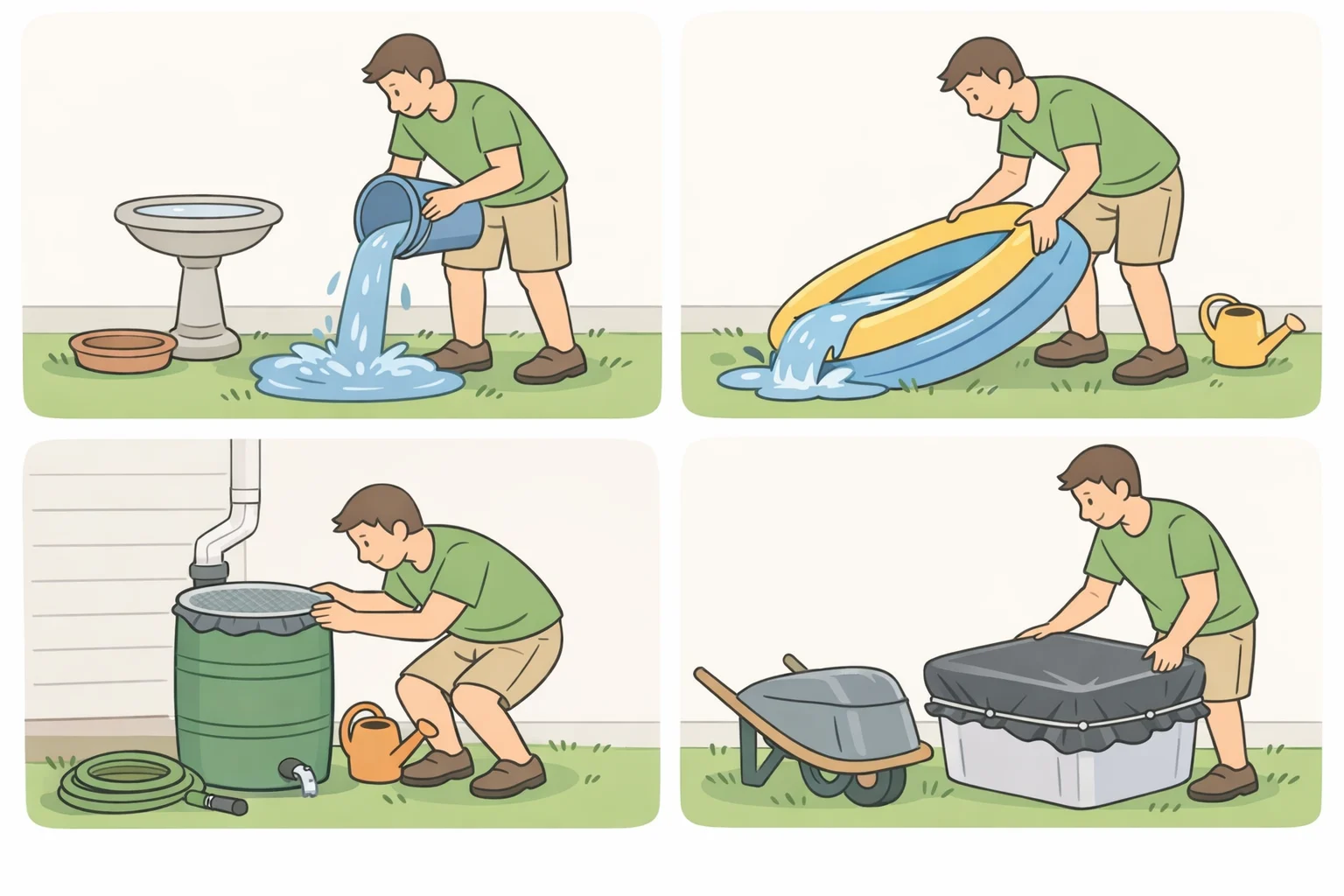
The CDC recommends emptying, scrubbing, turning over, or covering any item that holds water on a weekly schedule. That cadence maps directly to the development timeline: catch the larvae before they become adults, and they never bite. Practical targets:
- Empty plant saucers, buckets, tarps, and clogged gutters every week
- Refresh birdbaths and pet bowls several times a week; flush bromeliad cups with a hose
- Screen rain barrels to block mosquito access
- For water that can't be drained ornamental ponds, decorative water features use larvicide products containing Bacillus thuringiensis israelensis (BTi), which kills mosquito larvae without harming people, pets, fish, or beneficial insects like dragonflies, NC State Extension explains
This is the intervention that removes mosquitoes from the environment rather than trying to push them away with a nearby plant.
Why one yard isn't enough
Source reduction works. The catch is that mosquitoes can travel anywhere from a few hundred yards to several miles, NC State Extension reports. A spotless yard with zero standing water can be reinvaded within hours from a neighbor's clogged gutter or an abandoned bucket three houses down. This is also why yard-wide pesticide spraying tends to disappoint: the results are short-lived because new mosquitoes quickly move back in from surrounding areas.
When neighborhoods coordinate to eliminate breeding sites across a wider area, the population drop is substantially greater than anything a single property can achieve, NC State notes. Local mosquito control programs formalize this logic. The CDC describes integrated mosquito management (IMM) as a combination of surveillance, breeding-site elimination, larval control, adult control, and ongoing monitoring a system designed to act before mosquito populations reach levels where disease transmission becomes a risk.
For readers who want practical steps right now, rather than waiting for neighborhood coordination, a few individual measures have genuine evidence behind them. Run a fan on a patio: mosquitoes are weak fliers, and moving air disrupts them significantly, NC State Extension notes. Keep window and door screens in good repair. Wear long sleeves and pants during peak activity hours. Apply an EPA-registered repellent to exposed skin products containing DEET, picaridin, or formulated oil of lemon eucalyptus are among the options with documented protection times, per UF/IFAS repellent research.
Two gadgets worth skipping: bug zappers, which are used at night when most mosquitoes aren't active and kill far more beneficial insects than mosquitoes, and some mosquito traps, which may actually attract more mosquitoes than they capture. Both are flagged by NC State Extension as common missteps.
What to do instead
The plants can stay in the garden they're fine plants. Just don't count on them for mosquito control.
Iowa State Extension is direct: using plants placed in the landscape as mosquito repellents does not work. The most effective household-level action is eliminating standing water on a weekly schedule a conclusion the CDC, NC State, and UF/IFAS all arrive at independently. For personal protection, an EPA-registered repellent applied to skin beats any garden arrangement: a 23.8% DEET product provided five hours of protection in testing; citronella-based sprays offered 10 to 20 minutes, per UF/IFAS repellent research.
Readers who want to go deeper can look up their local mosquito control program through the CDC's mosquito control resources to find out whether surveillance-based larvicide treatments or adult control are available in their area. The gap between "this plant smells like a repellent" and "this plant protects your yard" is the gap between a compound sitting in a cell and that compound reaching a mosquito. No amount of strategic plant placement closes it.