Day of the Dead, or Día de Los Muertos, might be a Latino holiday centered on death—but it's far from morbid. A distinct holiday from Halloween, the celebration of life spans two days—November 1 and 2—and gives people a chance to pay their respects to their deceased loved ones. November 1 is reserved to honor children who have passed, and November 2 honors departed adults. While Day of the Dead traditions vary from region to region, revelers adorn their homes and graveyards with bright yellow marigolds, create altars with their ancestors' favorite food and drinks, and use face paint to dress up as calaveras.
History of Día de Muertos
Video of the Day
The beginnings of Día de Muertos can be traced back to the Aztecs, a pre-Columbian culture indigenous to Central Mexico. The Aztecs believed that when a person died, they embarked on the long journey to Mictlan, the Land of the Dead. To help their loved ones reach Mictlan, the Aztecs performed a ritual every August providing food, water and tools to the deceased.
Video of the Day
The celebration evolved after the Spanish conquistadors colonized Mexico in the 16th century, and the holiday shifted to fit the traditions of the Catholic church. The holiday was moved to early November to align with the more somber Catholic and Celtic holidays of All Saints Day and All Souls Day.
7 Ways to Celebrate the Day of the Dead
Anyone looking for ways to participate in the holiday and honor their ancestors has several options. Here are seven ways to celebrate the Day of the Dead.
1. Build an ofrenda
Día de los Muertos is a time when the deceased return to reunite with their family members. One of the biggest ways to beckon spirits is by creating an ofrenda, or altar.
An ofrenda starts with items to represent each of the four elements: a candle to guide a spirit along their journey (Fire); water for their long travels (Water); their favorite foods to keep them nourished (Earth); and colorful paper banners, or papel picado (Wind).
You can also incorporate personal touches like photos, keepsakes from your deceased relative, candy skulls and flowers.
2. Display marigolds
Marigolds, or cempasúchiles, are key for Day of the Dead celebrations. Their unmistakable orange-yellow hue and powerful scent are thought to guide spirits back to their loved ones in time for the holiday. You'll find marigold flowers on ofrendas, in cemeteries and outside people's homes.
3. Make your own papel picado
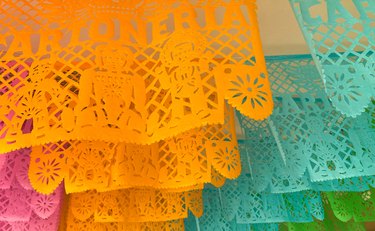
Papel picado are colorful banners that are a staple decoration for the Day of the Dead. The vibrant sheets of tissue paper are cut out with designs of flowers, birds and skeletons and strung up along homes, altars, churches and cemeteries. It's believed that the cutouts allow visiting spirits to pass through.
Some designs are intricate, but you can make your own pared-down version. Grab some tissue paper, scissors and string to form a banner and get to work!
4. Dress up as a calaveras
Calacas (skeletons) and calaveras (skulls) are the most commonly associated symbols for Dia de los Muertos, but it's La Catrina that's become the face of the holiday.
Mexican political cartoonist and printmaker Jose Guadalupe Posada created the image of La Catrina in 1910 in a piece called La Calavera Catrina (the elegant skull), which became his most well-known work. The piece was meant to satirize Mexicans who abandoned their own heritage and traditions in favor of European customs. Over time, the image of La Catrina became linked with the holiday.
5. Prepare traditional food
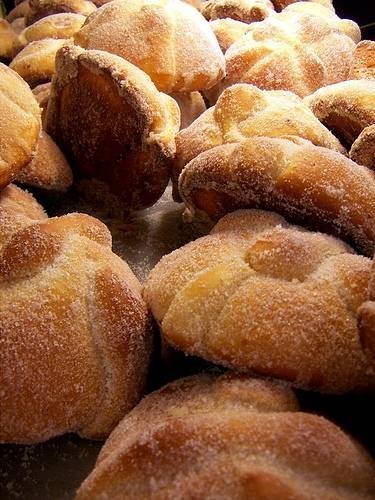
Food is a major element of Día de los Muertos celebrations, and the most important is pan de muerto, or bread of the dead.
Pan de muerto is a sweet, eggy bread decorated with crisscrossed "bones" on top. Bakeries are stocked with the bread in the weeks leading up to the holiday.
Sugar skulls, tamales, mole, and a corn-based beverage called atole are also typical.
6. Visit a loved one's gravesite
Día de los Muertos is all about celebrating and honoring your loved ones, so what better way than to pay them a visit and adorn their gravesite.
Typically, families bring offerings of food, flowers—and sometimes alcohol—to the graves of their deceased. There, they spend time sharing stories, recounting memories and bringing life to a somber space.
7. Attend a community event
Día de los Muertos is meant to be celebrated in community, surrounded by your family, friends and neighbors. Often, cities organize parades, festivals or other events to bring people together for the Mexican holiday. Figure out what your community is doing to celebrate!
Tip
While many countries in Latin America celebrate on November 1 or 2, countries around the world have different approaches to the holiday. For example, Bolivia celebrates Día de las Ñatitas on May 5 in addition to Día de los Muertos, while Guatemala only celebrates November 1 by building and flying massive kites. In the U.S., Día de los Muertos is celebrated on both November 1 and 2.
You don’t have to be Latinx to honor and celebrate your loved ones who’ve passed, but it is important to remain culturally sensitive when participating in another culture’s traditions