How to prevent condensation in your home: a 5-step fall routine
The first real cold snap of the season is when windows start sweating and closets start smelling like a gym bag left in the trunk. Warm air holds more moisture than cold air, and when it meets a cold window or wall, that moisture has to go somewhere. It shows up as fog on the glass, a damp patch on drywall, or a musty smell in a closet that never quite airs out.
Learning how to prevent condensation in your home comes down to a handful of habits grounded in federal guidance. Some of it comes from CDC material written for mold cleanup and flood recovery, and some comes from EPA guidance on home humidifiers. Neither was written specifically for a foggy bedroom window, but together they offer solid principles for ordinary fall dampness, along with an honest account of where that guidance runs out.
Two numbers anchor everything that follows, and they're really the same number stated twice. The CDC's ceiling is 50 percent indoor humidity, maintained all day rather than just at peak dampness, and the EPA sets that identical threshold as the point where a humidifier should stop adding moisture. Both agencies treat 50 percent as an upper limit rather than an official sweet spot, which makes it a reasonable anchor for a fall routine without pretending it's some universal standard.
What follows is four preventive habits: measuring, dehumidifying, venting, and keeping humidifiers clean, plus a fifth step for when a musty smell or mold turns up anyway. Found mold despite all that? Wiping away the spot without fixing what caused it doesn't solve the problem, and Step 5 covers why. There's also a boundary worth flagging early: if humidity is already under control and condensation keeps coming back to the same spot, a hygrometer and a dehumidifier aren't going to fix that on their own.
Step 1: Measure your humidity, don't guess at "damp"
Video of the Day

Start with a number instead of a feeling: 50 percent relative humidity, maintained throughout the day rather than just at its worst. That's the ceiling the CDC sets for mold prevention, and it's the exact figure the EPA uses as the point where a humidifier should stop adding moisture, which is why it works as the practical upper limit for this whole routine.
An inexpensive hygrometer turns "it feels damp in here" into a reading you can act on. Both agencies set an upper limit here, not an official floor, so resist treating "30 to 50 percent" as some agency-endorsed sweet spot. That range shows up often in home-improvement advice, but it isn't what these two sources actually say.
Once there's a reading, the next move depends on which side of 50 percent it lands on. Above that line, move to Steps 2 and 3 and start actively pulling moisture out of the air and venting it outside. At or below 50 percent with a window or room that still sweats repeatedly, the remaining steps in this routine won't do much more for you, and it's worth reading the section below before assuming you just need a bigger dehumidifier.
How to stop condensation on windows when humidity is already low
This is where the routine runs into its limit. If humidity is already controlled and a window or wall still fogs up or feels damp, the issue is more likely the surface temperature, the insulation, or a leak than overall humidity. A single-pane window in an unheated room will condense well before a double-pane window down the hall does, even in the exact same air.
A few quick comparisons can narrow down what's going on, as a matter of practical troubleshooting rather than anything drawn from the cited health guidance:
- Compare the problem window or wall with others nearby. If just one spot sweats while the rest of the room stays dry, that points to something local, like a thin pane, a poorly sealed frame, or a gap in insulation, rather than whole-house humidity.
- Check for staining, peeling paint, soft drywall, or recurring dampness near plumbing lines and exterior walls. Those are signs water is getting in from somewhere other than the air.
- Note whether the dampness shows up in one window, one room, or across the whole house. A single trouble spot usually means a localized fix; a pattern across multiple rooms points back to overall humidity.
If a leak or a cold spot isn't obvious after a reasonable look, bring in a qualified contractor or home inspector. These housekeeping fixes were never built to solve a structural problem, and cycling through them again won't change that.
Video of the Day
Step 2: Pull moisture out of the air to reduce humidity in the house
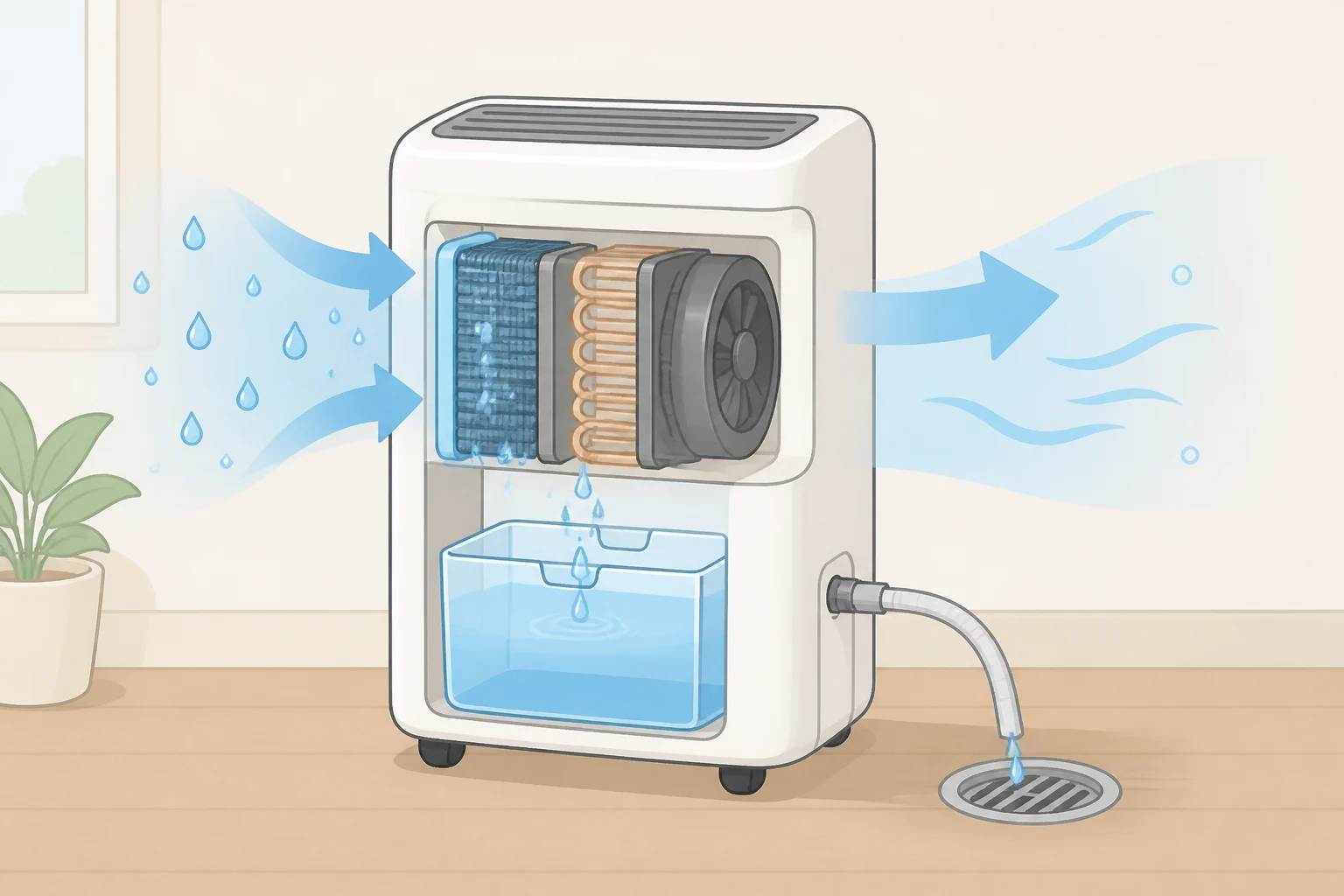
When the number comes in high, the fix is active removal rather than waiting for the air to dry out on its own. CDC guidance written for flood recovery recommends running fans and dehumidifiers to pull excess moisture out of a space. That guidance was built for homes recovering from a flood, but the underlying principle, actively removing moisture instead of letting it sit, applies just as well to an ordinary damp fall room.
Fall tends to make the problem more noticeable. As homes close up for the season and windows stay shut against the cold, moisture from cooking, showering, and just breathing has fewer places to go than it did when a window could be cracked open on a mild afternoon. A dehumidifier pulls water vapor out of that air and collects it in a tank or sends it down a drain, instead of leaving it to settle into windowsills, closets, and walls.
None of the research specifies ideal unit size, placement, or settings for a bedroom or living room, so there's no precise formula to hand over here. Run the dehumidifier, recheck the hygrometer after a day, and adjust from there. Less satisfying than a chart of numbers, maybe, but an honest reflection of what the guidance actually covers.
Step 3: Vent moisture outward, not just around the room
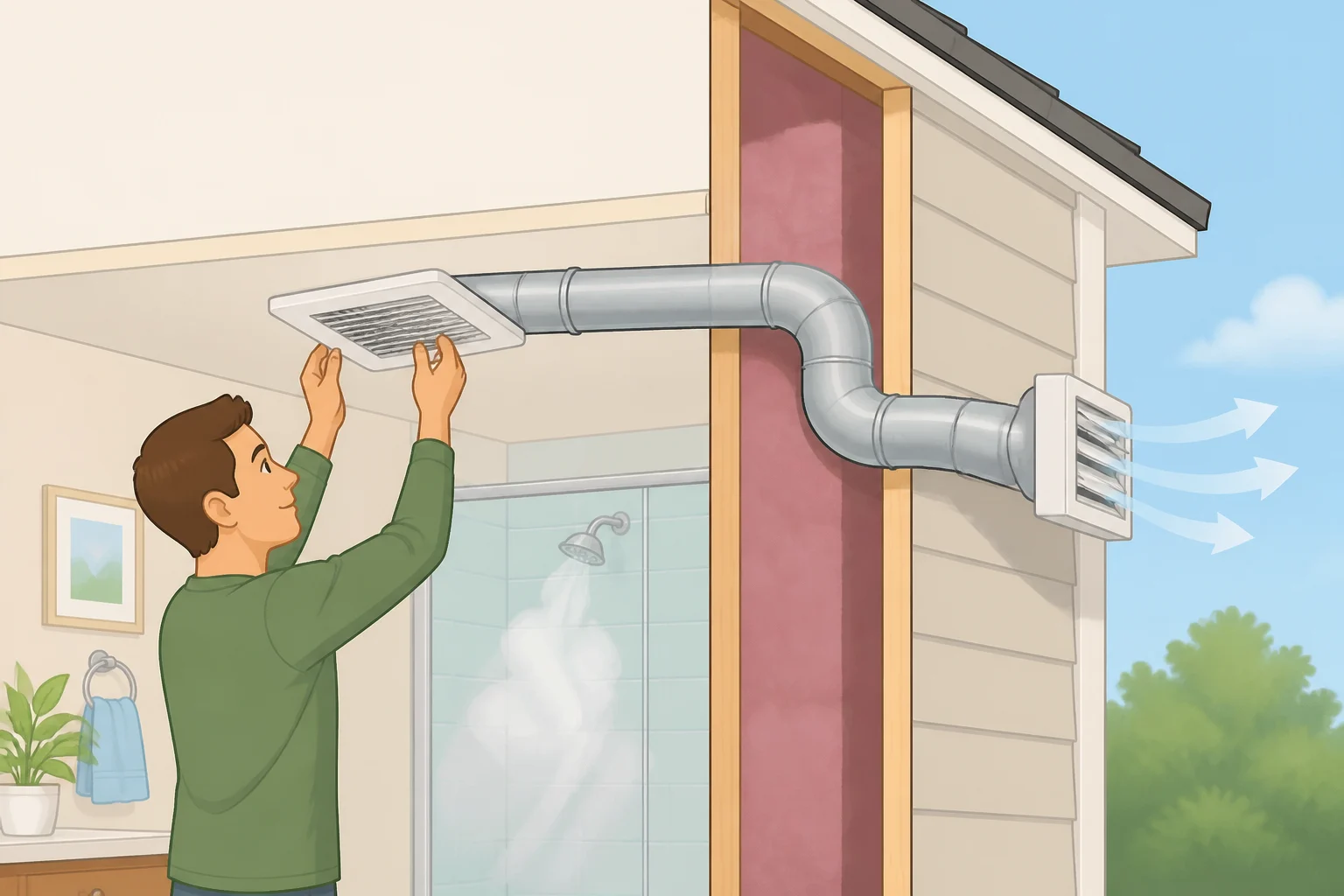
Moving air around a room is not the same as getting moisture out of the house. A box fan circulating air just redistributes the same moisture; it doesn't remove anything. CDC guidance on fan placement, pointing a fan out through a window or door rather than back into the room, comes from flood and mold-cleanup protocols specifically, so treat it as a principle borrowed from a more extreme situation rather than a lab-tested recommendation for everyday dampness.
Even so, the logic carries over. An exhaust fan running during a shower, or a cracked kitchen window while something simmers on the stove, is doing the same job on a smaller scale: pushing moist air outside instead of letting it settle into walls, closets, and window frames. Nobody tested that exact scenario, but the distinction between exhausting air outward and simply stirring it around the room still holds.
A bathroom exhaust fan that vents into an attic rather than outside is a common version of this mistake. It feels like it's doing something, and it's still just relocating the moisture instead of removing it.
Step 4: Maintain humidifiers so they don't cause the problem they're meant to solve
A humidifier that isn't cleaned can recreate the exact dampness it was bought to prevent. The EPA warns against humidifying past that same 50 percent ceiling, and it specifically cautions against letting the area around the unit get damp or wet. Standing water in a humidifier tank is a known breeding ground for microorganisms, according to the same guidance.
The fix, per EPA maintenance guidance, is a routine rather than a one-time setup. Unplug the unit before cleaning it. Empty and dry the tank daily. Refill with distilled or low-mineral water where practical, since mineral buildup forms scale that can itself harbor microorganisms, though plain tap water isn't forbidden, just less ideal. Clean the entire unit every third day, and if a cleaning or disinfecting agent is involved, rinse the tank thoroughly afterward so chemical residue isn't misting into the air along with the moisture.
Skip that upkeep, and a humidifier can quietly push a room past the 50 percent line from Step 1, undoing everything the earlier steps accomplished.
Step 5: How to get rid of musty smells in the house (and what to do about mold)
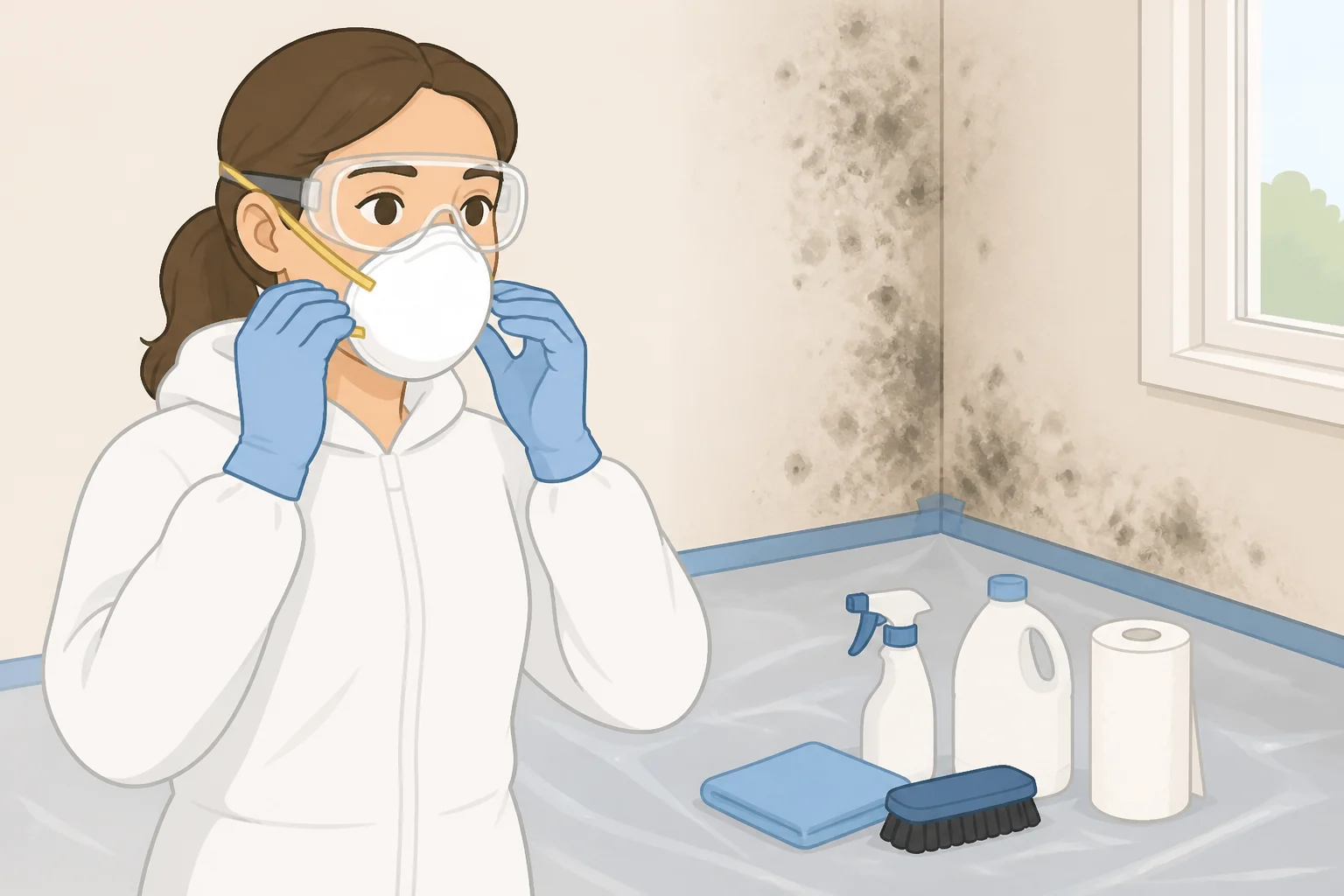
If the first four steps haven't solved it, the problem has moved past prevention. A musty smell is reason enough to inspect for dampness or visible growth and deal with whatever is causing it. CDC guidance applies once mold is actually seen or smelled: remove it, and fix the moisture problem behind it, not just the symptom in front of you.
For hard surfaces, CDC cleanup guidance keeps it straightforward: household cleaning products, soap and water, or a bleach solution of no more than one cup of bleach per gallon of water, with a window or door open for fresh air the entire time. The agency doesn't recommend testing to identify which species of mold is involved. Whatever the species, the directive is the same: remove it and correct the moisture source behind it.
Before cleaning visible mold:
- Never mix bleach with ammonia or any other cleaner. The combination produces toxic gas, per CDC cleanup guidance.
- People with asthma, COPD, immune suppression, or allergies face heightened risk and shouldn't take part in cleanup, the same CDC guidance notes.
- Wear at least a NIOSH-approved N95 respirator, protective gloves, and goggles that provide complete eye protection, not vented safety glasses, per CDC guidance for mold cleanup after disasters.
What counts as an adequate response depends on how much water damage the home has taken and where the mold is growing, and the CDC is explicit on that point. Wiping down a small patch on bathroom tile is a different job than dealing with soaked drywall after a leak that's been seeping for weeks; porous materials that have absorbed water often need to be removed rather than cleaned.
That's also where this routine's scope ends. An HVAC system that's been exposed to floodwater needs to be checked and cleaned by an experienced professional before it runs again, since turning on a mold-contaminated system will spread mold through the whole house, per CDC flood guidance. That standard applies to flood-exposed systems specifically, not to every ordinary HVAC unit that happens to share a house with a mold problem.
Keeping fall home moisture control simple
The routine holds together because each step targets moisture at the point where it tends to build up: measure against the 50 percent ceiling, pull existing moisture out and vent it outside when the number runs high, keep humidifiers scrupulously clean, and treat a musty smell as a cue to find and fix the source rather than mask it. A hygrometer and a dehumidifier can't repair a cold windowpane or trace a leak behind a wall, which is exactly why the cleanup guidance above pairs removing mold with fixing the underlying moisture problem instead of treating cleanup alone as sufficient.
Knowing when to stop troubleshooting and call a contractor isn't a failure of the routine. It's the last step of it, and the one most homeowners skip until a damp spot has had months to turn into something worse.