What Does Soil Level Mean on a Washing Machine? HE Guide
Most people glance at the soil level dial on their washer and assume it works like an intensity knob: more soil, more water, more scrubbing power. On the Whirlpool and Maytag top-load HE washers covered here, the manufacturer documentation identifies soil level primarily as a wash-time control (Whirlpool documentation). It doesn't set the fill level on its own. What it changes is how long the wash portion of the cycle runs.
Both manufacturers spell this out in near-identical language. The control is labeled "Soil Level (wash time)," and that parenthetical is doing real work: it tells you exactly what the dial adjusts (Maytag documentation). Touch the soil-level pad on the console and watch the display. The estimated time remaining ticks up or down in minutes as you move between settings, which is about as direct a piece of evidence as a washer can offer (Maytag documentation).
This guide draws specifically on Whirlpool and Maytag top-load HE washer documentation, and it separates two things people tend to blur together: the soil-level setting a person selects on the console, which is documented as a wash-time control, and automatic load-sensing, a separate feature on some models that reads soil level as one input for adjusting both water and duration (Whirlpool documentation).
Does soil level change wash time?
Video of the Day
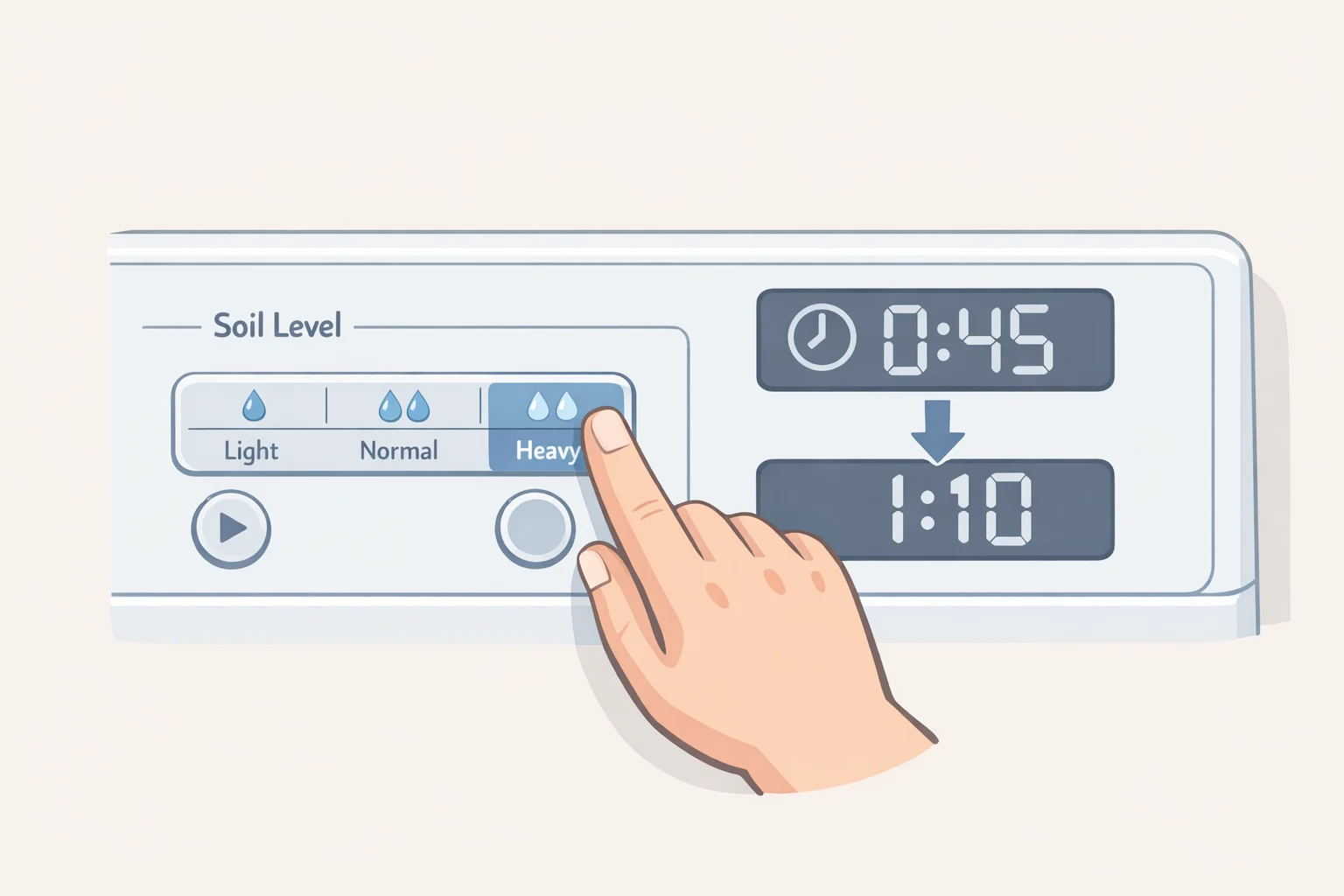
Yes, and that's essentially the whole function of the manual control. Both Whirlpool and Maytag document soil level as preset for each wash cycle, meaning the baseline time comes from the cycle itself, and the soil-level pad shifts that baseline up or down (Whirlpool documentation; Maytag documentation). Select Extra Heavy Soil Level for a heavily soiled load and the machine adds wash time. Select Light Soil Level and it trims time off the cycle (Whirlpool documentation).
There's a documented side benefit to picking a lighter setting when it fits: a lighter soil level setting helps reduce tangling and wrinkling (Maytag documentation). So dropping a lightly worn load down to Light isn't just faster, it's gentler on the fabric too.
A stove burner is a decent comparison. Turning up the heat under a pot doesn't make the pot bigger, it changes how long the contents cook. Soil level works the same way on these machines: it's documented as changing how long the wash portion runs, not how much water fills the tub.
That distinction matters because a second, separate system exists on some models. Automatic sensing, where the washer has it, detects both load size and soil level and uses that reading to adjust water level and cycle duration together (Whirlpool documentation). The soil-level pad a person presses is documented as a time control. Auto-sensing is a different, model-dependent feature that happens to use soil level as one of its own inputs. The rest of this guide keeps those two mechanisms separate, because that's how the manufacturers describe them.
Video of the Day
How to choose soil level on a washer
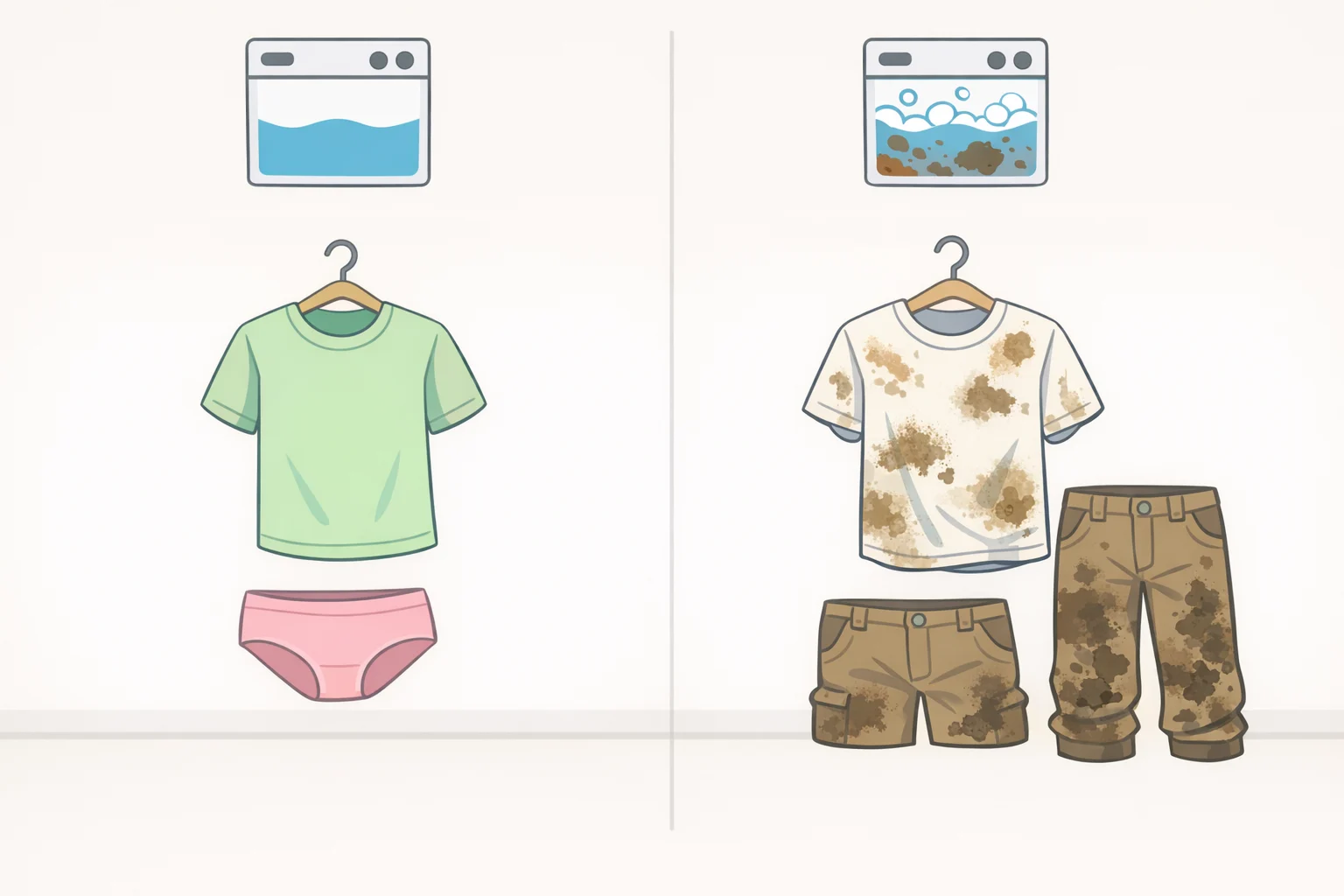
Manufacturer guidance here is intentionally broad. Both Whirlpool and Maytag simply instruct users to select the most suitable setting for the load, based on how soiled the items are (Whirlpool documentation; Maytag documentation). Neither company's supplied documentation ties the setting to how full the drum is; the guidance is framed around visible soiling, not load size.
A couple of documented reference points make this easier to apply. For heavily soiled items, both manufacturers recommend Extra Heavy Soil Level for more wash time, which suits mud-caked activewear or grease-stained work clothes that need extra minutes to work on ground-in grime (Whirlpool documentation). For lightly soiled items, Light Soil Level trims wash time, which fits something like a shirt worn once to the office or pajamas that saw a night of light wear.
Many models also offer a middle setting between those two extremes for ordinary, visibly worn laundry. Neither manual spells out exactly how many minutes that setting adds or subtracts relative to the extremes, so treat it as a reasonable in-between choice rather than a precisely defined default. How many minutes any level actually shifts varies by cycle and model, and neither manufacturer publishes a shared table of thresholds. The owner's manual for a specific washer is the place to check if that detail matters.
Framed this way, soil level is a tradeoff between wash time and fabric wear, not a dial to max out on every load. Using Extra Heavy Soil Level on lightly worn items adds wash time without a documented reason to do so.
A sensible order of operations: pick the cycle that fits the fabric and load type first, then use soil level within that cycle to adjust wash time for how dirty the load actually is.
Soil level vs. water level: two different systems

On the Whirlpool models documented here, water level is described in terms of the cycle selected. Quick Wash or Express Wash requires a minimum fill, just a few inches of water in the bottom of the drum. Normal, Casual, and Wrinkle Control fill to slightly less than half. Delicate, Hand Wash, Whites, Heavy Duty, Deep Water Wash, Power Wash, and Super Wash fill to about half full, and Bulky results in a complete fill (Whirlpool documentation).
The lesson isn't to run everything on Bulky for more water. It's to match the cycle to the load, and to use a Deep Water Wash option where the model has one if a load genuinely needs more water.
Rinse behavior is a separate variable that has nothing to do with soil level. Some cycles default to a spray rinse, but choosing the Fabric Softener option switches the washer to a full rinse instead (Whirlpool documentation). That's a rinse-stage decision, distinct from anything the soil-level pad governs.
Then there's auto-sensing, mentioned above. On washers equipped with it, the machine detects load size and soil level and uses that reading to adjust both water level and cycle duration, with the stated goal of conserving water and energy while maintaining cleaning performance (Whirlpool documentation). It's a separate, model-dependent system from the pad a person presses on the console, and it's the one place where soil level, as read automatically rather than selected manually, feeds into a water decision.
Because of that sensing step, a couple of things that look like problems usually aren't. The washer may run short, slow spins first to estimate load size, and these sensing spins may take 2 to 3 minutes before more water is added (Whirlpool documentation). Someone watching might read that stretch as a pause, though it's documented as a normal step in the sensing sequence. A wash load not being fully submerged partway through a cycle is also documented as normal and necessary for the clothes to move, especially on units with a wash plate in the bottom of the drum (Whirlpool documentation).
One maintenance note worth flagging: running the Clean Washer cycle with affresh® Washer cleaner about once a month recalibrates the machine back to its factory-set water levels (Whirlpool documentation). That's documented as general upkeep for the water-level system, not a fix tied specifically to soil-level behavior.
Put together, the core distinction to carry into laundry day: on these documented Whirlpool models, cycle selection and rinse options govern water and rinse depth, automatic sensing (where present) folds soil level into its own water and duration adjustments, and the soil-level pad a person selects manually governs wash time. A reader who wants more water in the tub should reach for a different cycle or a Deep Water option, not assume that raising the soil-level setting will do it.
Choosing wisely, and knowing where the manual takes over
Soil level, on these machines, is documented as a wash-time control. Extra Heavy adds minutes for tougher loads, Light trims them for gentler ones. The practical habit worth building is simple: pick the cycle for the fabric and load first, then use soil level to fine-tune the wash time for how dirty that load actually is, rather than defaulting to the highest setting out of habit.
If clothes come out visibly dirty despite the correct soil setting, the owner's manual for that specific model is the place to check next rather than pushing the soil-level dial higher.
All of this is documented specifically for Whirlpool and Maytag top-load HE washers. Front-loaders, older non-HE machines, and other brands may not split time and water the same way, so it's worth confirming against the manual that actually came with the washer in question before assuming the logic carries over.