Cleaning products you should never mix, according to EPA and public health officials
A closet under the sink holds bleach, glass cleaner, a scrub brush, and maybe a bottle of vinegar for wiping down the microwave. None of it looks dangerous until two of those products end up in the same bucket. These are the cleaning products you should never mix, and bleach is the common thread running through nearly all of them: combine it with the wrong household chemical and a routine countertop wipe-down can turn into a toxic gas exposure in seconds, no lab required, just a sink and the wrong two bottles.
The EPA is blunt about it: don't combine cleaning products, and keep bleach away from other chemicals entirely. Most people never think of a second wipe-down of the counter as "mixing chemicals," but that's exactly what it can be.
Between 2007 and 2022, an estimated 240,862 children age five and younger were treated in U.S. emergency departments for injuries tied to household cleaning products, a study published earlier this year found. Bleach was associated with 30.1% of those cases and detergents with 28.6%, the two largest categories in the data, though the study tracked injuries from cleaning products broadly rather than injuries specifically caused by mixing two products together (PubMed-indexed study). The combinations covered here, bleach with ammonia, bleach with acids, and hydrogen peroxide with vinegar, share the same underlying problem: two harmless-looking bottles that turn out to be chemically incompatible.
This piece covers those specific combinations, the chemistry behind why they're dangerous, what to do if a mixing accident happens, and how to clean a house without accidentally starting a reaction nobody meant to start.
What cleaning products should you never mix?
Video of the Day
Public health agencies don't offer a nuanced hierarchy of risk here. The Alabama Department of Public Health, in guidance published last year, is direct: household chemicals should never be combined. That's a behavior rule, not a chemistry puzzle to solve case by case.
In practice, that doesn't always mean pouring two bottles together on purpose. It could mean forgetting to rinse a bucket before adding a new cleaner, using the same rag on two different products back to back, or refilling a spray bottle without cleaning it out first. None of that looks like a deliberate mix. It still counts as one.
Think of bleach as the ingredient in the cabinet that doesn't play well with almost anything else, the way one bad ingredient can ruin an entire recipe. That's true whether it lands in ammonia, an acid, or something else marketed as gentle.
The sections that follow cover three specific pairings drawn from public health guidance: bleach with ammonia, bleach with acids such as vinegar or lemon juice, and hydrogen peroxide with vinegar. Bleach shows up in two of the three because it reacts with a wide range of ordinary household products, which is why the EPA's warning is worth repeating: don't mix cleaning products, and don't add bleach to other chemicals. Give whatever ends up next to bleach a second thought before it goes anywhere near the same bucket.
Video of the Day
Why you should never mix bleach and ammonia
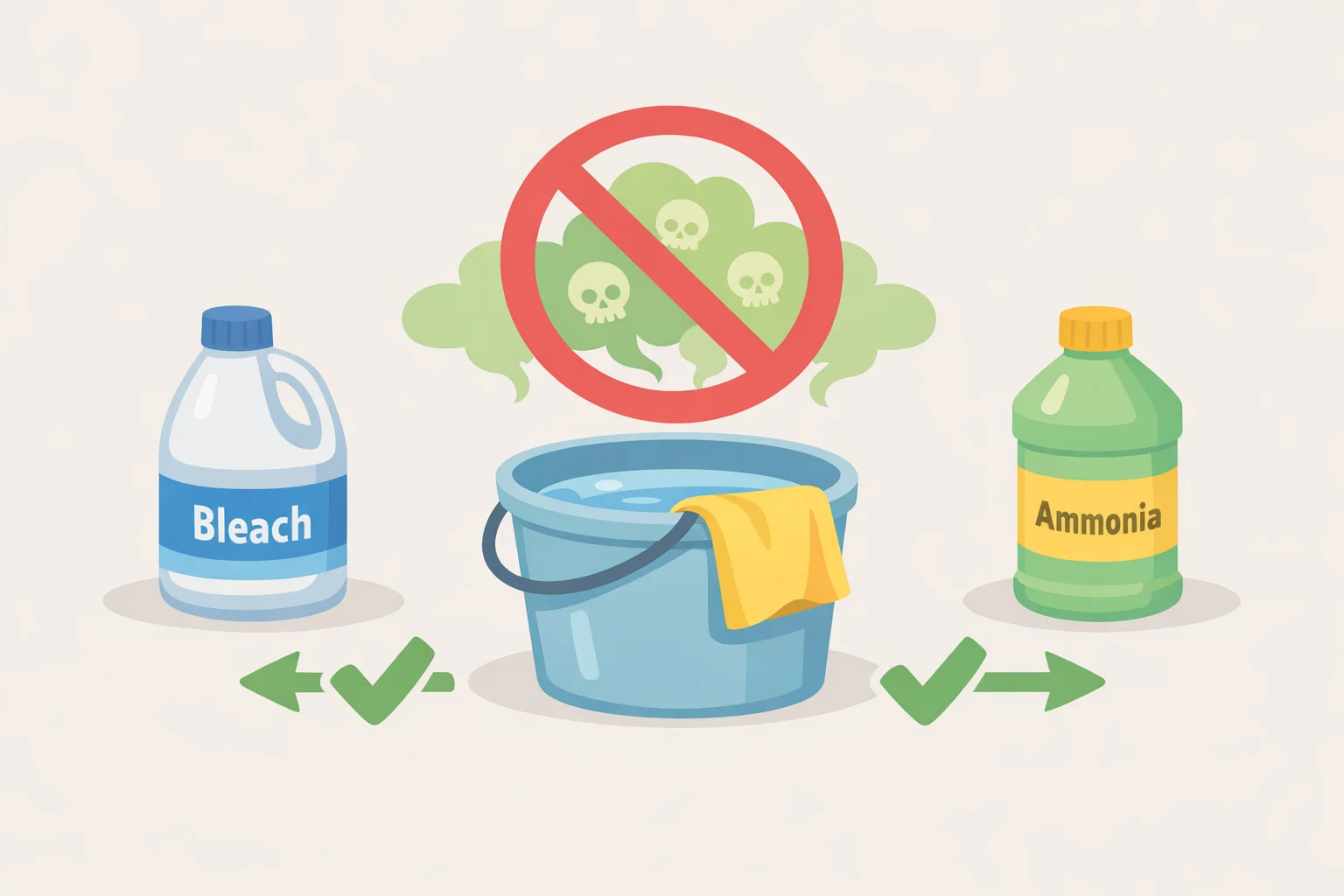
Combine bleach and ammonia and the reaction produces toxic chloramine gas, which the Alabama Department of Public Health says can cause serious and long-lasting respiratory issues. That puts it in a different category than a strong smell to shrug off.
Ammonia doesn't always announce itself the way bleach does. Some products may contain it even when the label doesn't advertise the fact, so checking the ingredient and warning information is a better habit than assuming safety based on how a product is marketed.
A mix like this is rarely deliberate. It could happen if a rag or bucket used with bleach touches a surface just wiped down with an ammonia-based cleaner, without a rinse in between. The fix is unglamorous: don't let bleach and ammonia-containing products share a bucket, a rag, or an unrinsed surface, and keep the space ventilated regardless of which product is in hand. What to do if exposure happens anyway is covered further down.
Can you mix bleach and vinegar or lemon juice?
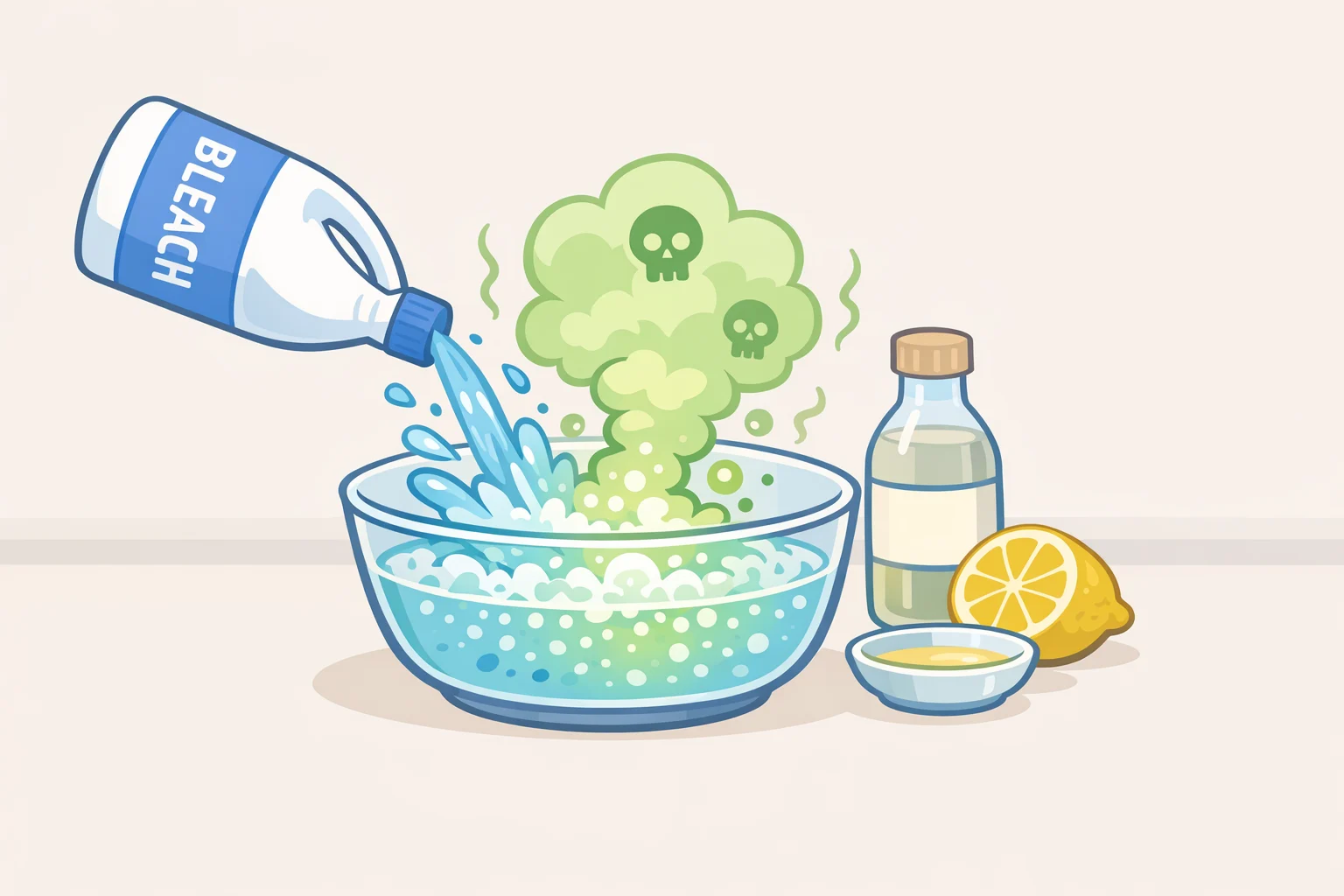
No. Bleach combined with any acid, including vinegar or lemon juice, releases chlorine gas (Alabama Department of Public Health). This one trips people up because vinegar and lemon juice read as the gentle, natural alternative to harsh chemicals, right up until one of them meets a splash of bleach in the same bucket.
The reaction isn't just an unpleasant smell to wave away. The Alabama health department notes that even the smaller concentrations of chlorine gas typical of a household mixing accident can cause anything from minor irritation to serious damage to the eyes, skin, and respiratory system, which is why a faint whiff is worth taking seriously rather than ignoring.
The Alabama Department of Public Health addresses the "natural cleaning" angle directly: mixing chemicals with anything, even something as ordinary as fruit juice, can trigger an unintended and dangerous reaction. Vinegar and lemon juice aren't the problem sitting on the shelf. They become one the moment they land in a bucket that already has bleach in it.
The consequences of cleaning-product exposure aren't limited to breathing, either. In the same emergency-department data, chemical burns accounted for 14.1% of pediatric cleaning-product injuries, and dermatitis or conjunctivitis, meaning skin and eye irritation, made up another 11.2% (PubMed-indexed study). The study didn't isolate which injuries came from mixed products specifically, but it's a reminder that skin and eye contact carry real risk from cleaning products generally, mixed or not.
Is it safe to mix hydrogen peroxide and vinegar?
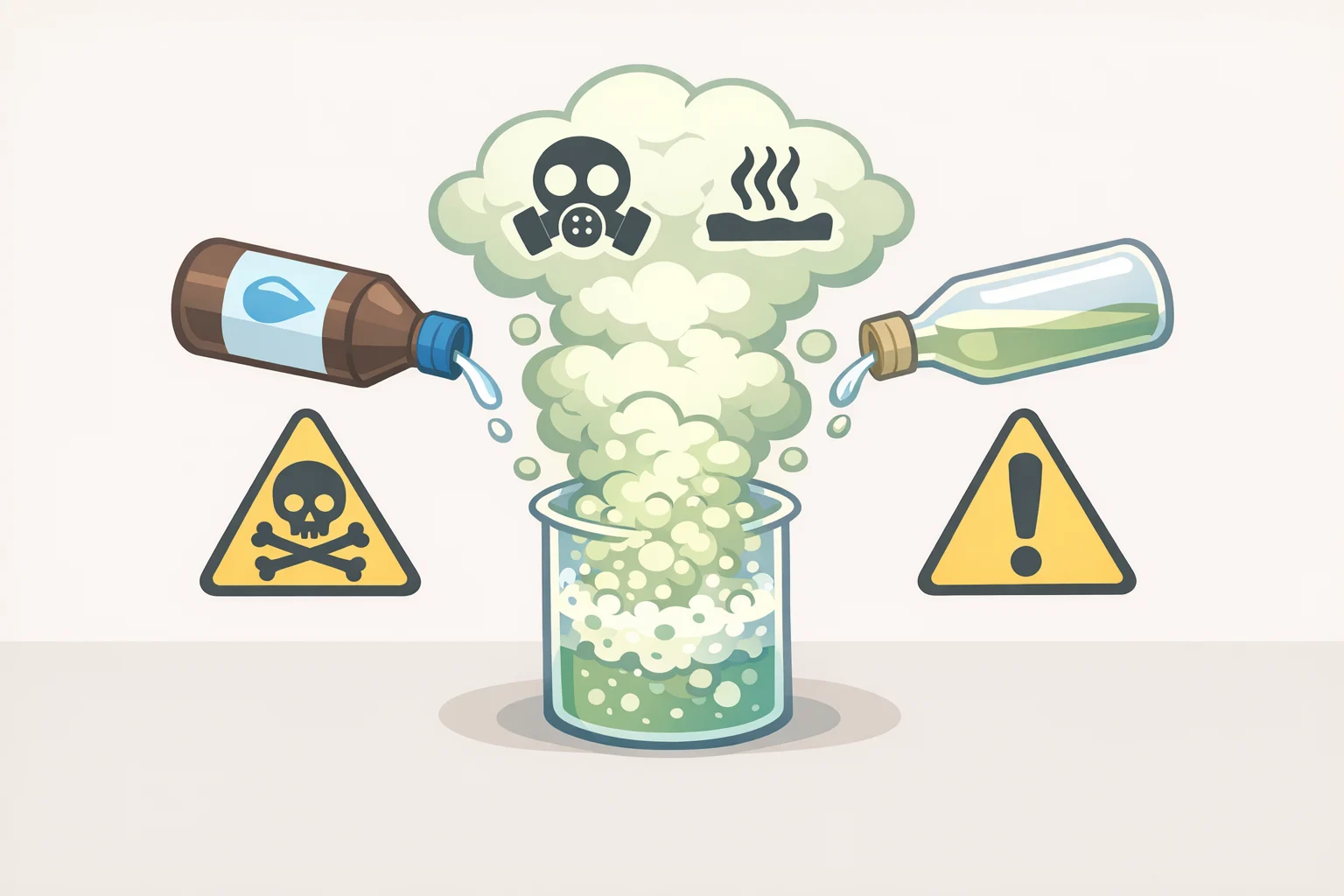
Also no. The Alabama Department of Public Health warns that combining hydrogen peroxide and vinegar can create toxic fumes, form a corrosive acid, or cause spontaneous combustion.
This pairing catches people off guard because neither product carries bleach's reputation for danger. Both get used as gentler alternatives around the house, which is part of why combining them doesn't register as risky the way reaching for bleach might.
The health department points readers toward the American Lung Association's safer-cleaning recipes, which use ingredients such as white vinegar, baking soda, and Castile soap, a plant-oil-based soap. Even those ingredients, the department notes, aren't meant to be combined with other cleaning agents (Alabama Department of Public Health).
The lesson isn't that natural ingredients are inherently risky sitting alone on a shelf. It's that combining them, whether with each other or with a separate commercial product, is exactly where the guidance draws a line, and it's easy to cross without realizing a reaction has started.
How to clean safely without guesswork
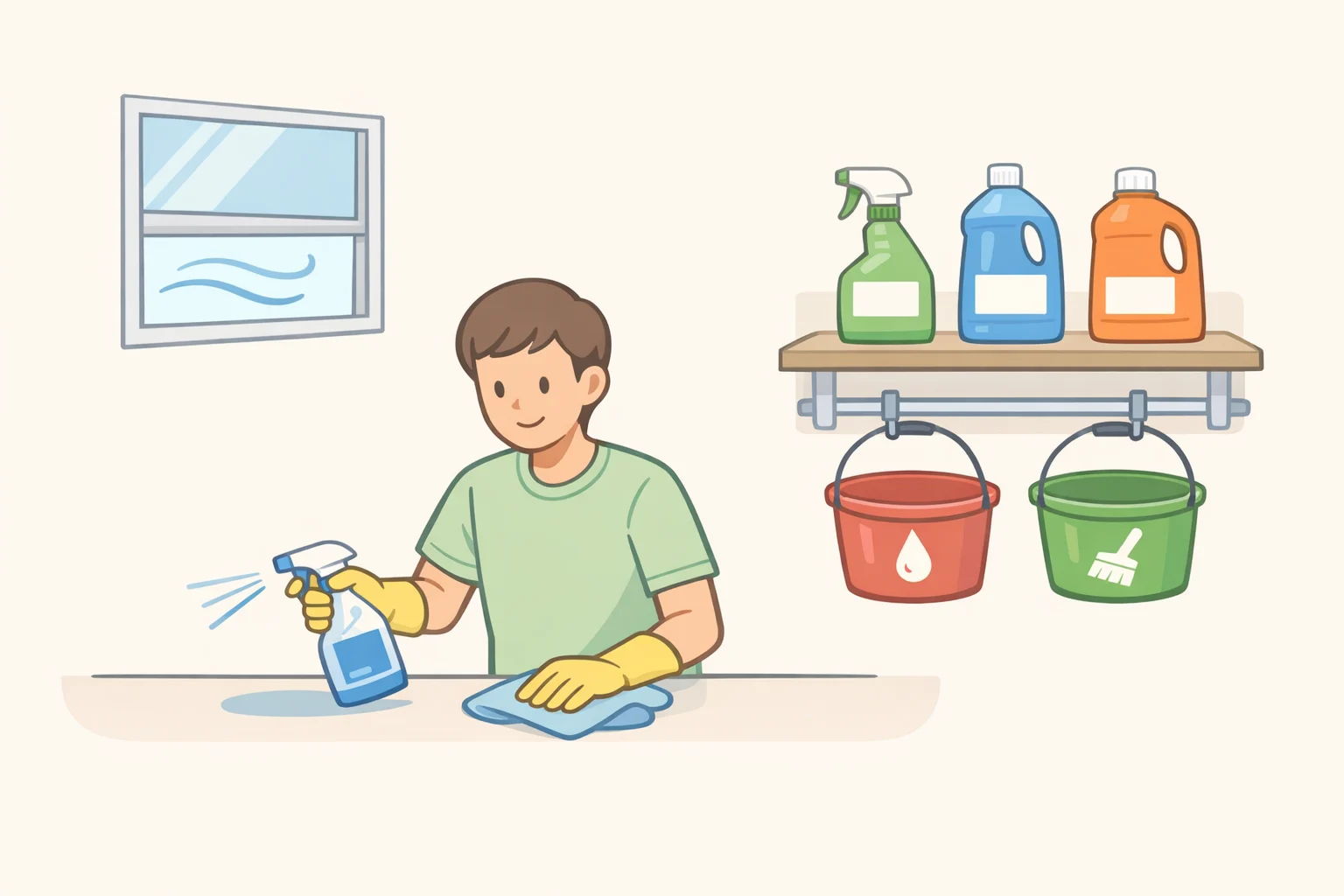
Using one product at a time removes the most common opportunity for two incompatible chemicals to meet, whether that's two products layered on the same surface or one poured into a container that still holds traces of another. Let a product finish the job before reaching for the next one, and reread the label any time there's a switch, not just the first time a bottle gets opened.
Beyond that, the Alabama Department of Public Health's guidance breaks down into a handful of concrete habits:
- Read the label and follow the instructions every time, even for a product used a hundred times before.
- Keep products in their original, labeled containers rather than transferring them into unmarked bottles.
- Clean in well-ventilated spaces, and wear gloves and goggles when handling stronger chemicals.
- Store different types of cleaning products separately, out of reach of children and pets, and use safety locks on cabinets where they're kept.
Ventilation isn't just about comfort. It's the difference between a stray whiff that dissipates in seconds and a gas that concentrates in a closed bathroom or laundry room.
Packaging matters almost as much as the chemicals themselves. In the same emergency-department data, injuries were most associated with detergent packets (33.0%), spray bottles (28.2%), and non-spray containers (19.7%) (PubMed-indexed study). None of that ties back to mixing specifically, but it's a fair argument for keeping everything sealed, labeled, and locked away regardless of what's inside.
What to do if a mixing accident happens
Prevention covers most of the risk, but it helps to know what to do if a mixing accident happens anyway.
A strong chemical smell, watery eyes, coughing, or sudden trouble breathing after using cleaning products together are all signs to leave the area immediately rather than stay to investigate the source. Get to fresh air, and keep the space closed off and ventilating before going back in.
Anyone with breathing difficulty, chest pain, or symptoms that don't ease once they're away from the fumes should call emergency services rather than wait and see. For guidance specific to the products involved, or for anyone unsure whether a reaction is serious, Poison Control is the resource built for exactly that question.
The takeaway
None of this requires a chemistry background, just treating "don't mix" as a rule rather than a suggestion open to interpretation. Bleach shows up in two of the three combinations covered here because it reacts with a wide range of ordinary products, which is reason enough to give it a wide berth on cleaning day.
The safer habit fits in one sentence: use one product at a time, keep it in its original container, ventilate the space, and don't assume a "natural" ingredient is automatically compatible with anything else in the cabinet. Anyone weighing a specific combination is better off checking the label or calling Poison Control than trusting a tip that sounds convincing online. For anyone stocking a cleaning cabinet from scratch, checking a product's label before buying is a smaller habit that pays off long before two bottles ever meet in the same bucket.