What Not to Store Under Kitchen Sink: 9 Items to Move
Open the cabinet under your kitchen sink and you may find rust-spotted tools, an economy pack of paper towels, half a bottle of drain cleaner, and something in a repurposed jar that nobody quite remembers filling. That's no accident. Dark, low-traffic, and parked right next to the cleaning supplies, this cabinet earns default trust as the house's catch-all, which is exactly why knowing what not to store under kitchen sink cabinets is the first real step toward getting the space back under control (Iowa State University Extension).
The cabinet sits below the water supply lines and, in most kitchens, right beside a dishwasher, which can add heat and humidity to the space rather than leaving it at room temperature (Iowa State University Extension). Household cleaners, solvents, and other everyday products also release organic compounds into the air, not only while someone is using them but to some degree while they simply sit in storage (U.S. EPA, updated earlier this year). A 1985 EPA-cited study found levels of about a dozen common organic pollutants running two to five times higher indoors than outdoors, regardless of whether the home sat in a rural or industrial area (U.S. EPA). That's the backdrop worth keeping in mind while deciding what actually earns a spot in this particular cabinet.
Sorting what's in there comes down to one test, applied item by item:
- Keep it if it's a daily-use product, closed, in its original labeled container, and stored the way the label allows.
- Move it if moisture will ruin it but it's still perfectly usable: metal tools, small appliances, absorbent paper goods, pantry food.
- Dispose of chemical products safely if they're old, unneeded, leaking, corroded, or missing their labels. Contact your local hazardous-materials official or fire department for instructions (U.S. EPA).
The categories below walk through what falls into each bucket, and where it should end up instead.
Under kitchen sink storage safety starts with a leak check
Video of the Day
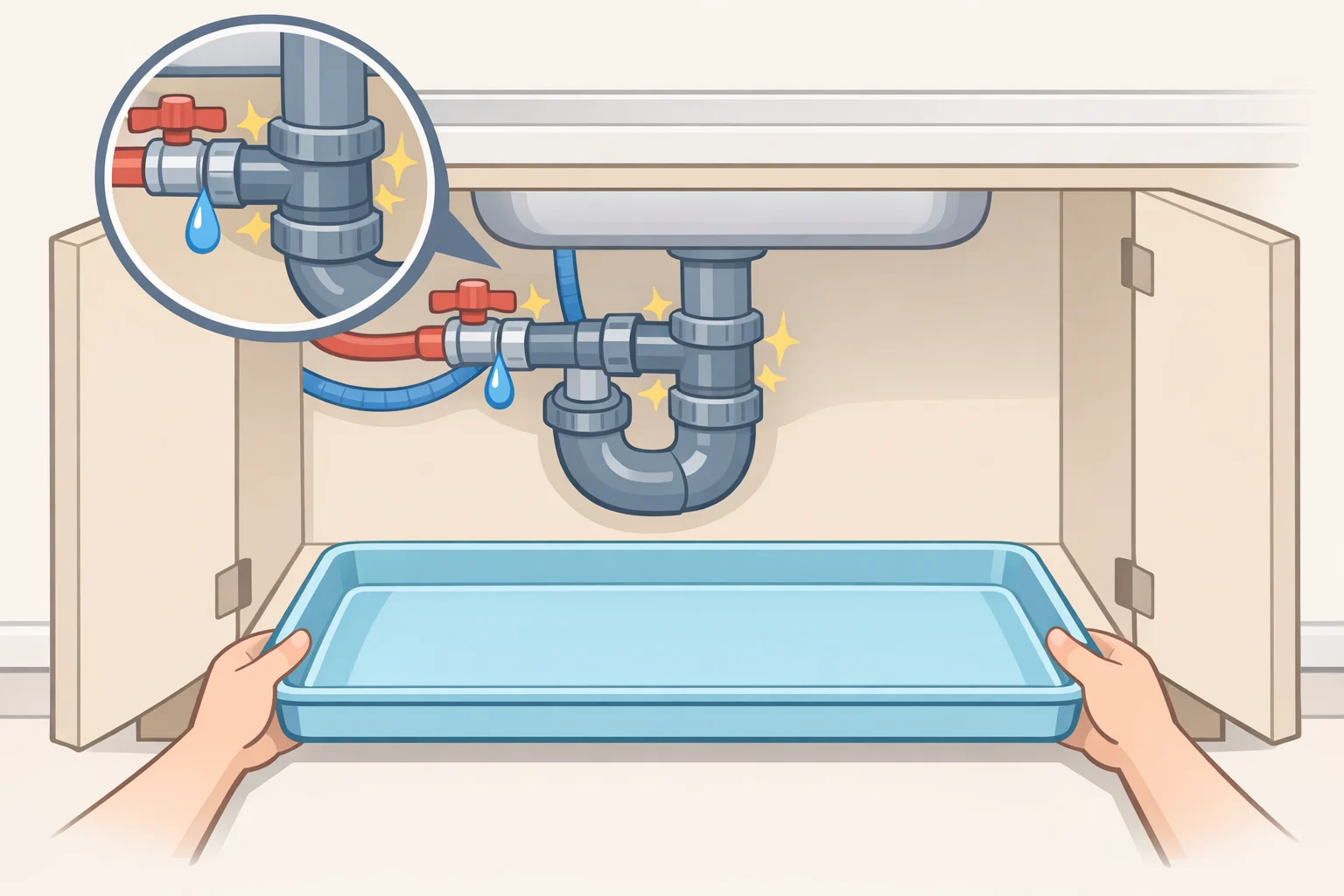
Before deciding what stays, take everything out. It's the best way to see what's actually accumulated in there, and an empty cabinet makes it much easier to spot problems before they become expensive ones (Iowa State University Extension).
With the cabinet empty, wipe down the floor and walls, then look closely at the pipes, water lines, and faucet connections for stains or anything that looks off. Anything suspicious deserves a follow-up call, not a shrug (Iowa State University Extension).
Before putting anything back, line the cabinet floor with a removable, waterproof mat or tray. It protects the cabinetry and helps prevent mold from forming in a space that's already prone to moisture (Iowa State University Extension). That mat is cheap insurance, and it quietly turns this whole project from a decluttering chore into the plumbing check that clutter had been letting you postpone.
Video of the Day
What moisture ruins under the kitchen sink
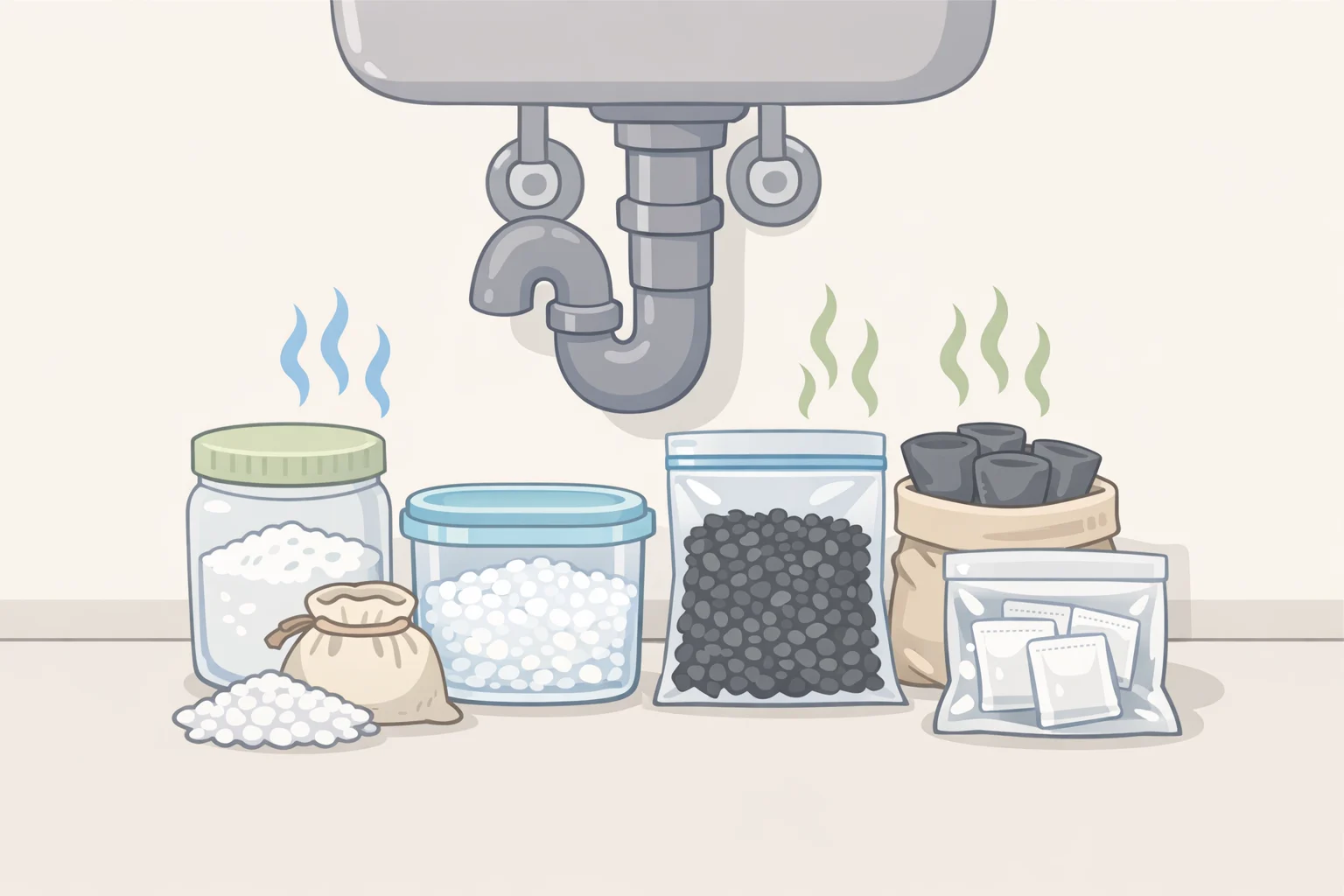
Four categories fail the "move it" test, and they fail it for different reasons: rust, absorbed odor, and mold, all traced back to the same warm, enclosed space.
- Metal tools, pots, pans, and cookware. Anything prone to rusting doesn't belong here. A kitchen drawer or a toolbox is the better home (Iowa State University Extension).
- Small appliances and light bulbs. Iowa State's list of items to move groups these with metal tools and cookware under the same damp-cabinet caution (Iowa State University Extension).
- Paper towels, rags, cloth towels, and paper bags. These absorb water and odor, and they pick up smells from the waste basket or other stored items when heat and humidity from the sink or dishwasher get added in. If under-sink storage is genuinely the only option, keep them sealed in a closed plastic container rather than loose (Iowa State University Extension).
- Produce and dry pantry food. Both may mold in the cabinet's warmth and humidity. A pantry shelf or a countertop bowl is a more sensible destination (Iowa State University Extension).
None of this needs a hazard label to justify moving it: a humid, enclosed cabinet is simply the wrong environment for metal, absorbent fabric, and food. It's basic maintenance, not a safety intervention.
Chemicals and habits that turn the cabinet into a hazard
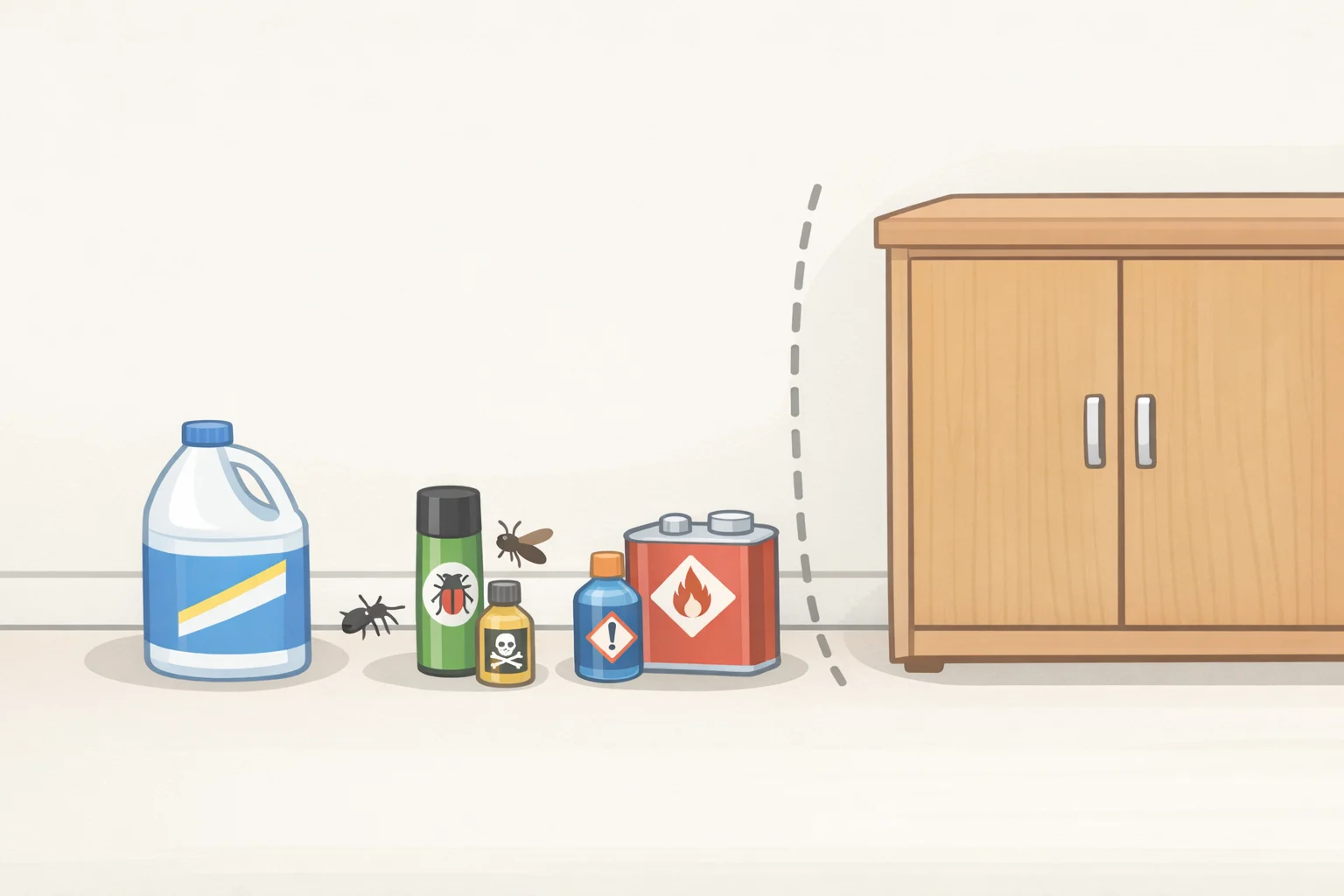
The next five entries split into two different problems. Three are genuinely hazardous products. Two aren't products at all so much as habits, and they turn ordinary storage into something harder to manage.
- Bleach and chlorine-based cleaners. Iowa State's guidance is direct here: bleach has no place under the kitchen sink, because a leaking container or escaping fumes go straight into a living space (Iowa State University Extension).
- Insecticides and pesticides. Same leak-and-fume concern, made worse by sitting in a kitchen where food is prepared (Iowa State University Extension).
- Solvents, paint thinners, and furniture polish. These are flammable, and storing them beside a dishwasher raises the odds that heat or an electrical spark could meet those fumes (Iowa State University Extension). Treat that as a reason to check the product's own flammability warning, not a substitute for reading it.
- Overstock, refills, and duplicate supplies of anything. This one isn't about what the product is, it's about volume. Extra bottles and backup rolls are exactly what turn the cabinet into a stash spot that's hard to keep tidy and hard to inspect for leaks (Iowa State University Extension). For products used only occasionally, paint, paint strippers, kerosene for a space heater, or gasoline for the mower, the EPA's advice is to buy only what will get used right away instead of keeping a backup supply on hand (U.S. EPA).
- Anything decanted into an unlabeled or repurposed container. For hazardous products specifically, the EPA's guidance is unambiguous: keep them in their original containers with the label intact, and never transfer them into a food container or anything else unmarked (U.S. EPA).
The guidance draws a clear line between hazardous products and routine daily-use ones. The same Iowa State source that bans bleach also lists dish soap, dishwasher pods, scrubbers, and cleansing agents among items that can reasonably stay put (Iowa State University Extension). "Cleaner" isn't the deciding word; the label is. A sealed, daily-use product stored the way its manufacturer allows is a different situation than a half-used bottle of something flammable sitting next to a heat-generating appliance.
For anything in the hazardous group, never mix products unless the label specifically says to, and meet or exceed every precaution printed on it (U.S. EPA). Gases can escape even from a closed container, which is one reason the EPA recommends clearing out partially full bottles of old or unneeded chemicals rather than letting them linger (U.S. EPA). If a label calls for a well-ventilated storage area, that's a signal to pick a different spot; a cabinet built around plumbing and appliances may not meet that bar (U.S. EPA). Iowa State points toward the same destinations: bleach, insecticides, solvents, thinners, paints, and polishes belong in the basement, garage, or utility area instead, away from small children (Iowa State University Extension).
If something in that cabinet is leaking, corroded, or missing its label, don't move it to another shelf. Call your local hazardous materials official or fire department and follow their instructions for handling it (U.S. EPA). Don't pour products down the drain or combine them together; follow local instructions for packaging and transporting whatever you're getting rid of (U.S. EPA). Corroding containers need special handling of their own, and even a container that looks empty can still carry residual chemical hazard, so treat it with the same caution as a full one (U.S. EPA).
What to store under kitchen sink cabinets instead
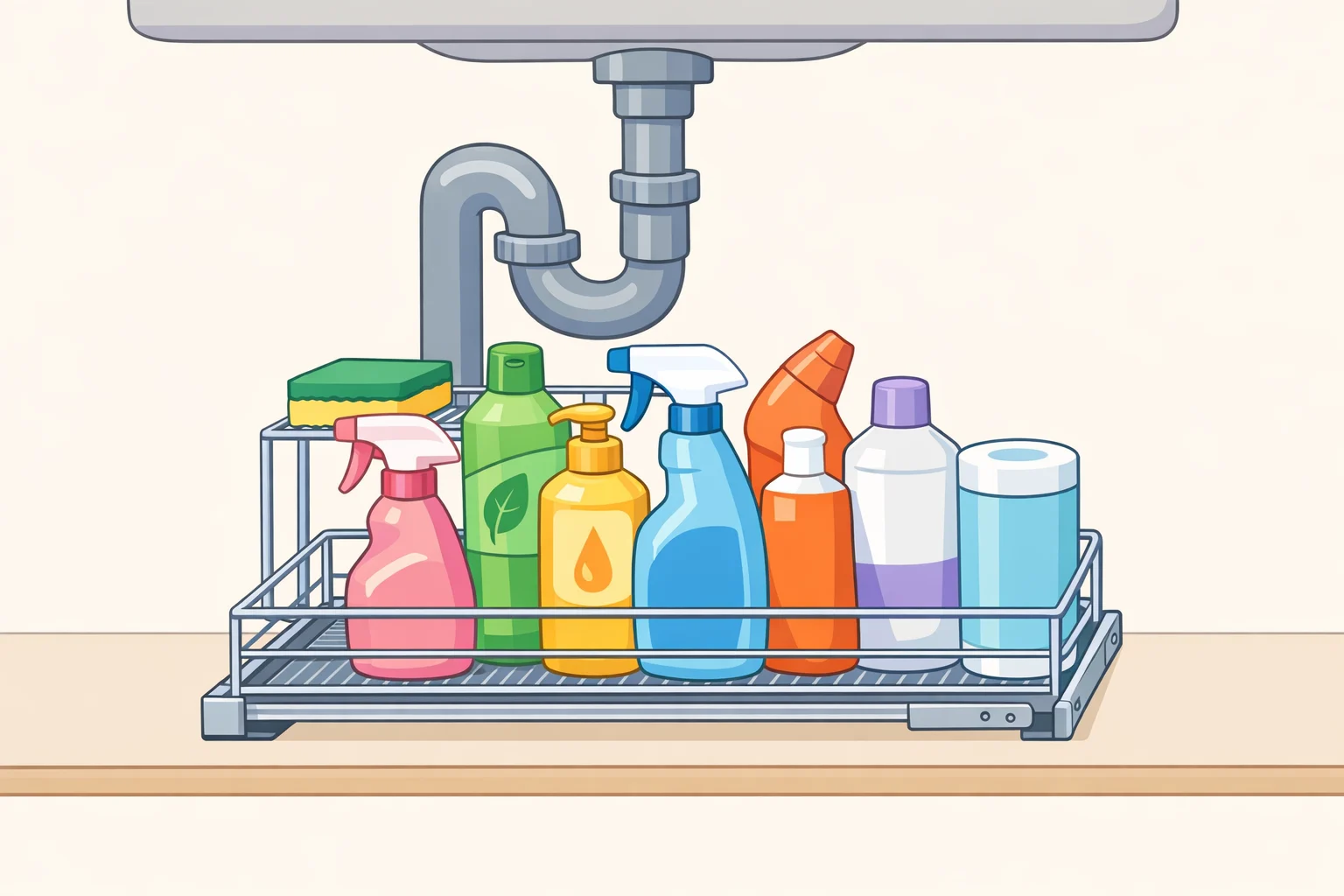
Once the moisture-sensitive items and the genuine hazards are gone, what's left is short and boring in the best way. Routine, sealed, originally labeled products used every day, things like dish soap, dishwasher pods, scrubbers, sponges, and kitchen gloves, can reasonably stay put (Iowa State University Extension). That's a convenience call, not a safety endorsement. Read the label's storage directions before assuming anything gets a permanent pass.
A pull-out rack or a lazy Susan keeps these items contained and visible instead of sliding around loose on the cabinet floor (Iowa State University Extension). Keeping bottles upright and in view also makes a slow leak easier to catch before it soaks into the cabinet floor. If young children are in the house, add childproof locks to the cabinet doors to prevent accidental poisoning from whatever's stored inside (Iowa State University Extension).
The garbage disposal tool used for unjamming a clogged unit is the one tool that genuinely earns a spot in this cabinet (Iowa State University Extension).
Iowa State lists the cabinet as one possible location for a small kitchen fire extinguisher, reasoning that quick reach matters most in the event of a grease fire (Iowa State University Extension). Check the extinguisher's viability date before storing it there, and mount it to a side wall rather than leaving it loose on the floor (Iowa State University Extension). Treat the location as one option, not a rule. As a matter of judgment rather than extension guidance: keep it accessible, follow the manufacturer's placement instructions, and skip this cabinet if plumbing, clutter, or a closed door would slow you down in an emergency.
How often to recheck the cabinet
Set a reminder to run through this same routine every six months or so, as a matter of practical habit rather than a sourced recommendation: empty the cabinet, check the leak mat, confirm the extinguisher's condition if one's stored there, and make sure any chemical product kept inside is still in its original, intact, labeled container.
Revisit it sooner if something changes. A new leak, a damaged container, or supplies quietly piling up again are all reasons to redo the sort ahead of schedule.
After the sort, the cabinet should hold only daily-use items that are sealed, labeled, easy to see, and permitted by their own storage directions. Everything else, whether it's vulnerable to moisture or genuinely hazardous, belongs somewhere else in the house, or nowhere at all if it's due for disposal.