Can You Clean With Apple Cider Vinegar? Chemistry Explained
The bottle of apple cider vinegar sitting behind the salad dressings shares its key ingredient with the white vinegar in the cleaning closet: acetic acid. That overlap is exactly why so many people search "can you clean with apple cider vinegar" hoping to skip a trip to the store. The short answer is that both vinegars draw their cleaning power from the same acid, but apple cider vinegar carries extra baggage that plain white vinegar leaves behind on the shelf.
Standard white distilled vinegar is a 5% acetic-acid solution with a pH of 2.5 to 3.0. Products labeled "cleaning vinegar" push that concentration to 6%, about 20% more acid per bottle, according to CleaningTuts, which published its breakdown of vinegar chemistry two months ago. Acetic acid, not some special property unique to vinegar as a category, is what breaks down alkaline mineral buildup. Understanding that distinction is the key to knowing when either vinegar actually helps, and when it's just a wet detour that does nothing.
How vinegar actually dissolves grime
Video of the Day
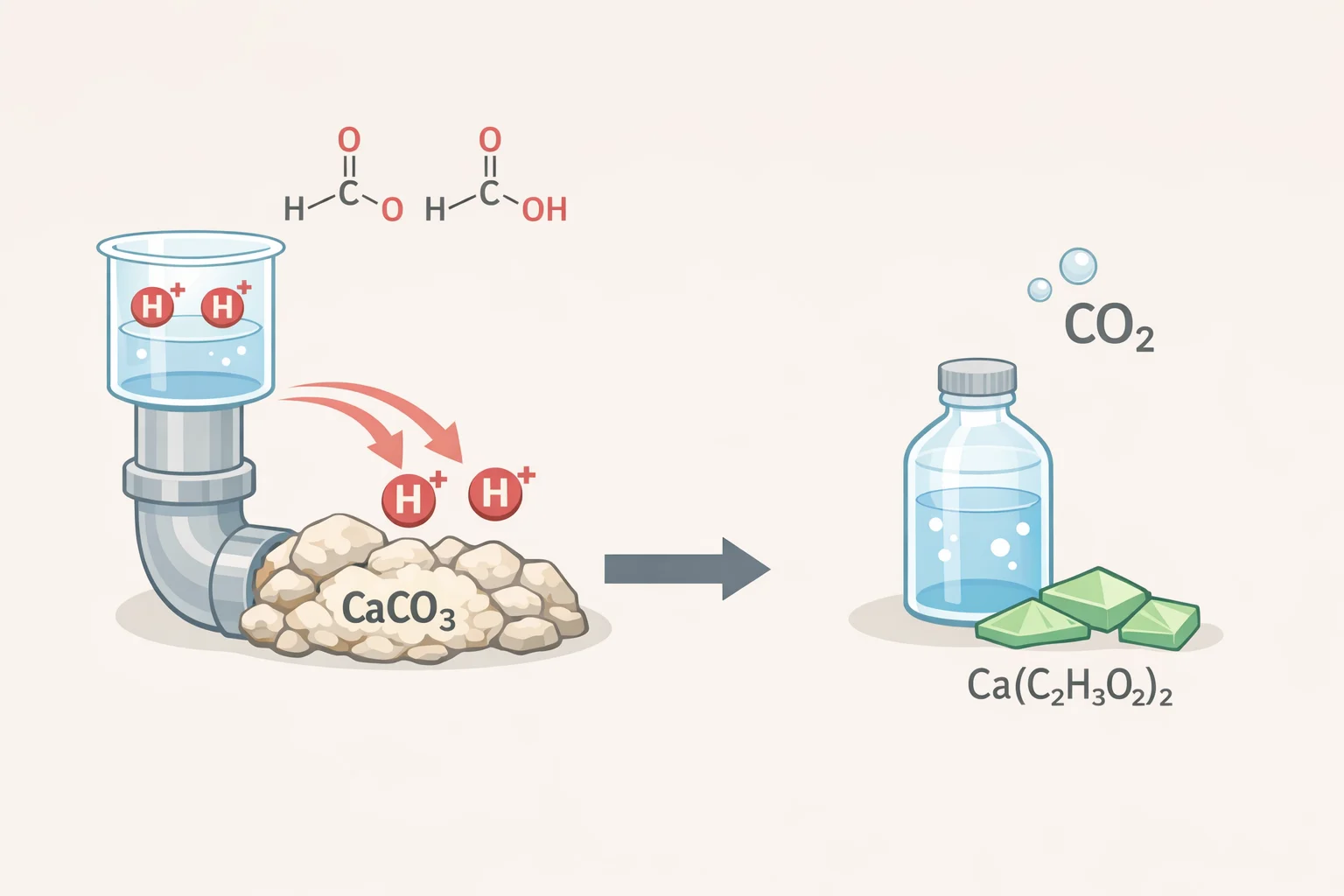
Acetic acid works by donating hydrogen ions to alkaline compounds, and the clearest example is calcium carbonate, the main ingredient in hard-water scale. The reaction converts a hard mineral crust into soluble calcium acetate, water, and carbon dioxide gas: CaCO₃ + 2 CH₃COOH → Ca(CH₃COO)₂ + H₂O + CO₂ (CleaningTuts). It's a genuine chemical transformation, not a marketing claim.
What that equation doesn't show is time. A thirty-second contact is the bare minimum needed to start the ion exchange, but a thick crust on a showerhead or faucet aerator can take one to four hours of soaking to fully dissolve (CleaningTuts). Submerge a showerhead in a bag of undiluted 6% cleaning vinegar for that stretch and the mineral crust dissolves, restoring flow through that particular fixture (CleaningTuts). Spray it on and wipe it off thirty seconds later, and almost nothing happens because the reaction hasn't had time to run its course.
There's a secondary benefit worth knowing about. Most cleaning soaps are alkaline, sitting around pH 8 to 10, so a mild acid rinse neutralizes leftover alkalinity on a surface. That helps prevent soap film from reforming and slows how fast new mineral deposits stick (CleaningTuts).
Think of acetic acid molecules as keys that only fit alkaline locks: mineral scale, soap film, tarnish. They're useless against grease or protein stains, because those are different locks entirely, built from non-polar oils and amino acid chains that a weak acid doesn't touch (CleaningTuts). That limitation matters just as much for apple cider vinegar as it does for the white stuff, since both share the same active ingredient.
Video of the Day
White vinegar vs. apple cider vinegar for cleaning
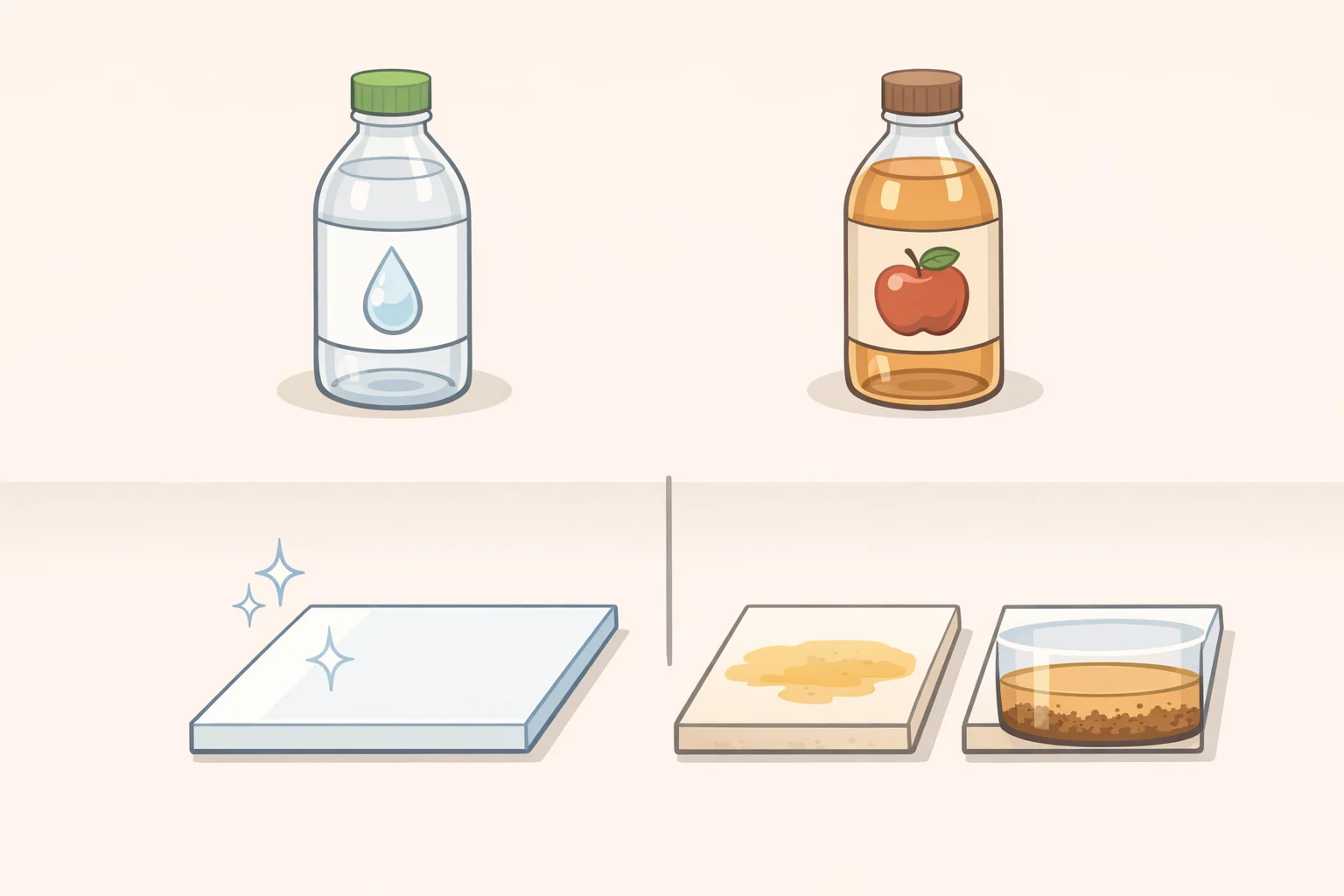
Whether apple cider vinegar can be used as a cleaner comes down to a simple question: does it carry the same acetic acid that makes white vinegar work? It does. Because apple cider vinegar is also an acetic-acid vinegar, it may produce a similar reaction on mineral scale, but nothing in the available research measures its acetic-acid concentration against white vinegar's 5% standard, and bottle formulations vary by brand. Treat the claim as plausible, not proven.
Where the two products clearly diverge is everything besides the acid. White distilled vinegar became the standard cleaning recommendation precisely because it contains no tannins, no coloring agents, and no sediment to leave behind (CleaningTuts). Apple cider vinegar, along with wine vinegar and balsamic, can contain organic compounds, pigments, and sugars that leave residue and discolor grout, natural stone, and light-colored countertops (CleaningTuts).
Using apple cider vinegar to clean a shower door is a bit like washing a car with fruit juice instead of water. The acid in the juice might do some of the job water would do, but now there's sugar and pigment to deal with afterward, on a surface meant to end up cleaner, not stickier. White vinegar skips that extra step entirely, which is the whole case for keeping it as the default.
Where vinegar works: mineral scale and soap scum
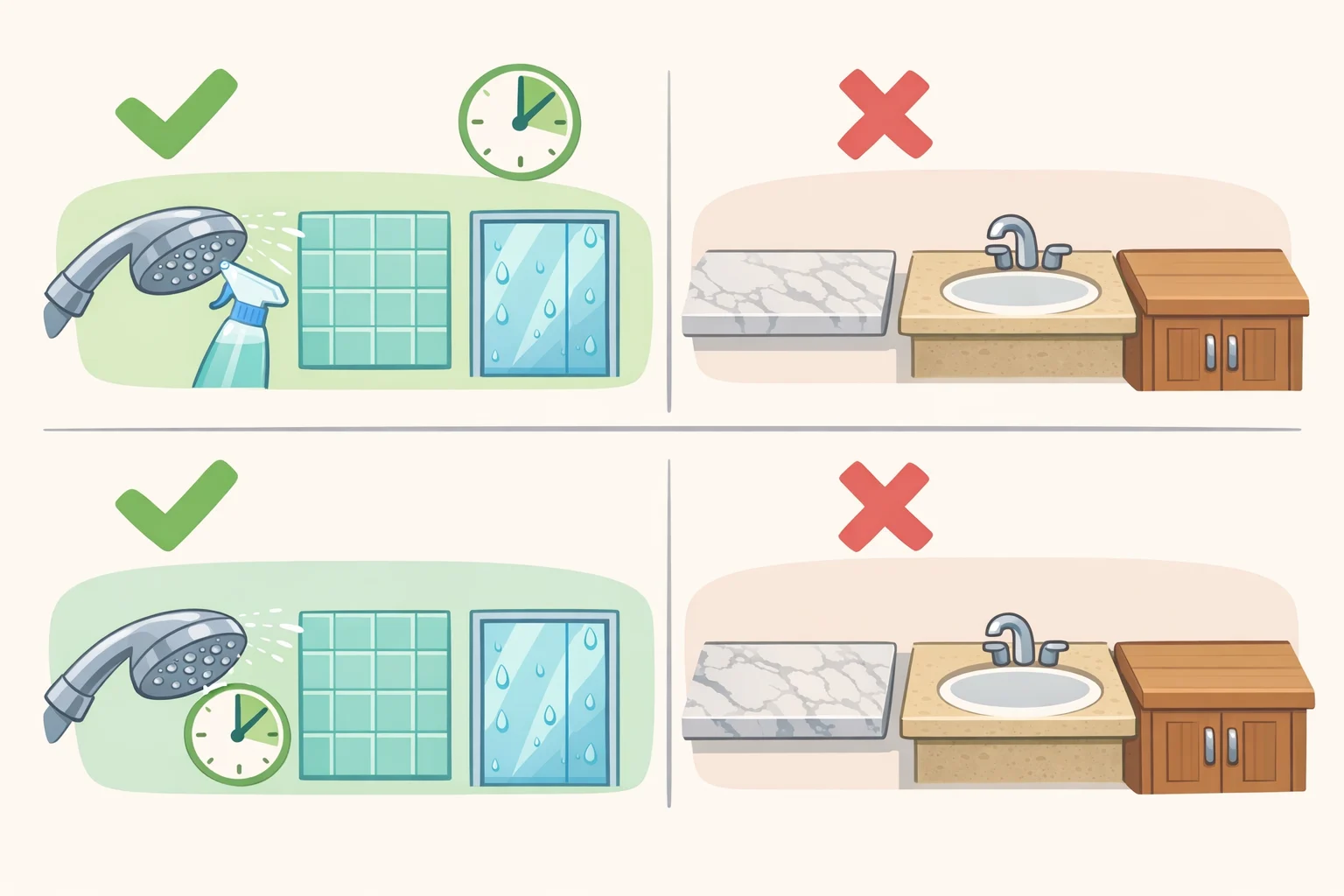
The proven uses for vinegar cluster tightly around mineral deposits, and knowing the method matters as much as knowing the target. On glass shower doors, chrome fixtures, and stainless steel, hard-water spots form as calcium and magnesium carbonates left behind by evaporating water. A vinegar-soaked cloth or spray, given real dwell time rather than a quick wipe, breaks those deposits down the same way the showerhead soak does (CleaningTuts).
Soap scum on tile walls and shower enclosures responds the same way, since it forms when soap residue bonds with mineral deposits rather than being a stain in its own right (CleaningTuts). Tarnished brass and copper are a slightly different case: mixing vinegar with salt creates a more aggressive paste that lifts tarnish, a use documented separately from the mineral-scale chemistry above (CleaningTuts).
A rough guide for where to point the vinegar bottle:
- Good candidates: glass shower doors, chrome fixtures, stainless steel, ceramic tile with mineral-based soap scum, tarnished brass or copper (with salt added).
- Needs soak time, not a spray-and-wipe: showerheads, faucet aerators, and anything with a visible mineral crust. Expect one to four hours for full results, not thirty seconds.
- Skip vinegar entirely: marble, other natural stone, waxed wood, and cast iron cookware, all covered in more detail below.
Why vinegar isn't a general cleaner or sanitizer
Vinegar's chemistry only acts on inorganic alkaline material, which means it cannot cut grease or dissolve protein stains like blood or egg no matter how long it sits (CleaningTuts). Those need a surfactant, the kind found in ordinary dish soap, to break down. This is a common point of confusion in vinegar cleaning advice, and it applies equally to apple cider vinegar since the underlying acid chemistry is identical.
A second, more consequential confusion is treating vinegar as a stand-in for disinfecting. Cleaning and sanitizing are not the same task. Cleaning removes dirt and organic matter through scrubbing with hot water and soap; sanitizing reduces the number of germs on a surface to safer levels, which is a narrower claim than killing every pathogen present (Iowa State University Extension, three months ago). Iowa State's guidance lists diluted white vinegar among household sanitizing options, but only after a surface has already been washed, never as a substitute for that step.
University of Maine Cooperative Extension outlines two ways to use white vinegar for that sanitizing step: heating four ounces to about 150°F before applying it, or using four ounces at room temperature in a labeled spray bottle (University of Maine Cooperative Extension, last year). Both methods are written for white vinegar specifically. These extension sources describe white vinegar as a sanitizing option under particular conditions; they don't establish apple cider vinegar as an equivalent, and neither source claims vinegar of any kind matches a registered disinfectant's broader kill rate.
Surfaces and combinations that turn vinegar into a mistake
Vinegar's acidity, useful on mineral scale, is a liability on the wrong material. It permanently etches marble, strips protective wax finishes, and corrodes the seasoning on cast iron cookware through direct chemical attack (CleaningTuts). None of that requires much acid or much time; it's the same reaction that dissolves hard-water scale, just aimed at a surface that isn't scale.
Apple cider vinegar carries that same structural risk plus a layer of its own. Its pigments and sugars can stain porous or pale materials like grout and natural stone, which is a reason for extra caution on anything absorbent, on top of the acid risk both vinegars share (CleaningTuts).
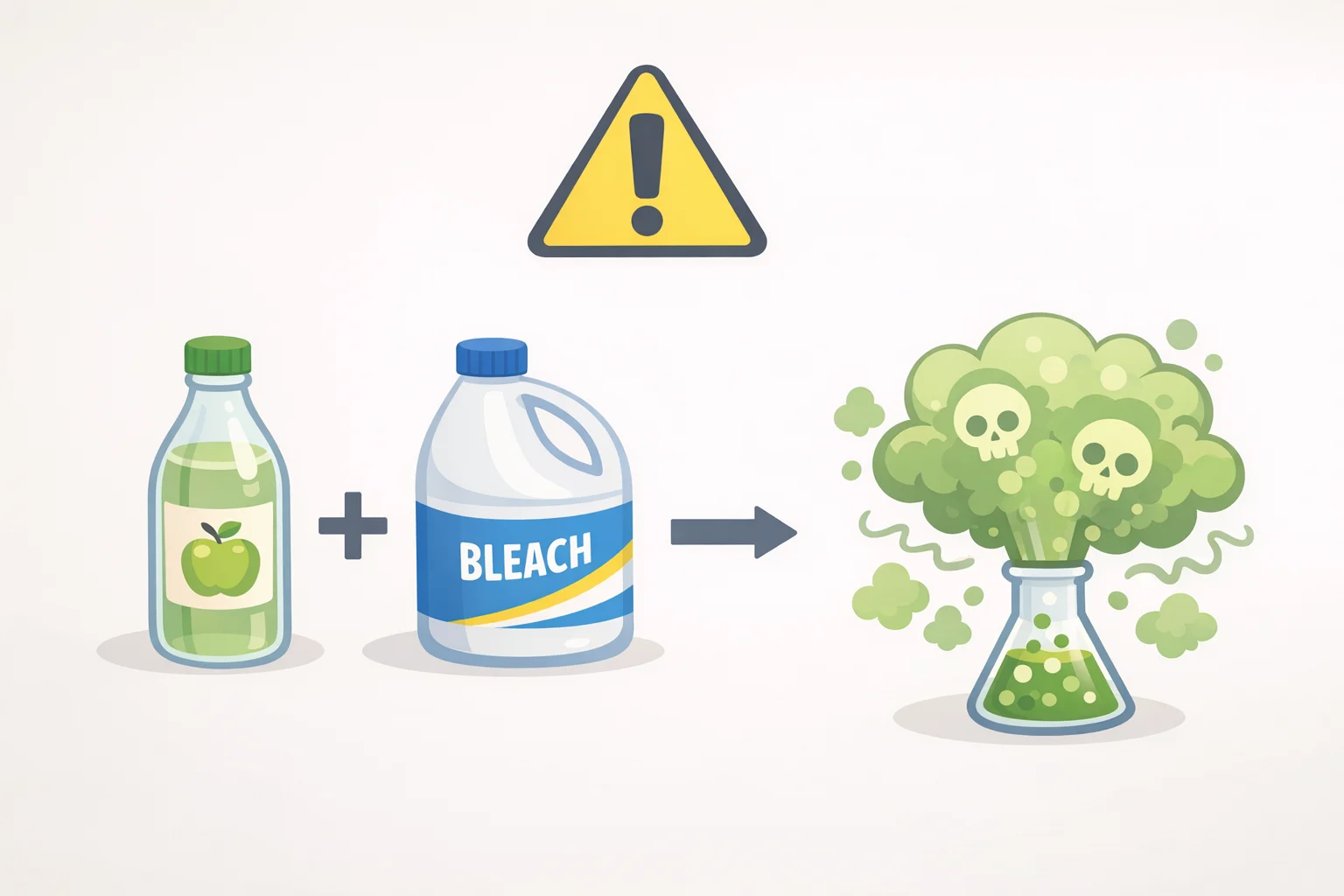
The bigger hazard has nothing to do with surfaces and everything to do with what's in the next bottle over. Mixing any vinegar with bleach releases toxic chlorine gas, a warning confirmed by both the UF IFAS Extension, last year, and Iowa State CFSPH, in 2023. That reaction is driven by vinegar's acidity reacting with chlorine compounds in bleach, not by any other ingredient, so there's no reason to expect apple cider vinegar would behave differently. Vinegar and hydrogen peroxide are a bad pairing too; combined, they can produce harmful fumes, according to University of Maine Cooperative Extension. Both rules apply regardless of which vinegar is sitting in the bottle.
The short version
Yes, apple cider vinegar can probably loosen mineral scale, since it shares the same acetic acid that makes white vinegar effective. But white distilled vinegar is the better cleaning choice, because it leaves less residue behind and comes with better-established guidance for how and where to use it.
Readers curious about their own bottle's exact acidity should check the label, since formulations vary by brand and none of the available research tested apple cider vinegar's cleaning power directly against white vinegar's. Until that comparison exists, white vinegar remains the safer default for anything beyond a low-stakes experiment on a nonporous surface, and neither vinegar should be asked to do a disinfectant's job.