How to Freeze Homemade Chips: A Batch-Cooking Method
By the end of this guide, you'll know how to freeze homemade chips using a method built from evidence rather than guesswork: cut, soaked, blanched, cooled, dried, portioned and cooked to a decent result. That's more than can be said for the viral price tag that inspired it.
That claim, promoted by outlets including The Sun, suggests one bag of potatoes stretches into a month's worth of chips for around 8p a portion. The sources reviewed for this article don't provide any supermarket costing or storage trial confirming either the 8p figure or a month-long shelf life. What does hold up is the underlying idea: you can batch cook homemade chips once and pull from the freezer whenever you like, and an earlier-this-year study comparing two potato cultivars, Atlantic and McCain, found that blanching before freezing cut reducing-sugar content in the McCain cultivar by 28.88% compared with frying fresh-cut potatoes under that study's own processing conditions (spgykj.com, earlier this year).
This guide walks through how to make and freeze potato chips, labelling each step by how well it's actually supported rather than presenting a full recipe as though every timing had been laboratory-tested. It draws on UK government guidance on acrylamide, the compound that forms in starchy food cooked above 120°C through frying, baking, roasting or toasting (GOV.UK, updated in June), and a 2024 home-cooking study on soaking and frying methods (Frontiers in Nutrition, 2024).
Some figures below come straight from that research, some sit inside ranges those studies actually tested, and a few are sensible starting points with no study behind them at all, flagged as such where they appear. Treat the whole thing as a framework to adjust for your own potatoes, cut size and appliance, not a fixed recipe card.
What you'll need:
- A bag of potatoes
- A large pan for blanching
- A colander
- A clean tea towel or kitchen paper
- A baking tray that fits your freezer
- Freezer bags or containers for portioning
How to freeze potatoes for chips: cutting and soaking
Video of the Day
-
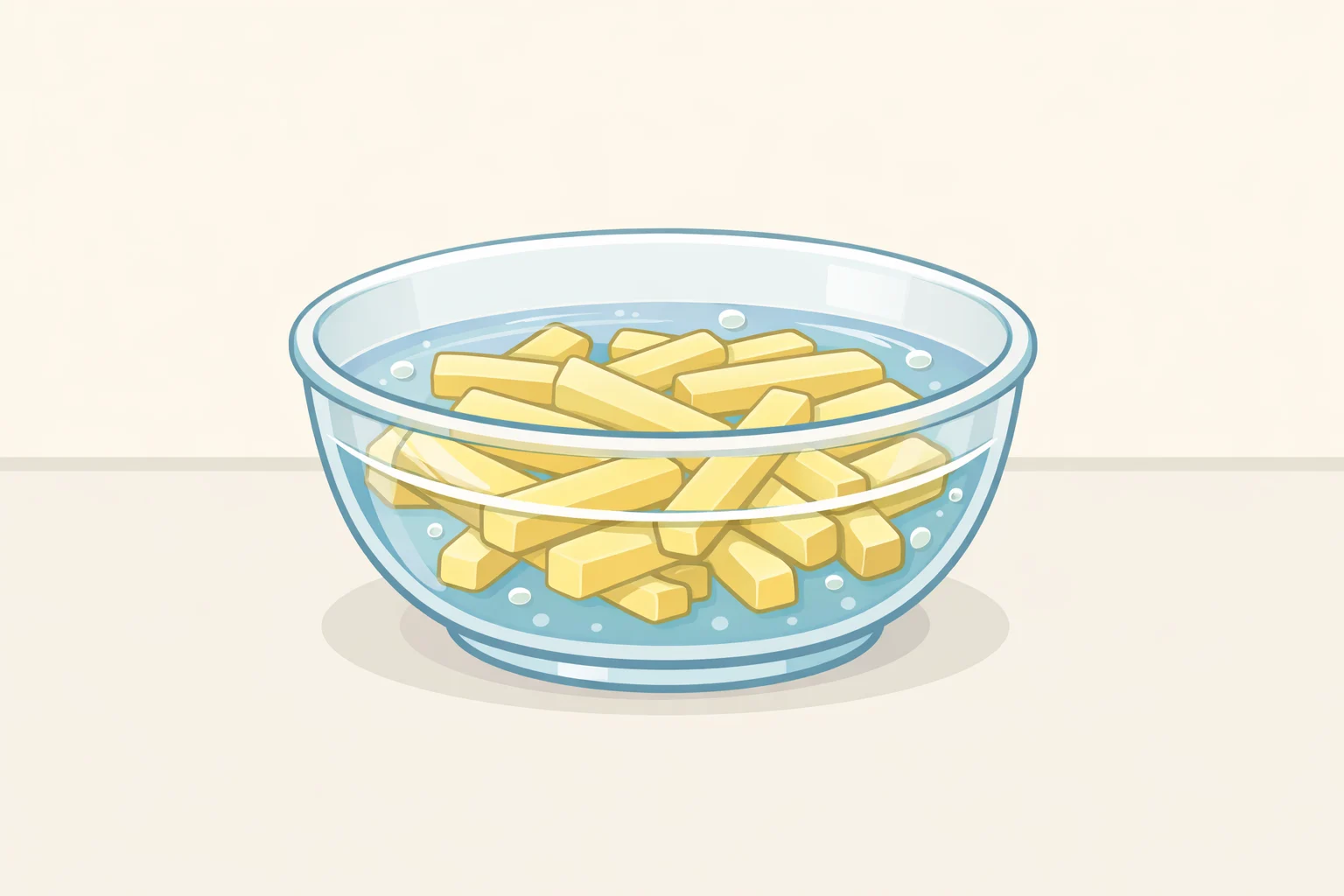
Cut into even batons. Aim for something close to chip-shop thickness, roughly as thick as your little finger. That's an editorial starting point, not a tested spec: both the cultivar study and the home-cooking study used consistent potato sticks for even cooking, not a specific measurement (spgykj.com; Frontiers in Nutrition, 2024).
-
Soak the cut potatoes in room-temperature water for around 10 minutes before cooking. The 2024 study found that a 10-minute soak before deep frying produced a statistically significant drop in acrylamide compared with unsoaked potatoes (p = 0.029) (Frontiers in Nutrition, 2024).
-
Drain and pat the batons dry before blanching. As a matter of kitchen technique rather than tested research, drier batons tend to blanch more evenly than wet ones.
That soak produced the clearest positive result among the cited home-cooking findings, a clean, statistically significant effect from a real experiment. Everything else in this section is ordinary kitchen practice rather than something the studies measured.
Video of the Day
Blanching and freezing: making homemade freezer chips
-
Blanch in near-boiling water for a few minutes. A 2023 review of acrylamide-reduction strategies found that blanching potato batons in water at roughly 95°C for one to eight minutes cut reducing sugars by 51-62% under its own commercial-style test conditions (Brieflands review, 2023). Three or four minutes sits comfortably inside that window as a starting point; as a rough visual guide rather than a finding from the review, look for batons that have softened at the edges but still hold their shape.
-
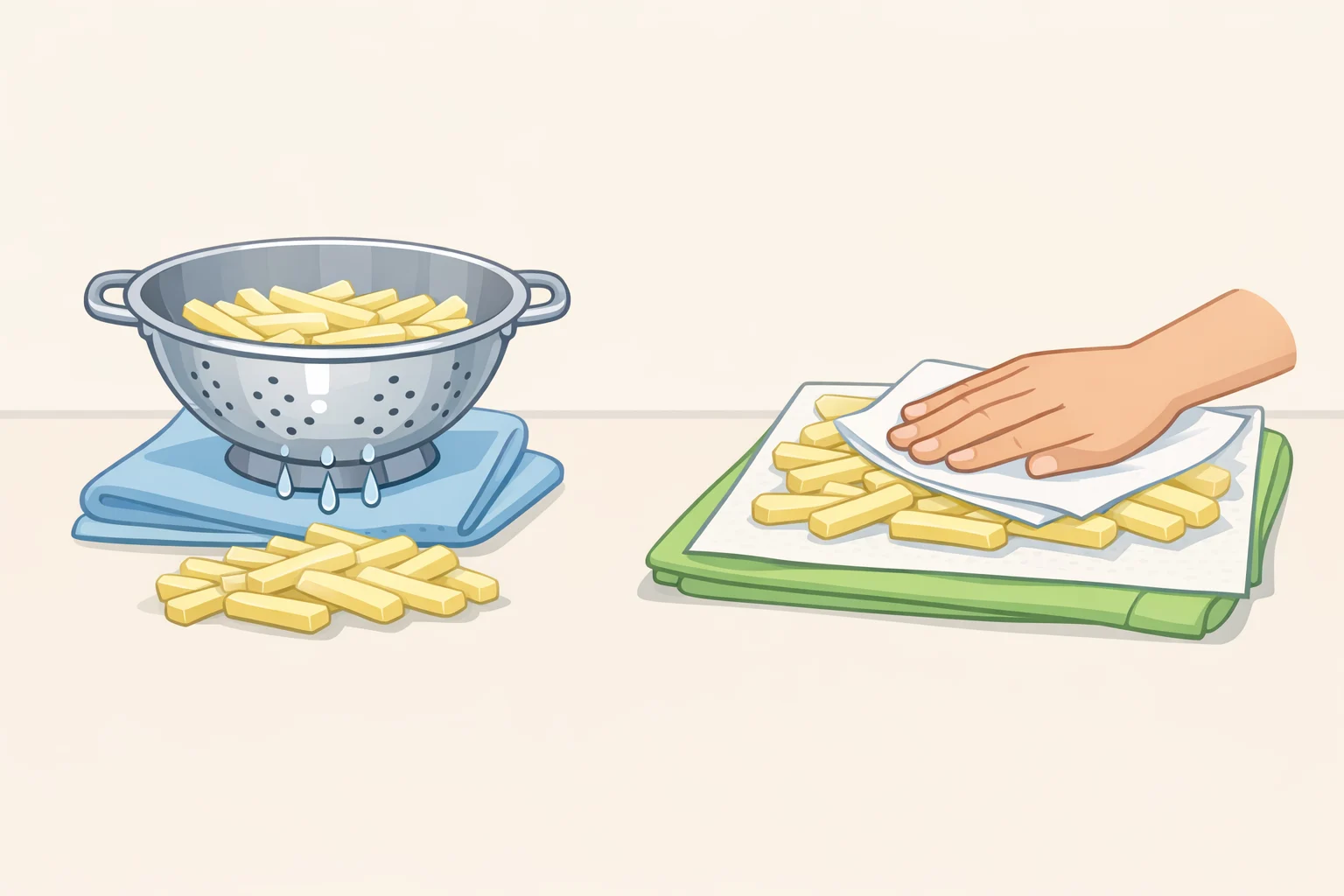
Drain into a colander and spread the batons out in a single, shallow layer rather than piling them into a covered bowl. Cool them as quickly as you reasonably can and get them into the fridge or on to drying towels without leaving them sitting around, standard practice for handling cooked or blanched food rather than a finding from the research cited here. None of that research sets a specific time limit, so there's no authoritative cutoff to quote; use your own judgement and don't dawdle.
-
Pat the batons dry with a clean towel or kitchen paper before they go anywhere near the freezer. Leftover surface water is what tends to turn into ice crystals and clumping later, a practical kitchen observation rather than something the cited studies measured directly.
-
Spread the dried batons on a tray in a single layer, not touching, and freeze until solid before bagging. How long that takes depends on your freezer and how thinly you've spread them, so check rather than clock-watch. A baton that lifts cleanly away from the tray, rather than sticking to it or its neighbours, is ready to go in the bag, and this step is what keeps a batch loose instead of turning into one solid block.
-
Judge homemade freezer chips by how they look, not a date on the bag. None of the research reviewed for this piece measured how long homemade blanched-and-frozen chips hold up in a domestic freezer, so there's no study-backed shelf life to quote. As an editorial guideline rather than a tested figure or a safety cutoff, aim to use the batch within a few months, and check for freezer burn, ice crystals, clumping or discolouration before cooking every time, since those are signs quality has dropped, not proof anything is unsafe.
-
Expect softer, slightly duller chips, and don't mistake that for something gone wrong. The cultivar study found that freezing after blanching, direct freezing and frying itself all reduced hardness and crispness compared with fresh-cut fries in the cultivars and conditions it tested, and that blanch-freezing specifically cut lightness, the L* value, by 4.24% in the Atlantic cultivar (spgykj.com, earlier this year). That's the trade-off for having a bag ready to go instead of a raw potato waiting to be cut.
Blanching is doing the clearest chemical work in this whole process, at least under the lab conditions the 2023 review tested. Freezing itself is just storage, and the honest version of that advice is about reading the batch in front of you rather than reciting a number of months.
Cooking frozen chips: appliance settings and the rule that matters most
-
Cook straight from frozen rather than thawing the batons first. None of the studies cited here tested a full blanch-freeze-then-cook-from-frozen sequence, so this is a practical recommendation rather than a research finding. Thawed potato tends to release water and cook unevenly, which is reason enough on its own to skip the thaw.
-
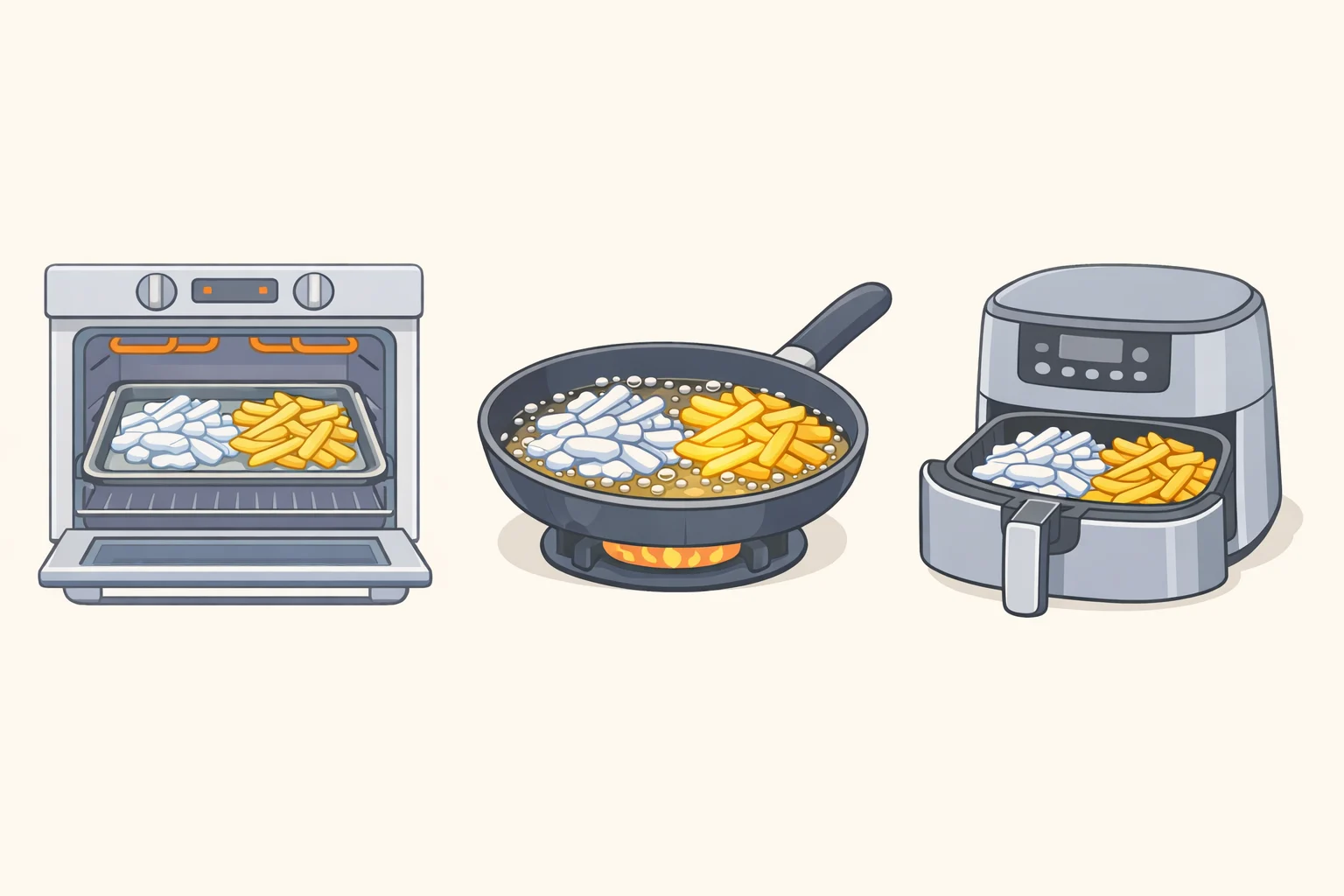
Pick one method and use these as reference points, however you freeze homemade fries. The 2024 home-cooking study deep-fried potato sticks at 180°C for 10 minutes, oven-fried at 200°C for 15 minutes in a fan oven, and air-fried at 200°C for 15 minutes (Frontiers in Nutrition, 2024). Those figures come from fresh-cut potatoes, not batons already blanched and frozen, so treat them as a starting point and watch for colour rather than trusting the clock exactly.
-
Stop at golden yellow, not dark brown, whichever appliance you're using. UK government guidance states that longer cooking times and higher temperatures form more acrylamide regardless of method, and recommends aiming for golden yellow or lighter; colour is the practical cue worth building a habit around (GOV.UK, current guidance).
-
Don't assume the air fryer wins by default. The 2024 study cites an EFSA assessment finding that hot-air fryers can produce 30-40% more acrylamide than conventional deep fryers (Frontiers in Nutrition, 2024, citing EFSA). Separately, that same study reported its own air-fried potatoes returned the highest average reading of the three methods tested, 12.19 μg/kg against 8.94 μg/kg deep-fried and 7.43 μg/kg oven-fried, though the difference wasn't statistically significant (p = 0.789) and came from just two duplicate runs. Read that as a reason not to assume air frying wins automatically, not as a verdict against it.
-
Oil, not acrylamide, is where air frying's advantage actually shows up on this evidence. Research cited within that same study reports up to roughly 80% lower oil absorption for air frying compared with deep frying (Frontiers in Nutrition, 2024). That's a genuine benefit, just a narrower one: fat and calories, not browning risk.
Appliance choice matters less than it feels like standing in the kitchen deciding. Stopping at golden, on any of the three, is the one habit worth actually building.
Troubleshooting a batch that's gone wrong
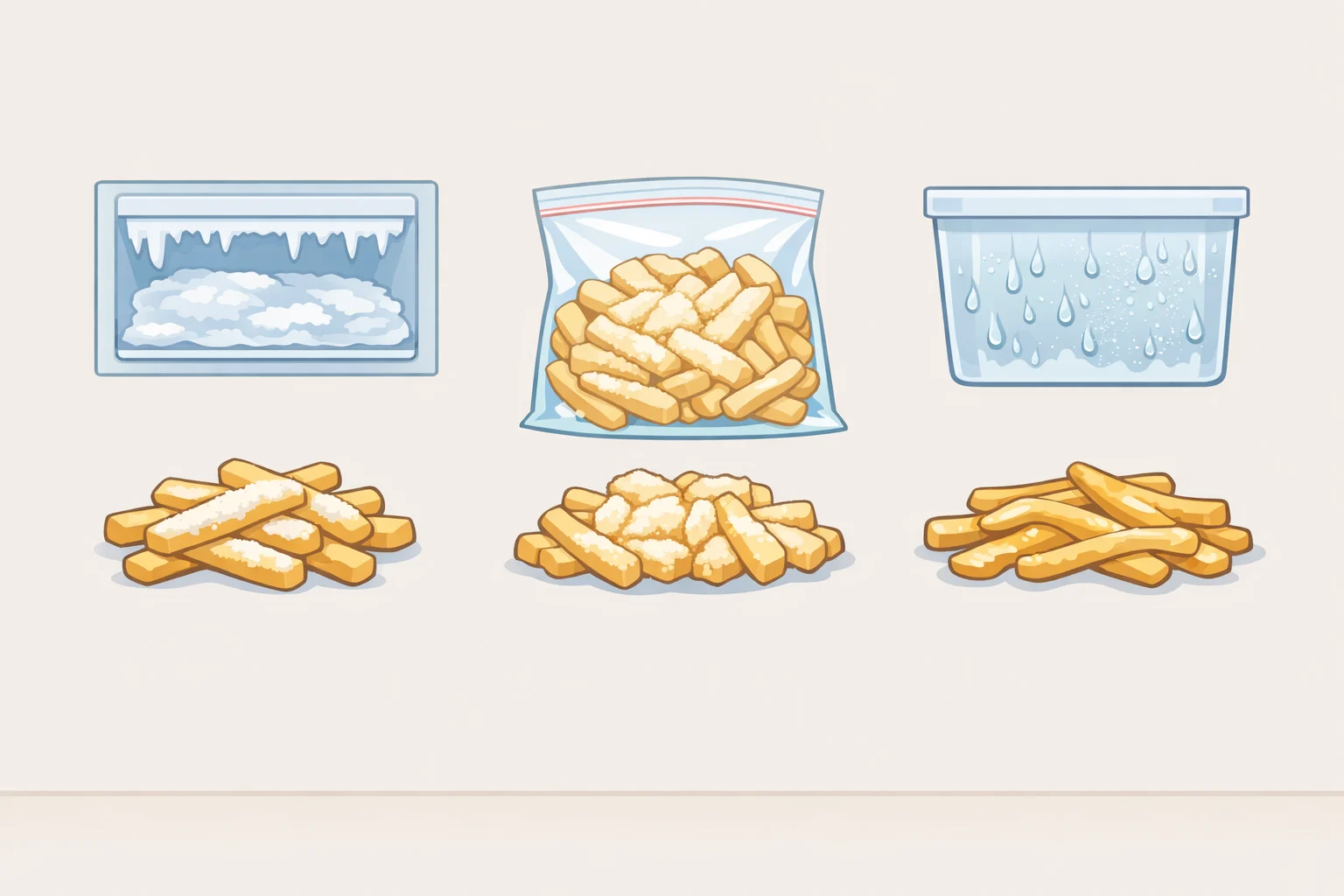
These aren't findings from the studies cited elsewhere in this guide; they're common kitchen explanations worth checking against your own batch rather than settled facts.
- Soggy after cooking. Often comes down to surface moisture that wasn't dried off before freezing, or a tray or basket packed too tightly, which can trap steam instead of letting it escape. Dry the batons properly, and cook in smaller batches if your appliance can't fit them in a single layer.
- Clumped together in the bag. Usually traced back to skipping the tray-freeze step, so batons go into the bag while still wet or touching. The fix is prevention: freeze them loose on a tray until solid, then bag.
- Freezer burn or a dry, frosted look. Often linked to air trapped in the bag rather than simply how long the batch has been in the freezer. Push out as much air as you can before sealing, use a container that fits the batch snugly, and label the bag with the date you froze it.
- Dark or unevenly browned once cooked. Points back to cooking time and temperature, not anything to do with freezing. Check the appliance heat is accurate, don't overcrowd the tray or basket, and pull the batch as soon as it turns golden.
If deep-frying from frozen, shake off any loose ice clinging to the batons before lowering them into hot oil, and follow your fryer's manufacturer instructions for cooking from frozen; oil and ice don't always mix well.
Working out whether the 8p claim holds up
Rather than trust somebody else's headline figure, run the numbers in your own kitchen. Check the price per kilo of your potatoes, then weigh what you actually get after peeling and trimming, since that varies by potato and by how you cut, so weigh your own rather than assume a fixed percentage.
Add in the oil used and your appliance's running cost for whatever cooking time you settle on, then divide by the number of portions the batch makes. Compare that total against a bag of frozen oven chips at current supermarket prices. The sources reviewed for this article don't provide supermarket costings or energy-tariff data, so they can't confirm or deny 8p specifically, but they do hand over the method to check it for yourself.
FAQ: storing raw potatoes before you start
Where should raw potatoes be kept before cutting? GOV.UK previously warned against fridge storage over so-called cold sweetening, where sugars build up and can convert into more acrylamide during cooking. Current guidance says home fridge storage doesn't materially increase that risk compared with a cool, dark cupboard, so store the bag wherever cuts down on waste in your own kitchen (GOV.UK, current guidance).
What you're left with is a repeatable process: cut, soak, blanch, cool, freeze, then cook to gold, adjusting the timings above to your own kitchen rather than treating them as fixed. The 8p figure remains unverified on the evidence available, but the method behind it doesn't need a headline number to be worth doing properly.