How to Grill Oysters Safely: The 145°F Doneness Rule
Many cooks treat a popped-open shell as the finish line for grilled oysters. That instinct misses the point: a just-opened oyster is not fully cooked, according to NC Sea Grant.
This guide covers grilling live oysters in the shell, cooked directly on the grate, not shucked oysters, half-shell preparations, or frozen product, which come with different handling rules. It walks through buying and storing live oysters, then how to grill oysters and confirm they're actually safe to eat.
Washington State's health department puts it bluntly: barbecuing oysters only until they open "will not kill the bacteria" (Washington State DOH). The real target is an internal temperature of 145°F held for at least 15 seconds; NC Sea Grant cites this as the CDC's recommendation for cooking seafood generally. None of the sources behind this guide publish a grill-specific cook time, so what follows is the target, the method for reaching it, and an honest account of where the guidance stops.
Why shell-popping isn't the finish line
Video of the Day
Oysters filter about 25 gallons of water a day while they feed, and that constant filtering is how they pick up more than plankton (Colorado State Food Source Information). Because they're filter feeders, they may harbor Vibrio vulnificus, Vibrio parahaemolyticus, norovirus, and hepatitis A in their tissue, and none of it shows up as a smell, color, or taste anyone would notice (Colorado State Food Source Information; UF/IFAS Extension).
About 80% of Vibrio infections happen between May and October, when coastal waters run warmest, according to Keith Schneider, a food safety professor at UF/IFAS (UF/IFAS Extension). That timing matters for a summer oyster roast, since warmer water is exactly when the bacteria concentrate.
The risk runs higher for people with certain immunocompromising conditions, including liver disease, diabetes, cancer, alcoholism, iron overload disease, and stomach disorders, along with anyone on acid-reducing medication; these groups are advised to eat oysters fully cooked rather than raw (NC DEQ). Separately, Vibrio vulnificus bloodstream infections in general are fatal in more than half of cases (Colorado State Food Source Information), which is why the temperature rule below isn't a suggestion.
Video of the Day
Buying, checking, and storing live oysters
Buy from a reputable commercial source: a licensed dealer, market, or restaurant. In North Carolina, a harvester may not sell shellfish directly to the public without a dealer license and a certified facility, and those facilities are required to maintain sanitation and temperature control (NC DEQ). UF/IFAS Extension backs the same principle: always buy live oysters from a commercial source such as a seafood market, grocer, or restaurant.
Ask to see the shellfish tag before it's removed at the point of sale. The tag documents harvest information and helps confirm the product came from an approved, legal source, and it lists the harvest date (NC DEQ; UF/IFAS Extension). For the best quality, plan to cook within 10 days of that date; oysters kept properly refrigerated beyond that window are still safe, though quality drops off (NC DEQ).
Keep oysters refrigerated at 45°F or below until they're ready to cook, the same threshold the National Shellfish Sanitation Program requires of commercial shellfish coolers (Colorado State Food Source Information; NC DEQ). Scrub the shells clean of mud with a stiff brush right before they hit the grate (NC DEQ).
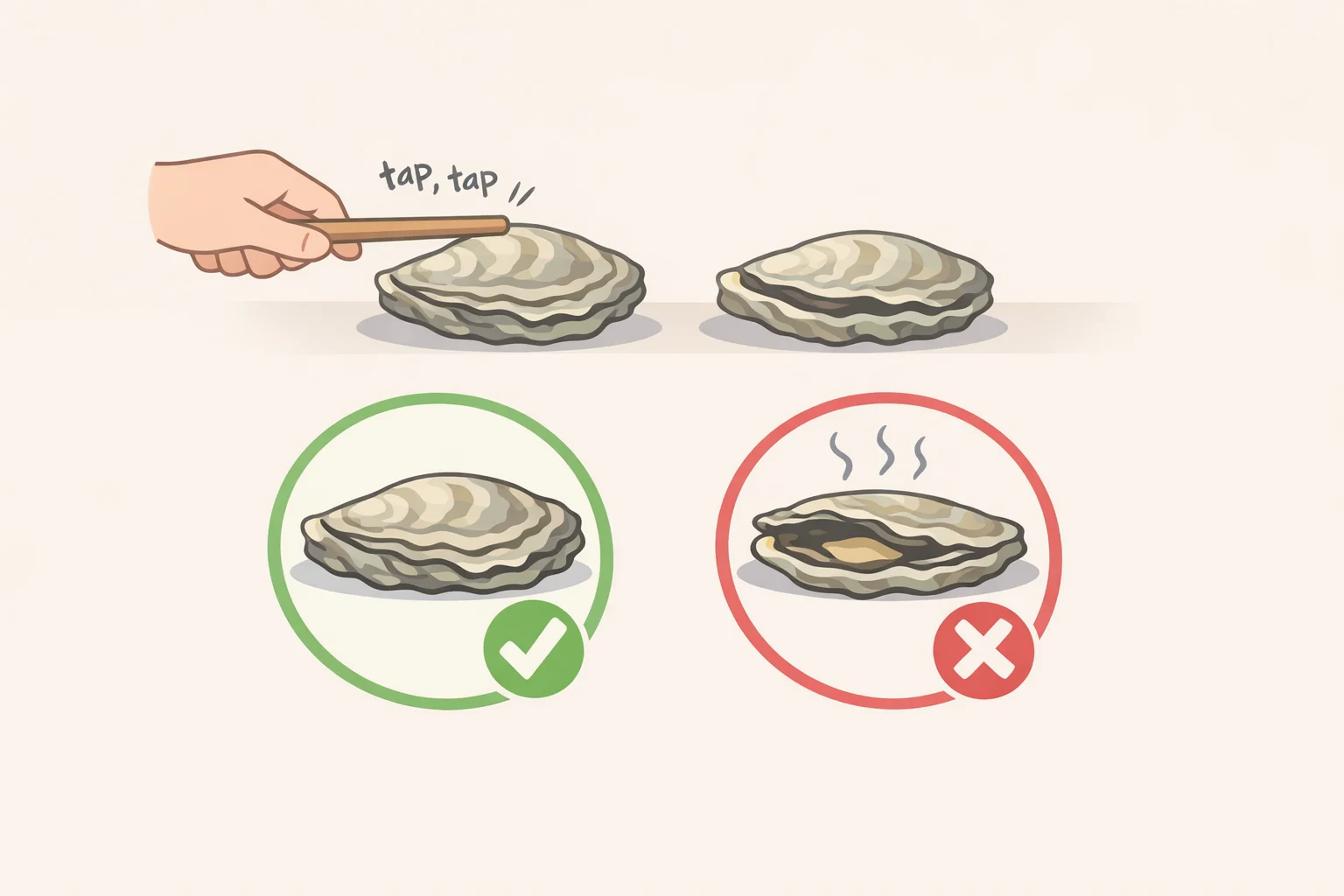
Tap-test every shell before cooking. A live oyster's shell is tightly closed, or snaps shut when tapped if it's slightly open; one that stays open is dead and belongs in the trash, not on the grill (NC Sea Grant; NC DEQ).
How to grill oysters in the shell, step by step
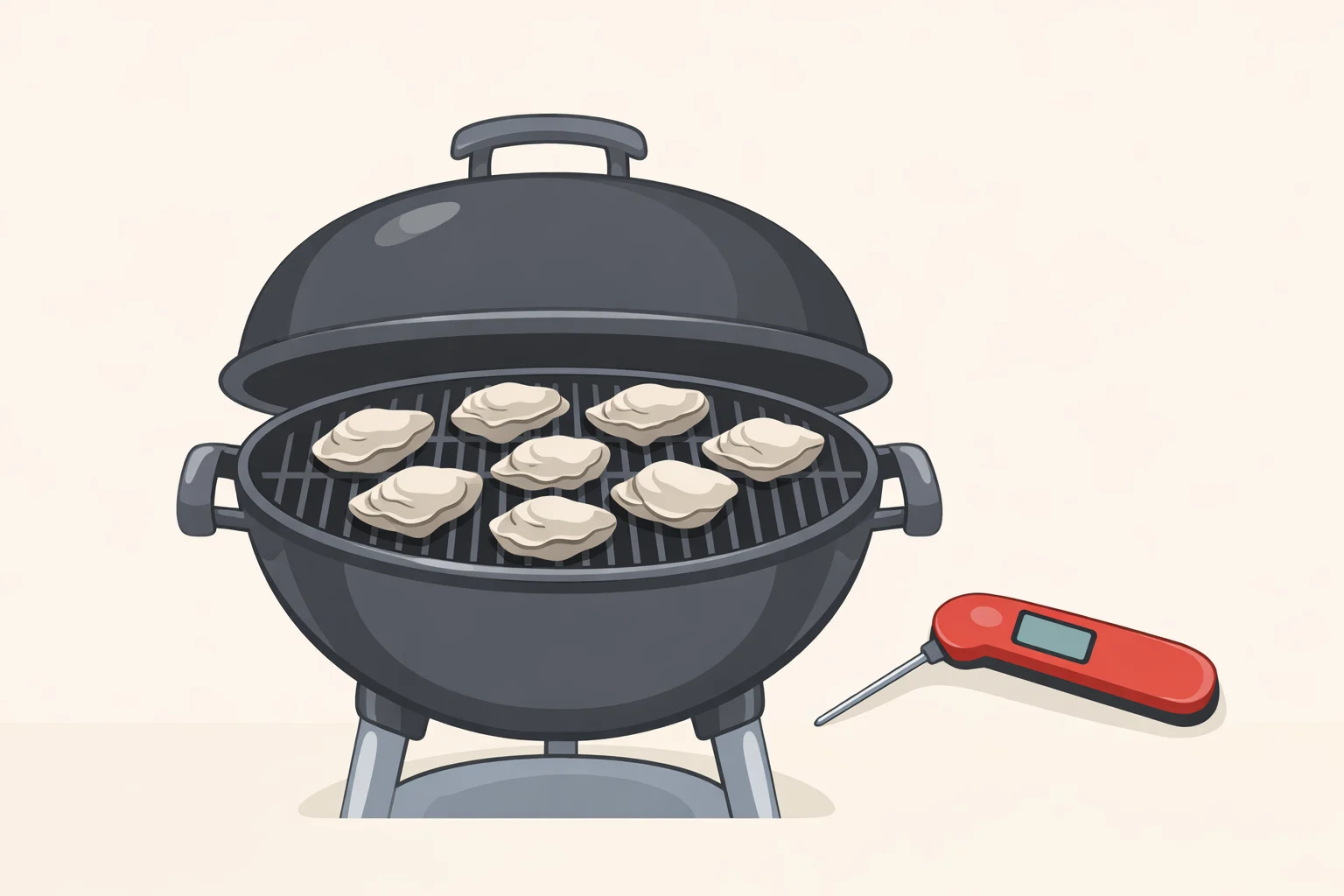
Before starting, everything above should be handled: a licensed source, a checked tag, 45°F storage, and dead or open shells thrown out. Keep an instant-read thermometer within reach; this is how to cook oysters on the grill once sourcing is squared away.
-
Build a hot, steady fire. None of the food-safety sources behind this guide set an exact grill temperature for oysters, unlike the fixed numbers published for boiling or frying. Aim for enough heat to force the shells open and cook the meat through without charring the shells first.
-
Set the oysters cup-side down on the grate and close the lid. Some grillers keep the cup down to hold the natural liquor in the shell rather than losing it to the fire. None of the food-safety sources address this directly, so treat it as a matter of preference, not a safety step.
-
Watch for shells to pop open, then keep going. Shell opening is the cue to start checking, not the signal to pull them off the grill: grilling only until shells gape will not reliably kill Vibrio bacteria (Washington State DOH).
-
Access the meat and check it with an instant-read thermometer, one oyster at a time. Once a shell gapes, use tongs or an oyster knife to lift the top shell fully away rather than poking the probe through the gap; a probe that hits shell instead of flesh will read low. Insert the tip into the thickest part of the meat, avoiding the shell itself. The target is 145°F held for at least 15 seconds, the internal-temperature endpoint federal and state guidance use for shellfish (Colorado State Food Source Information; Washington State DOH). Leave the oyster on the grate and the probe in place for the full 15 seconds once it first reads 145°F; a quick touch-and-go reading doesn't confirm the hold.
-
Handle staggered opening oyster by oyster. Oysters on the same grate rarely open at the same moment. Move any that have already hit temperature to a cooler part of the grill or pull them off, and leave the rest over direct heat. Checking each one individually beats assuming the whole batch finished together.
-
Return anything under temperature to the heat and recheck it. No source used for this guide publishes a grill-specific cook time. Boiled oysters need 3 to 5 minutes after the shells open, and steamed oysters need 4 to 9 minutes after opening (NC DEQ; Washington State DOH), but those numbers describe boiling and steaming, not grilling, and shouldn't be converted into a grill countdown. Grill until the thermometer confirms 145°F for a full 15 seconds; that's the endpoint, and the clock isn't.
-
Discard any oyster that never opens during cooking. A shell that stays shut through the whole cook should go in the trash, not get pried open and eaten (NC DEQ; UF/IFAS Extension).
Confirming doneness: temperature, appearance, and biotoxins
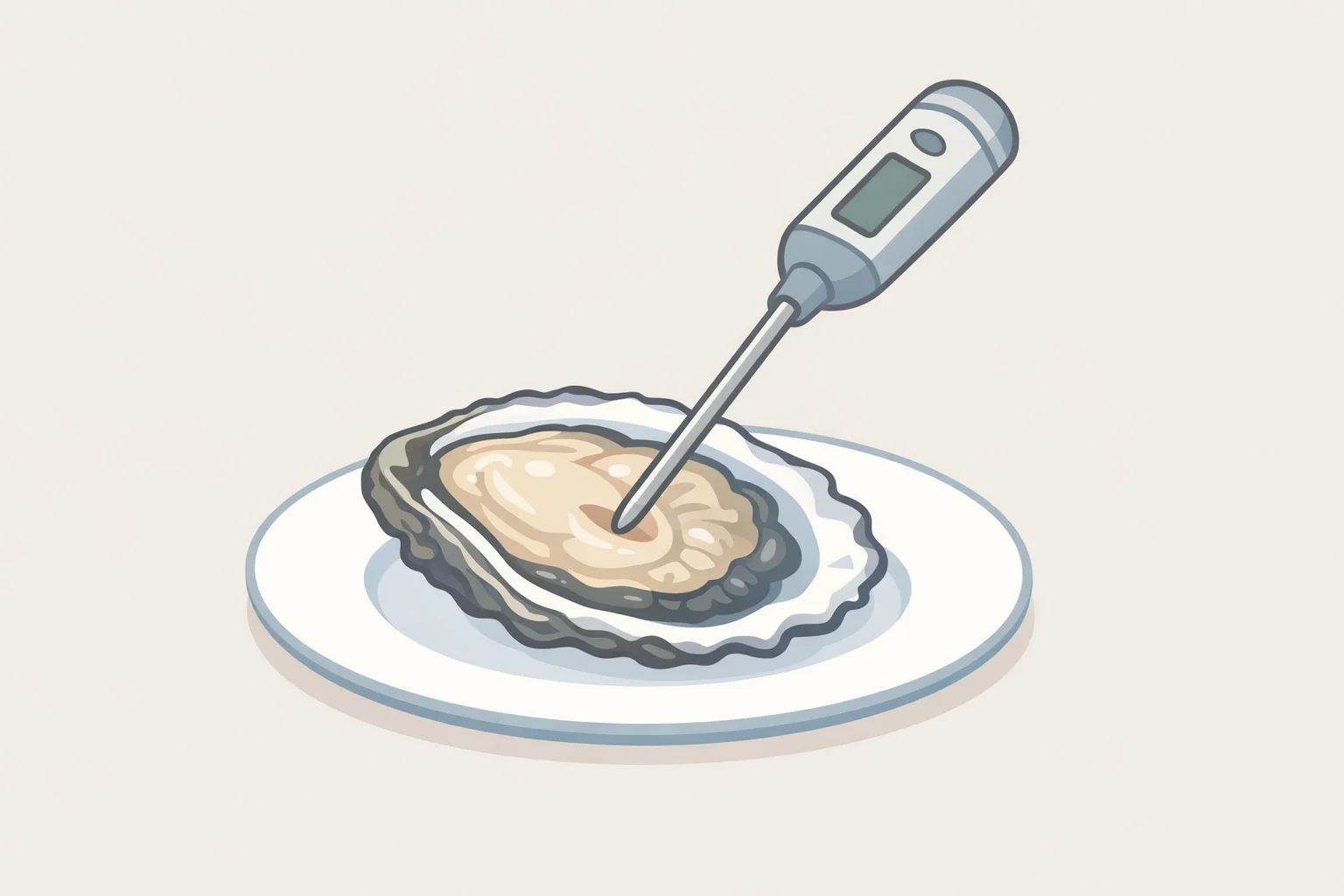
Once oysters are open, a crinkled appearance in the meat is a useful visual cue (NC Sea Grant). Treat it as backup information alongside the thermometer, not a replacement for one.
Temperature solves one problem, not every problem. Thorough cooking destroys Vibrio bacteria, but it does nothing to neutralize biotoxins from harmful algal blooms, sometimes called red tide (Washington State DOH). That risk lives in the water at the time and place of harvest, not in how long something sits on the grill. A tag from a licensed dealer documents where and when the oysters were harvested; it doesn't guarantee they're toxin-free, but sourcing from a licensed dealer is still the strongest safeguard available to a home cook.
Safe grilled oysters: the final checks
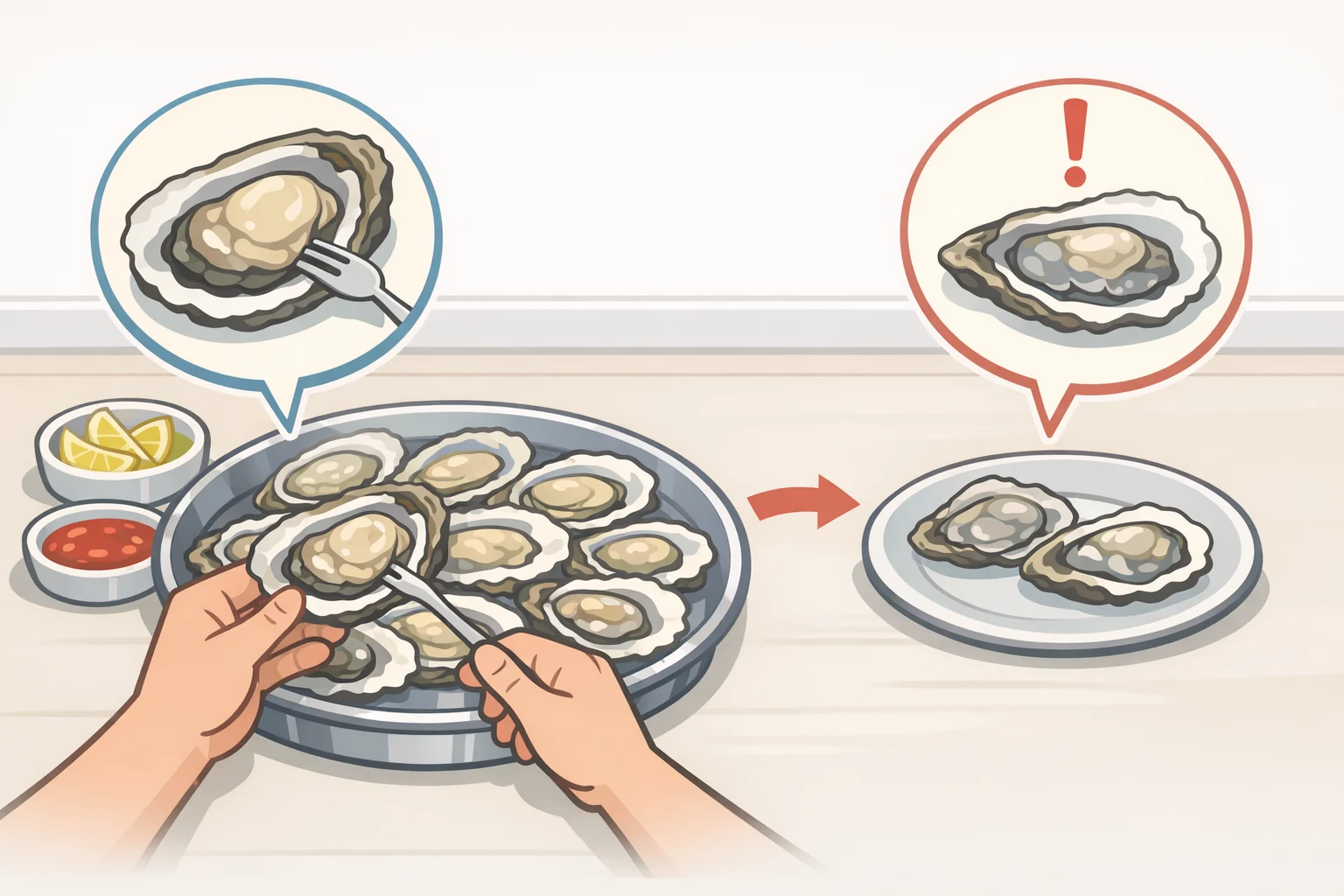
Sourcing sets up everything that follows, and the thermometer, checked oyster by oyster, is what actually says when to stop. Many restaurants post a consumer advisory warning that raw or undercooked shellfish carries added risk for people with certain medical conditions (UF/IFAS Extension), and the same caution is worth carrying home.
None of the pathogens involved show up to the naked eye, so a thermometer check is worth the extra minute every time oysters go on the grate. Anyone unsure of personal risk, particularly with liver disease, diabetes, cancer, or a weakened immune system, should talk to a doctor before eating undercooked shellfish and default to fully cooked oysters when in doubt (NC DEQ).